
Reviewed · SURF LESSONS
Surf with ALOHA SURF SCHOOL
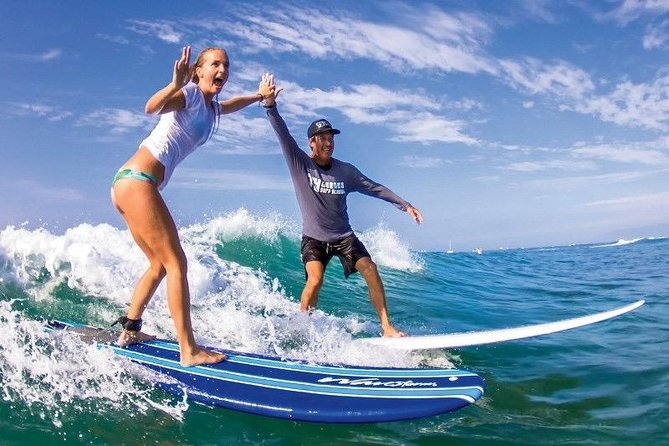
Maui’s Kalama Park gives beginners a friendly place to learn he’e nalu, the Hawaiian art of surfing. You start with a safety talk and basic instruction, then walk to the surf area with your certified instructor. Patient coaching is a major strength here, with instructors such as Sean, Chris, Donald, Jesse, and Jayden helping nervous first-timers find their balance.
I like two things right away: the gear is included, and the lesson is small enough to feel personal, even though the maximum group size is 15. The gentle beginner water has helped children, teens, honeymooners, and first-time adults stand up during the lesson. The catch is that surfing is hard work, and the rocky shallow area means you should bring water shoes and strong sun protection.
Key points to know before you book
- Kalama Park is a beginner-friendly starting point: The lesson takes place near The Cove, where small waves and shallow water can help first-timers learn.
- You get the main equipment: A surfboard, rash guard, booties, and protective footwear are included.
- The instructors focus on confidence: Sean, Chris, Donald, Jesse, Chris, and other team members are praised for clear, patient coaching.
- The two-hour session is physical: Expect paddling, pushing up, balancing, walking through shallow water, and repeated attempts.
- Photos and edited video may be available: The staff has taken photos and, in some cases, prepared a free edited video of the lesson.
- The meeting point is convenient: Start and finish at Kalama Park, 1900 S Kihei Road, with public transportation nearby.
Learning Hawaiian surfing at Kalama Park
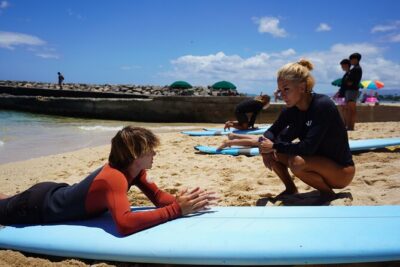
The lesson begins at Kalama Park in Kihei. This matters because you are not being dropped into an advanced break and left to figure things out. The experience is built around a first lesson, with safety and basic technique covered before you head to the water.
Your instructor teaches the essentials of surfing, including how to handle the board and how to get into a standing position. The goal is not to turn you into a polished surfer in two hours. The goal is to help you understand the sport, stay safe, and catch a few manageable waves with proper guidance.
I like that the experience connects the activity to Hawaiian culture through he’e nalu, the ancient sport of wave riding. That cultural note is brief, but it gives the lesson more meaning than a simple equipment rental. You are learning a living island tradition, not just trying an amusement park stunt.
After the land instruction, you walk to the designated surf area. The walk is part of the lesson rather than a separate transfer, so wear something comfortable and be ready to carry yourself and your energy toward the water.
More surf lessons on Maui:
- Maui: Two Hour Beginner Group Surf Lesson in Kihei
★ 5.0 · 950 reviews - Outrageous Surf ScHool Lesson on Lahaina Side
★ 4.5 · 547 reviews - Group Surf Lesson at Kalama Beach in Kihei
★ 5.0 · 264 reviews
Why Kalama Park works for first-timers
The surf area near Kalama Beach Park is described as gentle and suitable for beginners. Small waves can be especially helpful when you are learning to paddle, position the board, and push up without being overwhelmed.
The water may also be shallow enough for an instructor to give close help. That is useful if you feel nervous, since your first wave can come with a clear voice nearby and a simple reminder about what to do next.
Still, shallow water is not the same as soft water. The bottom near the lesson area can be rocky, and that creates two practical concerns. First, you need to pay attention to your footing. Second, people watching from shore may have trouble seeing students clearly in the shallow area.
I would bring water shoes even though booties and protective footwear are included in the stated equipment. The supplied gear is part of the package, but the rocky conditions make it worth confirming exactly what footwear you will receive and deciding if you want additional protection.
The spot can vary with weather and wave conditions. One lesson had very small surf but was still considered a pleasant way to spend time on the water. That is a fair warning: you may not get dramatic waves, but small waves can be much better for learning your first standing technique.
What the two-hour lesson feels like
Expect a workout rather than a passive beach activity. You will likely spend time carrying or handling the board, paddling, pushing up, standing, falling, and repeating the sequence. Even children who learned quickly were tired by the end of the session.
The physical demand is one reason the activity asks for a moderate fitness level. You do not need to be an athlete, but you should be comfortable with sustained activity in the sun. If you have a sore shoulder, limited mobility, or difficulty getting up from the floor, consider how the repeated push-up motion will feel.
The instruction is aimed at beginners, including people who feel unsure about trying. Donald and his team have been especially good at helping nervous newcomers. Jesse is also praised for clear explanations and patient instruction, with one first-time surfer standing on a board almost immediately.
That early success is possible because the instructors keep the task simple. You learn the body position, timing, and balance one step at a time. I would not judge the lesson by how quickly you stand. Some people catch on fast, while others need several attempts before the movement feels natural.
The two-hour length gives you time to improve after your first success. You are not simply shown one technique and sent away. The extended water time lets you try again, adjust your stance, and gain confidence.
The instructors make the largest difference
The people teaching the lesson are the best reason to consider this experience. Sean is described as attentive, friendly, and professional. He and Indie helped make one lesson feel calm and comfortable before the group entered the water.
Chris has coached families and teens through nearly two hours of surfing, with a patient and playful approach. He has also taught people on their second time out, helping them feel capable even when they were still new to the sport.
Donald is a good name to remember if you are worried about arriving as a complete beginner. His clear instruction helped a first-time surfer stand on her first wave. The staff has also been willing to stay out a little longer when conditions and energy allow, though you should not treat extra time as guaranteed.
The team’s attention to safety is important. One family specifically appreciated the instructor watching out for the children while they were learning. That does not replace your own responsibility, but it is reassuring when you are managing young surfers in moving water.
You may also encounter instructors named Jesse, Jayden, Cruz, Kruz, or Indie, depending on the session. The staff appears to work as a team, so the exact instructor is not promised. What is consistent in the available information is the emphasis on patience, clear directions, and a relaxed manner.
Same island, a different kind of day:
- Small-Group Road to Hana Adventure Tour with Pickup & Lunch
★ 5.0 · 3,064 reviews - Maui Pineapple Farm Tour in Haliimaile
★ 5.0 · 2,855 reviews - Maui Eco-Raft Tour: Eye-Level Whale or Dolphin Watching – Lahaina
★ 5.0 · 2,482 reviews - Maui Snorkeling Adventure to Molokini and Turtle Town
★ 4.5 · 2,221 reviews
Gear included, with a few items to bring yourself
The $120 price includes a surfboard, rash guard, booties, and protective footwear. That saves you from renting the core equipment separately and makes the activity easier to plan.
A rash guard is useful in the sun and can reduce rubbing from the board. Booties and protective footwear are also practical in a rocky shallow area. Still, I would not leave your personal preparation entirely to the equipment list.
Bring extra sun protection. The lesson takes place outdoors, and the physical effort can make you notice the sun less than you should. A UV cap and glasses with a strap are sensible additions if you use them, especially for children or anyone prone to sun exposure.
Bring water as well. The lesson is active, and the nearby park can be a pleasant place to continue your day with a picnic. Restaurants are close by, so you can turn the surf lesson into a simple morning or afternoon around Kihei.
Do not wear loose eyewear without a strap. Surfing involves falling and moving through water, and replacing lost glasses in the shallows would be an avoidable nuisance.
Family appeal, with an honest fitness warning
This lesson suits families with older children and teens particularly well. The experience has helped children stand and surf before the end of the session, and teens have described it as a favorite Maui activity. That combination of instruction and immediate action can make the lesson memorable for a family traveling together.
Parents should still be realistic about the physical effort. Children may have fun enough to keep going until they are exhausted, so plan a quiet period afterward rather than scheduling another demanding activity right away.
Adults should not assume surfing is only for the young. A 51-year-old participant managed to get up on a wave, and instructors have helped hesitant adults take part rather than remain on the beach. If you are reasonably fit and willing to try, the lesson can work well.
If one person in your group does not want to surf, that person can remain on the sidelines, but the activity is designed for participation in the water. The shallow rocky area may make it difficult for someone on shore to watch every moment closely.
Service animals are allowed, and the meeting point is near public transportation. The available details do not promise hotel pickup, so plan to reach Kalama Park on your own.
Is $120 a fair price?
At $120 per person, this is not the cheapest way to spend two hours in Maui. The price makes more sense when you count the included board, rash guard, booties, protective footwear, certified instruction, and small-group format.
You are also paying for the coaching. A surfboard alone cannot explain how to position your body, when to paddle, or how to recover after a missed wave. For a first lesson, clear instruction can save you a great deal of frustration.
The group size is capped at 15. That is still large enough that the level of personal attention can vary, especially if the session fills. The experience is described as small-group, but you should not expect a private lesson unless you arrange one separately.
Photos can improve the value for families and couples. The staff has taken pictures of the action, and one instructor team produced an edited video at no extra cost. These extras are not listed as guaranteed inclusions, so treat them as a possible bonus rather than part of the price calculation.
I would consider the cost fair for a first Maui surf lesson if standing on a wave is one of your trip goals. If you only want to watch surfing or spend quiet time near the water, this is too much money and effort for what you need.
Timing, meeting point, and cancellation
You meet at Kalama Park, 1900 S Kihei Road, Kihei, Hawaii 96753. The activity ends back at that same meeting point, which keeps the plan simple and avoids arranging a separate return transfer.
Confirmation is provided when you book. The activity is offered in English, and the average booking window is about 17 days in advance. That suggests you should reserve ahead if the lesson is important to your Maui schedule.
The experience depends on good weather. If poor weather cancels the session, you can choose another date or receive a full refund. You can also cancel for a full refund if you do so at least 24 hours before the start time. Cancellations or changes inside 24 hours are not refunded or accepted.
The cut-off is based on Maui local time. Keep that in mind if you are booking from another time zone.
Who should book this surf lesson?
I would choose this for a first-time surfer who wants instruction rather than a board rental. It also fits families with children, couples looking for an active Maui morning, and adults who feel nervous but are willing to work at the skill.
The lesson is a good match for you if:
- You want a structured introduction to surfing.
- You value patient, direct coaching.
- You are comfortable with two hours of physical activity.
- You want equipment supplied.
- You are staying near Kihei or can reach Kalama Park.
- You are happy with gentle waves instead of dramatic surf.
I would pause before booking if you dislike repeated falls, have difficulty with push-up movements, or want a quiet beach experience. The rocky shallows also mean you need to pay attention to your feet and bring sensible sun and water protection.
Should you book Aloha Surf School?
Book it if your Maui plans include trying something new and you want a real chance to stand on a board. The combination of beginner-friendly water, included equipment, and instructors such as Sean, Chris, Donald, and Jesse gives the lesson a strong practical case.
The best reason to go is the coaching. The staff has helped children, teens, nervous adults, and older beginners take part without making the experience feel intimidating. The main tradeoff is the effort, plus the rocky bottom and the possibility of very small waves.
For most reasonably fit first-timers, I think the chance to learn Hawaiian surfing at Kalama Park is worth the $120. Bring water shoes if you have them, protect yourself from the sun, and leave enough time afterward to enjoy the park, nearby restaurants, or a well-earned rest.
FAQ
Where does the surf lesson begin?
The lesson begins at Kalama Park, 1900 S Kihei Road, Kihei, Hawaii 96753.
Where does the activity end?
The activity ends back at the Kalama Park meeting point.
How long does the surf lesson last?
The lesson lasts approximately two hours.
How much does the experience cost?
The listed price is $120 per person.
Is surfing equipment included?
Yes. The experience includes a surfboard, rash guard, booties, and protective footwear.
Is the lesson offered in English?
Yes. The activity is offered in English.
How many people can join the activity?
The maximum group size is 15 people.
What fitness level is needed?
You should have a moderate level of physical fitness. Surfing requires active movement in the water and repeated attempts to stand on the board.
What happens if poor weather cancels the lesson?
You can choose a different date or receive a full refund if the activity is canceled because of poor weather.
Just added on Maui
- Two Site Snorkeling Adventure featuring the Molokini Crater★ 5.0 · 4 reviews
- Road to Hana Deluxe Rainforest & Waterfall Experience from Maui★ 5.0 · 116 reviews
- Traditional Airport Lei Greeting on Kahului Maui★ 5.0 · 95 reviews
- Turtle Town Clear Kayak & Snorkel Tour (8am-11am)★ 5.0 · 100 reviews
- The Best Maui 3 Hour Molokini and Turtle Town Snorkel★ 5.0 · 106 reviews
- 3-Hour Small-Group Maalaea Luxury Snorkel Cruise Tour★ 5.0 · 29 reviews
- Elite Private Tour★ 5.0 · 7 reviews
- VIP Premiere Whale Watch Kaanapali Beach MAX 12 PASSENGERS★ 5.0 · 78 reviews
Surf Lessons, compared.
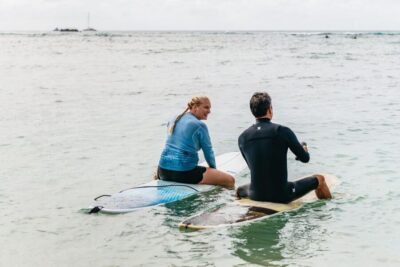
Beginner-Friendly Waikiki Beach Surfing Lesson
Read our review →
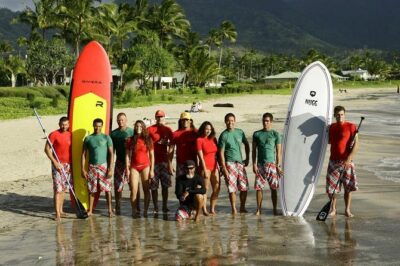
Private Hanalei Sandy Bottom Surf Lesson on Kauai
Read our review →
Browse the lists this tour appears in