
Reviewed · WHALE WATCHING
Maui Eco-Raft Tour: Eye-Level Whale or Dolphin Watching – Lahaina
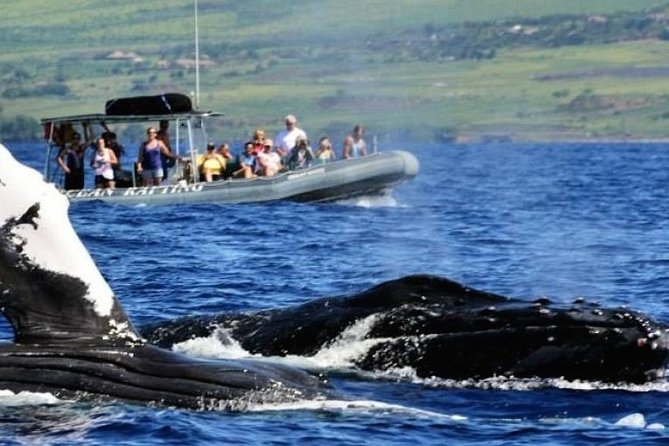
The best part of this Lahaina boat trip is its eye-level view of the ocean. You ride a small zodiac raft rather than a high-sided catamaran, so whales can feel remarkably close to the waterline. From December through April, the mission is humpback whales. In summer, the trip shifts to dolphins and coastal sightseeing.
I like the small-group feel, which makes it easier to hear the marine naturalist and get a clear look when a whale surfaces. I also like the hydrophone, since hearing whales communicate adds something a camera cannot capture. The tradeoff is simple: this is an open, low boat. You may get wet, the ride can feel lively, and close wildlife sightings are never guaranteed.
Key points to know before booking
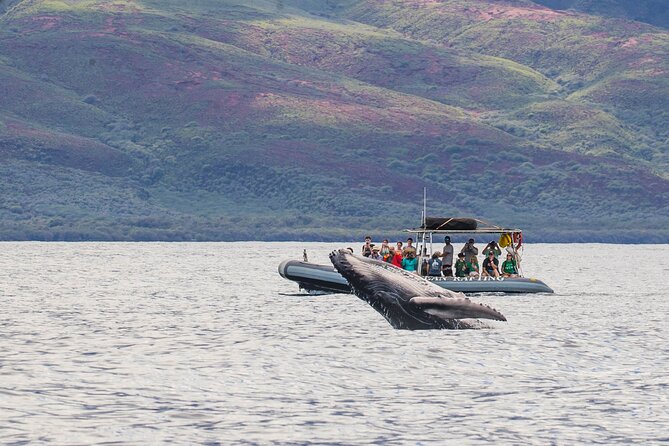
- Eye-level whale watching: The raft sits low on the water, giving you a more direct view than a large sightseeing boat.
- Seasonal wildlife: Book from December through April for humpback whales, or choose the summer dolphin and coastal tour.
- Strong guiding team: Captains and marine naturalists such as Jack, Jess, Mark, Olivia, Steve, and others explain animal behavior and Hawaiian ecology.
- Hydrophone included: During whale season, you can listen to real whale songs beneath the boat.
- Plan to get wet: Ocean spray and light rain are part of the outing. Bring a light layer, hat, sunglasses, and reef-safe rub-on sunscreen.
- Small but active boat: The group can include up to 25 people, and boarding requires physical mobility. Children must be at least 3 years old.
Why the low raft changes the whale-watching experience
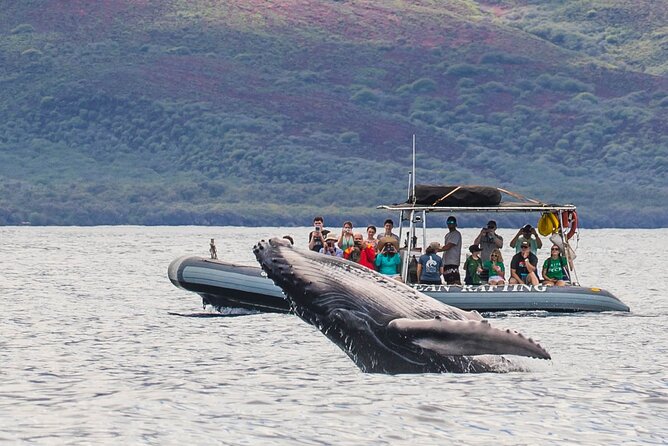
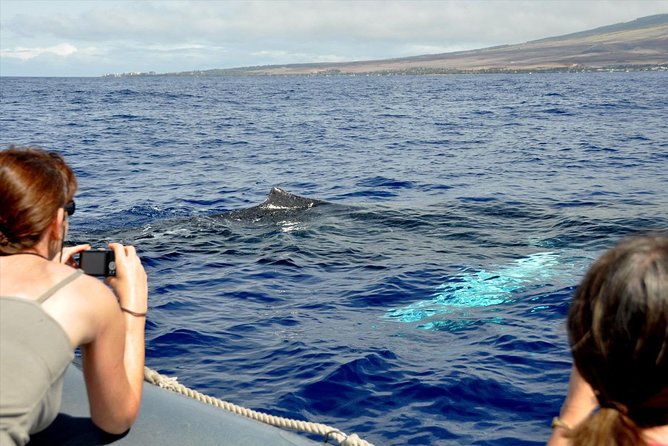
Large boats give you more room, but this raft gives you a closer connection to the surface. You sit low enough that a whale’s back, fin, or tail appears at roughly your own eye level. That makes even a short surfacing feel more immediate.
The raft can also stop when whales appear, giving you time for photos and a better look. The crew does not promise a certain number of animals or a guaranteed close approach, since the whales and dolphins are wild. That point matters. The boat can search well, but it cannot control where an animal surfaces.
The tour’s strong rating, 4.9 out of 5 from 2,482 ratings, fits the experience described by the feedback. Praise centers on the crew’s ability to find whales, explain behavior, and keep the trip organized. Captains Jack, Mark, Steve, and others are repeatedly singled out, as are marine naturalists Jess, Olivia, Meredith, Shay, and Diana.
You should also understand the physical setting. This is not a dry, quiet cruise with indoor seating. It is an active ocean ride on a small vessel. The reward is a better view and a more personal feel. The cost is exposure to spray, sun, wind, and the occasional rough patch of water.
More whale watching on Maui:
- From Maalaea: Whale Watching Tour Aboard the Quicksilver
★ 4.5 · 1,461 reviews - Maui: Ultimate Whale Watch from Lahaina
★ 5.0 · 1,162 reviews - WHALES GUARANTEED Maui Whale Watching Makai Adventures
★ 5.0 · 1,081 reviews
December to April: searching for Maui’s humpbacks
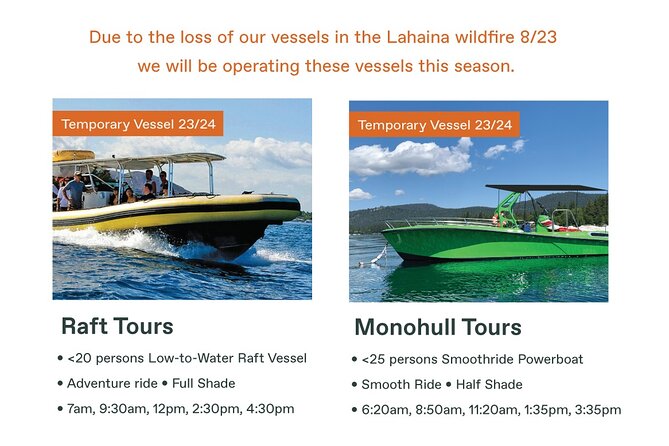
The whale option runs during Maui’s main humpback season, from December through April. After check-in at 1223 Front Street in Lahaina, you board the low-water raft and head out to search for whales around Maui’s coastal waters.
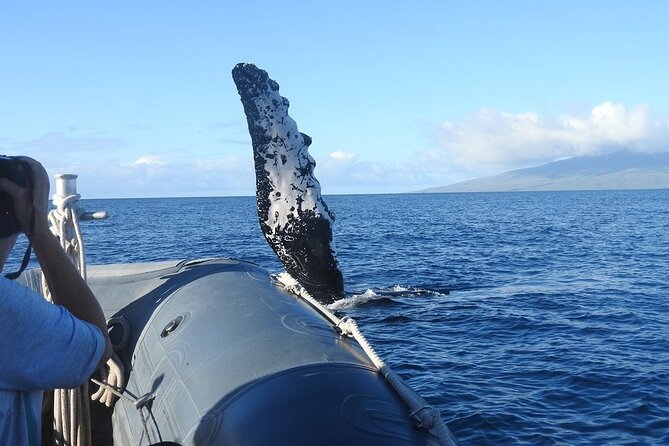
The basic rhythm is easy to follow. The captain moves the raft toward areas with whale activity, then slows or stops when the crew spots a surfacing animal. The marine naturalist explains what you are seeing, from tail lifts and pectoral fins to breaches, mothers, calves, and escort whales.
This is where the crew matters most. Finding a whale is only part of the job. The captain must position the raft safely, and the naturalist helps you understand whether the animal is traveling, resting, communicating, or preparing to surface again. Several guides are praised for answering questions while keeping people aware of where to look.
The trip can produce a series of quick sightings rather than one long show. You might see a tail disappear just as you raise your camera, then spot another whale a short distance away. The best approach is to keep your eyes moving and listen for instructions from the crew.
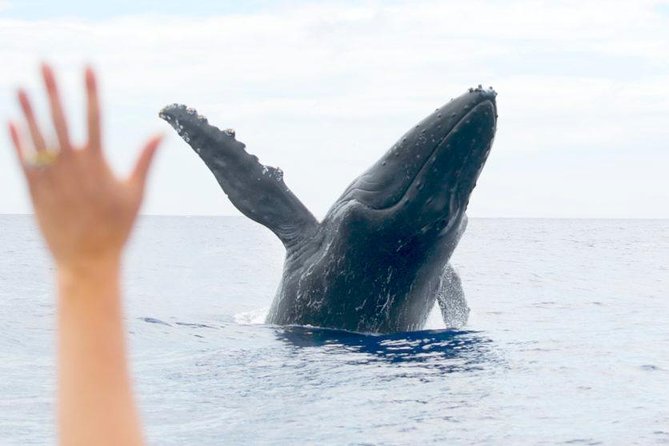
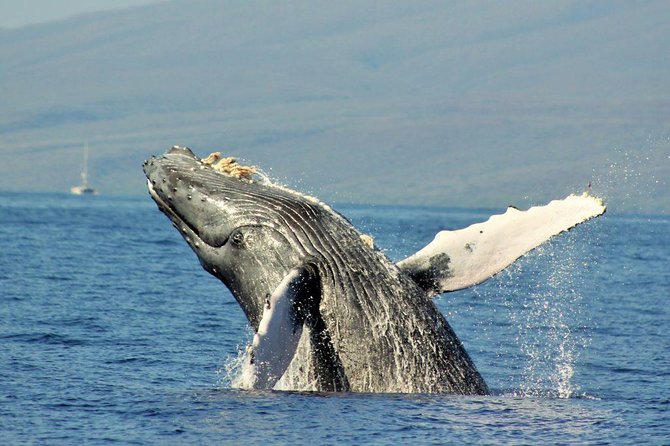
Some outings have included mothers with calves, male escorts, repeated breaches, pectoral-fin displays, and tail slaps. Those moments cannot be scheduled, so you should book this for the chance to observe wild whales, not for a promised performance.
The hydrophone adds a soundscape you cannot get from photos
A hydrophone is one of the most worthwhile features here. Once the boat is positioned in a suitable area, the crew can lower the listening device and let you hear whale songs underwater.
The sound changes the experience. You are not only watching a back or tail appear above the surface. You are also hearing animals communicate below you. That helps explain why the naturalist may pause in one area even when no whale is breaching at that exact moment.
The narration covers whale behavior as well as facts about Maui and the Hawaiian ecosystem. The best guides keep this information tied to what is happening around you, so the commentary does not feel like a lecture detached from the ocean.
If you enjoy wildlife trips for the learning as much as the photos, this feature adds real value. If your only goal is a dramatic breach, the hydrophone may feel less important, but it remains a good reason to pay attention between surface sightings.
Summer changes the focus to dolphins and coastal views
From late spring through the warmer months, the experience is offered as a dolphin-watching and coastal sightseeing trip rather than a whale trip. The animals you see depend on the option and season selected when you book.
Dolphin outings include snacks and beverages. The supplied information does not promise a particular type or quantity of food, and all onboard food may come into contact with common allergens, including peanuts, tree nuts, shellfish, fish, soy, eggs, dairy, wheat, and gluten. If you have a serious allergy, notify the operator in advance, carry any needed medication, and consider the stated warning carefully.
The summer version keeps the same small-raft format. You still get a low view of the water, marine naturalist narration, and the possibility of seeing wildlife in its natural setting. Dolphins are not guaranteed, and the crew cannot make wild animals appear on schedule.
The coastal sightseeing element gives the summer trip another purpose. Even if the animals stay out of view, you are still spending time offshore with a guide explaining the surrounding marine environment. That makes the summer option useful for people who want a small-boat outing but are visiting outside whale season.
Other dolphin trips leaving Maui:
- Ultimate 4 Hour Lanai Snorkel and Dolphin Encounter
★ 5.0 · 927 reviews - Eco-Raft Tour: Maui-Lanai Snorkel / Dolphin Watch (Semi-Private)
★ 5.0 · 259 reviews - Lanai Snorkel and Dolphin Watch from Maalaea
★ 4.5 · 235 reviews - Oahu Dolphin and Snorkel Tour with Waikiki Pickup & Lunch
★ 4.5 · 1,687 reviews
What the 2 hours and 30 minutes feel like
The advertised duration is about two and a half hours. That is long enough to search several areas without turning the trip into an all-day commitment.
I see the timing as a good fit for a Maui schedule. You can pair it with other Lahaina plans without giving up a full morning or afternoon. At the same time, two and a half hours on a low raft is plenty of time in the sun and spray, especially if weather turns cool or rainy.
A few practical details make a difference:
- Arrive at least 30 minutes before boarding. The boat leaves promptly, and late arrival can mean missing the trip.
- The meeting point is 1223 Front Street in Lahaina. Parking can be limited, so allow extra time if you are driving.
- Shoes may need to come off when boarding. Slip-on shoes are a sensible choice.
- Bring a hat, sunglasses, and reef-safe rub-on sunscreen. Spray sunscreen is not permitted.
- Pack a light jacket or warm layer. A complimentary poncho may help, but it will not replace a jacket in cold rain.
- You may bring your own beer or other drinks if they are in plastic containers or cans. Glass is not allowed under the stated BYOB rule.
Shade varies by boat. Do not assume you will have a covered seat for the entire ride.
Group size, seating, and the boarding reality
The maximum group size is 25 people, though some outings may feel smaller. One account described roughly 16 people aboard, which gives you a sense of how intimate the raft can be on certain departures.
Small boats have a seating tradeoff. You are closer to the water, but not every seat has the same view. One person who boarded late found the back seats less ideal for sightlines, though that position offered more interaction with the captain and marine naturalist.
For the best chance at an open view, arrive early and follow the crew’s seating instructions. The captain may ask people to sit so everyone gets a fair look. Avoid standing suddenly or shifting around while the boat is moving.
Boarding requires physical mobility. The activity is not suitable for pregnant people or anyone with back or neck injuries. Children must be at least 3 years old, and babies are not allowed. These limits are especially important on a low boat where boarding and movement are less forgiving than on a large vessel.
Life jackets are available for emergencies but are not required to be worn during the tour. The crew will explain safety rules before departure.
How much value do you get for $85.16?
At $85.16 per person, this is priced above a basic harbor cruise but below many full-day ocean activities. The value comes from the small raft, the low viewing angle, the naturalist narration, and the chance to hear whale songs through the hydrophone.
You are paying for access to a focused wildlife outing, not transportation or hotel service. Hotel pickup and drop-off are not included, so you must arrange your own way to Front Street. The trip returns to the same meeting point.
I think the price makes sense if you care about wildlife and prefer a small boat to a large party-style cruise. It is less compelling if you dislike spray, have trouble boarding, or need a guaranteed close encounter. No operator can promise that wild whales or dolphins will surface near the raft.
The trip’s 97 percent recommendation rate and 4.9 rating suggest that most people find the experience worthwhile, especially when the animals are active. Still, those numbers should not replace realistic expectations. Nature decides what happens offshore.
Weather can change the plan
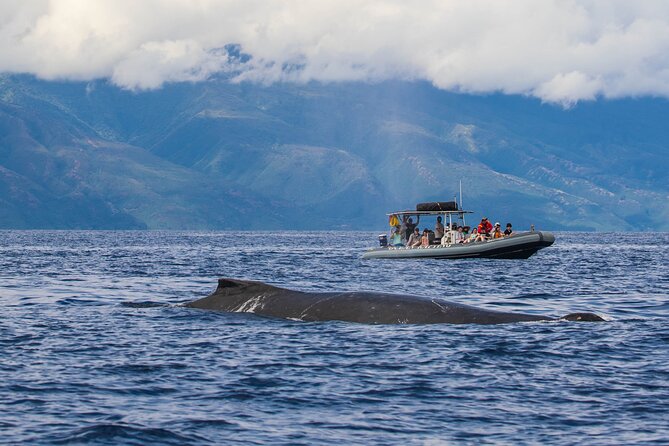
This experience requires good weather. If poor conditions force a cancellation, you can choose another date or receive a full refund.
Even when the trip runs, conditions can vary. A cool, rainy day may make the ride feel much wetter than expected. One useful strategy is to wear a jacket beneath the provided poncho rather than relying on the poncho alone.
If the operator needs to cancel because the minimum number of participants is not met, you will be offered another date or experience, or a full refund. For your own cancellation, you need to cancel at least 24 hours before the start time to receive a full refund. Changes made inside that window are not accepted.
Who will enjoy this raft most?
I would choose this tour for you if you want:
- A close-to-the-water view of whales or dolphins
- A small-group outing rather than a large sightseeing boat
- Clear explanations of animal behavior and Maui’s marine environment
- The chance to hear whale songs during whale season
- A short activity that fits neatly into a Lahaina day
- A family outing for children age 3 and older who can manage the boat setting
I would think twice if you are pregnant, have a back or neck injury, cannot board with physical effort, or strongly dislike getting wet. You should also reconsider if a guaranteed sighting is essential. The crew works hard to locate wildlife, but the animals remain wild.
Should you book the Lahaina Eco-Raft Tour?
Book it if your priority is the viewing position. The low zodiac raft puts you close to the ocean surface, and the small group makes the experience more personal than a large boat cruise. The hydrophone and marine naturalist narration give the trip substance beyond simply pointing a camera at the water.
For whale season, aim for a departure between December and April and arrive early at Front Street. Wear a light jacket, use only reef-safe rub-on sunscreen, and accept that spray is part of the deal. For summer, choose the dolphin and coastal sightseeing option, with snacks included and the same understanding that wildlife sightings are not guaranteed.
This is a strong pick for active families with older children, couples, solo visitors, and anyone who wants a focused ocean outing. It is not the right choice for someone seeking a dry, fully sheltered ride. If you can accept the weather and wildlife variables, the combination of eye-level views, attentive crew, and whale songs makes the $85.16 fare a reasonable Maui splurge.
FAQ
Where does the Maui Eco-Raft Tour depart?
The tour departs from 1223 Front Street in Lahaina, Hawaii, and returns to the same meeting point.
How long does the tour last?
The experience lasts approximately 2 hours and 30 minutes.
When can I see whales on this tour?
Whale watching is offered from December through April.
What does the tour offer during summer?
The summer option focuses on dolphin watching and coastal sightseeing.
Are whale or dolphin sightings guaranteed?
No. Wildlife is wild, so close encounters and specific sightings are not guaranteed.
How many people can join the tour?
The activity has a maximum capacity of 25 people.
Can children join the raft?
Children must be at least 3 years old. Babies are not permitted.
What should I bring?
Bring sun protection, including a hat, sunglasses, and reef-safe rub-on sunscreen. You should also bring a light jacket because spray and rain can occur.
What happens if bad weather cancels the tour?
You will be offered another date or experience, or a full refund.
Just added on Maui
- Central Maui: Two-Island Scenic Helicopter Flight to Molokai★ 4.9 · 165 reviews
- Goat Yoga with Miniature Goats In Maui★ 5.0 · 55 reviews
- A Maui Beach Photoshoot in Wailea★ 5.0 · 154 reviews
- From Ma’alaea: Sunset Dinner Cruise Aboard the Quicksilver★ 4.5 · 218 reviews
- Maui Lahaina Group Surf Lesson★ 4.9 · 235 reviews
- Maui: Guided Rainforest and Waterfall Walk & Swim★ 4.8 · 226 reviews
- South Maui: Gilligans’ Island Luau with Dinner and Drinks★ 4.2 · 254 reviews
- Maui: Molokini Snorkel and Performance Sail with Lunch★ 4.8 · 224 reviews
Whale Watching, compared.
2-Hour Oahu Whale Watch from Ala Wai Harbor, Waikiki
Read our review →
Luxury Snorkel Cruise, Local Buffet with Whale & Dolphin Watch
Read our review →
WHALES GUARANTEED Maui Whale Watching Makai Adventures
Read our review →
Waikiki, Oahu 2-Hour Whale Watching: Guaranteed Sightings
Read our review →
Ma’alaea Harbor: Whale Watching Tour Aboard Power Catamaran
Read our review →
Whale Watching Cruise with Open Bar from Ka’anapali Beach
Read our review →Browse the lists this tour appears in