
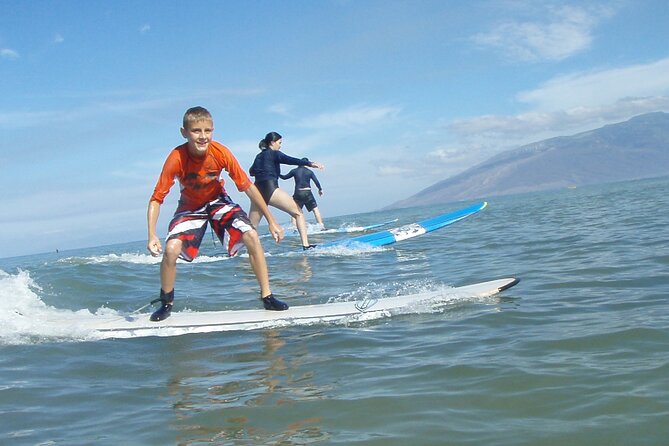
Reviewed · SURF LESSONS
Maui: Two Hour Beginner Group Surf Lesson in Kihei
The best part of this Kihei lesson is that you get into the water quickly and have a real chance to stand on a board during your first class. The beach lesson covers ocean safety and surf etiquette, then instructors such as Mike, Ivan, Sofia, Jay, and Francisco help you choose and ride small beginner waves.
I like the six-person limit, which gives you more personal help than a large beach class. I also like the practical guarantee: if you do not get surfing in one lesson, your next lesson is free. The main catch is the ocean itself. On calm days, waves may be scarce, and the water time can be tiring.
Key points to know
- Small groups of six or fewer: You get direct help with board position, paddling, and standing up.
- Beginner-friendly Kihei waves: The lesson uses small waves suited to first attempts, though conditions vary by day.
- Gear is included: Your surfboard, rash guard, and water booties are provided.
- Patient, upbeat instructors: Mike, Ivan, Sofia, Jay, and Francisco are among the instructors praised for clear teaching and encouragement.
- Photos are available: A photographer may capture your rides, with some participants paying $40 for one photo or $75 for a full set.
- Ages matter: The group lesson has a minimum age of 9, while children under 9 should book a private lesson.
Your First Hawaiian Surf Lesson in Kihei
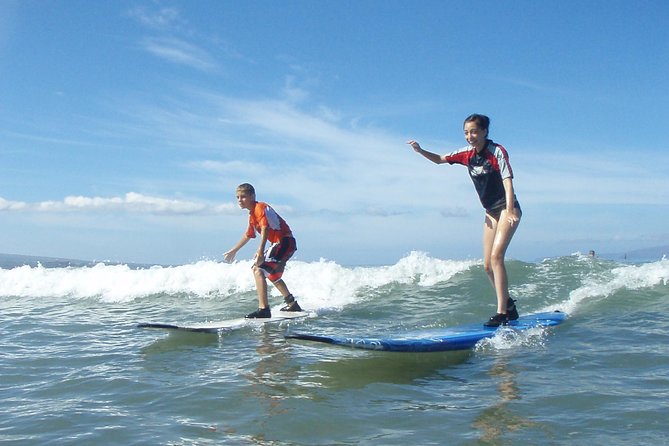
Surfing can look simple from shore: paddle, stand, glide. The first few minutes on a board tell you otherwise. This two-hour class breaks the process into manageable steps, so you are not left guessing when a wave comes behind you.
You meet at Surf Shack at 1976 South Kihei Road. The class is conducted in English and returns to the same meeting point. There is no hotel pickup, so plan your own way to Kihei and allow time to find the shop and get ready.
The group size is capped at six students. That number matters. Beginner surfing involves plenty of waiting between waves, but a small class means the instructor can watch your attempts and give useful corrections instead of calling out general advice to a crowd.
The class is built for first-time surfers. You do not need prior experience, and most participants can take part. Children must be with an adult. The minimum age for the group class is 9, and children from about 5 to 9 are directed toward private instruction for better safety and attention.
More surf lessons on Maui:
- Outrageous Surf ScHool Lesson on Lahaina Side
★ 4.5 · 547 reviews - Group Surf Lesson at Kalama Beach in Kihei
★ 5.0 · 264 reviews - Maui Lahaina Group Surf Lesson
★ 4.9 · 235 reviews
The Beach Briefing: Safety Before Style
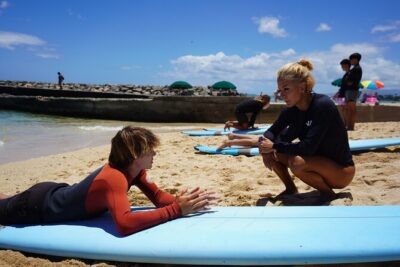
Expect a short land-based lesson before heading into the water. This is not filler. You learn how to position yourself on the board, where to place your hands and feet, how to get up, and what to do when you fall.
The instructors also cover ocean awareness and basic surf rules. That includes understanding the space around you, avoiding another surfer’s path, and following simple etiquette. For a first lesson, these points are just as useful as standing up. You want your first wave to be fun, not chaotic.
The teaching style appears relaxed but purposeful. Several instructors are praised for being patient and clear, with Mike and Ivan receiving especially strong mention for encouragement and personal attention. Sofia, Jay, Justo, Francisco, and others are also identified as friendly instructors who help beginners feel comfortable.
I like that the lesson does not treat surfing as a contest. The aim is not to make you look polished. The aim is to help you make safe, repeatable attempts and understand what your body and the board need to do.
Walking Into the Water and Catching Small Waves
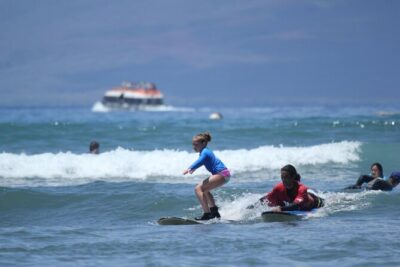
After the beach briefing, you take your board into the water and begin working on the basics. Instructors help place you in position and may push the board as a wave approaches. This support is a big reason many first-timers manage to stand up quickly.
The water is described as shallow where beginners fall, which can make the first attempts less intimidating. Still, falling is part of the activity, and you should expect an arm workout from paddling and repeated attempts. One class had about an hour and a half in the water, with a short beach lesson beforehand.
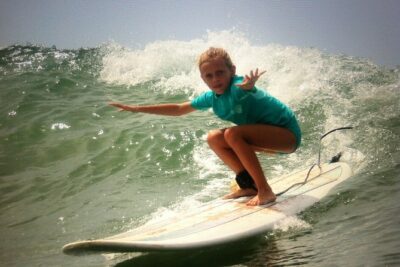
The first successful ride may last only a few seconds. That is enough. You learn to spot the wave, paddle at the right moment, push up, and find your balance. Once you stand, the instructor can help you build from that small success.
Do not expect a constant stream of perfect waves. Conditions can be calm, and one class had trouble finding enough waves. That means more rest between attempts, which can be helpful when your shoulders begin to tire, but it may also limit how many rides you get.
The area can be somewhat crowded. That is worth knowing before you book. It is still considered suitable for beginners, but you may share the water with other first-timers and surfers. The tradeoff is a forgiving setting where you can learn without pressure to perform at an advanced level.
What the Two Hours Really Feel Like
The advertised duration is about two hours, but not every minute is spent standing on a board. You will have time for instruction, getting your gear, walking into the water, waiting for waves, paddling, falling, resting, and trying again.
That rhythm is normal. Surfing uses your arms, shoulders, stomach, and legs, especially when you are learning. The calm breaks between waves give you a chance to recover and listen to the instructor.
The strongest lesson experience depends on how much individual attention your instructor can give you. With six or fewer students, the odds are good that you will receive several direct corrections. If the group is smaller, you may get even more turns. A group of four, for example, can feel far more personal than a full beach class.
The goal is not mastery in two hours. It is a first taste of surfing, plus enough basic skill to understand why board position and timing matter. Some people will want to rent gear and practice again afterward. Others will be happy with one successful ride and a good story.
Same island, a different kind of day:
- Small-Group Road to Hana Adventure Tour with Pickup & Lunch
★ 5.0 · 3,064 reviews - Maui Pineapple Farm Tour in Haliimaile
★ 5.0 · 2,855 reviews - Maui Eco-Raft Tour: Eye-Level Whale or Dolphin Watching – Lahaina
★ 5.0 · 2,482 reviews - Maui Snorkeling Adventure to Molokini and Turtle Town
★ 4.5 · 2,221 reviews
Boards, Rash Guards, and Water Booties
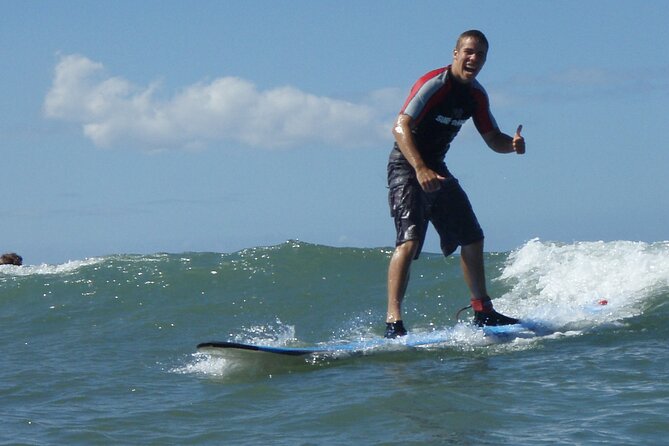
The $98 price includes the surfboard, rash guard, water booties, professional instruction, taxes, and the $1 state ocean stewardship fee. That makes the price easier to judge because you are not adding the main equipment costs at the beach.
The rash guard helps protect your skin from board friction and gives the instructor a visible way to identify students in the water. The booties offer some protection for your feet, though one participant found the provided booties quite thin and preferred the idea of bringing sturdier ones.
You should not assume the gear will feel custom-fitted or luxurious. It is practical lesson equipment. The important point is that you do not need to pack or rent a board before class.
A photographer may also be working in the water. This is not included in the $98 fee. The available pricing reported for photos was $40 for one image or $75 for the full set, with one package containing about 20 photos. If you want proof of your first ride, this can be worthwhile. If you prefer to keep costs down, treat it as optional.
Is $98 a Fair Price?
For a first surfing lesson, $98 is a reasonable price if you value small numbers and included gear. You are paying for two hours of instruction, a board, rash guard, booties, and the chance to work directly with a professional instructor.
The six-person maximum is the key value point. A cheaper lesson with a much larger group might leave you waiting longer and receiving less personal help. Here, the instructor can push your board into a wave, correct your stance, and encourage you through repeated attempts.
The free repeat lesson guarantee also gives the booking some protection. If you do not get surfing in the first lesson, the next lesson is free. You should confirm the exact conditions of that offer when booking, but it signals that the school is focused on giving beginners a genuine chance to stand up.
The price does not include transportation to Kihei or optional photographs. Add those costs only if you need them. If you are already staying nearby and plan to spend the morning in Kihei, the class fits neatly into a day without requiring a full-day commitment.
The Instructors Make the Difference
Good beginner instruction is less about showing off and more about making corrections without making you nervous. That is where this class earns much of its praise.
Mike is repeatedly described as encouraging, fun, and attentive. Ivan is noted for clear instruction and a friendly manner. Sofia, Jay, Justo, and Francisco are also named as instructors who help beginners catch waves and enjoy the process.
The descriptions point to a consistent pattern: instructors demonstrate the technique on land, explain what to do, then help you in the water. They also adjust their help to the person in front of them. A teenager may need less physical assistance but more technical direction. An older beginner may need extra encouragement and a slower pace.
One class included adults in their sixties, teenagers, and children. That broad mix is useful if you are booking as a family, though younger children may be better served by a private lesson.
Families, Teenagers, and Older Beginners
This is a good fit for families with children aged 9 and older who want to try surfing together. Children have managed to stand up and catch several waves, and teenagers have gained enough basic skill to continue surfing on their own.
Adults should not assume the activity is only for young, athletic people. One participant in their sixties had wanted to surf for decades and found the first lesson manageable with instruction and encouragement. You still need to be comfortable in the ocean and ready for a physical activity, but you do not need to arrive as an athlete.
The group format can be fun for friends and couples. You get shared laughs when someone falls, then a shared cheer when someone stands. Solo participants also fit comfortably into the class because the instructors keep the mood friendly and active.
Children under 9 are a different case. The information gives a minimum group age of 9 and advises private lessons for children from 5 to 9 for safety and better attention. If you are booking for a child near that age range, ask the provider which format is appropriate before reserving.
What to Do Before and After Class
Wear or bring what you need to be comfortable around the water, but the core surf gear is supplied. Plan to arrive ready for a physical activity, since paddling and repeated attempts can leave you tired.
Parking is described as convenient. The area also has family-friendly beaches within a short walk, plus shops and food trucks across the street. That gives nonparticipants something to do while the lesson is under way and makes it easy to turn the class into a relaxed Kihei morning.
Do not schedule a demanding activity immediately afterward unless you know your energy level. Even a successful beginner class can leave your shoulders and arms tired. On the other hand, you might feel ready to rent gear and try again, especially if your first lesson goes well.
Weather, Waves, and the Main Drawback
Surfing depends on the ocean, and no instructor can create waves. On a calm day, you may get fewer rides and spend longer waiting. This is the clearest limitation of the experience.
The instructors can still teach positioning, safety, paddling, and timing when conditions are modest. Small waves are useful for beginners, but very little surf can reduce the thrill and the number of chances to stand.
The lesson area may also feel crowded. That does not make it unsuitable, but it means you should expect other beginners nearby. If you want empty water, larger waves, or a private coaching session, this group lesson may not be the right choice.
For most first-timers, the setting seems to favor confidence over advanced progression. You are learning to catch a manageable wave, not training for a surf competition.
Cancellation and Practical Details
You receive confirmation when you book, and the activity is offered in English. The meeting point is Surf Shack, 1976 S Kihei Road, Kihei, Hawaii. The class ends back there.
Free cancellation is available if you cancel at least 24 hours before the start time. Cancellations or changes made within 24 hours are not refunded, and the cut-off uses local Maui time.
The activity is mobile-ticket friendly. There is no hotel pickup or drop-off, so arrange your own transportation. The maximum group size is six, and the advertised price is $98 per person.
Should You Book This Kihei Surf Lesson?
Book it if you want a friendly, first-time introduction to surfing with included equipment and a small group. The strongest reasons are the six-person limit, practical safety instruction, patient instructors, and free follow-up lesson if you do not get surfing the first time.
It is especially suitable for families with older children, teenagers, couples, friends, and adults who have always wanted to try surfing but never found the right moment. The photo option can be worth adding if standing up on a Maui wave is a memory you want to keep.
Think twice if you need guaranteed waves, a private class, or a quiet beach with no other beginners. Ocean conditions can limit your rides, and the activity takes real effort. For most people seeking a low-pressure first attempt, though, this is a sensible way to give surfing a try without buying gear or committing to a long course.
FAQ
Where does the surf lesson begin and end?
The lesson begins at Surf Shack, 1976 S Kihei Road, Kihei, Hawaii. It ends back at the meeting point.
How long does the lesson last?
The class lasts approximately two hours, including the beach instruction and time in the water.
What is included in the price?
The $98 price includes a surfboard, rash guard, water booties, professional instruction, taxes, and the $1 state ocean stewardship fee.
Is hotel pickup included?
No. Hotel pickup and drop-off are not included, so you must arrange your own transportation to Surf Shack.
What is the minimum age for the group lesson?
The minimum age is 9. Children under 9 should take a private lesson, and children from 5 to 9 are specifically advised to book privately for safety and personal attention.
How many people are in each group?
The class has a maximum of six participants.
Can I cancel for a full refund?
Yes, if you cancel at least 24 hours before the experience start time. Cancellations or changes made less than 24 hours in advance are not refunded.
Just added on Maui
- Central Maui: Two-Island Scenic Helicopter Flight to Molokai★ 4.9 · 165 reviews
- Goat Yoga with Miniature Goats In Maui★ 5.0 · 55 reviews
- A Maui Beach Photoshoot in Wailea★ 5.0 · 154 reviews
- South Maui: Sunset Prime Rib or Island Fish Dinner Cruise★ 4.7 · 242 reviews
- Maui Circle Island-PRIVATE-Air Tour for 2-5: Waterfalls & Lava!★ 5.0 · 228 reviews
- Clear Kayak Tour with Pontoons and Optional Snorkeling-Unlimited★ 5.0 · 224 reviews
- Haleakala Maui Sunset Twilight Tour with Dinner★ 4.5 · 240 reviews
- Intro/Refresher Dive Swim Ability Required★ 5.0 · 248 reviews
Surf Lessons, compared.
Beginner-Friendly Waikiki Beach Surfing Lesson
Read our review →

Private Hanalei Sandy Bottom Surf Lesson on Kauai
Read our review →
Browse the lists this tour appears in