
Reviewed · SURF LESSONS
Maui Surf Instruction 101 at Kalama Beach in Kihei
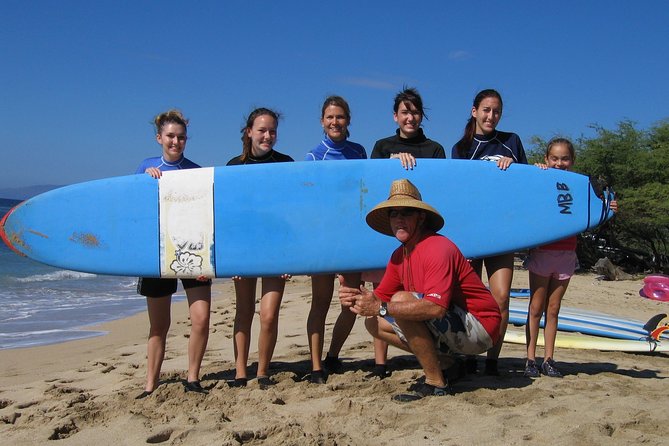
Catching your first wave at Kihei’s Cove is the whole point, and this lesson gives you a fair shot at it without asking you to bring any gear or prior skill. You’ll start with a short shore briefing, then head out on a wide, stable soft-top board with an instructor nearby. The warm water and gentle rolling waves suit beginners far better than dramatic surf.
I like the small-group format, which gives instructors room to watch each person and offer useful tips. I also like that the price includes the board, rash guard, booties, taxes, and certified instruction. The main catch is that the beach can be crowded, the bottom may be rocky, and optional photos can add a sizable cost.
Key points to know before you book
- Beginner-friendly waves at The Cove: Kihei’s popular surf spot uses gentle rolling waves that give first-timers a practical place to learn.
- Instruction comes from certified professionals: Instructors hold CPR and first-aid certification, with local teachers such as Jordan, Keoki, Fran, Josh, and Ricky Bobby named in past sessions.
- You get the essential equipment: A soft surfboard, rash guard, and neoprene booties are supplied.
- The lesson stays fairly personal: The maximum group size is 12, and private lessons are also available.
- Plan for a tired afternoon: Many people spend most of the two hours working in the water, and young surfers may be worn out afterward.
- Photos are optional and costly: On-site photographers capture rides, but one reported package price was $75 per person.
Why Kihei’s Cove works for first-time surfers
Surfing looks simple from shore. Paddle, stand, ride. In practice, the timing is strange, the board moves under you, and the ocean has no interest in making your first attempt easy.
That is why this location matters. The Cove in Kihei is used for beginner instruction, with waves described as gentle and rolling rather than large and forceful. You are still dealing with real ocean water, but you are not being sent straight into advanced surf.
The goal is not to become a polished surfer in two hours. The goal is to understand the basics, catch a few waves, and learn enough to decide if you want another lesson. Several first-timers got upright within their first few attempts, and some children were surfing within an hour. That is a useful sign for families who want an activity with a clear payoff.
The area can also be crowded. One family found that avoiding other surfers was the hardest part of the session, while another praised the instructor for positioning the group well in a busy lineup. You should expect other boards in the water and listen closely when the instructor tells you where to wait and when to paddle.
More surf lessons on Maui:
- Maui: Two Hour Beginner Group Surf Lesson in Kihei
★ 5.0 · 950 reviews - Outrageous Surf ScHool Lesson on Lahaina Side
★ 4.5 · 547 reviews - Group Surf Lesson at Kalama Beach in Kihei
★ 5.0 · 264 reviews
Meeting the black truck near Kalama Beach
The listed meeting point is 1965 South Kihei Road, Kihei, Hawaii 96753. You make your own way there because hotel pickup and drop-off are not included. The activity ends at the same meeting point.
Finding the operation may take a little attention. One person had trouble locating the team at first and advised looking for the black truck associated with Beach Boys. That is a useful practical tip: do not simply wander toward the water and hope you spot a surf lesson. Look for the designated vehicle and staff near the meeting area.
The tour information also names Maui Eco Tours and South Pacific Kayaks as stops or operating points. South Pacific Kayaks & Outfitters is the experience provider, and the beach operation handles the equipment and instruction. You should allow enough time to locate the team without arriving rushed.
There is no hotel transport, so this works best if you already have a rental car, access to public transportation, or another easy way to reach South Kihei Road. The area is near public transportation, but the supplied information does not give a specific route or stop.
The first 10 minutes: safety, technique, and beach etiquette
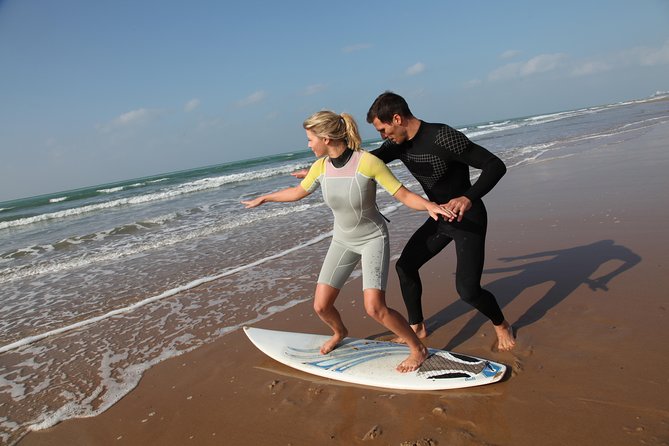
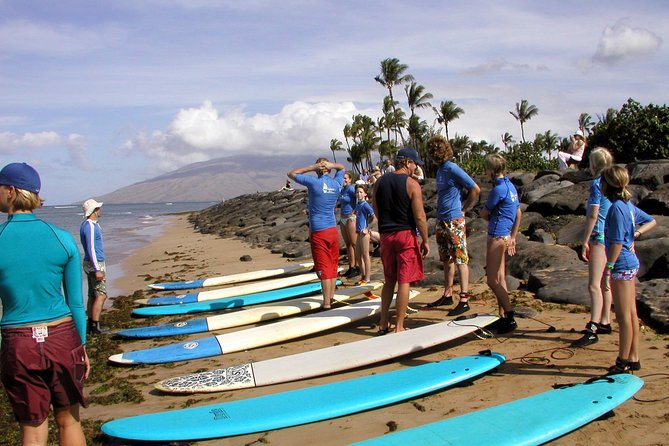
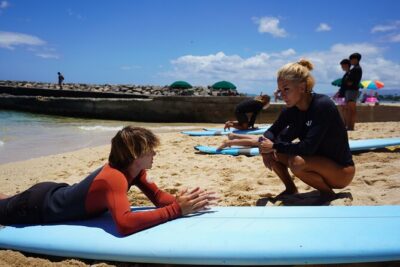
The shore briefing is short, practical, and important. You learn how to lie on the board, paddle, stand, and handle yourself around other people in the water. You also receive basic instruction in surf etiquette and safety before heading out.
One especially useful detail is the balance between instruction and water time. A person taking a private lesson reported about 10 minutes on land, with most of the session spent catching waves. The exact timing can change with the group and conditions, but you should not expect a long classroom lecture.
The soft board is a major help. It is wide and stable, giving your feet and knees a more forgiving platform than a narrow hard board. That does not remove the need for balance, but it makes the early attempts less intimidating.
The supplied rash guard protects your upper body from rubbing against the board. Neoprene booties protect your feet, which matters because a rocky bottom was an issue for one young surfer. The booties are useful, but you should still follow instructions about where to walk and how to move in shallow water.
Bring sunscreen and a sense of adventure. A camera is also suggested, though you should not expect to carry it while managing a board and waves.
Two hours on the water with a soft-top board
Once you reach the water, the lesson becomes active. You paddle, wait for a suitable wave, and try to move from lying down to standing at the right moment. The instructor watches your attempts and gives corrections that are simple enough to use immediately.
That close attention is where the small group matters. The maximum is 12 people, so this is not an entirely private experience, but it is not an enormous class either. You can choose a private lesson if you want more direct attention or have a group with different comfort levels.
The strongest praise has gone to the instructors’ patience and encouragement. Jordan helped several first-timers stand up quickly, Keoki was singled out for watching each participant and offering individual tips, and Josh was described as funny, caring, and encouraging during a family session. Fran, Louis, and Ricky Bobby were also named positively in past sessions.
The teaching style appears to be direct rather than technical. You are given a few simple movements, then allowed to try them repeatedly. That is the right approach for a short beginner lesson. You do not need a lecture on board design or wave forecasting before your first ride.
The water time may feel demanding. A 12-year-old and a 14-year-old managed to surf successfully but were exhausted for the rest of the day. I would schedule this activity before a quiet afternoon, not before a long drive or a packed evening.
Same island, a different kind of day:
- Small-Group Road to Hana Adventure Tour with Pickup & Lunch
★ 5.0 · 3,064 reviews - Maui Pineapple Farm Tour in Haliimaile
★ 5.0 · 2,855 reviews - Maui Eco-Raft Tour: Eye-Level Whale or Dolphin Watching – Lahaina
★ 5.0 · 2,482 reviews - Maui Snorkeling Adventure to Molokini and Turtle Town
★ 4.5 · 2,221 reviews
What families should know about age and comfort
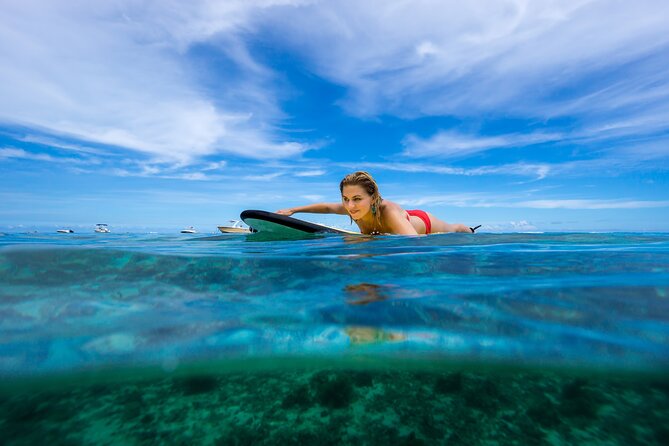
The experience is especially well suited to families with school-age children and teenagers. Young people often have an easier time accepting repeated falls and trying again, and the wide boards offer a forgiving start.
Children aged four and under are not recommended. The supplied information does not give a maximum age, and a 70-year-old father enjoyed a birthday lesson with his family. That suggests the activity can suit a broad age range when each person is comfortable in the water and able to follow instructions.
Parents and grandparents can watch from the beach. There is room to observe, but bring your own chairs. An umbrella can also be useful because the information provided does not say that shade or seating is supplied.
Keep an eye on the bottom near shore. One child got somewhat banged up by rocks, even though the family still rated the session highly. Booties are included, but they are not a guarantee against every scrape or bump. Listen carefully during the entry and exit instructions.
A private lesson may be the better choice if a child needs extra attention, if family members have very different abilities, or if someone feels anxious in a group. The regular class may be fine for confident beginners who want a social activity.
The instructors make the difference
A surf lesson can be technically sound and still feel flat if the instructor is impatient. Here, the repeated strength is the teaching attitude: friendly, calm, funny, and encouraging.
That matters because beginners often need help after a failed attempt. You may stand too early, miss the wave, fall to one side, or forget the foot position entirely. A good instructor keeps the next attempt simple instead of making you feel foolish.
The staff are described as local instructors with years of experience, and instructors are CPR and first-aid certified. That does not remove every ocean risk, but it gives the session a sensible safety foundation. You are learning in an open-water setting, so you should still follow every instruction and speak up if you feel uncomfortable.
The best results came when participants asked questions. The instructors know the local surf area and can explain positioning, timing, and etiquette in a way that makes sense on the water. Do not stay quiet if you are unsure how to paddle back, where to wait, or when to take a wave.
The photo option is useful, but budget for it
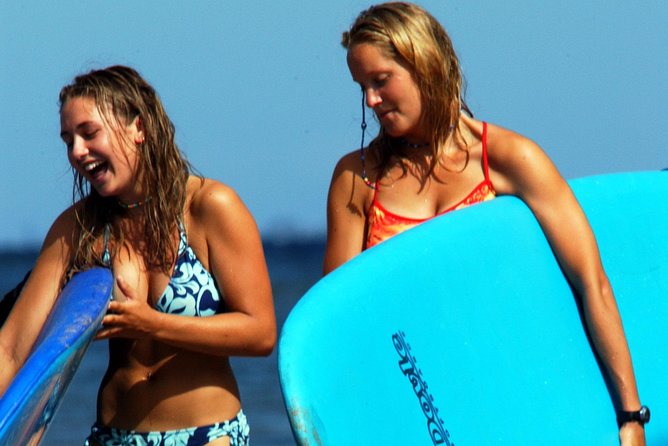
Photographers work with the surf operation and take pictures while you ride. This can be a real benefit for families because the person holding the phone on shore cannot capture every successful attempt.
Several people considered the photos worth buying, especially for children, birthdays, and first-time surfers. The images and videos were described as high quality, and the photographers also helped participants move through the crowded lineup.
The cost is the weak point. One person reported paying $75 per person for a photo package and felt that was steep compared with other Maui activities. The package is not included in the $108.03 lesson price, so treat it as an optional extra, not part of the advertised value.
If you want pictures, decide before the lesson how much you are willing to spend. If you do not, you can enjoy the session without buying anything afterward. Bring your own camera only if someone in your group can safely stay on shore or handle it away from the water.
Is $108.03 a fair price?
At $108.03 per person, the lesson is not a casual beach rental. You are paying for instruction, equipment, safety guidance, taxes, and access to a structured two-hour activity.
The included gear saves you from renting a soft board, rash guard, and booties separately. The certified instructor is also important. You are not simply being handed a board and sent toward the waves.
The value is strongest if this is your first attempt and you want a realistic chance of standing up. Several people got upright quickly, including families and adults who had never surfed before. The lesson also removes much of the guesswork about where to paddle and how to behave around other surfers.
The value is less clear if you already surf well or only want to try a board for a few minutes. This is built for beginners, not experienced surfers seeking challenging waves. You should also add possible photo costs to your vacation budget if keeping action shots is important to you.
Timing, weather, and a small organizational caveat
The lesson lasts about two hours and is offered in English. It is generally booked well ahead, with an average advance booking time of 28 days, so I would not leave it until the last morning of your Maui stay.
Weather and surf conditions can affect the quality of the session. One person felt the timing recommended by the company led to poor conditions and also reported schedule confusion during a busy holiday period. The provider responded that weather cannot be controlled and that gentle waves are intentionally chosen for beginners.
That distinction is worth understanding. Bigger surf may look exciting, but it is not automatically better for learning. Gentle rolling waves allow you to focus on standing, balance, and safe positioning. At the same time, a gentle session can feel less dramatic than the surfing you see in photographs.
Scheduling can become harder during busy periods, especially if people arrive early, late, or on the wrong day. Confirm your time and arrive with enough margin. The free cancellation policy allows a full refund when you cancel at least 24 hours before the start time. Changes or cancellations inside that window are not refunded.
Who should book this Kihei surf lesson?
I would choose this for a first-time surfer, a family with older children, a couple wanting an active Maui morning, or an adult who has always wanted to try surfing but never found an easy entry point.
It also works well for a mixed-age family. The session has welcomed children, teenagers, adults, and a 70-year-old beginner. The shared experience can be more memorable than splitting up for separate activities, though a private lesson may suit families needing extra help.
I would think twice if you dislike physical exertion, feel uneasy in open water, or want a quiet beach activity. The ocean bottom may be rocky, the lineup can be crowded, and you may be tired afterward. The class is not recommended for children four and under.
Should you book it?
Yes, if you want a practical first surfing lesson with equipment included and a good chance of standing on a wave. The strongest reasons are the patient instructors, gentle beginner surf, and small-group attention. The experiences led by Jordan, Keoki, Josh, Fran, and others show how much the staff’s attitude can shape the day.
Book a private lesson if personal attention is your top priority. For a standard lesson, confirm the meeting details, look for the black truck, bring sunscreen, and leave the rest of the day flexible. If you want photographs, plan for the extra cost before you arrive.
FAQ
Where does the surf lesson meet?
It meets at 1965 S Kihei Rd, Kihei, HI 96753, USA.
Where does the activity end?
The lesson ends back at the meeting point.
How long is the lesson?
The lesson lasts approximately two hours.
What equipment is included?
A soft surfboard, rash guard, and neoprene booties are included.
Are instructors certified?
The instructors are CPR and first-aid certified and have years of surfing instruction experience.
Is the lesson offered in English?
Yes. The experience is offered in English.
How many people can join the group?
The maximum group size is 12 people.
Can I choose a private lesson?
Yes. You can choose between a group lesson and a private lesson.
Is the activity suitable for young children?
It is not recommended for children aged four and under.
Is hotel pickup included?
No. Hotel pickup and drop-off are not included, so you must reach the meeting point yourself.
Are photos included in the lesson price?
No. Photos are optional and cost extra. One reported package price was $75 per person.
Can I cancel for a full refund?
Yes, if you cancel at least 24 hours before the experience start time. Cancellations or changes made within 24 hours are not refunded.
Just added on Maui
- Two Site Snorkeling Adventure featuring the Molokini Crater★ 5.0 · 4 reviews
- Traditional Airport Lei Greeting on Kahului Maui★ 5.0 · 95 reviews
- Turtle Town Clear Kayak & Snorkel Tour (8am-11am)★ 5.0 · 100 reviews
- Road to Hana Deluxe Rainforest & Waterfall Experience from Maui★ 5.0 · 116 reviews
- The Best Maui 3 Hour Molokini and Turtle Town Snorkel★ 5.0 · 106 reviews
- 3-Hour Small-Group Maalaea Luxury Snorkel Cruise Tour★ 5.0 · 29 reviews
- Elite Private Tour★ 5.0 · 7 reviews
- VIP Premiere Whale Watch Kaanapali Beach MAX 12 PASSENGERS★ 5.0 · 78 reviews
Surf Lessons, compared.
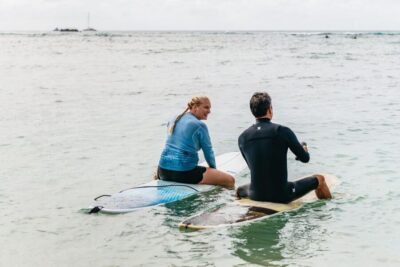
Beginner-Friendly Waikiki Beach Surfing Lesson
Read our review →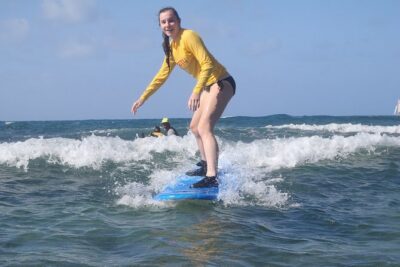
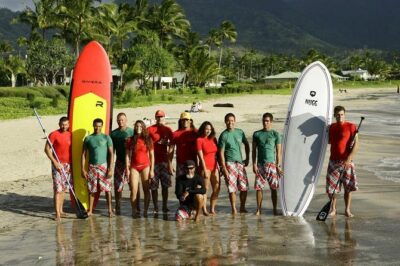
Private Hanalei Sandy Bottom Surf Lesson on Kauai
Read our review →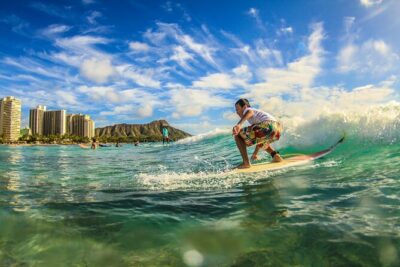
Browse the lists this tour appears in