
Reviewed · SURF LESSONS
Maui Lahaina Group Surf Lesson
Learning to surf in Maui is a fine way to get beyond the beach towel. This two-hour lesson uses a small group of no more than five surfers, so you get repeated turns with an instructor rather than a quick demonstration and a long wait. I especially like the 15-minute beach lesson and the help in the water, where beginners learn safety, wave technique, and surfing etiquette before being sent toward the break.
I also like that the package includes the board, rash guard, and water shoes, plus a professional photographer who can capture those first wobbly rides. The main consideration is the rotation: you take turns one at a time, so the first part can feel slow, and the $125 price does not include towels, sunscreen, swimwear, or photos. One isolated complaint also described an instructor as rough and impatient, so staff assignments can matter.
Key points to know before booking
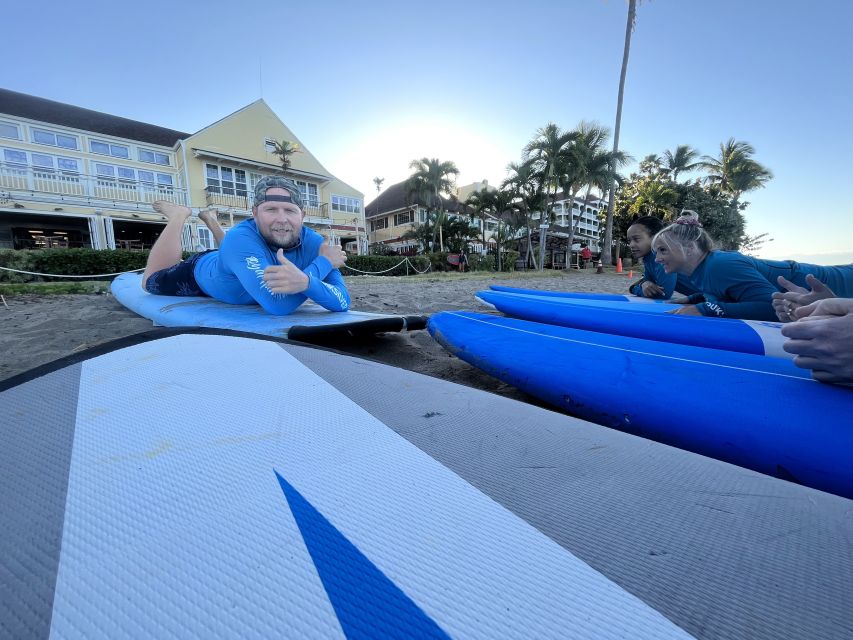
- Small groups of five or fewer: You get more coaching and more chances to try a wave.
- Beginner-friendly West Maui water: The break is described as workable year round, with waves that can be exciting without feeling too large for first-timers.
- Land lesson before water time: Expect about 15 minutes on the beach covering safety, procedures, technique, and etiquette.
- Two hours from shop to shore: The clock starts when you leave the surf shop and ends when the instructor calls everyone in.
- Photos are optional and extra: A photographer works close to the action, with photo packages available after the lesson.
- Children must be 10 or older: Younger children are directed toward private or semi-private instruction.
Why this Lahaina surf lesson works for beginners
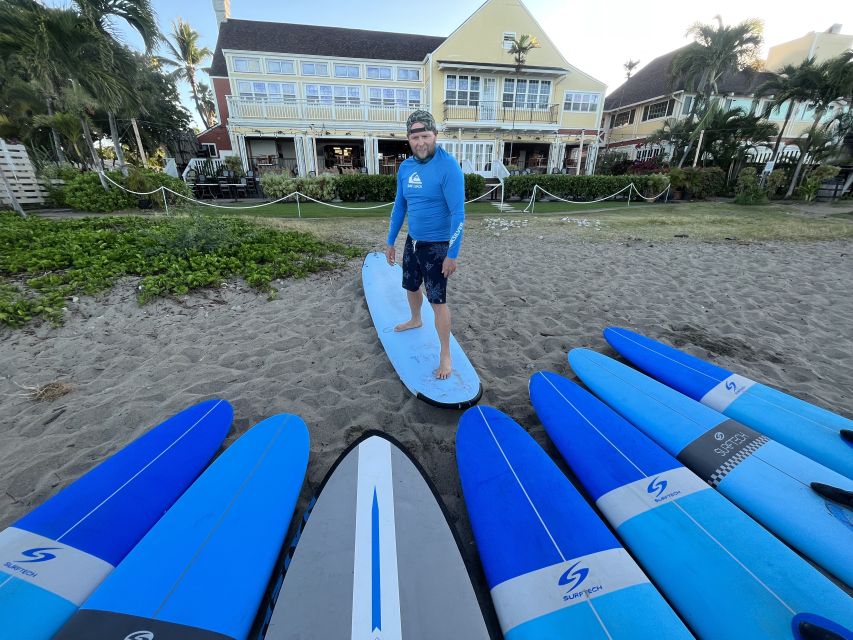
Surfing looks simple from shore. Paddle, stand, glide. In practice, your timing, balance, feet, and nerves all have to cooperate at once. A good first lesson makes that process less awkward, and this one is built around repeated attempts rather than a single showcase ride.
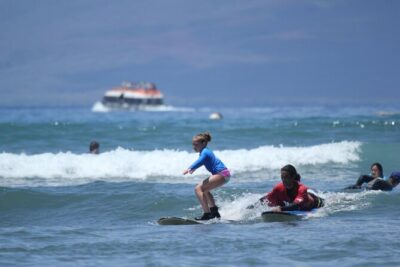
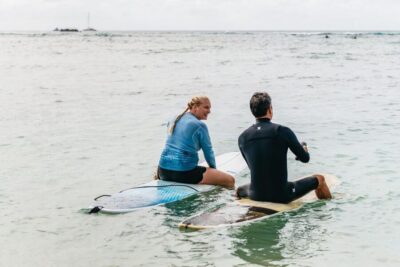
The group limit is the biggest practical advantage. Five surfers is still a group, but it is small enough for the instructor to watch each person. You ride one at a time, then return to a marked waiting area while the others take their turns. That means you are not constantly fighting for attention.
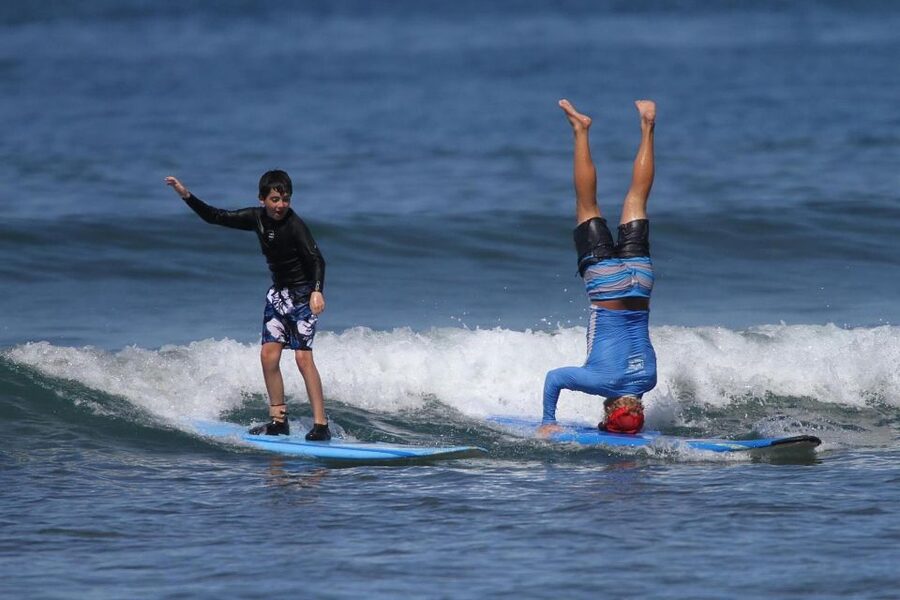
The first few waves may take a while. Everyone is learning where to sit, when to paddle, and how to keep the board pointed in the right direction. Once the group finds a rhythm, the turns come faster. Several participants have managed to stand more than once, and some were riding independently before the lesson ended.
I would set your goal at learning the basics and catching a few waves, not becoming a polished surfer in two hours. That is enough. If you finish able to stand, steer a little, and understand basic ocean etiquette, the lesson has done its job.
More surf lessons on Maui:
- Maui: Two Hour Beginner Group Surf Lesson in Kihei
★ 5.0 · 950 reviews - Outrageous Surf ScHool Lesson on Lahaina Side
★ 4.5 · 547 reviews - Group Surf Lesson at Kalama Beach in Kihei
★ 5.0 · 264 reviews
Checking in at 505 Front Street
You need to check in 30 minutes before the scheduled start at 505 Front Street in Lahaina. That extra time is not just paperwork. You will sign a liability release, receive your gear, and place anything you do not want wet in secure cubicles.
Bring your swimsuit and sunscreen. A towel is not included, so pack one for the ride back to your accommodation. The shop supplies the surfboard, long-sleeve UV rash guard, and water shoes.
The operating area is listed at the guardrails between Puamana Beach Park and Launiopoko Beach Park. Parking instructions point you to the yellow flag on the mountain side of the highway. Pay close attention to the meeting instructions on your booking confirmation, since the check-in address and water location are different parts of the outing.
This is a self-drive activity. No hotel pickup is listed, and you should allow enough time to park, walk in, and check in without rushing. Arriving late could cut into the two hours you paid for.
The 15-minute beach lesson
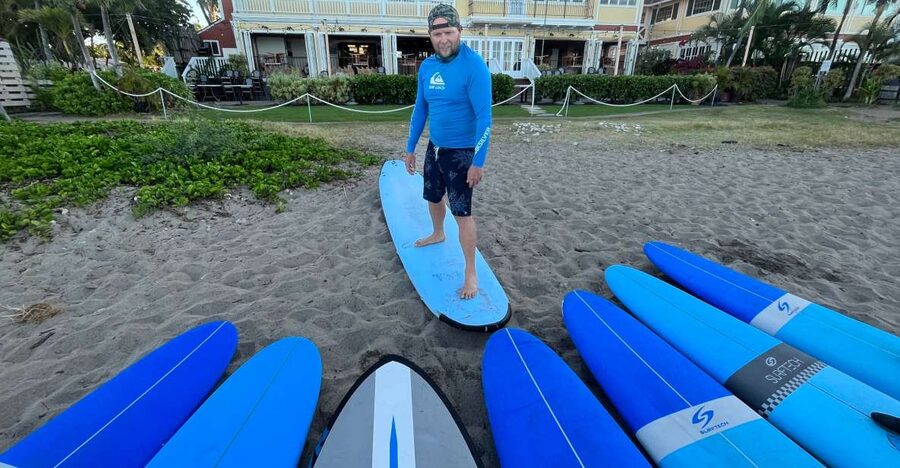
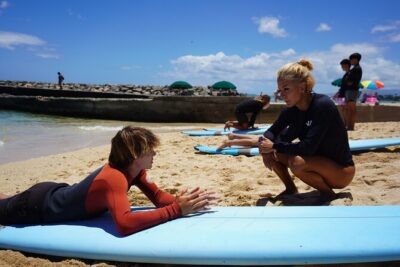
Before anyone heads into the water, the instructor gives a short land lesson. This is where you learn how to position yourself on the board, push up, place your feet, and respond when a wave approaches.
The safety portion matters just as much. You learn the basic procedures for entering the water, waiting your turn, and handling your board. The instructor also covers surfing etiquette, which helps prevent the classic beginner problem of paddling into someone else’s path.
Do not treat this as a formality. The beach briefing is where the lesson starts to make sense. Once you are in the water, it is harder to hear every instruction and easier to focus only on staying upright. Pay attention here and ask questions if the foot placement or turning instructions are unclear.
The instructors are English-speaking. Names praised in the supplied feedback include Lee, Steve, Inaldo, Connor, Felipe, Josh, and J.B. Individual assignments vary, but the strongest pattern is clear: patients, encouraging instructors make a large difference for first-timers.
Two hours of turns in the water
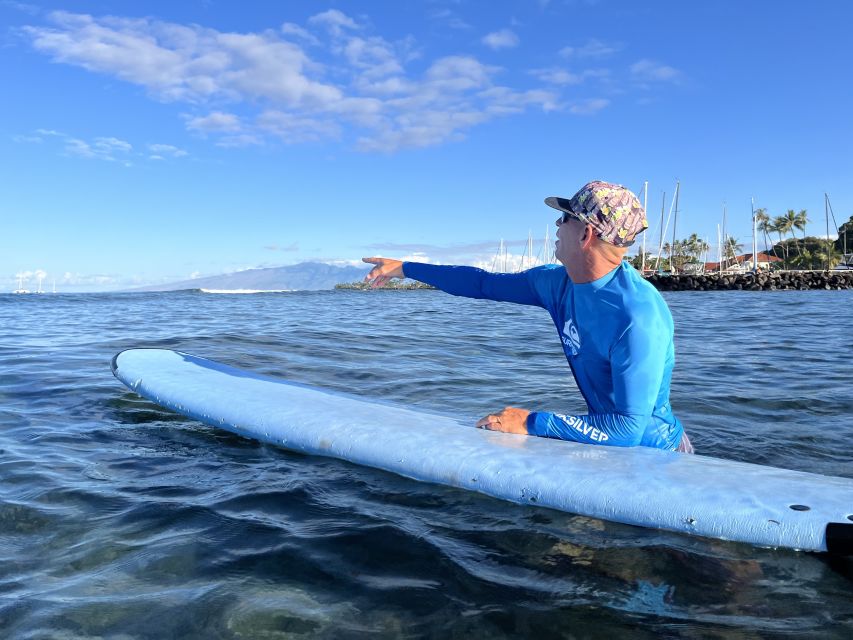
After the beach briefing, the group heads out with boards and begins taking turns. The instructor sends one surfer toward a wave, then guides the next person into position while the first surfer returns to the waiting area.
This arrangement gives you a useful mix of action and observation. While you wait, watch how the other surfers time their paddles and place their feet. You can learn from their mistakes, too. The early turns may be messy for everyone, but the group often improves together.
Instructors may give you a push or help start the board moving when you are ready. Several people have described being helped onto early waves, then encouraged to paddle and catch waves on their own as their confidence improved. That progression is exactly what you want from a first lesson. Assistance gets you moving, but the goal is to reduce it as you improve.
The lesson ends when the instructor signals everyone back in. It is not simply two hours from the moment you arrive at the shop. The advertised two-hour period runs from leaving the surf shop until the water session ends. Plan extra time for check-in, changing, showers, and returning equipment.
If you finish early, you can sit on the beach while the rest of the group completes the session. That may be useful if you are tired, uncomfortable, or simply reached your limit. Surfing is more tiring than it looks, especially when you are repeatedly paddling and getting back on the board.
Same island, a different kind of day:
- Small-Group Road to Hana Adventure Tour with Pickup & Lunch
★ 5.0 · 3,064 reviews - Maui Pineapple Farm Tour in Haliimaile
★ 5.0 · 2,855 reviews - Maui Eco-Raft Tour: Eye-Level Whale or Dolphin Watching – Lahaina
★ 5.0 · 2,482 reviews - Maui Snorkeling Adventure to Molokini and Turtle Town
★ 4.5 · 2,221 reviews
What makes the West Maui break suitable
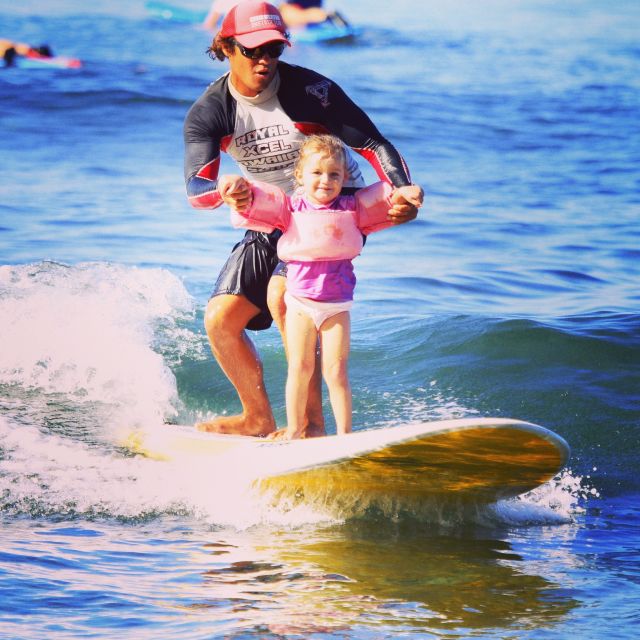
The activity describes the West Maui break as calm enough for beginners and available for surfing year round. That does not mean the sea is always flat or identical. Ocean conditions change, and one account describes rainy, choppy weather that still produced a worthwhile lesson.
The useful point is that the instruction is adapted to a beginner setting. The waves are described as large enough to keep you moving but not so intimidating that first-timers cannot try. A separate account noted that the area could get crowded with other surfers, although the lesson still worked well.
That crowd factor is worth keeping in mind. You will not have an empty stretch of ocean to yourself. The waiting-area system and the instructor’s signals help organize the group, but other surfers may be nearby.
Earlier start times may offer a calmer feel. One family specifically preferred a 7:45 a.m. session because it was less crowded and they caught many waves. Availability changes, so check the start times when booking rather than assuming a particular time will be offered.
The instructors are the heart of the experience
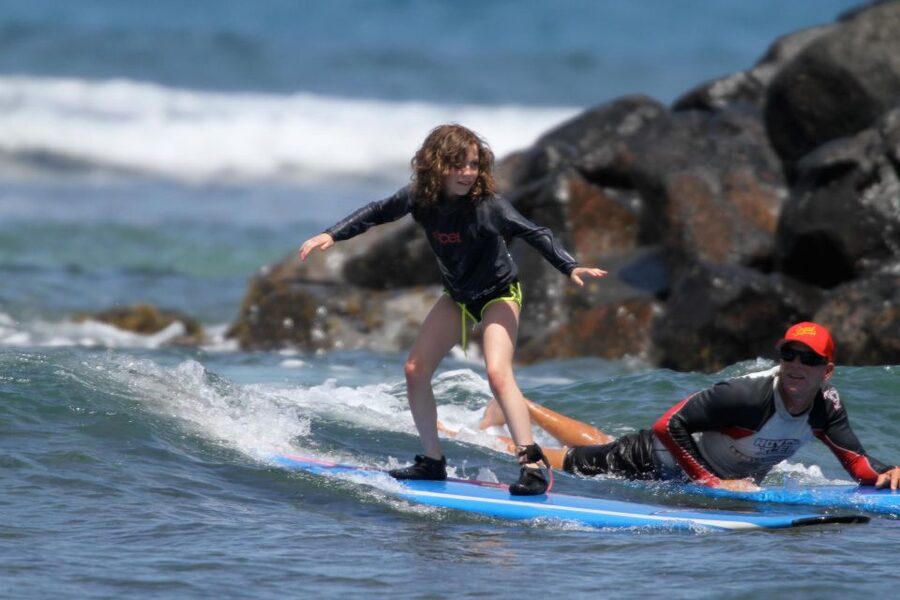
The equipment is important, but the instructor determines how comfortable the lesson feels. The best accounts describe teachers who were patient, funny, supportive, and willing to spend extra time with someone who was falling behind.
Lee receives repeated praise for getting beginners standing quickly and for towing tired surfers back toward deeper water by holding onto their boards. Steve has been described as helpful with scheduling and as willing to assist when someone needed extra coaching. Inaldo, Connor, Felipe, Josh, and J.B. also received specific praise for clear instruction and encouragement.
That does not guarantee the same instructor for your group. The quality of any lesson depends on the person assigned and the conditions that day. One complaint described poor patience, bad language, and overly rough handling after a surfer went toward the rocks. It is a single negative account among many very positive ones, but it is still useful context. If an instruction feels unsafe or overly rough, speak up immediately.
The instructors are CPR certified, which adds a sensible layer of reassurance. It does not remove the need to follow directions. Stay within the assigned area, keep control of your board, and listen when the instructor tells you where to wait.
Gear, showers, and the optional photographer
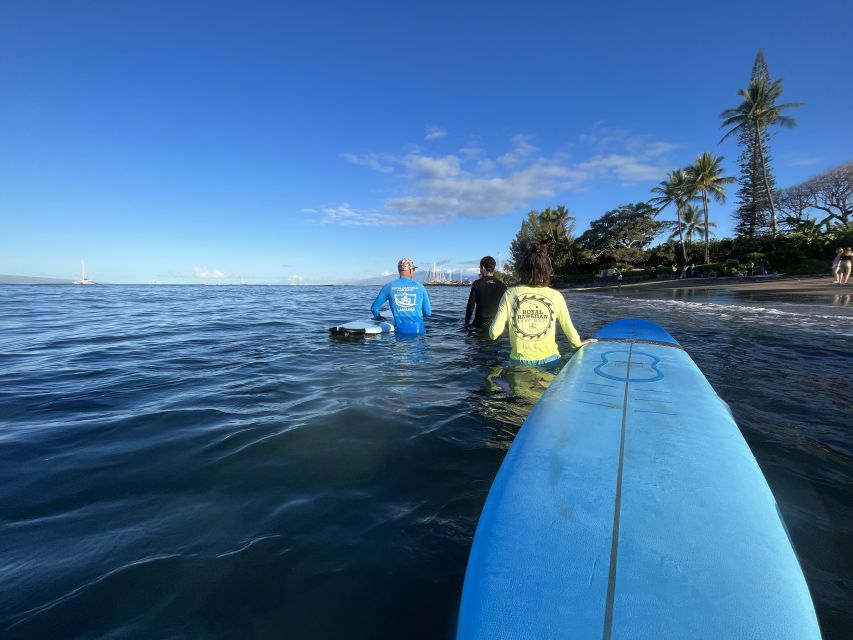
The included equipment keeps this activity simple. You receive a surfboard, a long-sleeve rash guard, and water shoes. You do not need to rent these separately or bring your own board.
You do need to bring sunscreen, a swimsuit, and a towel. Sunscreen is especially important during a water activity, where reflection can make the sun feel less intense than it is. Apply it before check-in and bring more if you need to reapply later.
After the water session, the group carries the boards back to the shop and uses a fresh-water shower. You then return the gear and can look at the photos taken during the lesson.
The photographer works close to the action and takes shots of individual rides. Photos are not part of the $125 price. One account puts the cost at $25 per person, payable by cash, Venmo, or card, though you should confirm the current price before buying. The photos can be a good souvenir because surfing is hard to photograph from shore, but they are an optional add-on, not a reason to stretch your budget.
Is $125 a fair price?
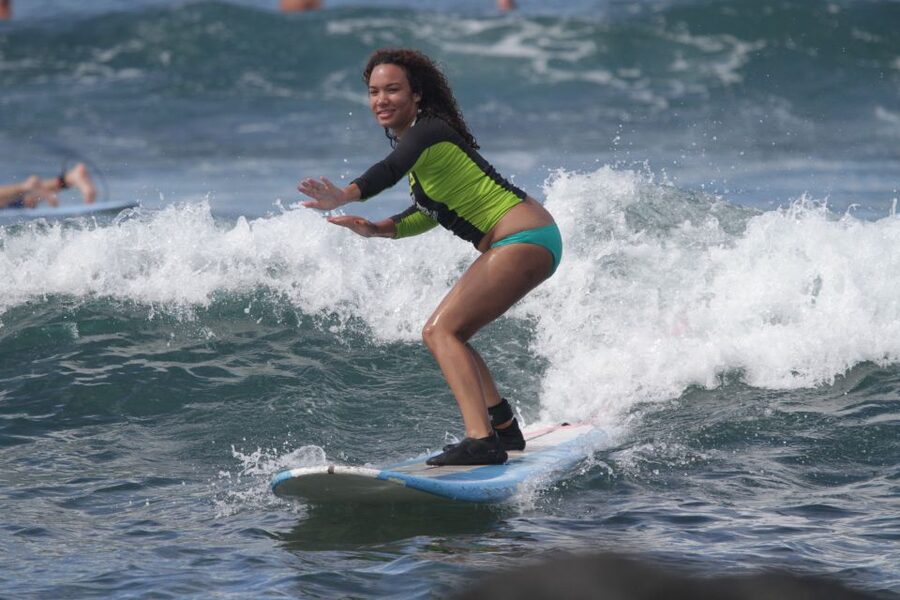
At $125 per person, this is not the cheapest way to get on a surfboard. The price includes two hours of instruction, a professional surf instructor, a board, rash guard, water shoes, and a group capped at five. You are paying for coaching and organization, not just equipment rental.
For a complete beginner, that can be fair value. A board alone does not teach you when to paddle, how to stand, how to fall safely, or where to wait. The small group also improves the odds that the instructor will notice what you are doing wrong.
The value is strongest if you want a structured first attempt and care about getting up on a wave. It is weaker if you already surf confidently and only need a board. In that case, a rental could suit you better, though this experience may still make sense if you want local guidance or a refresher on technique and etiquette.
You also have some financial flexibility. The booking terms allow cancellation up to 24 hours in advance for a full refund, and you can reserve now and pay later. That helps when weather, schedules, or family plans remain uncertain.
Who should book this lesson?
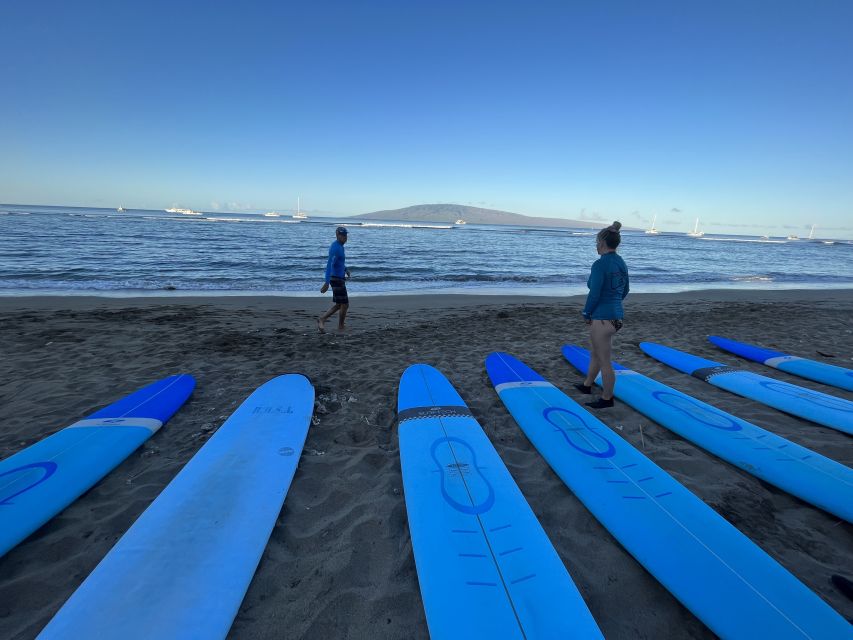
This lesson suits adults, teenagers, couples, and families with children 10 or older. It works especially well for mixed groups, since stronger participants can try to surf independently while beginners receive more direct help.
It is also a good choice for nervous first-timers. Several people with concerns about the ocean felt more comfortable once instructors guided them step by step. You still need to be willing to enter the water and follow safety instructions, but you do not need prior surfing experience.
Children age 9 and younger should not be placed in this group lesson. The supplied information directs younger children to private or semi-private lessons instead. If your family includes different ages, ask about the right format before booking.
I would also think about your fitness and energy. The lesson can be tiring, particularly when you paddle repeatedly and climb back onto the board. If you have an injury or a condition that makes swimming, paddling, or balance difficult, ask the operator before reserving.
Should you book the Lahaina group surf lesson?
Book it if you want a friendly, organized introduction to surfing and like the idea of learning in a small group. The strongest reasons are the five-person limit, the patient coaching reported across many sessions, the included gear, and the real chance of standing up during your first lesson.
Choose an early time if one is available and arrive 30 minutes ahead. Bring sunscreen and a towel, leave valuables in the provided cubicle, and budget extra for optional photos.
I would skip it only if you want a private lesson, dislike taking turns, need a towel or sunscreen supplied, or already surf well enough to manage on your own. For most first-timers visiting Maui, $125 buys more than a board rental: it buys a safer start, repeated attempts, and a clear introduction to the rules of the water.
FAQ
How long does the Lahaina group surf lesson last?
The water activity lasts two hours from the time you leave the surf shop until the instructor signals you back in. Check-in, changing, showers, and equipment return require additional time.
Where do I check in?
You must check in 30 minutes before the lesson at 505 Front Street in Lahaina. The water activity operates at the guardrails between Puamana Beach Park and Launiopoko Beach Park.
Where should I park?
The parking instructions ask you to park at the yellow flag on the mountain side of the highway.
What equipment is included?
The lesson includes a surfboard, long-sleeve UV rash guard, water shoes, and instruction from a professional CPR-certified instructor.
What should I bring?
Bring sunscreen, a swimsuit, and a towel. Sunscreen and towels are not included.
What is the minimum age?
Group lessons are for participants age 10 and older. Children age 9 and younger are recommended for private or semi-private lessons.
Are photos included in the price?
No. A professional photographer takes photos during the lesson, but the images are available for separate purchase after the session.
Just added on Maui
- Central Maui: Two-Island Scenic Helicopter Flight to Molokai★ 4.9 · 165 reviews
- Goat Yoga with Miniature Goats In Maui★ 5.0 · 55 reviews
- A Maui Beach Photoshoot in Wailea★ 5.0 · 154 reviews
- From Ma’alaea: Sunset Dinner Cruise Aboard the Quicksilver★ 4.5 · 218 reviews
- Maui: Guided Rainforest and Waterfall Walk & Swim★ 4.8 · 226 reviews
- South Maui: Gilligans’ Island Luau with Dinner and Drinks★ 4.2 · 254 reviews
- Maui: Molokini Snorkel and Performance Sail with Lunch★ 4.8 · 224 reviews
- South Maui: Sunset Prime Rib or Island Fish Dinner Cruise★ 4.7 · 242 reviews
Surf Lessons, compared.
Beginner-Friendly Waikiki Beach Surfing Lesson
Read our review →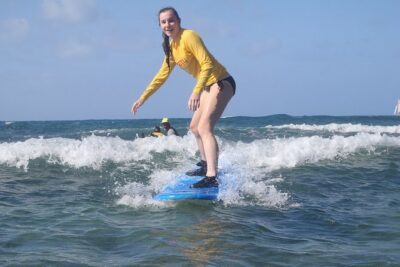

Private Hanalei Sandy Bottom Surf Lesson on Kauai
Read our review →
Browse the lists this tour appears in