
Reviewed · SURF LESSONS
Group Surf Lesson at Kalama Beach in Kihei
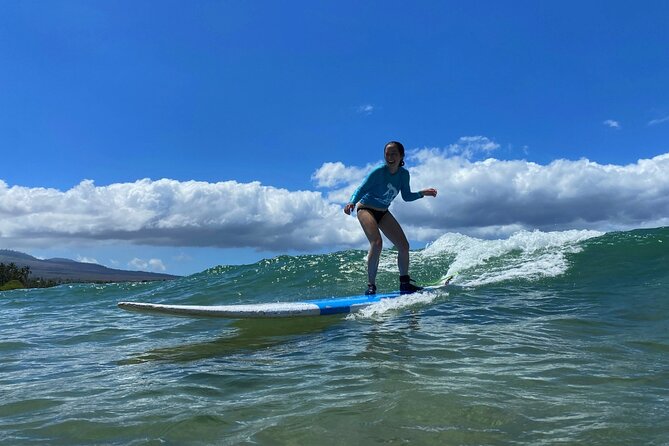
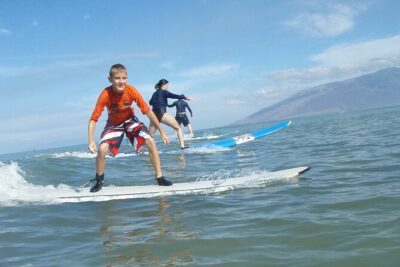
The best part of this Kihei surf lesson is that you get into the water quickly. After a short safety and technique briefing at Kalama Beach Park, your coach works with you as you paddle, catch small waves, and try to stand. The warm water is usually waist to chest deep, and the waves are generally gentle enough for first-timers.
I like the small group size, capped at six, and the fact that reef shoes, a rash guard, and surfboard are included. I also like the direct coaching style. Instructors including Bryan, Sarge, Epps, Pablo, Brendon, and Willow have been praised for giving useful feedback after each attempt. The main caution is the beach bottom: one session encountered plenty of rocks in shallow water, which made falling less comfortable.
Key points to know before booking
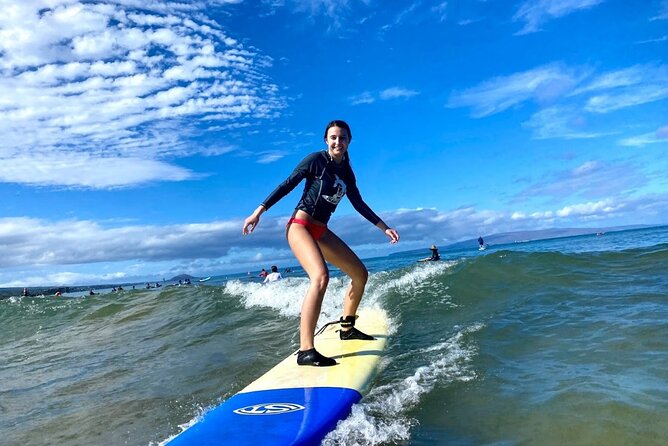
- Small groups mean useful coaching: The class has a maximum of six people, so you should get personal help between rides.
- You must be comfortable swimming in the ocean: This is not a learn-to-swim activity, and the lesson can be canceled without a refund if you cannot swim or feel unsafe in deep water.
- The class is for ages 11 and up: Younger children need a private or semi-private family lesson.
- The water is warm and usually waist to chest deep: Conditions are beginner-friendly, but the exact beach bottom and wave size can change.
- The package covers the basic equipment: Surfboard, reef shoes, rash guard, taxes, fees, and parking are included.
- Plan for a tip and possible photo purchase: Bring cash for your instructor, and remember that action photos, when offered, cost extra.
Why this Kihei surf lesson works for beginners
Surfing looks simple from shore. Paddle, catch a wave, stand up. In practice, timing and balance make those three steps surprisingly tricky. This class gives you a manageable first taste without asking you to figure everything out alone.
The lesson takes place at Kalama Beach in Kihei, a setting used for beginner instruction because the waves are usually mild. You are not signing up for a high-surf session or a long paddle into open water. The goal is to catch small waves and learn the basic movement safely.
That makes this a good choice if you want to say you surfed in Hawaii, even if you have never stood on a board before. It also suits an intermediate surfer who wants a refresher or a low-pressure session in warm water.
The class runs about two hours. That is long enough to receive instruction, make repeated attempts, and feel tired by the end. It is not so long that a first session becomes an exhausting half-day workout.
More surf lessons on Maui:
- Maui: Two Hour Beginner Group Surf Lesson in Kihei
★ 5.0 · 950 reviews - Outrageous Surf ScHool Lesson on Lahaina Side
★ 4.5 · 547 reviews - Maui Lahaina Group Surf Lesson
★ 4.9 · 235 reviews
Meeting the Surf Club Maui van at Kalama Beach Park
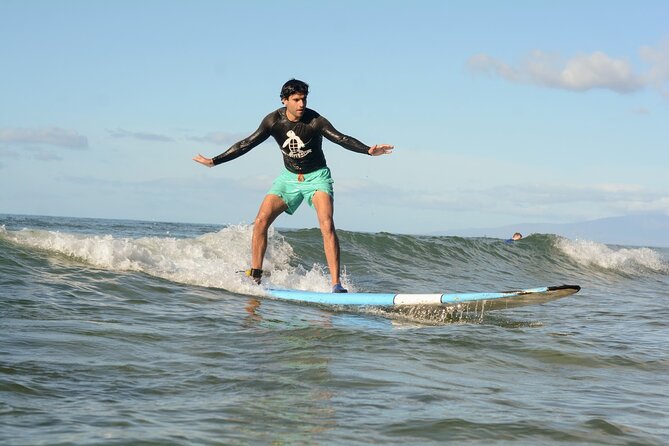
You meet Surf Club Maui at 1900 S Kihei Road, at Kalama Beach Park. Check-in takes place at the company’s van, where the staff outfits you with reef shoes and a rash guard surf shirt.
The meeting point is practical rather than fancy. You are there to gear up and get on the beach, not spend time in a large visitor center. Free parking is included, and changing rooms and showers are available.
You should arrive ready to move. Wear or bring a swimsuit, apply sunscreen, and drink plenty of water before the lesson. The company specifically asks you to arrive well rested and hydrated. That advice matters because paddling and repeatedly pushing up from a board take more effort than many first-time surfers expect.
Complete the online waiver before your lesson. You should also bring cash for a tip. Gratuity is not listed as part of the price, and tipping your instructor is expected.
The short beach lesson before you paddle out
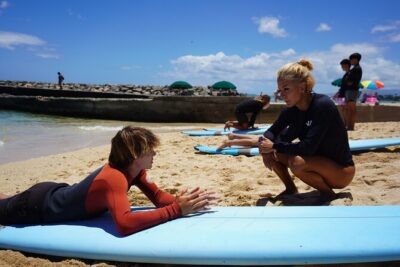
The first formal teaching happens on land. Your coach goes over safety, board handling, body position, and the basic technique for standing up.
This part is short by design. You will not spend an hour listening to theory while the waves roll in without you. The instructors aim to give you just enough information to make your first attempts safer and more productive.
Pay close attention to how you fall. A shallow-water wipeout can still lead to scrapes, especially if the bottom is rocky. One family found the beach surface rougher than expected and felt less comfortable falling in shallow water. Others had no problem with it, but the experience can vary by day and location.
The lesson also gives the coach a chance to check that everyone understands the safety rules. You are expected to report pain, tingling, numbness, or other health problems right away. If lower back or neck pain develops, you should stop the activity.
Catching your first waves in warm water
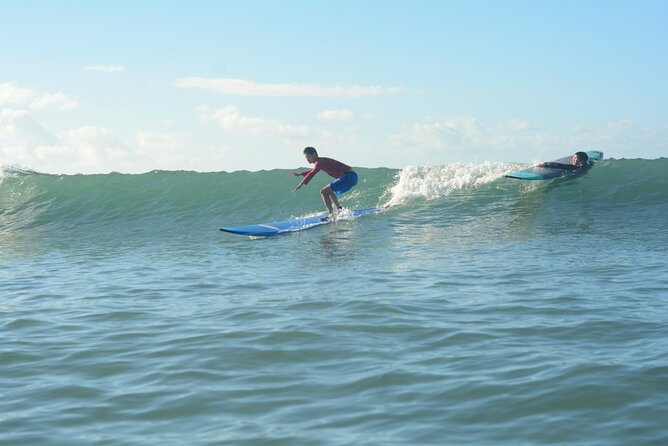
Once the land lesson ends, you take the board into the water with your coach. The water is usually warm, and the stated depth is about waist to chest deep. Conditions are often gentle, with small waves suited to learning.
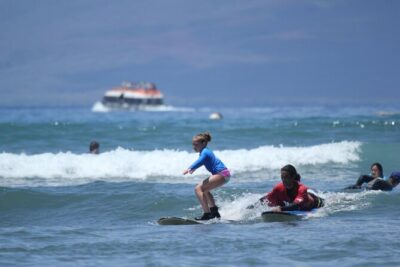
Your instructor helps position you for a wave, tells you when to paddle, and gives you a cue for standing. The best part of the format is the immediate correction. After each attempt, you can adjust your timing, stance, or balance instead of repeating the same mistake for two hours.
The coaches work in the water with you rather than simply pointing from shore. That hands-on help is especially useful during the first few rides, when you are still learning how much force to use and how quickly to move your feet.
Expect a mix of success and failure. Some people stand several times during their first class. Others struggle with balance but still learn how to read a wave and handle the board. The instructors are known for patience, and names such as Bryan, Sarge, Epps, Pablo, Brendon, Alan, Pedro, Willow, and Sol appear frequently in praise for clear and encouraging coaching.
Do not judge the lesson only by how many times you stand. Surfing is a coordination exercise, and simply learning the correct position can be a useful first step. Still, the class is clearly designed to give you a real chance at standing, not just a dry-land demonstration.
Same island, a different kind of day:
- Small-Group Road to Hana Adventure Tour with Pickup & Lunch
★ 5.0 · 3,064 reviews - Maui Pineapple Farm Tour in Haliimaile
★ 5.0 · 2,855 reviews - Maui Eco-Raft Tour: Eye-Level Whale or Dolphin Watching – Lahaina
★ 5.0 · 2,482 reviews - Maui Snorkeling Adventure to Molokini and Turtle Town
★ 4.5 · 2,221 reviews
What the group size means in the water
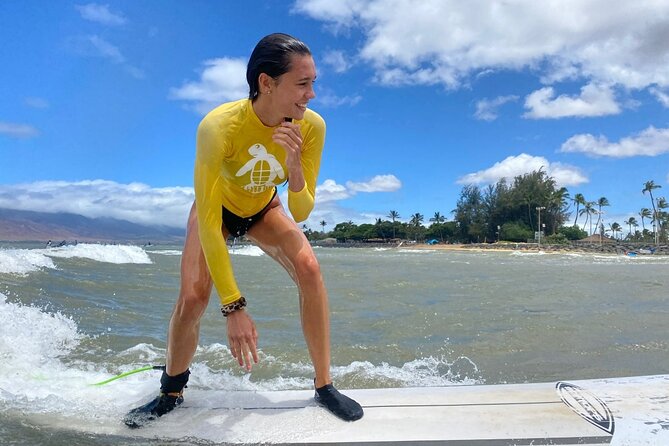
The maximum group size is six people. That is not a private lesson, but it is small enough to keep the coaching personal.
You will not be riding every minute. Surfing requires waiting for a suitable wave, paddling back into position, and taking turns. The waiting time also gives you a chance to watch the coach help someone else. That can make the next attempt easier because you see the timing before trying it yourself.
Some sessions may have fewer people. A smaller group gives you more direct attention and more attempts, though the number of waves and the conditions still depend on the day.
The class mixes ages 11 and up. That can work well for families with teenagers, couples, and friends at different ability levels. It is not the correct booking for children under 11. If you arrive with a younger child, the class may be canceled without a refund, so check this rule carefully before paying.
The rocky-bottom caution at Kalama Beach
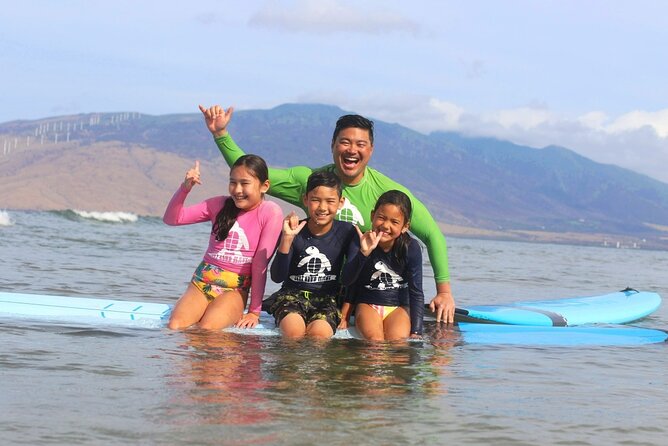
The most important practical warning concerns the bottom. One session encountered a notably rocky beach area, and several people received scrapes despite being taught how to fall properly.
That does not mean every class takes place over rough ground. Conditions and the exact teaching spot can vary, and many people find the setting comfortable. Still, you should be prepared for more than soft sand.
Reef shoes are supplied, which helps protect your feet. They do not remove every concern when you fall from a board. If you are nervous about shallow-water falls, tell your instructor at the start and follow the instructions closely.
The gentle waves are a major advantage for beginners, but shallow water and a rocky bottom can make falling feel less forgiving. This is the tradeoff for learning near shore rather than in larger, deeper surf.
How the $108.61 price compares with the experience
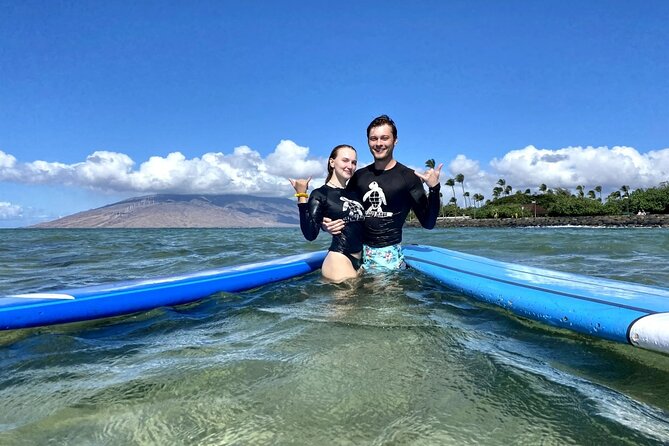
At $108.61 per person, the lesson is not a casual beach rental. You are paying for instruction, equipment, a small group, and the convenience of having a coach in the water.
The price includes all necessary equipment, reef shoes, a rash guard, taxes, fees, and free parking. That makes the package easier to compare with cheaper board rentals, which leave you to manage safety, positioning, and technique on your own.
For a first-time surfer, the instruction is the main value. A rental may cost less, but it does not give you the same help with catching a wave or standing at the right moment. If your goal is simply to try surfing once and possibly get upright, this class offers a sensible use of two hours.
Photos are not included in the advertised package. A photographer may be present, and action pictures can be purchased afterward. Some participants have paid around $60 per person for photos, so ask about the price before agreeing. The pictures can be a memorable souvenir, but they are an optional extra that raises the final cost.
A tip for the instructor is also separate. Bring cash if you want to thank your coach directly.
Who should book, and who should choose another lesson
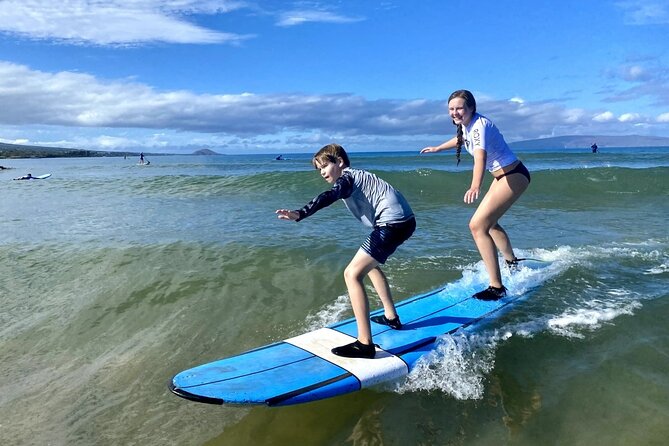
I would recommend this class to adults, teenagers, couples, and families with children aged 11 or older who can already swim in the ocean.
It is especially suitable if you:
- Want a first surfing experience in Hawaii
- Prefer gentle waves to larger surf
- Like direct coaching and repeated practice
- Want equipment supplied for you
- Have moderate physical fitness
- Are comfortable in waist to chest-deep ocean water
You should choose a different option if you have a child under 11. The company directs younger children to a private or semi-private family class.
You should also avoid this group lesson if you cannot swim, are uneasy in deep water, or have a medical issue that could make paddling and repeated falls unsafe. The company can cancel participation without a refund if you arrive unable to meet the swimming requirement.
Timing, weather, and making the most of the morning
The lesson lasts about two hours, and the exact feel of the session depends on wind, tide, and wave conditions. One experienced surfer suggested an early class for calmer winds, while also recommending that you call ahead if water depth is a concern.
That is useful advice, but do not assume every morning will have identical conditions. The surf school chooses conditions suitable for instruction, yet the ocean remains changeable.
You should avoid scheduling the lesson after a late night. Arrive hydrated, rested, and ready for physical activity. Paddling, balancing, and getting back on the board repeatedly can wear you out.
After the class, you finish back at the meeting point. Showers and changing rooms make it easier to continue with your day, though you should still allow a little time to rinse off, change, and collect any photos if they are available.
The coaching makes the difference
The strongest feature of this experience is the teaching. Many instructors are praised for helping first-timers stand while still allowing them to build confidence on their own.
That balance matters. A coach who pushes too hard can make a beginner tense, while one who gives too little help leaves you guessing. The best sessions here seem to offer short instructions, encouragement, and a correction after each ride.
Instructors named Bryan, Brendon, Sarge, Epps, Pablo, and Willow have all been singled out for patience, friendliness, or clear guidance. You cannot necessarily request a particular coach, but you can expect the school to assign an experienced instructor to the group.
Photographers may also work from the beach or water. They can capture the moment you stand, which is often difficult to photograph from a phone left on shore. Again, photos are optional and cost extra.
Should you book the Kalama Beach group lesson?
Book it if you want a well-supported first surf lesson, can swim confidently in the ocean, and are happy with a group class. The combination of warm water, mostly mild waves, included equipment, and a maximum of six people gives beginners a fair shot at catching a wave.
Think twice if a rocky bottom would make you anxious, if you need a private instructor, or if you are booking for a child under 11. A private or semi-private lesson may be better for young children or anyone who needs more control over the pace.
For eligible beginners, I think the value is strong. You get a genuine Hawaii surf experience rather than a board rental and a guess at what to do. Just arrive rested, complete the waiver, bring sunscreen and cash for a tip, and remember that the best outcome is not perfection. It is learning enough to want another wave.
FAQ
How long does the group surf lesson last?
The lesson lasts approximately two hours.
Where does the lesson meet?
You meet at the Surf Club Maui van at Kalama Beach Park, 1900 S Kihei Road, Kihei, Hawaii 96753.
Where does the activity end?
The lesson ends back at the meeting point.
What equipment is included?
Necessary equipment is included, along with reef shoes and a rash guard surf shirt. Taxes, fees, and parking are also included.
What age range is allowed?
The group class is for mixed ages 11 and up. Children younger than 11 must be booked into a private or semi-private family class.
Do I need to know how to swim?
Yes. You must be able to swim in the ocean and feel comfortable in deep water. If you cannot meet this requirement, the lesson may be canceled without a refund.
How many people can join the group?
The activity has a maximum of six participants.
Are changing rooms and showers available?
Yes. Changing rooms and showers are available.
What happens if bad weather cancels the lesson?
If poor weather causes a cancellation, you will be offered another date or a full refund. You can also cancel for a full refund if you cancel at least 24 hours before the start time. Cancellations within 24 hours are not refunded.
Just added on Maui
- Central Maui: Two-Island Scenic Helicopter Flight to Molokai★ 4.9 · 165 reviews
- Goat Yoga with Miniature Goats In Maui★ 5.0 · 55 reviews
- A Maui Beach Photoshoot in Wailea★ 5.0 · 154 reviews
- Maui: Guided Rainforest and Waterfall Walk & Swim★ 4.8 · 226 reviews
- South Maui: Gilligans’ Island Luau with Dinner and Drinks★ 4.2 · 254 reviews
- Maui: Molokini Snorkel and Performance Sail with Lunch★ 4.8 · 224 reviews
- South Maui: Sunset Prime Rib or Island Fish Dinner Cruise★ 4.7 · 242 reviews
- Maui Circle Island-PRIVATE-Air Tour for 2-5: Waterfalls & Lava!★ 5.0 · 228 reviews
Surf Lessons, compared.
Beginner-Friendly Waikiki Beach Surfing Lesson
Read our review →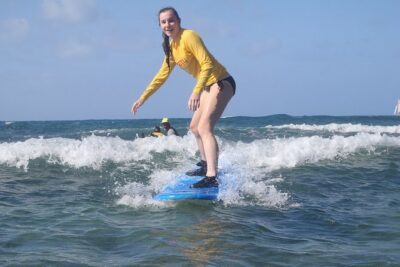

Private Hanalei Sandy Bottom Surf Lesson on Kauai
Read our review →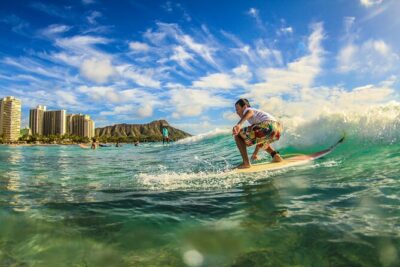
Browse the lists this tour appears in