
Reviewed · SURF LESSONS
2 Hour Beginner Group Surf Lessons
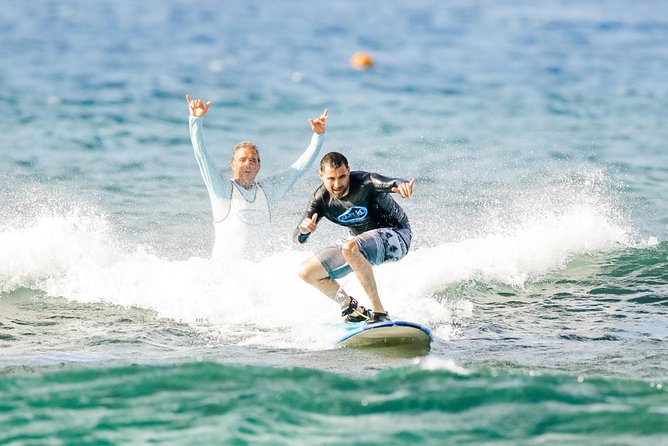
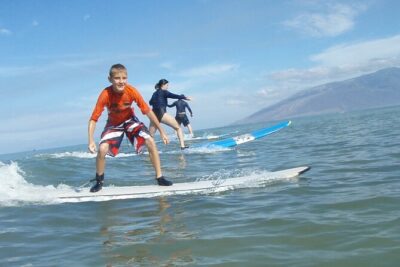
Maui is a fine place to learn surfing, and this lesson gets you into the water quickly rather than burying you in a long classroom talk. The group is capped at five, so instructors such as Mario, Austin, Curran, and Phillipe can offer real-time help instead of shouting tips from shore. I especially like the supplied board, rash guard, and reef shoes, plus the choice of several lesson times.
I also like the lesson’s clear family focus. Children age 9 and up can join the group, and instructors have helped beginners stand up on their first session. The main catch is simple: you must arrive 30 minutes early, and children 8 or younger need a private lesson rather than this group class.
Key points to know before you book
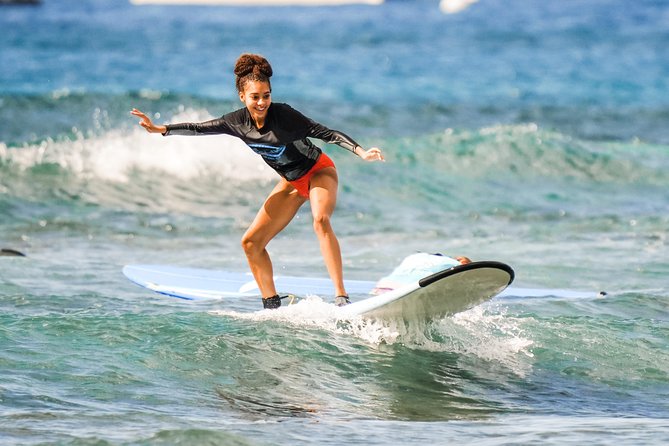
- Small groups of five or fewer: You should receive more direct coaching and more chances to ask questions.
- Two hours in the water: The length gives you time to learn, fall, adjust, and try again without making the session excessively tiring.
- Equipment is supplied: Boards, rash guards, and reef shoes are included, so you only need swimwear, water, sunscreen, and a towel.
- Built for first-timers: The lesson begins with basic instruction on land before you paddle out.
- Good for families: Children 9 and older may join the group, and instructors are used to keeping young surfers encouraged and safe.
- Meeting point near Lahaina: The activity begins and ends at Hawaii 30HI-30, with public transportation nearby.
Why this Maui lesson works for first-time surfers
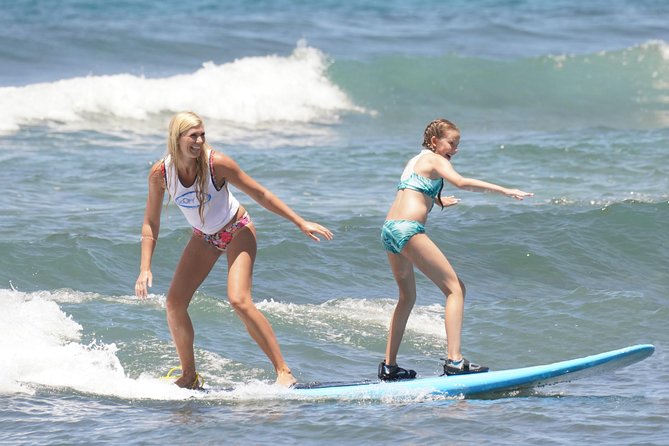
The best part of a beginner surf lesson is not learning every piece of surfing theory. It is getting enough useful instruction to catch a manageable wave before your arms and legs give up. This two-hour session is shaped around that goal.
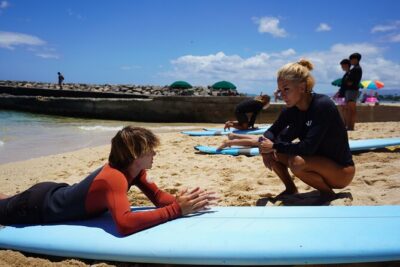
You begin with a short introduction on land. You learn the basic position, how to get from lying on the board to standing, and what to do when a wave comes underneath you. The instructors have been praised for breaking each movement into simple steps, then giving one small correction at a time.
That matters because beginner surfing can feel like too many jobs at once. You are watching the water, keeping the board straight, paddling, standing, and trying not to fall. A good instructor helps you focus on the next movement rather than dumping a full lesson into your head at once.
After the beach instruction, you take the boards into the water and work through the process repeatedly. The point is not to stand perfectly every time. You may fall, adjust your feet, try again, and slowly begin to understand how the board responds.
Several instructors are singled out for this patient style. Mario has helped beginners keep going when they were tired, while Austin is praised for giving people room to make mistakes and then offering clear feedback. Curran has worked closely with children throughout the session, and Phillipe is noted for explaining what to change after each attempt.
More surf lessons on Maui:
- Maui: Two Hour Beginner Group Surf Lesson in Kihei
★ 5.0 · 950 reviews - Outrageous Surf ScHool Lesson on Lahaina Side
★ 4.5 · 547 reviews - Group Surf Lesson at Kalama Beach in Kihei
★ 5.0 · 264 reviews
What the two-hour schedule feels like
You should plan on roughly two and a half hours at the meeting point once check-in and preparation are included. The actual surf lesson lasts about two hours, but the operator asks you to arrive 30 minutes before the scheduled start.
That early arrival is not a minor detail. You need time to check in and gear up, so showing up at the listed start time could leave you rushed. Come in swimwear, with a towel, water bottle, sunscreen, and enough time to get ready without hurrying.
The supplied rash guard is useful for comfort in the water, while reef shoes provide protection for your feet. You do not need to arrange your own surfboard or assemble a separate equipment rental before the lesson. This makes the class easier to fit into a short Maui visit.
Once the group is ready, the instruction moves to the beach and then into the water. The limited class size is important here. If there are only two or three people in your group, you may receive frequent turns and plenty of direct correction. Even with five, the instructor has a manageable number of students to watch.
The two-hour length is well judged for a first attempt. One participant found the time long enough to catch plenty of waves without becoming overly tiring. Surfing asks more of your arms and legs than it first appears, so a longer class is not automatically better.
The small-group advantage on the water
A maximum of five people is one of the strongest features of this lesson. Beginner classes can lose their value when one instructor must manage a large crowd. You may spend too much time waiting, miss a useful correction, or feel lost in the group.
Here, the instructor can keep a closer eye on each person. If your board keeps turning, you can get a correction. If you are standing but falling immediately, the instructor can watch your timing. If you are nervous, you can receive a direct explanation rather than trying to copy someone several yards away.
The small group also works well for mixed-ability families. One person may have surfed before, while another is touching a board for the first time. Austin, for example, has been praised for allowing one student to work things out while giving another more basic help.
You should still keep your expectations sensible. A small group does not guarantee perfect waves or a standing ride for every person. Ocean conditions vary, and balance takes practice. But the format gives you a fair chance to improve during the time available.
What makes this a good choice for families
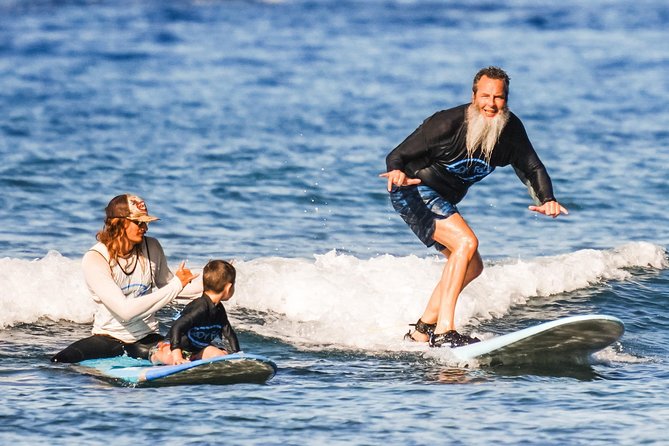
Children age 9 and older can join the group lesson. Anyone age 8 or younger needs a private lesson, with no exceptions. That age rule is useful to know before booking, especially if you are planning one activity for several children.
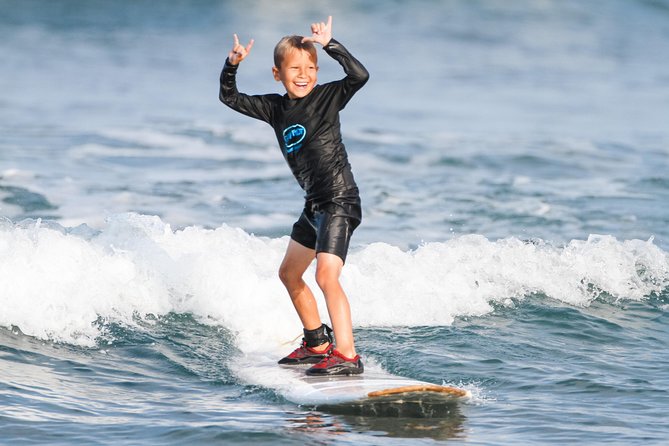
The strongest family feature is the instructor attention. Several sessions have involved children who were standing on the board during their first lesson. The useful part is not just the success itself, but the amount of support behind it.
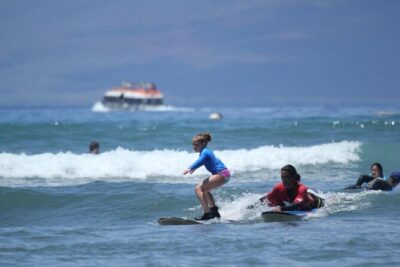
Instructors have stayed close to young surfers, helped them catch waves, and kept the tone upbeat after falls. One instructor assisted a child who felt seasick, made sure she returned safely to shore, and allowed her to rejoin the lesson when she felt ready. That is the kind of calm response parents want from an ocean activity.
The group format can also make a family outing more fun. Parents can watch children learn the same skill together, while siblings encourage one another. The session is active and shared, rather than splitting the family between separate attractions.
Still, surfing requires energy and comfort in the ocean. You know your child best. A child who is eager to try, can follow basic instructions, and is at least 9 fits the stated group requirement. Younger children need private instruction, which may affect the cost and planning of a family day.
Same island, a different kind of day:
- Small-Group Road to Hana Adventure Tour with Pickup & Lunch
★ 5.0 · 3,064 reviews - Maui Pineapple Farm Tour in Haliimaile
★ 5.0 · 2,855 reviews - Maui Eco-Raft Tour: Eye-Level Whale or Dolphin Watching – Lahaina
★ 5.0 · 2,482 reviews - Maui Snorkeling Adventure to Molokini and Turtle Town
★ 4.5 · 2,221 reviews
The beginner-friendly surf conditions
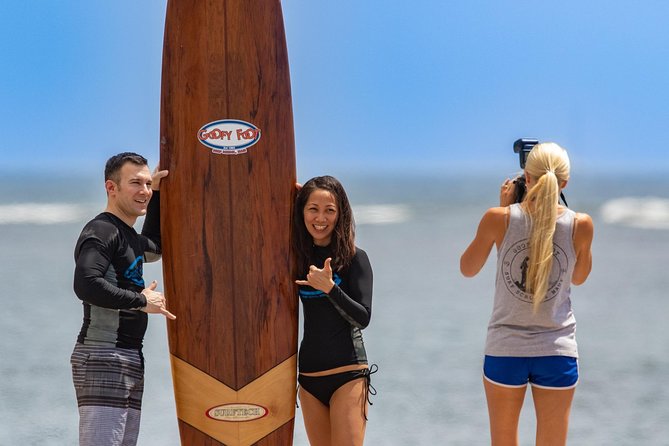
The lesson is designed around beginner-level conditions, and reports from the water describe waves that were steady but not large. That is exactly what you want for an introduction. Small, manageable waves give you a chance to practice timing without facing a wall of water.
Conditions can change, of course. No surf school can promise that every wave will feel identical. The company has moved lessons to a different day or location when another spot offered better surf conditions, so it is worth paying attention to any scheduling message before you go.
The setting near Lahaina has also been praised as convenient. The meeting point is at Hawaii 30HI-30 in Lahaina, and the activity returns there at the end. Public transportation is nearby, and one person found public parking about a three-minute walk away, with the area also close to the Banyan Tree and restaurants.
That makes the lesson easy to combine with other plans, though you should not cut the timing close. You need to arrive 30 minutes early, and ocean activities can leave you wet, sandy, and ready for a change of clothes or a meal afterward.
Equipment, clothing, and what you should bring
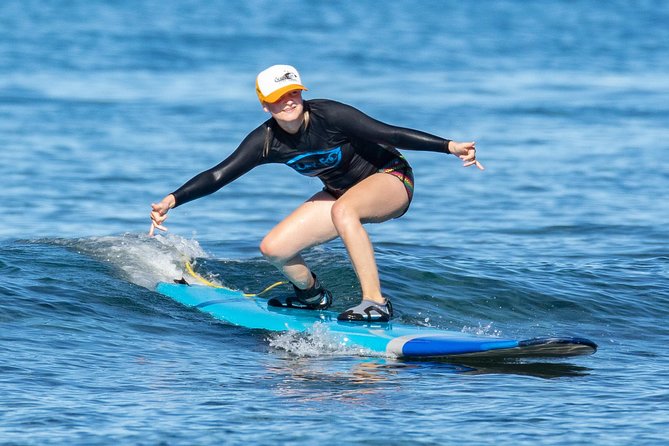
The school supplies the main surfing equipment, reef shoes, and rash guards. You should arrive in swim attire and bring your own water bottle, sunscreen, and towel.
The supplied equipment reduces the usual beginner hassle. You do not need to wonder which board to rent or whether you have packed suitable water clothing. The instructor can help get you set up as part of the check-in and preparation period.
A water bottle is worth bringing because two hours of paddling and repeated attempts can be tiring. Sunscreen is also essential for a session spent on open water. Apply it before arriving so you are ready to focus on the lesson.
If you are arranging a family session, pack enough towels and dry clothing for everyone. This is practical rather than glamorous, but it makes the transition from surf lesson to lunch or sightseeing much easier.
How the instructors teach
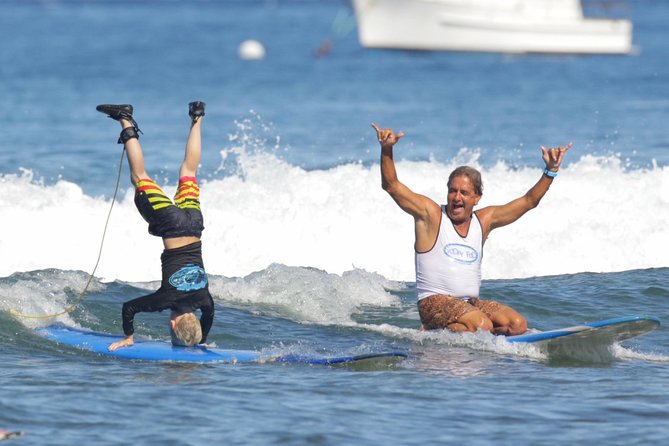
The instructors use encouragement without treating beginners like children. That balance comes through in the way the lessons are described: clear directions, repeated attempts, and corrections that focus on what to change next.
Mario is often associated with humor and steady encouragement. Austin is praised for being patient and for letting students learn through mistakes. Phillipe has been especially effective for people who wanted a detailed explanation after every failed attempt. Curran has stayed near children and continued helping until they were riding more confidently.
You should expect coaching in the water, not just a speech at the start. Instructors help position students for waves, offer feedback on form, and in some cases assist with getting back toward shore. The goal is to help you make progress during the session, not merely explain how surfing works.
Some sessions may have a photographer available. Gabriel has taken action photographs during lessons, and an optional photo purchase has been available for those who wanted it. Treat this as an extra, not part of the core booking, and ask about the fee if you are interested.
Value and practical trade-offs
No price is provided here, so I cannot judge the exact cost against other Maui schools. I can assess what you receive: about two hours of instruction, a small group limited to five, the board and other necessary gear, reef shoes, and a rash guard.
That package has real value if you are starting from zero. You avoid equipment rental, gain direct instruction, and have a better chance of receiving useful corrections than in a large class. If you only want to stand once for a photograph, the lesson may feel more than you need. If you want to understand the basics and try several waves, the format makes more sense.
The strongest value comes from the instructor-to-student ratio. A cheaper class with a large crowd might leave you waiting. A more expensive private lesson could offer even more attention, but this group option gives you a middle ground for children and adults who want guidance without paying for one-on-one teaching.
The main trade-off is the fixed age rule. Families with children 8 or younger cannot simply add them to the group. They will need private instruction, so check the total cost before making a booking for a mixed-age family.
Who should book this lesson
I would choose this for first-time surfers, adults who have not surfed in years, and families with children age 9 or older. It also suits couples with different experience levels, since the instructor can give each person a different amount of help.
You should book it if you want an active Maui morning, prefer learning by doing, and like the idea of trying several waves rather than watching a demonstration from shore. The session also works well for people who want a structured introduction before attempting to surf on their own.
I would hesitate if you dislike open-water activities, have limited mobility that makes paddling or standing difficult, or want a quiet beach outing with no physical effort. The class is beginner-friendly, but surfing still involves falls, paddling, and repeated attempts.
The experience is offered in English. Confirmation is received at booking, and service animals are allowed. Most people can participate, but you should consider your own comfort and fitness before signing up.
Cancellation and timing details
Free cancellation is available if you cancel at least 24 hours before the experience begins. Cancellations made less than 24 hours before the start time are not refunded, and changes inside that period are not accepted.
The cut-off uses local Maui time. That matters if you are booking from another time zone or changing plans during a busy vacation. I would make the surf lesson an early, fixed commitment in your itinerary rather than placing it beside a flight or another activity with a tight deadline.
Should you book Goofy Foot Surf School?
Yes, if your goal is a friendly, practical first surf lesson with a small group and a good chance to stand on the board. The strongest reasons are the five-person maximum, the supplied equipment, and instructors who give close encouragement to both children and adults.
Book with realistic expectations. You may catch several waves and stand up repeatedly, but ocean conditions and personal balance still matter. Arrive early, bring the requested basics, and leave enough time for the lesson to be the main event of your morning.
For families, check the ages carefully. Children 9 and older can join the group, while younger children need private instruction. If that fits your party, this is a sensible way to add a real Maui skill to your trip, not just another activity to check off.
FAQ
How long does the surf lesson last?
The surf lesson lasts approximately two hours.
How early should I arrive?
You should arrive 30 minutes before your scheduled lesson or activity time for check-in and getting equipped.
What equipment is included?
Surfing equipment, reef shoes, and rash guards are provided.
What should I bring?
You should bring swim attire, a water bottle, sunscreen, and a towel.
What is the minimum age for the group lesson?
Students must be at least 9 years old to join a group lesson.
Can children age 8 or younger participate?
Children age 8 or younger require private instruction and cannot join the group lesson.
How many people can join the group?
The activity has a maximum of five participants.
Where does the activity begin and end?
It begins at Hawaii 30HI-30, Lahaina, Hawaii 96761, and ends back at the meeting point.
Can I cancel for a full refund?
Yes. You can cancel for a full refund up to 24 hours before the experience starts. Changes or cancellations made less than 24 hours before the start time are not accepted or refunded.
Just added on Maui
- Two Site Snorkeling Adventure featuring the Molokini Crater★ 5.0 · 4 reviews
- Road to Hana Deluxe Rainforest & Waterfall Experience from Maui★ 5.0 · 116 reviews
- Traditional Airport Lei Greeting on Kahului Maui★ 5.0 · 95 reviews
- Turtle Town Clear Kayak & Snorkel Tour (8am-11am)★ 5.0 · 100 reviews
- The Best Maui 3 Hour Molokini and Turtle Town Snorkel★ 5.0 · 106 reviews
- 3-Hour Small-Group Maalaea Luxury Snorkel Cruise Tour★ 5.0 · 29 reviews
- Elite Private Tour★ 5.0 · 7 reviews
- VIP Premiere Whale Watch Kaanapali Beach MAX 12 PASSENGERS★ 5.0 · 78 reviews
Surf Lessons, compared.
Beginner-Friendly Waikiki Beach Surfing Lesson
Read our review →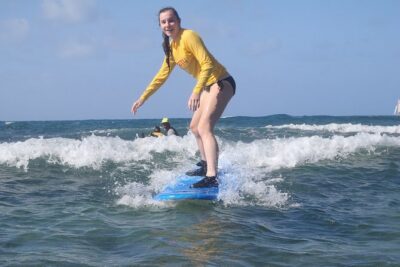

Private Hanalei Sandy Bottom Surf Lesson on Kauai
Read our review →
Browse the lists this tour appears in