Reviewed · TOURS IN MAUI
“Origins” Multicultural Dance Spectacular
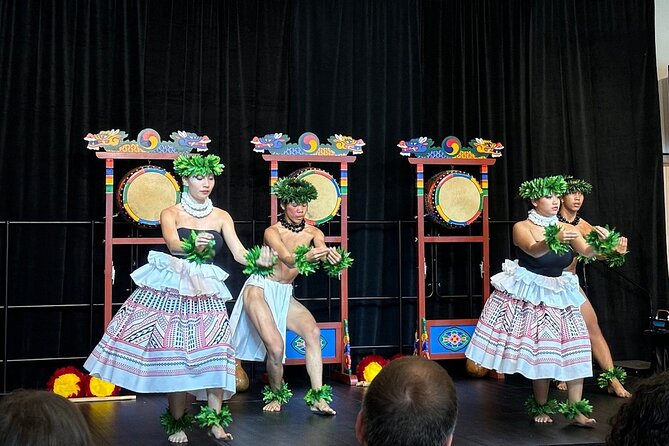
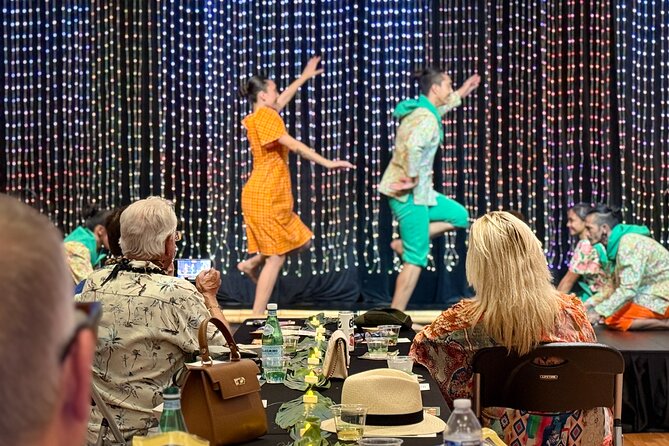
Hawaii’s story comes alive here through movement. The 45-minute dance show links Hawaiian and Polynesian traditions with the cultures that shaped life in the islands, including Japan, Korea, the Philippines, Mexico, and Spain. Costumes, music, narration, and dancers of different ages make this more than a stage performance.
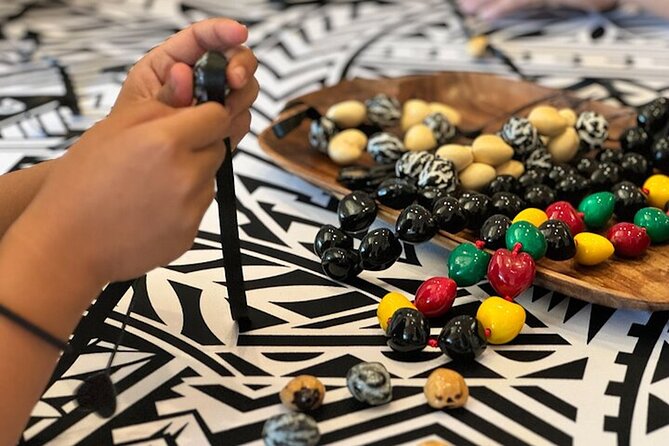
I like the hands-on craft time, especially because you take home a Ti Leaf or kukui nut bracelet instead of another mass-produced souvenir. I also like the small scale, with a maximum of 25 people, which gives the museum tour and photo session a personal feel.
The main consideration is timing. The show itself lasts about 45 minutes, but the full evening runs from 5:30 to roughly 7:30, so this is an educational cultural program rather than a quick evening production. Refreshments are light, not dinner.
Key points to know before booking
- A full cultural evening from 5:30 to 7:30: Crafts, museum exhibits, dance, snacks, and photos fill the visit.
- Eight or more cultural traditions on one stage: Expect Hawaiian, Tahitian, Filipino, Korean, Japanese, Spanish, Mexican, and related influences.
- A useful handmade souvenir: You can create a Ti Leaf or kukui nut bracelet during the craft session.
- A small group of up to 25 people: The setting is more intimate than a large resort show.
- A family-friendly performance: Dancers range from young children to adults, giving the program a community feel.
- Good value at $49: The price includes the museum, English guide, craft, performance, refreshments, parking, and photo time.
Why this show tells a broader Hawaii story
Many Maui performances focus on Polynesian dance alone. Origins takes a wider view, showing how Hawaii became a meeting place for people from across the Pacific, Asia, Europe, and the Americas.
That idea shapes the whole evening. The museum introduces migration and settlement, the craft session connects you with traditional materials, and the performance turns the story into music and movement. You are not simply watching a dance number after another dance number. You are given a framework for understanding why so many styles appear in Hawaii.
The program includes dances from Hawaii and Tahiti, along with the Philippines, Korea, Japan, Spain, Mexico, and other cultural traditions. The exact running order may vary, but you should expect a quick trip across several regions rather than one long presentation in a single style.
I appreciate that this approach avoids treating Hawaiian culture as isolated from the rest of the islands’ story. The evening recognizes the importance of Polynesian roots while also showing how later migrations affected dance, music, clothing, and daily life.
Other trips people book on Maui:
- Small-Group Road to Hana Adventure Tour with Pickup & Lunch
★ 5.0 · 3,064 reviews - Maui Pineapple Farm Tour in Haliimaile
★ 5.0 · 2,855 reviews - Maui Eco-Raft Tour: Eye-Level Whale or Dolphin Watching – Lahaina
★ 5.0 · 2,482 reviews
Starting at 5:30 with crafts and refreshments
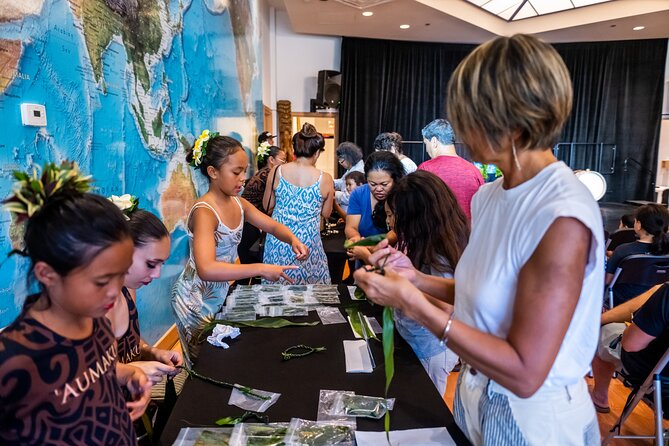
Check-in begins at 5:30 p.m. That early arrival matters because the first hour is part of the experience, not dead time before the main show.
You can work on a Ti Leaf or kukui nut bracelet while learning about Hawaii’s heritage. Lauhala weaving may also be part of the available craft activities. The goal is simple: use your hands, ask questions, and make something connected to local traditions.
The craft is especially useful for families. Younger children have something to do right away, while adults can listen to the cultural background without asking everyone to sit still for two hours. The finished bracelet gives you a small keepsake with a clearer connection to the evening.
Light refreshments are included, such as chips, soda, and water. Food details can vary, and special events may add other snacks. One event included mochi and macadamia nuts, but you should not book this expecting a full meal.
If you are planning dinner around the show, make that plan separately. The snacks are a welcome extra, not a substitute for dinner.
Touring the costume museum from 6:00 to 6:30
The guided museum portion runs from about 6:00 to 6:30 p.m. You may also tour the center on your own, but the guided option adds context and keeps the evening moving.
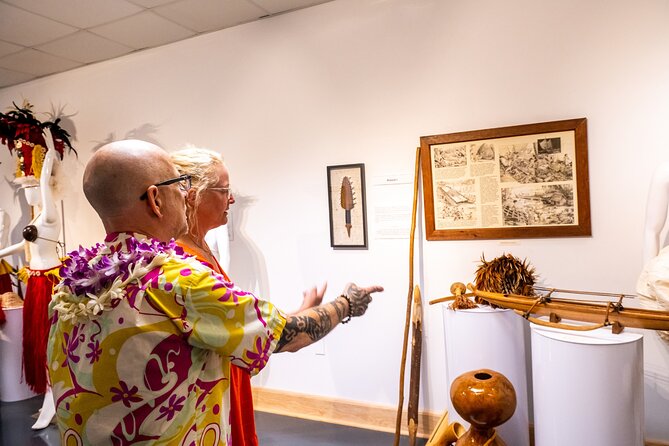
The exhibits trace Hawaii’s story from Polynesian migrations through Asian and Western arrivals. Costumes and artifacts show how different communities influenced clothing, music, dance, and life in the islands.
Guide Kuulei has been singled out for making this section lively with fun facts and a clear sense of enthusiasm. That matters because costume displays can feel static if you are left to read labels on your own. A good guide helps you notice why a garment, instrument, or design detail belongs in a wider cultural story.
The museum occupies several rooms, according to the program description, and written explanations identify the islands or countries connected with the displays. I would give this section your attention rather than treating it as a quick walk-through. It supplies the background that makes the performance easier to follow.
There is also an advantage for people who prefer learning at their own pace. If a guided tour is not your style, the self-guided option lets you spend more time with displays that interest you and less time on sections you already understand.
The 6:30 performance: many traditions in 45 minutes
The main show starts at 6:30 and runs until about 7:15 p.m. It uses narration to explain how various cultural traditions came to Hawaii and how they developed in the islands.
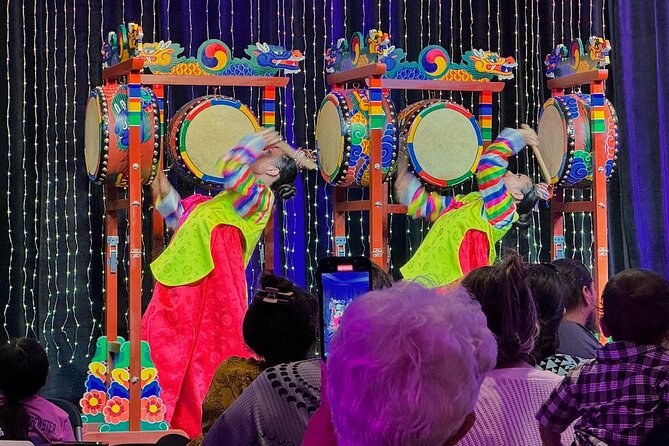
Expect a broad program. Hawaiian and Polynesian dances form an important part of the evening, but they share the stage with dances connected to the Philippines, Korea, Japan, Mexico, Spain, and other places. The result is a fast-moving cultural sampler.
The strongest part of this format is the contrast. You can see how posture, footwork, music, costumes, and group formations change from one tradition to the next. That variety keeps children interested, and it gives adults a more useful picture of Hawaii than a single stylized number can provide.
The dancers range from about four years old to adults. That age mix gives the show a community-school feeling rather than the polished distance of a major theater production. Some performers are described as highly trained and precise, while the youngest dancers add warmth and charm.
You should also expect live music for much of the program, along with recorded elements where needed. The costumes receive a lot of attention, and they are central to the presentation. They help identify each cultural tradition before the first steps even begin.
This is not a large-scale resort spectacle with elaborate stage machinery. Its strength is the performers, the costumes, the narrative, and the direct connection to the foundation’s cultural work.
Same island, a different kind of day:
- Maui Snorkeling Adventure to Molokini and Turtle Town
★ 4.5 · 2,221 reviews - Maui: Haleakala Sunrise Spectacular with Local Breakfast
★ 4.5 · 2,155 reviews - Maui Snorkeling Adventure From Ma’alaea Harbor to Molokini
★ 4.5 · 1,997 reviews - Maui: Turtle Town Snorkel with Photo and Video
★ 5.0 · 1,916 reviews
Photo time from 7:15 to 7:30
After the performance, the dancers come out for photo opportunities from about 7:15 to 7:30 p.m. This is a small feature, but it gives the evening a friendly finish.
You can meet performers in costume and take pictures rather than leaving as soon as the last number ends. For families, it also gives children a chance to remember the people behind the performance.
The photo session is short, so have your phone ready. A mobile ticket is accepted for the booking, and a phone is the easiest way to handle pictures and admission in one place.
What the $49 price really includes
At $49 per person, this is a strong value if you want more than a show. The ticket includes the costume museum, English guide, craft activity, live multicultural performance, refreshments, parking, and the post-show photo opportunity.
A ticket that covered only 45 minutes of entertainment would need to be judged against other Maui performances. This one gives you roughly two hours of structured activity, with the museum and craft time adding real substance.
The craft is the value booster. You are not only watching a presentation, you are making a small item and learning about traditional materials. The museum adds another layer, especially if you want to understand how migration shaped the islands.
The limits are clear. You receive light refreshments rather than dinner, and the venue is a cultural activity center rather than a full theater complex. If you want a lavish meal, a large cast, or an evening built around luxury production design, this may not be your best match.
If your priority is cultural context, local participation, and a reasonable price, the package makes sense. It also supports a foundation that teaches and presents dance, which gives the admission a community connection beyond simple entertainment.
Who will enjoy this Maui evening most
Families are a natural fit. The craft keeps younger children involved, the show changes styles often, and the presence of very young dancers gives the performance an approachable tone. The museum also makes the evening useful for school-age children who are learning about migration and culture.
It works well for adults who want an alternative to a standard Polynesian show. You will still see Hawaiian and Tahitian dance, but the program places them beside Asian, European, and Mexican influences. That wider frame is the reason to choose this experience.
I would also recommend it for people staying near Kahului Harbor. The center is described as about a 10-minute walk from the harbor, and drivers have ample free parking. It is also near public transportation, though the provided information does not specify routes or schedules.
The small group limit of 25 is another plus. You are less likely to feel lost in a crowd, and the museum, craft, and photo portions should feel more direct than they would in a large commercial production.
People with service animals can participate, and most participants can take part in the activity. The program is offered in English, so you should be comfortable following an English guide and narrated presentation.
A few practical points before you go
Plan to arrive for the 5:30 p.m. start, not just for the 6:30 show. Arriving late could mean missing the craft session or part of the museum tour, both of which help make the performance more meaningful.
Wear something comfortable for an evening that includes standing, walking through exhibits, and working on a craft. The supplied information does not specify seating arrangements or accessibility details beyond service animals and general participation, so contact the provider directly if you need precise access information.
Parking is free, which helps if you are driving. A mobile ticket is available, and confirmation is provided when you book.
The experience is offered in English. Gratuity is not included, so bring that cost into your planning if you want to tip the guide or staff.
You can cancel for a full refund up to 24 hours before the start time. Changes or cancellations made less than 24 hours before the experience are not accepted for a refund, and the cut-off uses Maui local time.
How this compares with a typical resort show
A resort show often centers on atmosphere, dinner, and a polished stage production. Origins puts the teaching first, then uses dance to make the lessons memorable.
That does not make it better for everyone. If you want a romantic sunset meal or a long evening of professional theater, choose a different type of event. If you want to understand how Hawaii’s many communities shaped one another, this program gives you more context for less money.
The foundation setting also changes the mood. You are visiting a working cultural center with a costume museum and a dance school connection. The performers feel connected to a local teaching mission, and the age range reinforces that sense of community.
The program can still feel polished. Costumes, music, synchronized movement, and narration provide a proper show. Just keep your expectations aimed at personal cultural education and local performance, not a giant commercial production.
Should you book Origins?
Book it if you want an affordable, family-friendly Maui evening that combines education with live entertainment. The best reasons are the wide cultural range, the hands-on bracelet craft, the museum tour with Kuulei’s fun facts, and the chance to meet the performers after the show.
Skip it if you are mainly looking for dinner, a large theater production, or a single-style Polynesian performance. For everyone else, $49 buys a well-filled two hours and a more complete look at how Hawaii became the culturally varied place you see today.
FAQ
What time does the experience begin?
Check-in starts at 5:30 p.m. The craft session runs from 5:30 to 6:30 p.m., the museum tour is scheduled for 6:00 to 6:30 p.m., and the dance show begins at 6:30 p.m.
How long does the full experience last?
The full program lasts about two hours, ending around 7:30 p.m. The dance performance itself runs from approximately 6:30 to 7:15 p.m.
What cultures are represented in the show?
The program includes dances from Hawaii, Tahiti, the Philippines, Korea, Japan, Spain, Mexico, and other cultural traditions connected with Hawaii.
Is a craft activity included?
Yes. You can make a Ti Leaf or kukui nut bracelet. Lauhala weaving may also be part of the craft activities offered at the center.
Are refreshments included?
Yes. Included refreshments are chips, soda, and water. The ticket does not include a full dinner.
Is parking available?
Yes. Free parking is included, and the center is also near public transportation.
What is the cancellation policy?
You can cancel up to 24 hours before the experience starts for a full refund. Cancellations or changes made less than 24 hours before the start time are not accepted for a refund.
Just added on Maui
- Two Site Snorkeling Adventure featuring the Molokini Crater★ 5.0 · 4 reviews
- Road to Hana Deluxe Rainforest & Waterfall Experience from Maui★ 5.0 · 116 reviews
- Traditional Airport Lei Greeting on Kahului Maui★ 5.0 · 95 reviews
- Turtle Town Clear Kayak & Snorkel Tour (8am-11am)★ 5.0 · 100 reviews
- The Best Maui 3 Hour Molokini and Turtle Town Snorkel★ 5.0 · 106 reviews
- 3-Hour Small-Group Maalaea Luxury Snorkel Cruise Tour★ 5.0 · 29 reviews
- Elite Private Tour★ 5.0 · 7 reviews
- VIP Premiere Whale Watch Kaanapali Beach MAX 12 PASSENGERS★ 5.0 · 78 reviews
Tours in Maui, compared.

Small-Group Road to Hana Adventure Tour with Pickup & Lunch
Read our review →

Maui Eco-Raft Tour: Eye-Level Whale or Dolphin Watching – Lahaina
Read our review →
Maui Snorkeling Adventure to Molokini and Turtle Town
Read our review →
Haleakala Sunrise Spectacular with Local Breakfast
Read our review →
Maui Snorkeling Adventure From Ma’alaea Harbor to Molokini
Read our review →