
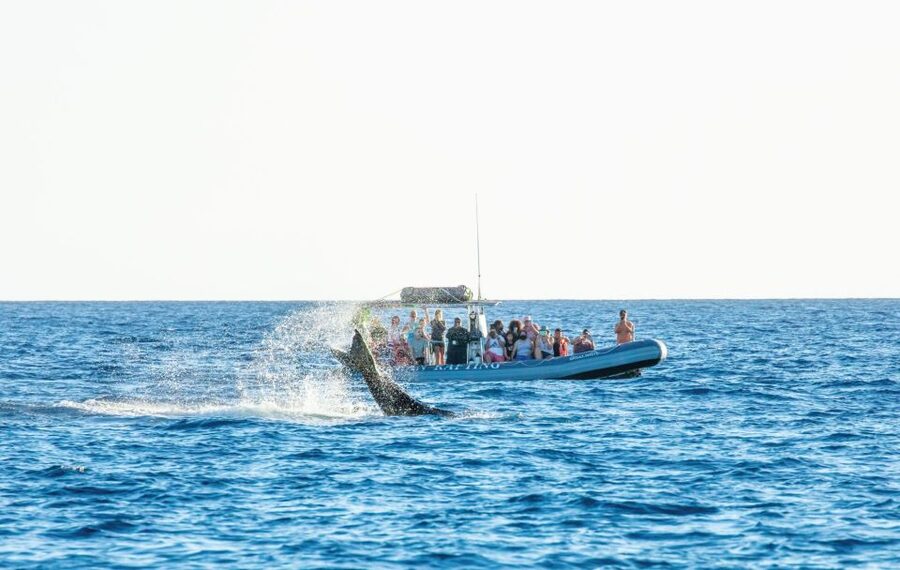
Reviewed · WHALE WATCHING
Maui: Guided Whale Watching Tour on Eco Raft
The best part of this Maui trip is hearing whales communicate through an underwater microphone while a small raft searches the coast for them. You stay dry enough for a simple ocean outing, though the low raft can still take spray and bumps. The company advertises a guaranteed whale sighting, but the exact behavior, distance, and number of whales remain up to the wild animals.
I like the small-group setting, which feels more personal than a large sightseeing boat. I also like the family-style extras: pastries, fruit, chips, cookies, and drinks while your marine naturalist explains what you are seeing. The main consideration is motion. Choppy water can make photography tricky, and this trip is not suitable for children under three, pregnant people, anyone with back problems, or wheelchair users.
Key points to know before booking
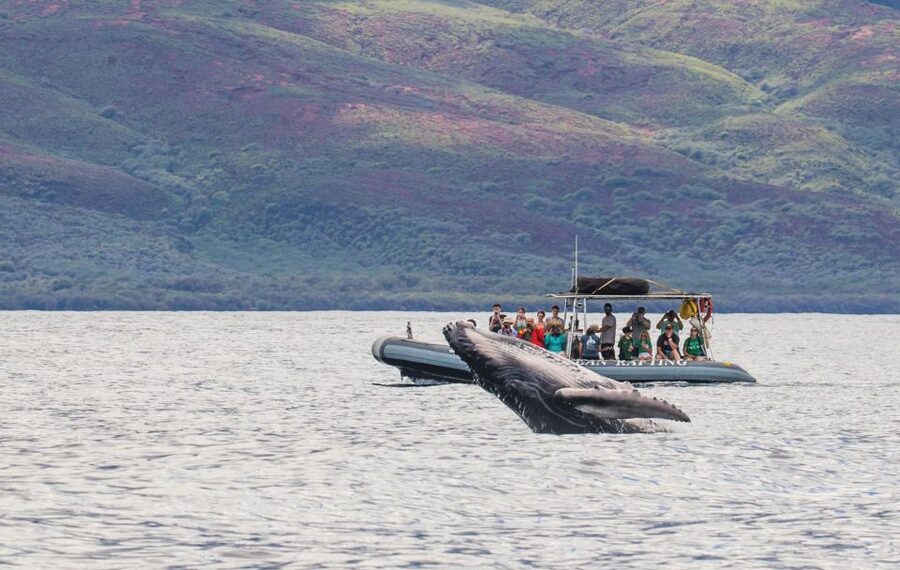
- Hear live whale calls: The onboard hydrophone brings whale songs and other sounds into the raft.
- Stay out of the water: This is a sightseeing cruise with no snorkeling or swimming.
- Small raft, close-to-water views: You get a lively ocean ride, but spray and bouncing are part of the deal.
- Strong guide team: Jack, Val, and Jill have been praised for friendly, useful explanations.
- Whale season matters: Sightings are promised, but breaches, tail slaps, and close approaches cannot be scheduled.
- Check in early: Meet at Dive Maui, 1223 Front Street in Lahaina, at least 30 minutes before departure.
Why the hydrophone makes this more than a boat ride
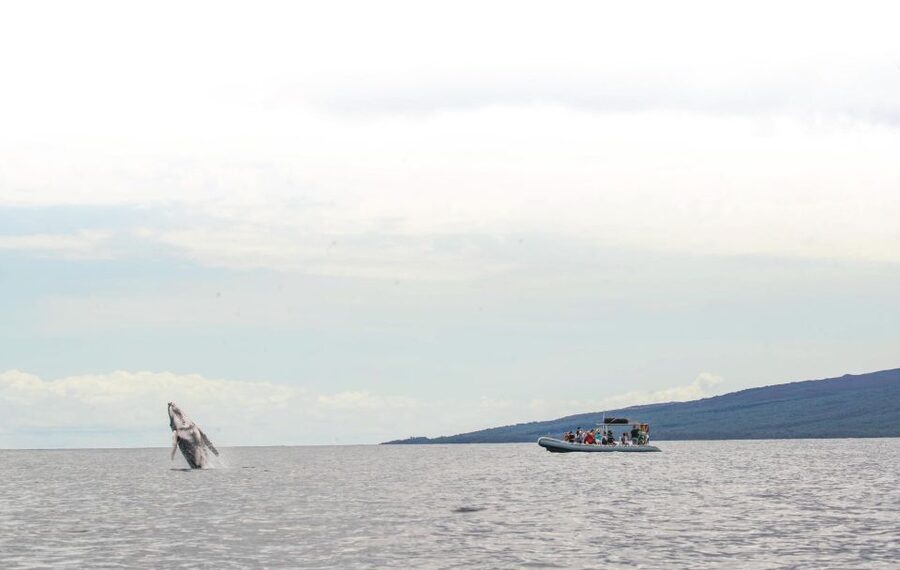
A whale-watching trip can turn into a quiet hunt for a distant fin. This one adds a sound track. The hydrophone lets you listen to whales communicating below the raft, which gives the outing a second way to notice wildlife even when the surface is calm.
That matters because whale behavior is unpredictable. You might see a breach, a calf, a tail, or only a small part of an animal passing below the surface. Hearing the calls keeps you involved between sightings and helps you understand that the water around the raft is active even when your eyes miss the action.
The crew also explains whale behavior and the marine environment around Maui and Lanai. Guides named Jack, Val, and Jill have been praised for friendly delivery and clear facts. One particularly good guide combination paired Jack at the helm with Val handling natural history. That sort of teamwork matters on a small boat, where a calm captain and an attentive naturalist shape the whole experience.
The company promotes a guaranteed whale sighting. Read that as a promise that you will encounter whales during the appropriate operating period, not a promise of a breach beside your seat. Wild animals set the terms. One trip produced more than eight whales, while another included several breaches and a fully breaching calf. Those moments are possible, but no crew can order them up.
More whale watching on Maui:
- Maui Eco-Raft Tour: Eye-Level Whale or Dolphin Watching – Lahaina
★ 5.0 · 2,482 reviews - From Maalaea: Whale Watching Tour Aboard the Quicksilver
★ 4.5 · 1,461 reviews - Maui: Ultimate Whale Watch from Lahaina
★ 5.0 · 1,162 reviews
From 1223 Front Street to open water
You check in at Dive Maui, at 1223 Front Street in Lahaina. The shop is next to the blue Snorkel Bobs building. Check-in is mandatory at least 30 minutes before the scheduled start. Arriving late can mean missing boarding, with no refund, so build in extra time.
Do not try to park at Mala Ramp. The instructions direct you to park near Longs Drugs at Lahaina Cannery Mall, walk toward Front Street, turn left, and cross the cement bridge to Dive Maui. That walk is simple enough, but it is not a last-second dash from a nearby parking space.
After check-in, the crew takes you to the departure point. The raft ride to the whale-watching area takes about 15 minutes, followed by roughly 1.5 hours of whale watching and another 15-minute ride back. The advertised duration can show as two to five hours depending on the departure slot and schedule, so check the exact time when you reserve.
The short ride out is part of the fun. This is not a high-sided cabin boat. You are close to the water, with a more direct view of the sea and the coast. The tradeoff is that you may feel each wave more clearly.
What the eco-raft feels like on the water
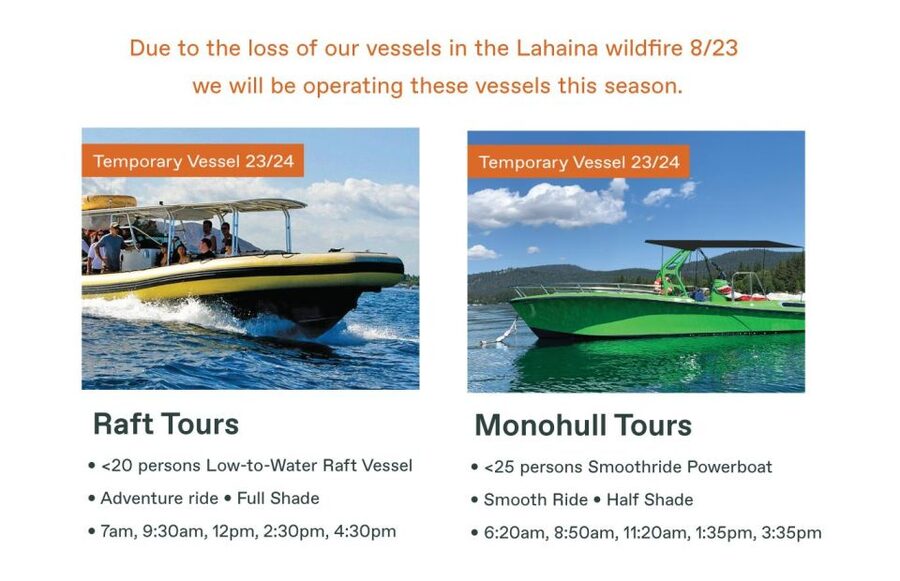
The raft is low to the water and built for an adventure-style ride. It can handle fairly large waves, according to the trip experience described by one four-person group, but that does not make it a smooth platform in all conditions. Bring a waterproof bag for your phone, wallet, and camera. The raft may get wet from spray, and the crew specifically tells you to expect that possibility.
The design suits people who want a lively ocean outing without entering the water. You do not need to swim, snorkel, or change into beach gear. That makes the trip useful for non-swimmers, older family members who want a wildlife experience, or anyone who prefers to watch from the boat.
It is less suited to people who need a very stable ride. One photographer had trouble getting sharp pictures from the front in choppy seas. Another account found the raft more stable than a different vessel for photography, so conditions and seating clearly matter. If photos are your main goal, ask the crew about the best side or position, and keep both hands available when the raft moves.
The seating view may not be equal from every spot. One participant wished they had sat on the starboard side because the captain often positioned the boat so that side had the better whale view. You cannot control every sighting, but asking about the viewing side at boarding is sensible.
The whale search along West Maui and Lanai
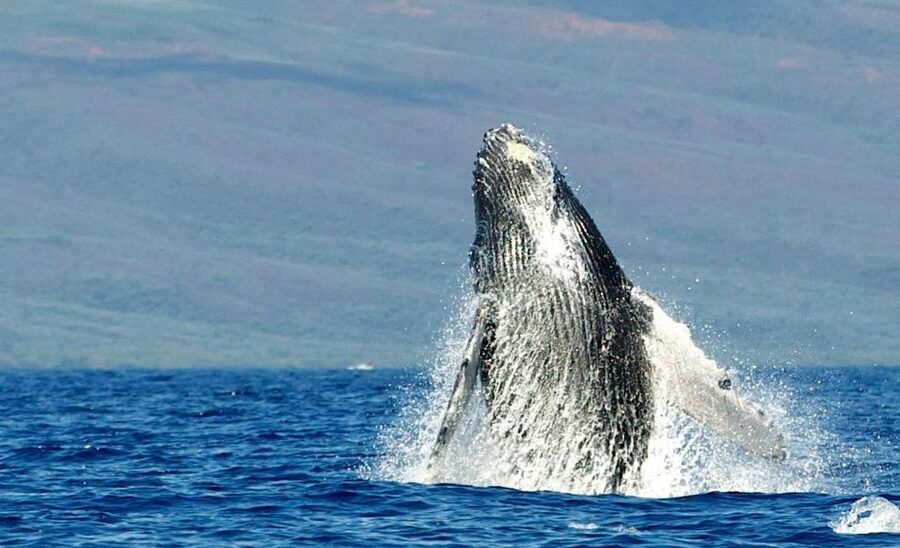
The main portion takes place off the coast of West Maui, with views toward Lanai. The point is not to race from one fixed stop to another. The captain searches for whale activity and positions the raft for safe viewing while the naturalist fills in the story.
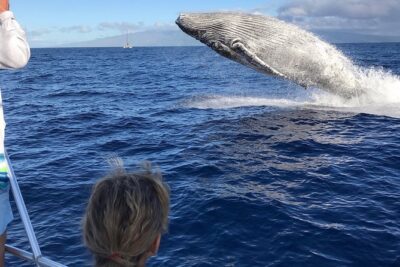
That search can produce a wide range of scenes. You might watch several whales playing together, follow a mother and calf, see pectoral fins breaking the surface, or catch a fluke as an animal sinks out of sight. The most dramatic accounts included two or three breaches, a fully breaching calf, and a group of whales chasing one another.
A mother and calf can be especially interesting because the naturalist can explain family behavior as you watch. One outing followed a female with her baby, another adult, and a rival male. The group saw repeated tail shots and the calf lifting out of the water. Scenes like that show why the guide’s interpretation matters. Without context, you see movement. With explanation, you begin to understand the social behavior behind it.
The coast itself adds value to the trip. You are seeing Maui from the water rather than simply looking at the ocean from shore. The exact route and views depend on conditions, but the ride provides a different angle on West Maui and the channel toward Lanai.
Still, keep your expectations honest. A whale sighting may mean a distant back, a fin, or a brief blow. Even a highly successful trip may have long quiet stretches between appearances. The guarantee is useful when choosing this tour, but it does not guarantee a close encounter or a perfect photograph.
Same island, a different kind of day:
- Small-Group Road to Hana Adventure Tour with Pickup & Lunch
★ 5.0 · 3,064 reviews - Maui Pineapple Farm Tour in Haliimaile
★ 5.0 · 2,855 reviews - Maui Snorkeling Adventure to Molokini and Turtle Town
★ 4.5 · 2,221 reviews - Maui: Haleakala Sunrise Spectacular with Local Breakfast
★ 4.5 · 2,155 reviews
Food, music, and the family feel
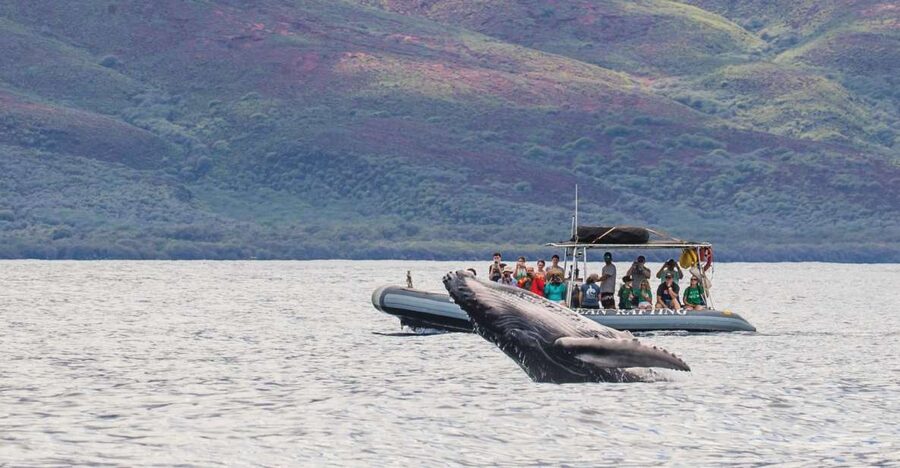
The crew serves simple snacks during the trip: sweet pastries, fruit, Maui-style potato chips, cookies, and beverages. Purified water is included. These are useful touches on a small boat, especially during a two-hour outing, but they are snacks rather than a meal.
Music may play while the raft cruises. One group particularly enjoyed the music between whale sightings. That helps the ride feel relaxed instead of overly formal, though people seeking a silent nature trip may prefer to focus on the sea and hydrophone.
The small-group format is one of the strongest reasons to choose this outing. A smaller raft makes it easier to hear the naturalist and ask questions. It also creates a more informal, family-style atmosphere. You are not simply one person in a large crowd looking toward a guide on a distant microphone.
There is a practical limit to that intimacy. A small raft has less room to spread out, and everyone may not have an equally good view at every moment. If the boat shifts position, you may need to adjust quickly. That is part of the tradeoff for being close to the water.
Food allergies require serious planning. The onboard food may contain or come into contact with gluten, peanuts, tree nuts, shellfish, fish, soy, eggs, dairy, and wheat. Tell the crew about allergies in advance and bring any required medication. Anyone with a severe allergy should consult a doctor before booking, since the operator cannot guarantee that snacks are free from cross-contact.
Who will enjoy this trip most
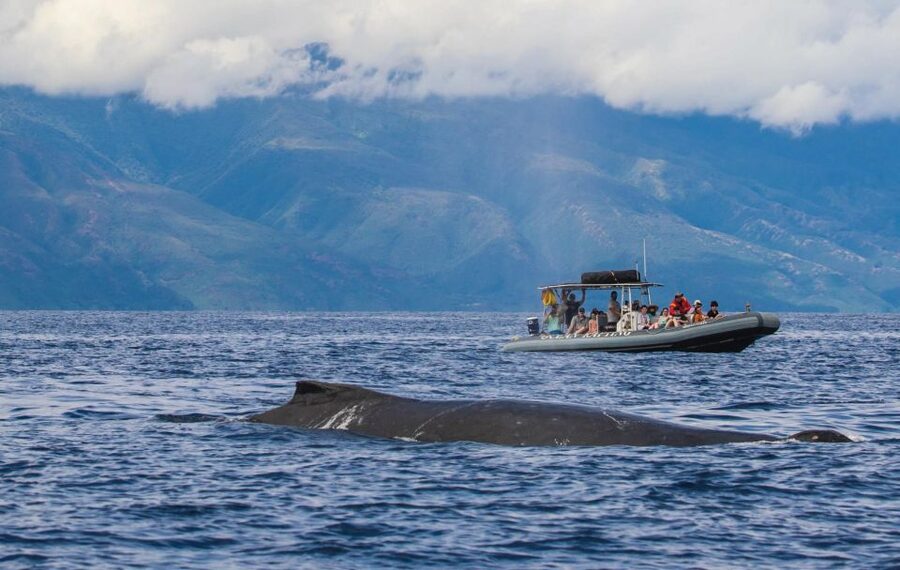
I would choose this tour for someone who wants wildlife without snorkeling. It works well for non-swimmers and for people who want an ocean experience while staying on the raft. Families with older children may also like the mix of snacks, music, guide stories, and moving wildlife.
It is also a good fit for visitors who prefer a small boat over a large group cruise. The naturalist is close enough to explain what is happening, and the captain can focus on finding whales rather than delivering a distant lecture.
The trip is not suitable for children under three, pregnant people, people with back problems, or wheelchair users. The low raft and choppy water require mobility and a tolerance for movement. If you are prone to motion sickness, consider the conditions and your own comfort carefully before booking.
Photography-focused visitors should think twice if perfect images are the priority. The raft offers an intimate view and can be stable in some conditions, but rough water makes it hard to hold a camera steady. A waterproof camera or phone case is far more sensible than bringing unprotected equipment.
Is $96 a fair price?
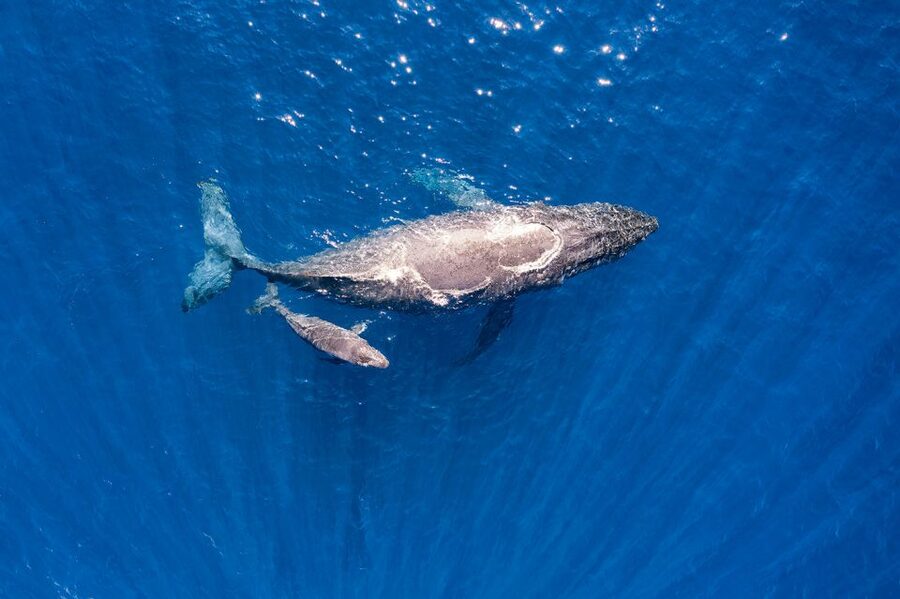
At $96 per person, the value rests on three things: the whale sighting, the small group, and the naturalist-led interpretation. You are not paying only for transportation. The hydrophone adds an experience that many basic whale rides do not offer, and the crew actively searches for wildlife rather than simply taking you offshore and waiting.
The price also includes purified water and light snacks. Those extras will not determine your decision, but they make the trip feel complete and save you from bringing food aboard.
The best value comes if you care about the quality of the encounter rather than the length of the boat ride. The actual whale-watching segment is about 1.5 hours, with roughly 30 minutes of raft travel. If you want a longer cruise or a large vessel with more space, another tour might suit you better. If you want a focused, small-group search with live whale sounds, $96 is reasonable.
A guaranteed sighting improves the value, but remember the limits of that promise. You are guaranteed whale activity according to the tour terms, not a specific species behavior, viewing distance, or number of animals. Weather and capacity can also force a cancellation or schedule change.
What to bring for a dry and comfortable ride
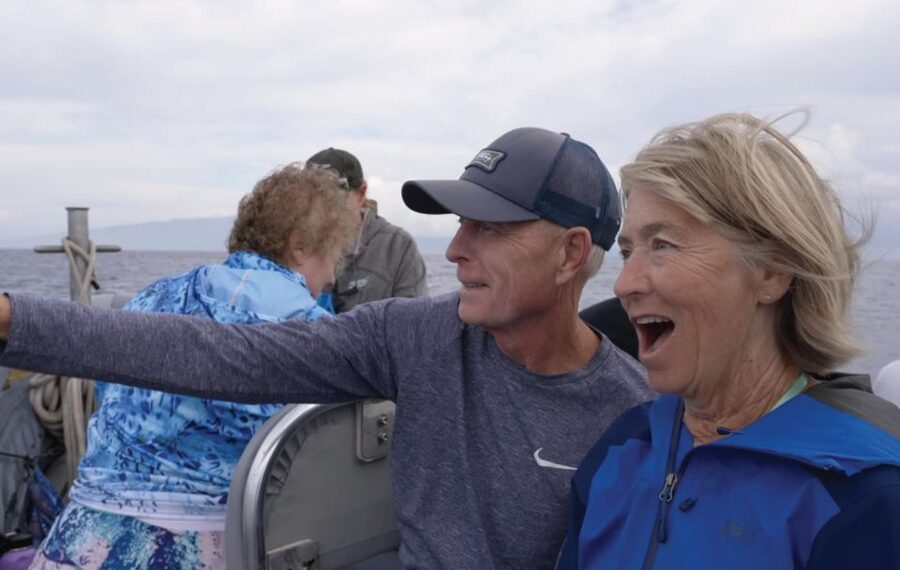
Pack light, but protect what you bring. The crew recommends sunglasses, a sun hat, a towel, a waterproof camera, biodegradable sunscreen, water shoes, and a waterproof bag.
The towel is not just for swimmers. Spray can reach the raft, especially in rougher conditions. Water shoes give you more secure footing than smooth sandals, and a waterproof bag protects the items you cannot afford to soak.
Keep your camera ready, but do not spend the entire trip looking through it. Breaches and tail movements happen fast. You may get better memories by watching the water first and taking pictures when the raft is steady.
Booking, cancellation, and weather notes
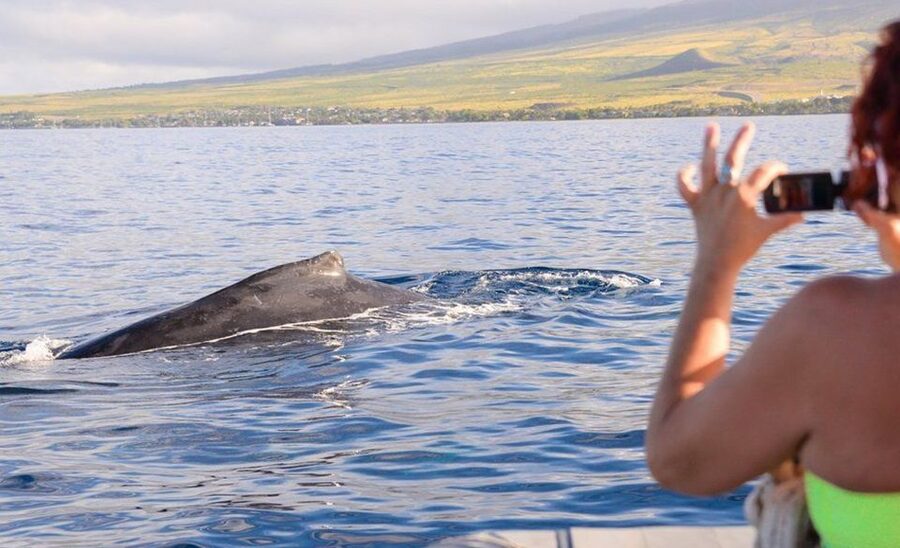
You can cancel up to 24 hours before departure for a full refund, and the reserve-now, pay-later option keeps the booking flexible. The tour can be canceled or rescheduled because of weather or capacity, so keep some space in your Maui schedule rather than placing it beside an important flight or fixed appointment.
The operating language is English. The meeting instructions are detailed, but you still need to check the departure time and arrive early. Missing the boarding window because of a late arrival does not qualify for a refund.
Should you book this Maui whale tour?
Book it if you want a small, lively raft ride, live whale sounds, and a knowledgeable naturalist without any swimming. It is especially appealing to non-swimmers and families with children old enough for the raft’s motion.
Skip it if you need a smooth, spacious boat, have back concerns, use a wheelchair, or want guaranteed close-up photographs. The strongest reason to choose this trip is not simply the promise of seeing whales. It is the combination of a close-to-water ride, useful guide commentary, and the unusual chance to hear whales beneath the raft.
FAQ
Where does the whale-watching tour meet?
Check in at Dive Maui, located at 1223 Front Street in Lahaina, Hawaii. It is next to the blue Snorkel Bobs building.
How early should I arrive?
You must check in at least 30 minutes before the scheduled start time. Late arrival may cause you to miss boarding, and no refund is issued for late check-in.
Is parking available at Mala Ramp?
No. The instructions direct you to park near Longs Drugs at Lahaina Cannery Mall, walk toward Front Street, turn left, and cross the cement bridge to Dive Maui.
Is swimming or snorkeling part of the tour?
No. This is a sightseeing trip from the eco-raft. There is no snorkeling or other in-water activity.
Are whale sightings guaranteed?
The tour includes a guaranteed whale sighting, but the exact behavior and viewing conditions vary because the whales are wild. Dolphin and other wildlife encounters are not guaranteed.
How long does the activity last?
The listed duration can range from two to five hours depending on availability and departure time. The stated route includes about 15 minutes by raft each way and around 1.5 hours of whale watching.
What should I bring?
Bring sunglasses, a sun hat, a towel, a waterproof camera, biodegradable sunscreen, water shoes, and a waterproof bag. The low raft can get wet.
Who cannot join the tour?
Children under three, pregnant people, people with back problems, and wheelchair users should not book this activity.
Can I cancel for a refund?
Yes. You can cancel up to 24 hours in advance for a full refund. The tour may also be canceled or rescheduled because of weather or capacity.
Just added on Maui
- Two Site Snorkeling Adventure featuring the Molokini Crater★ 5.0 · 4 reviews
- Road to Hana Deluxe Rainforest & Waterfall Experience from Maui★ 5.0 · 116 reviews
- Traditional Airport Lei Greeting on Kahului Maui★ 5.0 · 95 reviews
- Turtle Town Clear Kayak & Snorkel Tour (8am-11am)★ 5.0 · 100 reviews
- 3-Hour Small-Group Maalaea Luxury Snorkel Cruise Tour★ 5.0 · 29 reviews
- The Best Maui 3 Hour Molokini and Turtle Town Snorkel★ 5.0 · 106 reviews
- Elite Private Tour★ 5.0 · 7 reviews
- VIP Premiere Whale Watch Kaanapali Beach MAX 12 PASSENGERS★ 5.0 · 78 reviews
Whale Watching, compared.
Maui Eco-Raft Tour: Eye-Level Whale or Dolphin Watching – Lahaina
Read our review →
2-Hour Oahu Whale Watch from Ala Wai Harbor, Waikiki
Read our review →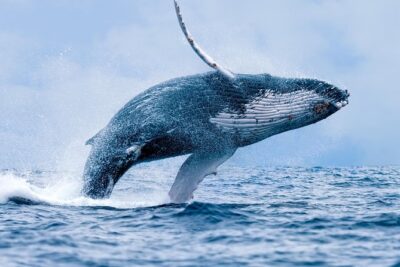
Luxury Snorkel Cruise, Local Buffet with Whale & Dolphin Watch
Read our review →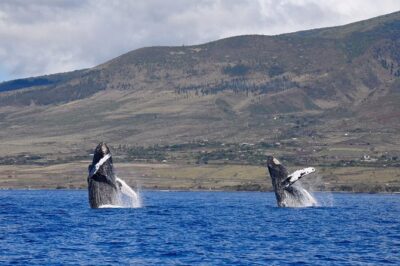
WHALES GUARANTEED Maui Whale Watching Makai Adventures
Read our review →
Waikiki, Oahu 2-Hour Whale Watching: Guaranteed Sightings
Read our review →
Ma’alaea Harbor: Whale Watching Tour Aboard Power Catamaran
Read our review →Browse the lists this tour appears in