
Reviewed · SURF LESSONS
Kona Surf Lesson in Kahaluu
Kahaluu Beach Park is a smart place to try surfing for the first time: the water is close at hand, the lesson stays focused, and you get into the waves rather than spending the morning on theory. Patient instruction is the main draw. Guides such as Koa, Carl, Brady, Kaleo, Max, and Molokai have helped nervous adults and children find their footing.
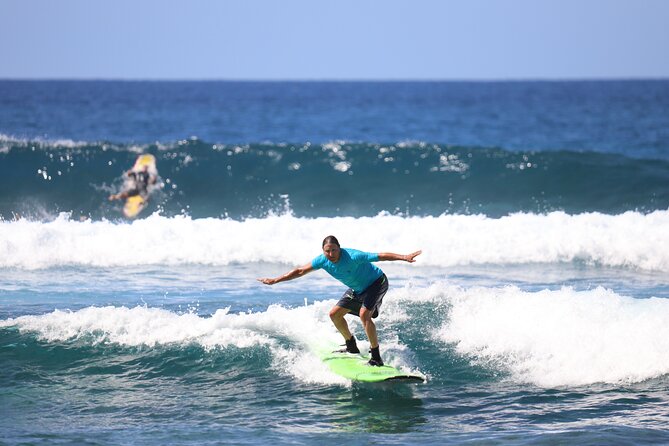
I like that reef shoes and an SPF surf shirt are included, so you have less gear to pack. I also like the hands-on format: you learn the pop-up on shore, then work on it in the water with an instructor nearby. The main catch is that wave conditions can change, and Kona is not known for dependable surf. On a slow or rough day, you may get fewer rides than you hoped.
Key points to know before you book
- Two hours at Kahaluu Beach Park: The lesson begins and ends at the park on Ali‘i Drive in Kailua-Kona.
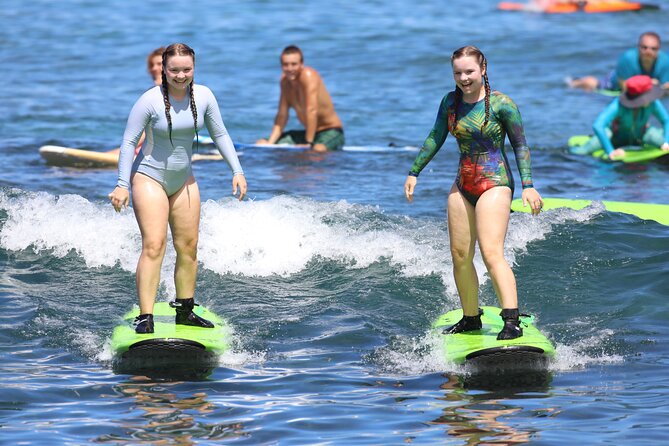
- Gear is supplied: You receive a foam top board, reef walker shoes, and an SPF surf shirt.
- Built for first-timers: The lesson covers stance, pop-up technique, surf etiquette, and water safety before practice begins.
- Good for families: Children, teens, adults, and older beginners have all taken part, with instructors adjusting their help to different ability levels.
- Instruction can vary by conditions: Calm, easy waves are ideal. Rough water or a low-surf day can limit your success.
- Maximum group size is 15: The experience is described as a small-group lesson, and multiple instructors may work with one group.
Why Kahaluu is a practical place to learn
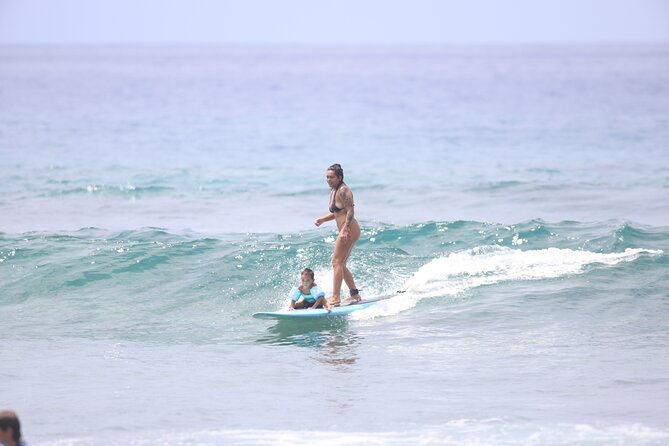
Surfing looks simple from shore. Lie on the board, paddle, stand up, and ride. In practice, the timing is tricky, especially when you are trying to remember where to put your feet while a wave lifts the board beneath you.
Kahaluu Beach Park gives you a useful first setting because the lesson takes place in a familiar, accessible Kona location rather than requiring a long trip to another part of the island. You meet at the park on Ali‘i Drive, and the activity returns to the same spot when the two hours are over.
The water conditions will matter more than the scenery. Kona does not usually offer the kind of strong, reliable surf associated with Hawaii’s most famous surfing beaches. That can be a plus for beginners, since smaller waves feel less intimidating. It can also be a drawback if the swell is weak or if the day brings difficult conditions.
One useful detail from the experience is that conditions are not treated as a minor footnote. A few lessons have faced waves that were either too limited or too challenging for easy beginner practice. If the weather is poor and the activity is canceled, you can choose another date or receive a full refund.
More surf lessons on Big Island of Hawaii:
- Private Surf Experience
★ 5.0 · 200 reviews - 2-Hour Guided Private Surf Lesson in Kona
★ 5.0 · 84 reviews - Go Surf Hawai’i (Kona Coast)
★ 5.0 · 83 reviews
Getting fitted for the right equipment
At the beach, you are sized for the equipment before heading into the water. The package includes a foam top surfboard, reef walker surf shoes, and an SPF surf shirt.
The foam board is the right kind of board for learning. It gives beginners a more forgiving platform than a narrow hard board, though board sizing can still matter. One family found that there were not enough beginner boards ideally matched to every person’s body weight. That is worth keeping in mind if your group includes people of very different sizes.
The reef shoes serve two purposes. They protect your feet and make walking in the water more comfortable around the rocky reef environment. You do not need to bring your own surf shoes or board.
The SPF shirt helps protect against sunburn and surf rash. You still need to bring your own swimsuit, towel, and sunscreen. The sun can feel strong even during a two-hour lesson, so sunscreen remains part of your preparation, not an optional extra.
The shore lesson: pop-ups, etiquette, and safety
Before you paddle out, the instructor gives a hands-on demonstration. This is where you learn the basic body position, how to place your hands, and how to move from lying on the board to standing.
The pop-up is the key skill. A good instructor breaks it into small movements so you are not simply told to stand when the wave arrives. The teaching also covers proper technique and surf etiquette, which matters in a shared break. You learn how to behave around other surfers and how to avoid creating a problem for the person riding a nearby wave.
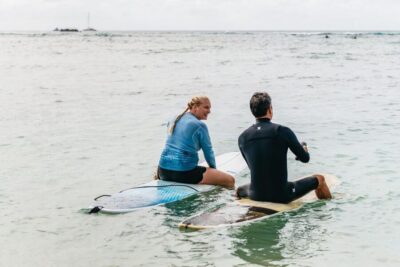
The safety briefing takes place both on shore and in the water. That two-part approach is useful. You hear the main instructions before you are wet, then receive reminders once you are dealing with the board, current, waves, and other people.
The best feedback from the lessons centers on patience and encouragement. Carl has worked successfully with adults and teenagers who had never surfed before. Brady and Brandon have helped groups of preteen girls stay relaxed and focused. Molokai has adjusted his approach to different skill levels and preferences. Kaleo has been praised for explaining the basics in a way that made sense to children aged 9 and 12.
The names may change from day to day, but the teaching style is clear: you are not expected to arrive athletic, confident, or already familiar with the ocean.
Two hours in the water
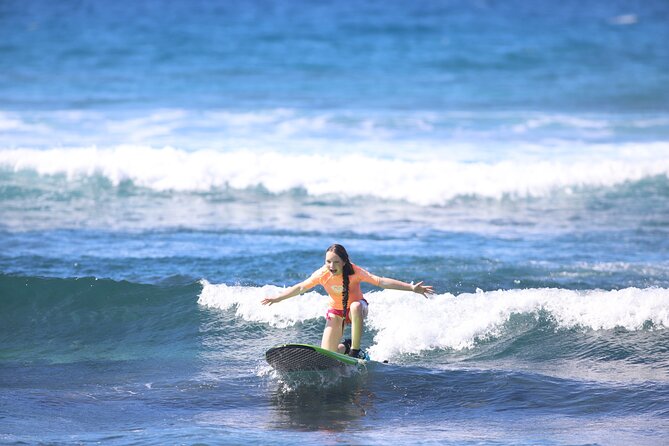
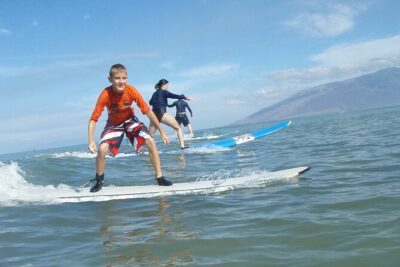
Once the shore instruction is finished, you head into Kahaluu Bay to practice. Your first goal is not graceful surfing. It is learning to catch a small wave, keep your balance, and make the pop-up at the right moment.
An instructor may help you choose a starting area where you have a better chance of success. That small decision can make a big difference. A nervous beginner who catches one early wave often relaxes quickly, while someone placed in a poor spot may spend the lesson falling before gaining any confidence.
Many first-timers have managed to stand on at least one wave during the two-hour session. Some families have caught several waves, and a few older children enjoyed the lesson enough to continue surfing afterward. You should treat those results as possible rather than guaranteed. Your success depends on the waves, your fitness, your balance, and how quickly you absorb the timing.
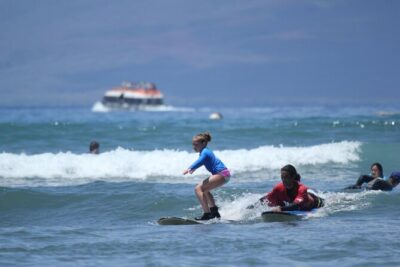
The instructors are also there to keep the lesson safe. Several families have appreciated having someone close to younger children throughout the water session. That matters when one child is eager to charge ahead while another is still trying to sit comfortably on the board.
The group size can affect how much personal help you receive. The stated maximum is 15 people, and the experience is described as a small group. One outing included a larger student group but also had five instructors, which kept the teaching support strong. When booking, it is sensible to ask how many instructors are scheduled for your date if individual attention is a major concern.
Same island, a different kind of day:
- Big Island in a Day: Volcanoes Waterfalls Sightseeing and History
★ 5.0 · 6,569 reviews - Big Island Manta Ray Night Snorkel
★ 5.0 · 5,656 reviews - Big Island: Kona Manta Ray Snorkel Tour in Keauhou Harbor
★ 4.5 · 2,465 reviews - Hilo Shore Excursion: Volcanoes National Park & Black Sand Beach
★ 4.5 · 2,338 reviews
The family factor at Kahaluu
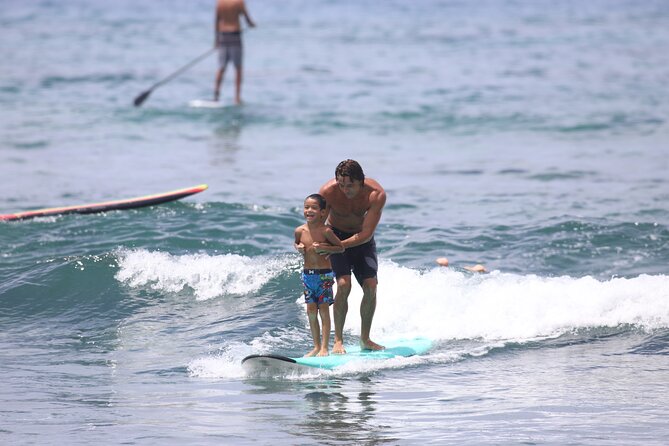
This is particularly suited to families with children and teens who want an active morning without committing to a full day of surfing.
Children aged 9, 10, 11, 12, 13, 15, 16, and 18 have all been part of successful lessons described in the feedback. That does not mean every child will stand up quickly, but it does show the activity can work across a broad age range when the instruction is well matched to the child.
Younger participants may need more direct supervision and encouragement. Older children and teenagers may pick up the mechanics faster, then want to keep surfing after the lesson. Some teens have rented boards for extra time once the formal instruction ended, though additional rental arrangements are not included in the stated package.
Kahaluu can also suit a mixed family day. One piece of feedback notes snorkeling nearby for family members who do not want to surf. The surf lesson itself does not include snorkeling, so treat that as a separate possibility at the beach rather than part of the booked activity.
Adults should not assume this is only for children. A mother in her forties with no previous surfing experience was able to get up, as was a beginner close to 70. You need a moderate level of physical fitness, since paddling, pushing up, balancing, and repeatedly getting back on the board all take effort.
The instructors make the difference
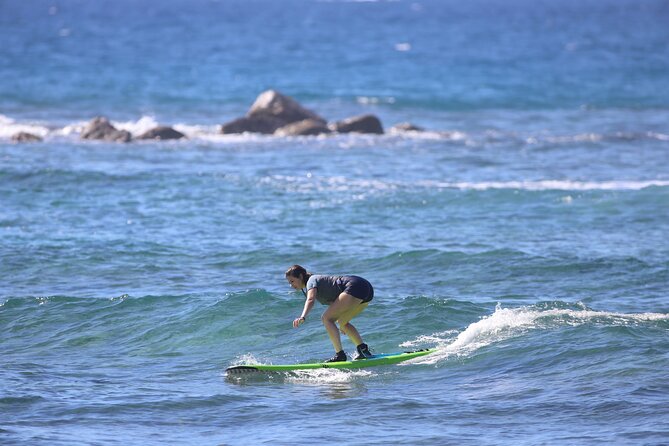
The strongest part of this experience is the teaching. Surf conditions may be modest, but good instruction can still make the session worthwhile.
Koa has helped young first-timers feel comfortable. Carl brings a calm, down-to-earth approach and can add stories about island life when the waves are slow. Brady, Brandon, Andre, Alex, Max, Poa, Parker, Kaleo, and Molokai have all been singled out for patience, safety, encouragement, or clear explanations.
That range of names also tells you something practical: this is a staffed lesson rather than a single instructor trying to manage every person alone. The actual team on your date may be different, but the operation has enough instructors to work with separate skill levels within one group.
Do not expect a private coaching session unless you have arranged one separately. A maximum of 15 people is still a group, and the amount of individual attention can vary. The best outcome comes when you listen closely during the shore demonstration and use the instructor’s water advice instead of trying to copy advanced surfers nearby.
Price and what you receive for $169.99
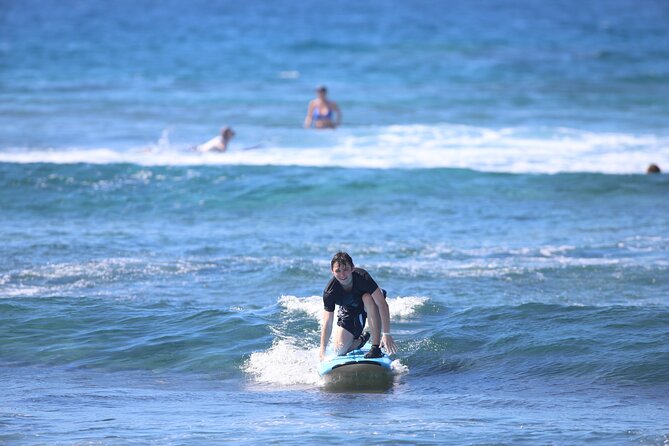
At $169.99 per person, this is not a bargain beach activity. It is priced as a guided lesson with equipment and instruction, not as a simple board rental.
The value depends on what you want from your Kona morning. If you only want to try standing on a board once, the price may feel high. If you want a safer introduction, properly fitted equipment, an explanation of etiquette, and help from instructors who can adjust the lesson for children and nervous adults, the cost becomes easier to justify.
You also avoid buying or hauling several pieces of gear. The foam board, reef shoes, and SPF surf shirt are included. You still bring a swimsuit, towel, sunscreen, and gratuity, so budget for those separately.
The lesson lasts about two hours. That is enough time to learn the basics and get repeated attempts, but it is not a full-day surf camp. If you catch the sport quickly, you may want more time on the water afterward. The formal experience itself ends back at the meeting point.
The activity is often booked about 21 days in advance. If your Kona schedule is tight, reserve early, especially if you need a particular morning or are organizing a family group.
Timing, conditions, and the cancellation rule
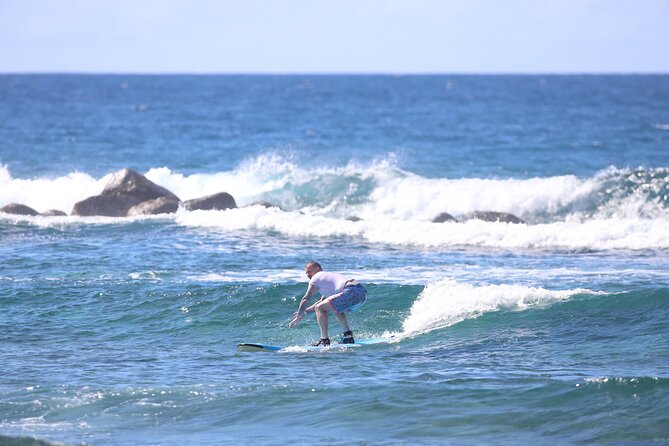
Surfing is controlled by the ocean, not by the clock on your reservation. A day with gentle waves may be perfect for beginners. A day with very few waves may leave you paddling and waiting. A day with difficult conditions can be uncomfortable or unsafe for new surfers.
One particularly important lesson from the feedback is that a challenging day can change the entire experience. An instructor may do everything right, yet the conditions can still make the lesson hard. If you are booking well ahead, keep some flexibility in your schedule.
You can cancel for a full refund up to 24 hours before the start time. Changes or cancellations made within 24 hours are not refunded. The cut-off uses local Hawaii time.
If poor weather causes the operator to cancel, you are offered a different date or a full refund. That policy gives you some protection, but it does not guarantee perfect waves. Weather cancellation and disappointing surf conditions are not the same thing.
Practical details for your Kona morning
The meeting point is Kahaluu Beach Park, Ali‘i Drive, Kailua-Kona, Hawaii 96740. The activity ends at the same place.
You receive confirmation when you book, and mobile tickets are supported. The lesson is offered in English. The park is near public transportation, and service animals are allowed.
Wear or bring a swimsuit. Pack a towel and sunscreen, since neither is supplied. You should also be ready for a physically active two hours involving paddling, pushing up from the board, balancing, and repeated attempts.
The experience allows up to 15 participants. It is best for beginners with moderate physical fitness who want an active introduction rather than a passive sightseeing outing.
Should you book the Kahaluu surf lesson?
Book it if you want to try a distinctly Hawaiian activity with proper instruction and you are comfortable accepting that the ocean controls the result. It is a strong choice for families, teens, couples, and adults who feel nervous about their first surf lesson.
I especially like it for groups with mixed confidence levels. The equipment is supplied, the safety instruction is built in, and the instructors have shown they can help both children and older beginners. The chance to stand on several waves is real, but it is not promised.
Think twice if you need guaranteed surf, a private lesson, or a low-cost activity. Kona conditions can be slow, and one lesson may not provide enough time for everyone to become comfortable. For most beginners, though, the combination of coaching, equipment, and time in the water makes this a worthwhile way to spend two hours on the Big Island.
FAQ
Where does the surf lesson meet?
You meet at Kahaluu Beach Park on Ali‘i Drive in Kailua-Kona, Hawaii 96740.
Where does the activity end?
The lesson ends back at Kahaluu Beach Park, the same place where it begins.
How long is the surf lesson?
The lesson lasts approximately two hours in total.
What equipment is included?
The experience includes a foam top surfboard, reef walker surf shoes, and an SPF surf shirt.
What should I bring?
Bring a swimsuit, towel, sunscreen, and money for gratuity. These items are not included.
Is the lesson suitable for beginners?
Yes. The lesson covers basic technique, the pop-up method, surf etiquette, and safety for first-time surfers.
How many people can join?
The maximum group size is 15 participants.
Is the lesson offered in English?
Yes. The activity is offered in English.
Can I cancel for a full refund?
Yes, if you cancel at least 24 hours before the experience start time. Cancellations made within 24 hours are not refunded.
What happens if poor weather cancels the lesson?
You can choose a different date or receive a full refund if the activity is canceled because of poor weather.
Just added on Big Island of Hawaii
- Volcano National Park and Rainbow Fall in Hilo, Hawaii★ 5.0 · 53 reviews
- Volcanoes National Park Adventure Tour – Hilo Shore Excursion★ 4.5 · 104 reviews
- Volcanoes National Park and Hilo Private Tour★ 5.0 · 3 reviews
- Private VAN Tour Hilo★ 4.5 · 5 reviews
- Volcanoes Adventure Tour from Hilo★ 4.0 · 29 reviews
- Majestic Waterfall Tour★ 5.0 · 31 reviews
- Private Shore Excursion Hilo Volcanoes National Park up to 10 PPL★ 5.0 · 36 reviews
- 5 Hour Custom Private Tour of Hawaii★ 5.0 · 9 reviews
Surf Lessons, compared.
Beginner-Friendly Waikiki Beach Surfing Lesson
Read our review →
Private Hanalei Sandy Bottom Surf Lesson on Kauai
Read our review →
Browse the lists this tour appears in