
Reviewed · SURF LESSONS
Go Surf Hawai’i (Kona Coast)
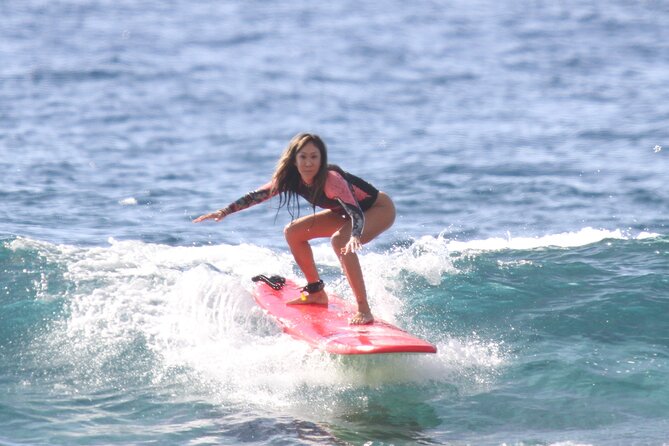
The best thing about Go Surf Hawai’i is the tiny group size. With no more than four people, you get real attention from instructors such as Jared, Jace, Rory, or Renee instead of waiting your turn in a large surf-school crowd. The lesson is built for first-timers, yet experienced beginners still get help with form, wave choice, and turning.
I like two details in particular: all the main gear is supplied, and the instructors share useful local advice about beaches, food, and places to explore. Some lessons end with fresh coconut juice, a small but memorable touch. The main drawback is the ocean itself. Waves and weather control the day, and one scheduled session had to be moved because conditions were too flat.
Key points to know before booking
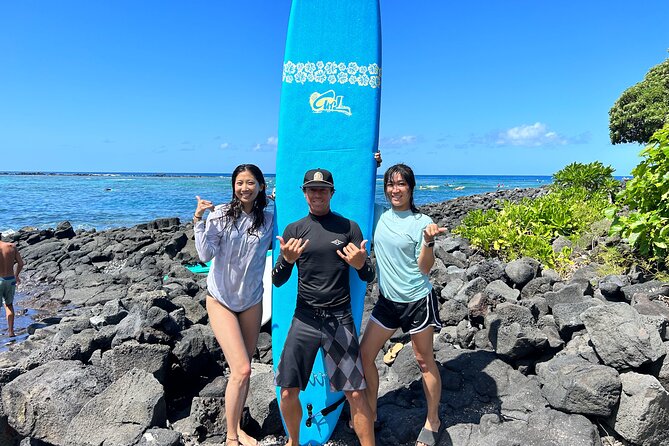
- Four-person maximum: Small groups mean more attempts, more coaching, and less time watching from the beach.
- Beginner-friendly surf break: You practice paddling, popping up, and balancing before heading into mellow waves.
- Instructors who adjust to your group: Jared, Jace, Rory, and Renee have worked with nervous adults, children, teenagers, and mixed-skill families.
- About 90 minutes in all: The session includes dry-land instruction, gearing up, and time in the water.
- Gear is supplied: Expect a soft-top board and rash guard, with optional photography when a freelance photographer is available.
- Ocean conditions matter: Poor weather or a lack of usable waves can lead to a new date or a full refund.
Why this Kona surf lesson works for beginners
Surfing looks simple from shore. You lie on a board, paddle, stand, and glide. In practice, the timing is awkward, the board moves under you, and a small wave can feel surprisingly fast. Go Surf Hawai’i deals with that first hurdle in a sensible way: your instructor starts on land and breaks the process into small steps.
You’ll meet at 78-6680 Ali‘i Drive in Kailua-Kona, then get set up with a soft-top board and rash guard. A soft-top board is a forgiving choice for new surfers. It offers a broad, stable platform and is less intimidating than a narrow performance board.
The dry-land portion covers the basics of paddling, standing, and finding your balance. That preparation matters. You can focus on the ocean instead of trying to remember every movement at once. Your instructor also customizes the lesson, so a nervous adult may receive a different level of help than a confident teenager in the same group.
Once you head out, the goal is not to chase a giant wave. You’ll work at a mellow beginner break, where the instructor can help you choose a manageable wave and give directions in the water. That setting is especially useful for a first lesson because success often comes from catching several small waves, not one dramatic ride.
More surf lessons on Big Island of Hawaii:
- Private Surf Experience
★ 5.0 · 200 reviews - Kona Surf Lesson in Kahaluu
★ 5.0 · 152 reviews - 2-Hour Guided Private Surf Lesson in Kona
★ 5.0 · 84 reviews
What happens during the 90-minute session
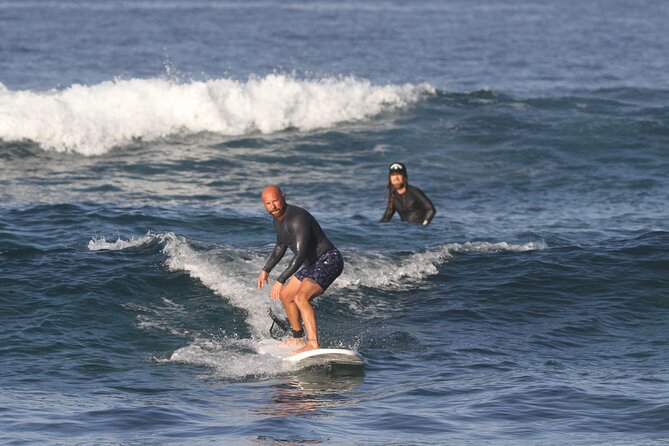
The activity lasts about an hour and a half. That is long enough to make repeated attempts, but short enough to fit into a busy Kona day. You should expect the time to include meeting up, getting your equipment, land instruction, and the water session.
The opening conversation lets the coach learn your group’s experience and comfort level. If one person has surfed before and another has never touched a board, the lesson can be adjusted to suit both. Several families have used the small group format for parents and children together, and the instruction has included children around six, ten, twelve, and thirteen years old.
After the land lesson, you carry the board to the water and begin practicing. The instructor helps with positioning, paddling, and the moment to rise. Early success may mean standing briefly on a small wave. That is still valuable. You are learning the timing and body position that you can repeat later.
The best part of this format is the number of tries. In a large class, you may spend much of the session waiting while someone else catches a wave. With only four people, the coach can keep the group moving and offer corrections between attempts. One family found that the small group gave everyone more chances in the water, which is exactly where the useful learning happens.
You may also work on turning, spotting waves, and improving your form. Jace has been especially helpful with technical feedback, including how to recognize a workable wave and how to turn the board. That makes the lesson more than a one-time stand-up trick. You leave with a few skills you can use if you rent a board later in your Hawaii visit.
The people teaching the lesson
Go Surf Hawai’i is a small operation, and the individual instructor can shape the feel of your session. Jared is described as patient, encouraging, and attentive to safety. He has helped nervous first-timers, children, and adults who were not confident about their fitness. His calm approach is a good match if you are worried about falling or entering the ocean for the first time.
Jace brings a clear teaching style and strong local knowledge. He has coached families, couples, and solo surfers, helping with form, wave choice, and turning. He has also been willing to reschedule when the surf was too flat, rather than send a group out for a poor lesson.
Rory has worked with young children and beginners who needed extra help paddling back into position. Renee has also taught children, including a six-year-old. The common thread is hands-on instruction, rather than simply explaining the sport from shore.
Your exact instructor is not guaranteed from the information provided, so book this with some flexibility. The teaching quality may feel slightly different from one coach to another, but the lesson format remains focused on practical help and safe progress.
Why the four-person limit matters
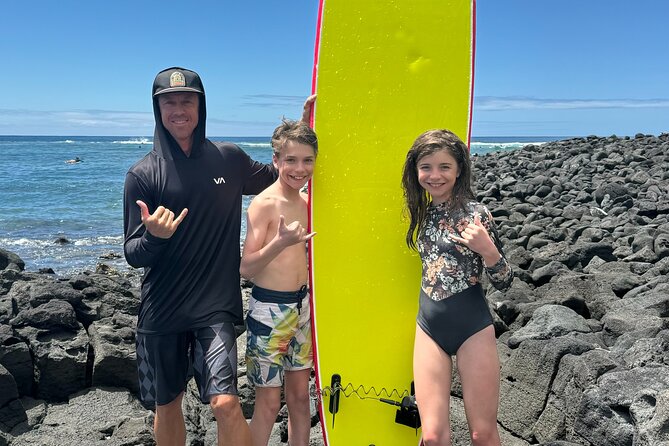
The maximum of four people is one of the strongest reasons to choose this experience. Surf lessons can become frustrating when a dozen boards share one instructor. You need help at the right moment, just before a wave arrives, not ten minutes later.
A group of four also works well for families. Parents can watch their children improve while still getting their own turns. Several family groups had all members stand at least once, including adults who did not consider themselves athletic. Children and teenagers often gained confidence quickly because the instructor could give them direct help instead of leaving them to copy someone else.
Couples benefit too. A more experienced partner can work on catching better waves while a nervous beginner receives simpler coaching. That balance is hard to achieve in a rigid class. Here, the instructor can tailor the challenge to each person.
The tradeoff is that a four-person maximum does not mean a private lesson. You still share the coach’s attention with up to three others. If you want the most individual instruction possible, ask about a private lesson. Private lessons are required for keiki under nine, according to the activity information.
Same island, a different kind of day:
- Big Island in a Day: Volcanoes Waterfalls Sightseeing and History
★ 5.0 · 6,569 reviews - Big Island Manta Ray Night Snorkel
★ 5.0 · 5,656 reviews - Big Island: Kona Manta Ray Snorkel Tour in Keauhou Harbor
★ 4.5 · 2,465 reviews - Hilo Shore Excursion: Volcanoes National Park & Black Sand Beach
★ 4.5 · 2,338 reviews
Gear, sun protection, and optional photos
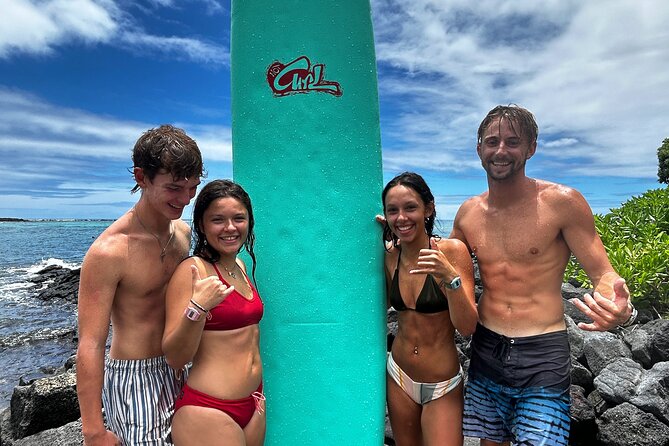
The main gear is included, which makes planning easy. You receive a soft-top board and rash guard. The rash guard helps reduce sun exposure and protects your skin from rubbing against the board, though you should still use sun protection appropriate for the ocean.
The provided equipment is a real value for a first lesson. You do not need to buy or rent a board before knowing if surfing suits you. It also removes one decision from a family morning, especially when several people need gear at once.
Photography is available on an optional basis. A freelance photographer may be able to capture the session, but availability varies, so request it in advance and understand that it is not guaranteed. Photos can be worthwhile because the action happens quickly and you may not remember your first successful ride clearly afterward.
Bring a way to keep personal items secure and avoid taking unnecessary valuables into the water. The supplied information does not specify changing facilities or storage, so it is wise to keep your arrival simple.
The local tips are part of the value
The surf lesson does not end with standing on a board. Jared, Jace, and the other instructors can point you toward places to surf, eat, and explore beyond the standard visitor route.
That local advice may be especially useful if you are staying on the Big Island for several days. A first lesson gives you a better sense of what kind of surf suits you, and the coach can offer equipment-rental or beach suggestions for later in your trip. One family used the advice to plan additional beach time around the weather.
I like this feature because it makes the lesson more useful after the 90 minutes are over. You are not simply checking surfing off a list. You are learning how to continue the activity on your own, at a level that makes sense for your group.
The experience also connects you with Kona’s surfing identity. One instructor pointed out that the lesson location is associated with the birthplace of surfing. That adds a bit of cultural context without turning the class into a lecture.
What the ocean can change
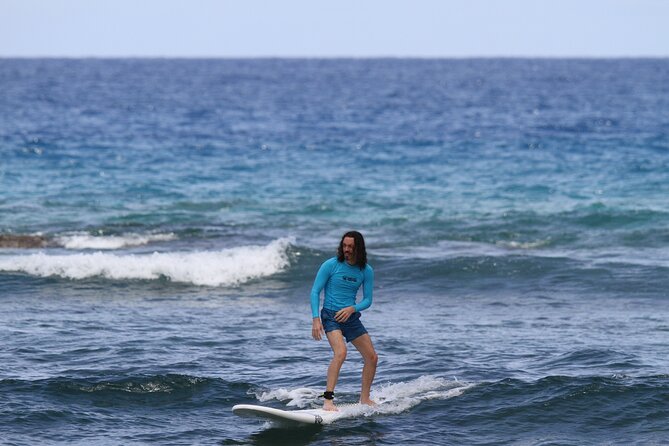
Surfing is an outdoor activity, so the schedule cannot be treated like a museum appointment. A flat day may not offer enough usable waves for a satisfying lesson. One group was contacted before the session and moved to the following morning, when the conditions improved.
That is good judgment, but it can disrupt a tightly planned vacation. I recommend booking early in your stay if possible. That leaves room to reschedule if weather or surf conditions do not cooperate.
The cancellation terms are straightforward. You can cancel at least 24 hours before the start time for a full refund. Changes or cancellations made less than 24 hours before the activity are not accepted for a refund. If poor weather causes the operator to cancel, you are offered another date or a full refund.
The activity calls for a moderate level of physical fitness. You need to paddle, push up, balance, and move through the water. You should also be comfortable swimming, even though the exact swimming requirement is not stated as a formal rule in the activity details. If you have concerns about mobility, stamina, or ocean comfort, contact the operator before booking.
Is the lesson good value?
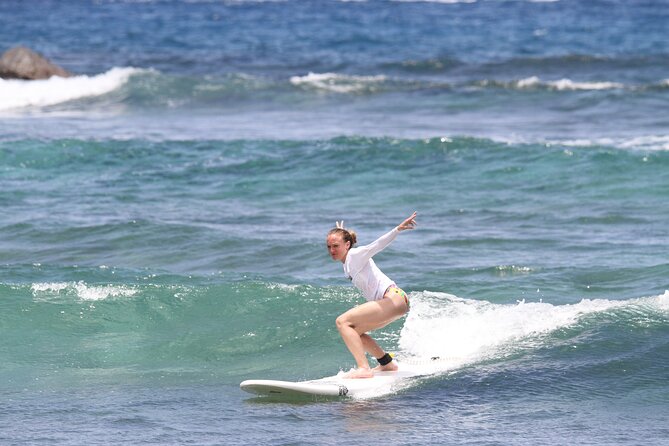
A price is not included in the supplied information, so I cannot judge the exact cost against other Kona classes. I can still explain what you are paying for. The value is strongest when you want a small group, supplied gear, direct instruction, and a lesson that works for mixed abilities.
A cheap large-group class may cost less per person but give you fewer attempts and less personal correction. Go Surf Hawai’i’s four-person limit can make a real difference, especially for a family of three or four. You can spend more of the water time practicing rather than waiting.
The lesson also has practical extras. You receive local surf and food suggestions, optional photo help, and instruction that can prepare you for a later board rental. Fresh coconut juice has been offered at the end of some sessions, though you should treat that as a pleasant possibility rather than a guaranteed part of the program.
For a family trying surfing for the first time, I see the value in the safety and patience as much as the number of waves. A nervous adult who catches even a small wave may leave with enough confidence to try again. That can be the difference between a frustrating morning and one of the most memorable activities of your trip.
Who should book Go Surf Hawai’i
This is a strong match for:
- First-time surfers who want step-by-step instruction.
- Families with children and teenagers.
- Couples with different levels of surfing experience.
- Adults who feel nervous about the ocean or doubt their athletic ability.
- Beginners who want local advice for more beach time later.
- Small groups who value repeated attempts over a large-class price.
It may be less suitable if you want advanced surf coaching, a long session, or guaranteed large waves. The lesson is designed around beginner-friendly conditions, not high-performance surfing. Conditions can also change, and the activity may need to move to another date.
The meeting point is at 78-6680 Ali‘i Drive in Kailua-Kona, and the activity ends there. It is near public transportation, but no hotel pickup is listed. Plan to arrive ready for an ocean activity and leave enough time to find the meeting point without rushing.
My booking advice
I would book this lesson if your goal is to stand up, learn the basics, and enjoy the ocean with a patient coach. The small group is the key feature. It gives you more direct help and more chances to try, which matters far more than fancy equipment for a first session.
Book early in your Kona stay so you have room to handle a weather-related change. If your group includes a child under nine, arrange a private lesson as required. Ask about photography when booking if you want pictures, and remember that the photographer’s availability is not guaranteed.
Skip it if you are looking for advanced surfing or cannot manage moderate physical activity. For everyone else, Go Surf Hawai’i offers a focused, friendly introduction to surfing, with enough practical advice to help you continue after the lesson ends.
FAQ
Where does the surf lesson meet?
The meeting point is 78-6680 Ali‘i Drive, Kailua-Kona, Hawaii 96740. The activity ends back at the meeting point.
How long does the activity last?
The surf lesson lasts approximately one hour and 30 minutes.
How many people can join the lesson?
The activity has a maximum of four people. This keeps the group small enough for more direct instruction.
Is the lesson suitable for beginners?
Yes. The lesson is designed for beginners and includes dry-land instruction on paddling, standing up, and balance before you enter a beginner-friendly break.
What equipment is provided?
A soft-top surfboard and rash guard are provided. Optional photography may be available through a freelance photographer, but availability varies.
Are private lessons required for young children?
Yes. Private lessons are required for keiki under nine.
What happens if the weather is poor or there are no usable waves?
If the activity is canceled because of poor weather, you will be offered another date or a full refund. You can also cancel at least 24 hours before the start time for a full refund.
Just added on Big Island of Hawaii
- Volcano National Park and Rainbow Fall in Hilo, Hawaii★ 5.0 · 53 reviews
- Volcanoes National Park and Hilo Private Tour★ 5.0 · 3 reviews
- Volcanoes National Park Adventure Tour – Hilo Shore Excursion★ 4.5 · 104 reviews
- Private VAN Tour Hilo★ 4.5 · 5 reviews
- Volcanoes Adventure Tour from Hilo★ 4.0 · 29 reviews
- Majestic Waterfall Tour★ 5.0 · 31 reviews
- Private Shore Excursion Hilo Volcanoes National Park up to 10 PPL★ 5.0 · 36 reviews
- 5 Hour Custom Private Tour of Hawaii★ 5.0 · 9 reviews
Surf Lessons, compared.
Beginner-Friendly Waikiki Beach Surfing Lesson
Read our review →
Private Hanalei Sandy Bottom Surf Lesson on Kauai
Read our review →
Browse the lists this tour appears in