Reviewed · TOURS IN MAUI
Honey Bee Adventure at the Maui Honey Bee Sanctuary
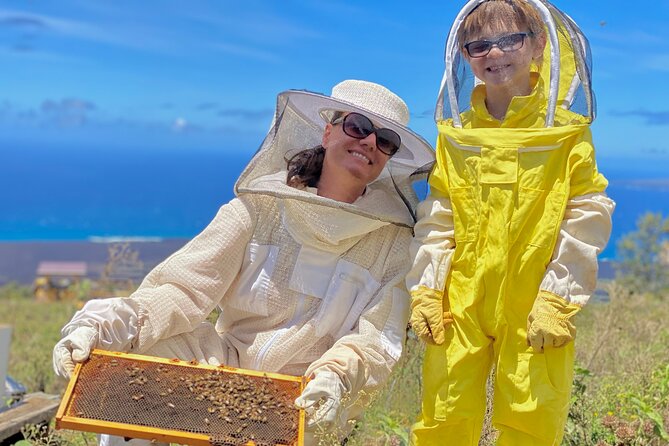
The best part of this Kula experience is getting close to a working hive without simply looking at bees from behind a fence. Beekeeper Erica leads a short lesson, suits you up, and brings out hive sections so you can see how the colony works. You’ll also taste honey from the farm and local beekeepers, with broad views from the apiary.
I like the small maximum group of eight, since it gives you a better chance to ask questions and see what is happening at the hive. I also like the mix of science and simple pleasure: you learn about pollination, handle the beekeeping gear, then taste the finished honey.
The main consideration is price. A past booking price was $79 per person, so this is not a cheap stop for a quick sample. The value depends on how much you want a hands-on lesson, rather than just a farm stand visit. The setting can also feel a little informal on arrival, so give yourself time to get oriented.
Key points at a glance
- Live hive visit: Put on the supplied bee suit and gloves, then see and hold sections from active hives under Erica’s direction.
- Honey tasting after the lesson: Sample honey from the sanctuary and Maui’s local beekeeping community at the farm stand.
- Small group setting: The group is limited to eight people, which is useful when you have questions or want a clear look at the hive.
- Kula views: The apiary has wide views toward the water, and the drive through Upcountry Maui can be part of the appeal.
- Family-friendly subject: Children, couples, honeymooners, friend groups, school groups, and company groups can all take part.
- Plan for bee safety: Closed-toe shoes and long, white or light-colored socks are required. This is not advised for anyone with a severe bee-sting allergy.
Why this Maui bee tour is different
Many farm visits give you a product to taste and a few facts to take home. This one lets you see the source. The honey is not an abstract item on a shop shelf: you learn how bees collect nectar, pollinate plants, build their colony, and turn nectar into honey.
That connection gives the tasting more meaning. After seeing the boxes and frames, you can compare the honey with a better sense of where it came from. You may also find beeswax candles, lotions, lip balm, muscle salve, jewelry, and other hive-related goods at the farm stand. These purchases are optional, but they give the stop a local, handmade character.
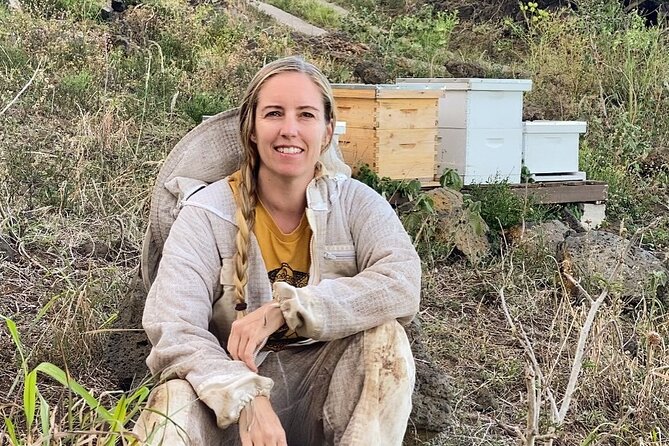
The tour is led by Erica, a beekeeper and the person behind the sanctuary. Her stated aim is to teach people why honeybees matter while making useful goods from the hive. That combination works well for visitors who want more than a quick photo opportunity.
Other trips people book on Maui:
- Small-Group Road to Hana Adventure Tour with Pickup & Lunch
★ 5.0 · 3,064 reviews - Maui Pineapple Farm Tour in Haliimaile
★ 5.0 · 2,855 reviews - Maui Eco-Raft Tour: Eye-Level Whale or Dolphin Watching – Lahaina
★ 5.0 · 2,482 reviews
Arriving at 16-655 Piilani Highway
The meeting point is at 16-655 Piilani Highway in Kula, with the activity beginning at 10:30 a.m. and ending back at the same place. The location is part of the experience, not just a pickup point. It sits in Maui’s Upcountry, where the drive can feel removed from the resort districts and coastal traffic.
The route itself may be memorable. Some people find the drive toward the sanctuary scenic, with winding sections that can feel a little like the road to Hana. That does not mean this tour includes the road to Hana, but it does mean you should treat the journey as part of your morning rather than a quick stop beside a major highway.
Arrival can be somewhat casual. If you are not sure where to go, ask at the front stand and look for directions to the tour area. The operation is small, which is part of its charm, but it may not have the polished arrival system of a large commercial attraction.
Use the mobile ticket supplied with your booking and arrive ready for the 10:30 start. Since the experience lasts about 90 minutes, you can fit it into a half-day Upcountry plan. The exact amount of time you need before or after depends on your drive and other stops.
The opening lesson on bees and pollination
The experience begins with an educational presentation. Erica explains the role honeybees play in pollination and how honey is made. This section gives you the basic vocabulary and context you need before standing beside a live hive.
The pollination lesson matters because it links the bees to the wider food system. Bees are not only producers of honey. Their work helps plants reproduce, which makes the hive important far beyond the jar of honey you may take home.
The honey-making process is also easier to understand after you learn what the bees are doing inside the colony. A good guide can turn a familiar food into a series of practical steps: bees gather nectar, work with it inside the hive, and store it as food. Here, the lesson prepares you to recognize those ideas when you see the frames.
This is a useful part of the tour for children and school groups, but adults should not assume it is only for kids. Couples and friends can enjoy it too, particularly if one person already has an interest in gardening, food, conservation, or small-scale farming.
Putting on the bee suit and gloves
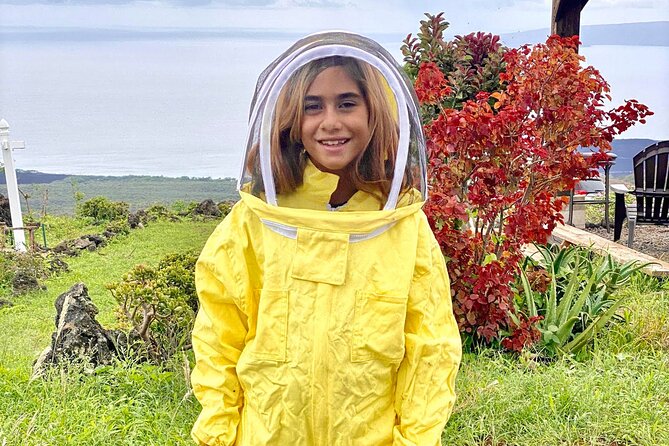
Once the presentation is finished, you prepare for the live hive portion. Bee suits and gloves are provided, so you do not need to bring specialist gear. You do need closed-toe shoes and long white or light-colored socks.
That clothing requirement is easy to overlook. Pack the right shoes and socks before leaving your hotel, since the tour is not designed for sandals or bare ankles. Light-colored socks are requested, so do not rely on dark, short athletic socks.
Putting on the protective gear is part of the fun, especially for families. It also changes your attention. A hive that might look like a simple box from a distance becomes something you approach carefully, with respect for the insects and the guide’s instructions.
The gear can make the experience feel more active than a standard lecture. You are not merely hearing that bees are busy and organized. You are preparing to stand close to them and look at the materials they use.
Same island, a different kind of day:
- Maui Snorkeling Adventure to Molokini and Turtle Town
★ 4.5 · 2,221 reviews - Maui: Haleakala Sunrise Spectacular with Local Breakfast
★ 4.5 · 2,155 reviews - Maui Snorkeling Adventure From Ma’alaea Harbor to Molokini
★ 4.5 · 1,997 reviews - Maui: Turtle Town Snorkel with Photo and Video
★ 5.0 · 1,916 reviews
Seeing and holding sections from the live hives
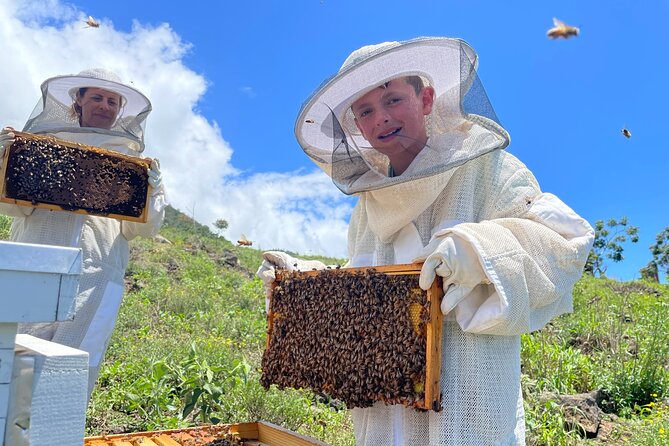
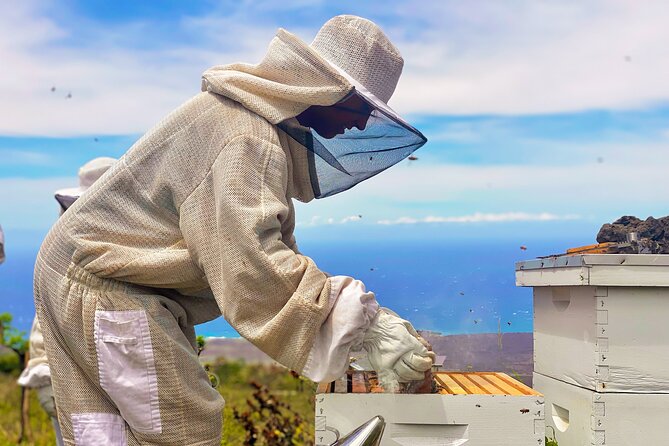
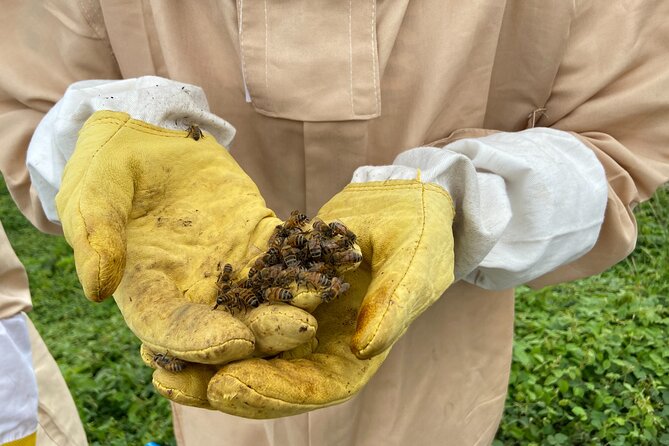
The hands-on portion takes place at the apiary. Erica removes hive sections so you can see what is happening inside and, under her direction, hold pieces from the hive. This is the point where the earlier lesson becomes real.
You may see bees moving across the frames and gain a clearer sense of the hive as a working community. The exact activity can vary with conditions, since bees are living creatures and weather affects the tour. Still, the central appeal is consistent: you get closer to beekeeping than you would at a museum display.
The small group helps here. With no more than eight people, the guide can give more attention to each person, explain what you are seeing, and help you follow the safe way to handle the equipment. In a larger group, the same hive visit could become a distant demonstration. This format should feel more personal.
It is worth keeping your expectations sensible. You are not taking over the work of a beekeeper or opening the hive alone. This is a guided encounter, and you should follow Erica’s instructions closely. The bees are the attraction, but they are not trained performers.
Guests with a severe bee-sting allergy should not book this activity. Even with protective clothing, a live-apiary visit carries a risk that a classroom presentation does not.
Honey tasting at the farm stand
After the hive visit, you taste honey from the sanctuary and from Maui’s local beekeeping community. This is a pleasant finish because it brings the morning back to something simple and edible.
Taste the honey with the lesson in mind. You have just learned how it is produced and seen the equipment used by the bees and beekeeper. The sample becomes a small link between the working hive, Maui’s plants, and the finished product.
The farm stand also sells products made with materials from the hives. Depending on what is available, you might find honey, beeswax candles, lotions, lip balm, muscle salve, and jewelry. These items make practical souvenirs, especially if you want something smaller than a standard Maui gift-shop purchase.
A jar of honey is a particularly good take-home item, but check your own luggage plans before buying larger quantities. The tour information does not specify package sizes or shipping services, so ask at the stand if you need details.
The views from this Upcountry apiary
The apiary has panoramic views toward the water. The scenery adds real value, especially if you are already planning time in Kula. You can combine an unusual farm visit with an open-air setting instead of spending the whole morning indoors.
The view is also a reminder that this is not a city attraction with bees placed in a controlled exhibit. The sanctuary sits in a rural part of Maui, and the setting helps explain why a bee farm belongs here. Bring a camera if you enjoy scenery, but keep the hive work and safety instructions as your first priority.
Weather matters. The activity requires good conditions, and poor weather can lead to a different date or a full refund. Since the tour includes time outdoors and contact with active hives, a weather cancellation is more understandable here than it would be for an indoor museum.
Is the roughly 90-minute visit worth the price?
A past booking recorded the cost at $79 per person. Prices can change, so check the current amount before booking. At that level, you are paying for a small-group lesson, protective equipment, a guided live-hive visit, honey tasting, and the setting, not just a sample of honey.
I would call it fair value for someone who specifically wants a hands-on beekeeping experience. The limited group size is important. You get a more direct look at the frames and more opportunity to ask Erica questions than you would at a large farm attraction.
The price is harder to justify if you mainly want a scenic drive or a jar of honey. You can enjoy the view and shop at the farm stand, but the main reason to pay for the tour is the educational and live-hive portion.
The informal setup may also affect how you judge the value. One past visit felt disorganized at the start, with uncertainty about where to check in before Erica arrived to explain the plan. That does not erase the substance of the activity, but it is useful to know that this is a small working operation, not a tightly scripted theme-park show.
Who should book this experience?
I would recommend the tour for families with curious children, couples who want an unusual Maui activity, and anyone interested in food production or conservation. The subject gives children something concrete to learn, while the suit-up and hive visit keep the morning active.
It also suits honeymooners and friends looking for a quieter change from beaches and resort pools. School groups can use it as a lesson about ecology and agriculture, and the small format may work well for team-building or company outings.
You should think twice if you dislike insects, feel uneasy around live bees, or want a polished attraction with a highly structured arrival. The tour is also a poor choice for anyone with a severe bee-sting allergy.
The 10:30 a.m. start makes it easy to build a morning around the visit, but the location means you should plan your route carefully. You may want to pair it with other Upcountry stops, though the tour itself returns you to the meeting point.
Booking, weather, and practical details
Confirmation is provided when you book, and the ticket is mobile. The tour is offered in English and has a maximum of eight people. Most people can participate, but the live-hive setting makes the shoe, sock, and allergy rules important.
You can cancel for a full refund up to 24 hours before the start time. Cancellations or changes made within 24 hours are not accepted for a refund. The cutoff uses local Maui time.
If poor weather forces a cancellation, you can receive a different date or a full refund. If the minimum number of participants is not reached, you will also be offered another date or experience, or a full refund.
Should you book the Maui Honey Bee Adventure?
Book it if you want to understand where honey comes from and are happy to trade a polished attraction for a small, personal farm visit. The best features are the live hive work, Erica’s teaching, the group limit of eight, and the chance to taste honey after seeing the process behind it.
Skip it if you only want a quick tasting, dislike bees, or think $79 is too much for a 90-minute activity. For the right audience, though, this is a memorable Upcountry stop with a clear purpose, lovely views, and enough hands-on action to make the lesson stick.
FAQ
Where does the Maui Honey Bee Adventure begin?
The tour begins at 16-655 Piilani Highway, Kula, Hawaii 96790.
What time does the tour start?
The scheduled start time is 10:30 a.m.
How long does the experience last?
The activity lasts approximately one hour and 30 minutes.
Where does the tour finish?
The experience ends back at the same meeting point in Kula.
Is the tour offered in English?
Yes. The activity is offered in English.
How many people can join the tour?
The group has a maximum of eight participants.
Are bee suits and gloves provided?
Yes. Bee suits and gloves are provided for the live-hive portion.
What should I wear?
You should bring closed-toe shoes and long white or light-colored socks.
Can I cancel for a refund?
You can cancel at least 24 hours before the start time for a full refund. Cancellations or changes made less than 24 hours before the start time are not accepted, and bad weather or an unmet minimum may lead to a different date or a full refund.
Just added on Maui
- Two Site Snorkeling Adventure featuring the Molokini Crater★ 5.0 · 4 reviews
- Road to Hana Deluxe Rainforest & Waterfall Experience from Maui★ 5.0 · 116 reviews
- Traditional Airport Lei Greeting on Kahului Maui★ 5.0 · 95 reviews
- Turtle Town Clear Kayak & Snorkel Tour (8am-11am)★ 5.0 · 100 reviews
- The Best Maui 3 Hour Molokini and Turtle Town Snorkel★ 5.0 · 106 reviews
- 3-Hour Small-Group Maalaea Luxury Snorkel Cruise Tour★ 5.0 · 29 reviews
- VIP Premiere Whale Watch Kaanapali Beach MAX 12 PASSENGERS★ 5.0 · 78 reviews
- Ti Leaf Airport Lei Greeting (Maui, Kahului Airport, OGG)★ 5.0 · 3 reviews
Tours in Maui, compared.

Small-Group Road to Hana Adventure Tour with Pickup & Lunch
Read our review →

Maui Eco-Raft Tour: Eye-Level Whale or Dolphin Watching – Lahaina
Read our review →
Maui Snorkeling Adventure to Molokini and Turtle Town
Read our review →
Haleakala Sunrise Spectacular with Local Breakfast
Read our review →
Maui Snorkeling Adventure From Ma’alaea Harbor to Molokini
Read our review →