
Reviewed · ZIP LINES
North Maui: 7 Line Zipline Adventure with Ocean Views
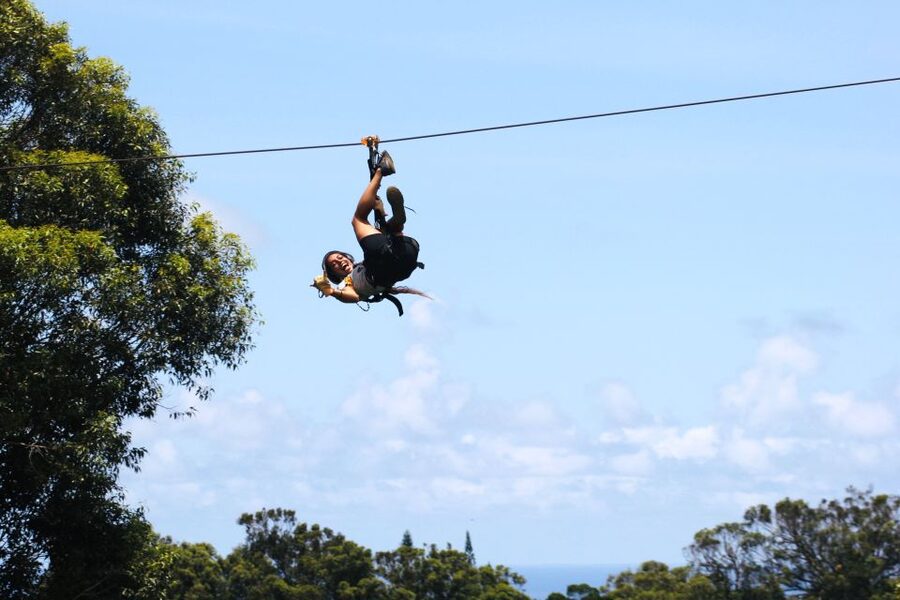
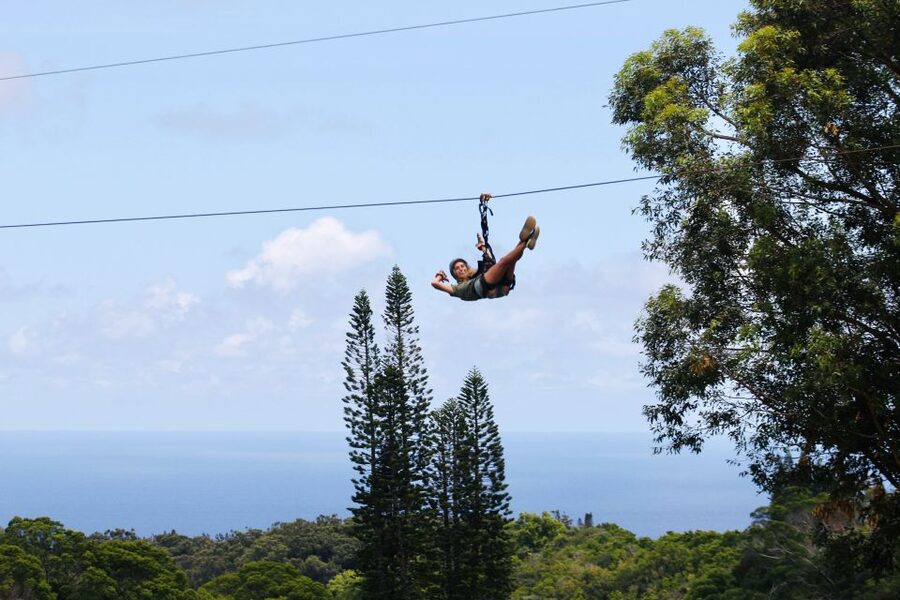
North Maui’s seven-line zipline course mixes fast rides with a setting you won’t get at a beach resort. You’ll sail above giant eucalyptus trees, cross suspension bridges, climb to an aerial platform, and catch wide views toward the ocean and Maui’s green north shore. The site is also a former WWII Marine base, so this is more than a quick thrill ride.
I like the careful start, with a safety briefing, harness practice, and a short Trainer Line before the real course. I also like the automatic braking system, which lets you focus on the view instead of guessing when to slow down. The main drawback is simple: you must drive yourself to a rural meeting point, and the course can feel like a workout by the seventh line.
Key points to know before you book
- Seven varied zipline rides: Expect a mix of heights and lengths, not seven identical runs.
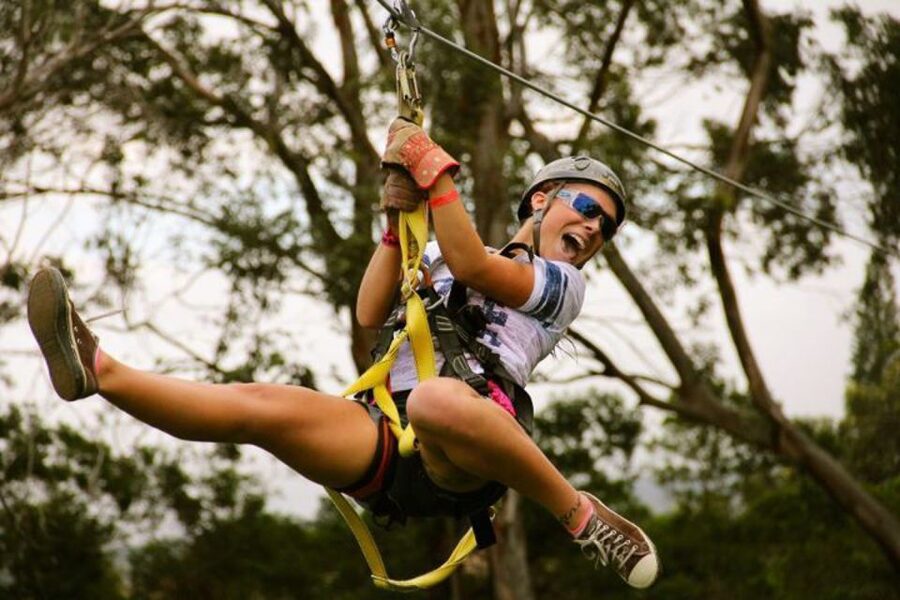
- A 45-mph finale: The Grand Slam line is the biggest rush and allows several body positions with its five-point harness.
- WWII history at Camp Maui: Your visit includes access to a museum on the former Marine base.
- A friendly, safety-first crew: Guides such as Trev, Ocean, Kayla, and Phi have led groups with clear instructions, jokes, and patient encouragement.
- A useful money-back safety net: You can stop during training if ziplining is not for you and receive a full refund.
- Strict participation rules: The tour is for ages five and up, with a 40 to 270 pound weight range. Open-toed shoes are not allowed.
Arriving at Camp Maui in Haiku
The meeting point is NorthShore Zipline Co. at 2065 Kauhikoa Road in Haiku. You’ll drive east on Hana Highway, also marked as Highway 36, past Paia. After 4.2 miles, turn at mile marker 11 onto Haiku Road, then continue uphill for 1.3 miles.
Turn left just past the Temple of Peace onto Kauhikoa Road. The zipline base is 2.8 miles farther on the left. The instructions specifically say not to use GPS or Google Maps, so print or save the directions before leaving your hotel. This is one of those Maui activities where five minutes of preparation can prevent a very annoying wrong turn.
You arrange your own transportation. There is no pickup included, so allow enough time to reach Haiku and locate the base without rushing. The experience lasts about two hours, and morning and afternoon departures are usually available.
Wear closed-toe shoes. Comfortable clothes are sensible because you’ll be moving between platforms, bridges, and ladders. Safety equipment includes a helmet, harness, gloves, and rain gear. Closed-toe shoes may be available on request, but I would not count on that as your plan. Bring cash for a guide tip, and leave the big camera at your accommodation.
More zip lines on Maui:
- 7-Line Maui Zipline on the North Shore
★ 4.5 · 1,648 reviews - Maui Zipline Eco Adventure: 8 Lines through the Jungle
★ 5.0 · 1,398 reviews - Haleakala 6 Line Zipline Adventure
★ 5.0 · 913 reviews
The Camp Maui beginning: history before the harness
Before you clip onto a cable, you’ll learn how Camp Maui served as a Marine base during World War II. The Camp Maui Museum gives the activity a useful sense of place. Instead of arriving at a generic adventure park, you begin at a site connected to Maui’s wartime past.
The museum portion is not the main event, and the supplied details do not promise a long guided history talk. Still, it adds something worthwhile. You can look at the zipline course differently when you know the ground beneath it once had a military purpose.
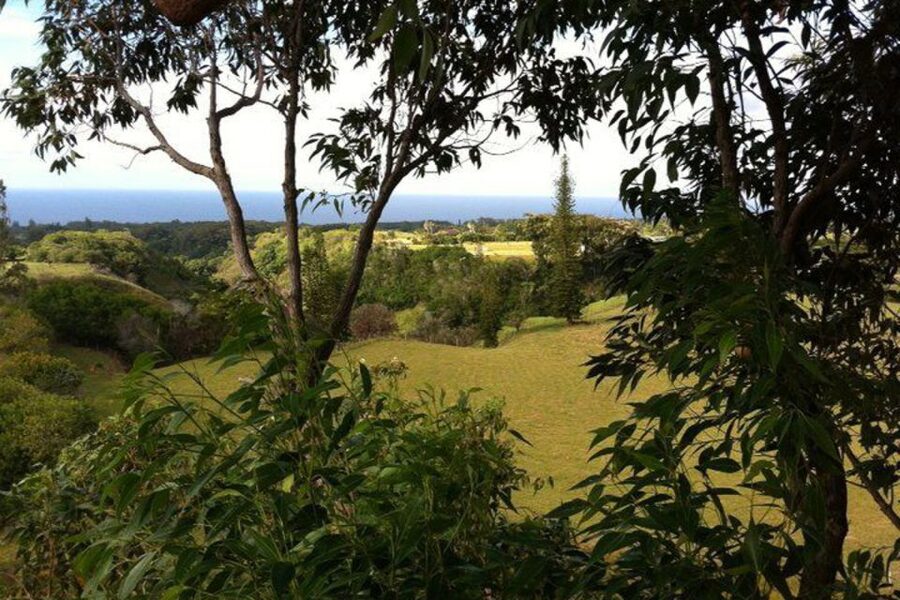
The setting also helps explain the scenery. Giant eucalyptus trees surround much of the course, while the higher points open views toward the ocean and up-country Maui. The trees provide the close-up drama, and the ocean views give you the wide-angle reward.
Training first, thrills second
The tour begins with safety procedures and gear fitting. You’ll put on a helmet, gloves, and a five-point harness, then learn how the system works. That matters most if this is your first zipline experience, or if you arrive with a child or companion who is uneasy about heights.
You then practice on a Trainer Line. This is not a token demonstration. It gives you a chance to get used to the launch, the cable, the landing, and the guide’s instructions before you are high above the forest.
The money-back guarantee applies during this early stage. If you decide that ziplining is not for you after the safety session and Trainer Line, NorthShore says you can leave and receive a full refund. That is a practical feature, especially for families or mixed groups. People who do not participate can also walk along free of charge and reach a viewing area where they can see six of the seven lines.
The guides use games and jokes during the training and transfers. That can make a real difference. A nervous person often needs a calm explanation and a little time, not pressure. The guide teams named in the available information include Trev and Ocean, as well as Kayla and Phi. Guide quality is a major part of this activity, since your comfort depends on clear instructions at every platform.
Seven lines through giant eucalyptus trees
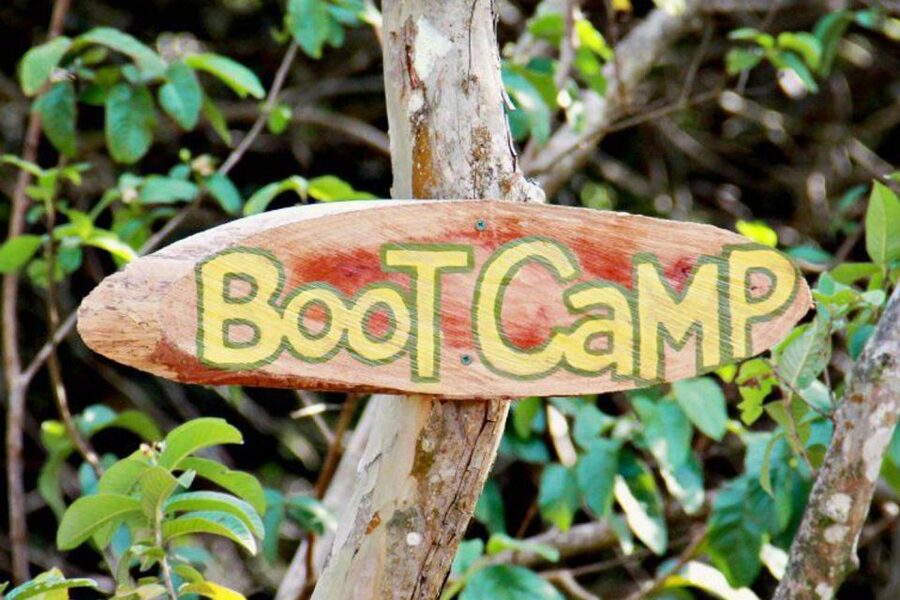
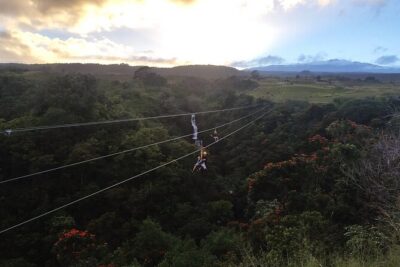
Once you finish the practice run, the course moves from preparation to the real rides. You’ll travel from tree to tree above the eucalyptus canopy, using a network of seven ziplines, suspension bridges, and aerial transfer platforms.
The seven rides vary in length and height. That variety keeps the experience from feeling repetitive. Some lines let you settle into the sensation of gliding, while others deliver a quicker burst of speed or a higher view. Between rides, you’ll walk across bridges and move between platforms, so this is an active two-hour outing rather than seven short seats in a row.
You may also climb a ladder to a eucalyptus tree. That detail is easy to overlook, but it affects the pace and physical demand. If you want an activity that involves only sitting and looking around, choose a boat ride instead. Here, you’ll climb, balance, walk, and handle a harness while following guide instructions.
The forest is the star at close range. Look down and you’ll see the tops and trunks of the eucalyptus trees. Look outward from the higher platforms and you may get views over Maui’s north shore toward the ocean and up-country slopes. Weather affects visibility, but rain gear is provided, and one past account describes the setting as enjoyable even in wet conditions.
Same island, a different kind of day:
- Small-Group Road to Hana Adventure Tour with Pickup & Lunch
★ 5.0 · 3,064 reviews - Maui Pineapple Farm Tour in Haliimaile
★ 5.0 · 2,855 reviews - Maui Eco-Raft Tour: Eye-Level Whale or Dolphin Watching – Lahaina
★ 5.0 · 2,482 reviews - Maui Snorkeling Adventure to Molokini and Turtle Town
★ 4.5 · 2,221 reviews
The Grand Slam finish at up to 45 mph
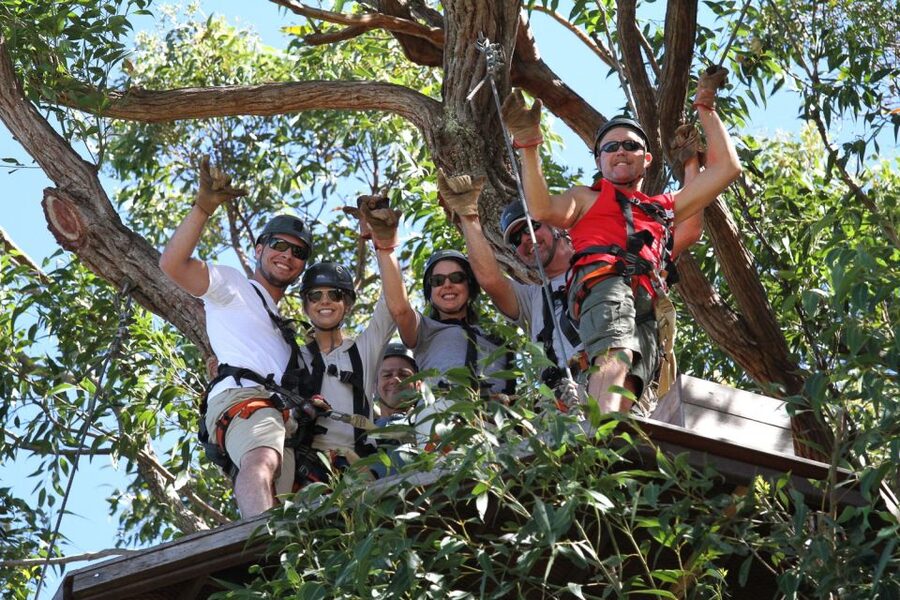
The last ride is the Grand Slam line. It can reach speeds of up to 45 miles per hour, making it the clear finale of the course.
The five-point harness lets you try different motions on the line. Your guide can show you techniques and body positions, which adds a playful element to the final run. You are not simply hanging in one fixed posture for seven identical rides.
An automatic braking system handles the end of the run. That is one of the strongest practical features here. You do not need to make a difficult braking decision while approaching the platform, and you can spend more attention on the ride itself. The system does not remove the height or speed, but it does take away one common source of first-time anxiety.
The Grand Slam line may be the part children and thrill-seekers remember most. For a nervous participant, it can also be the moment to decide how much is enough. The guides’ role matters here. They can encourage you, but you should not feel pushed beyond your comfort level.
What the guides add to the experience
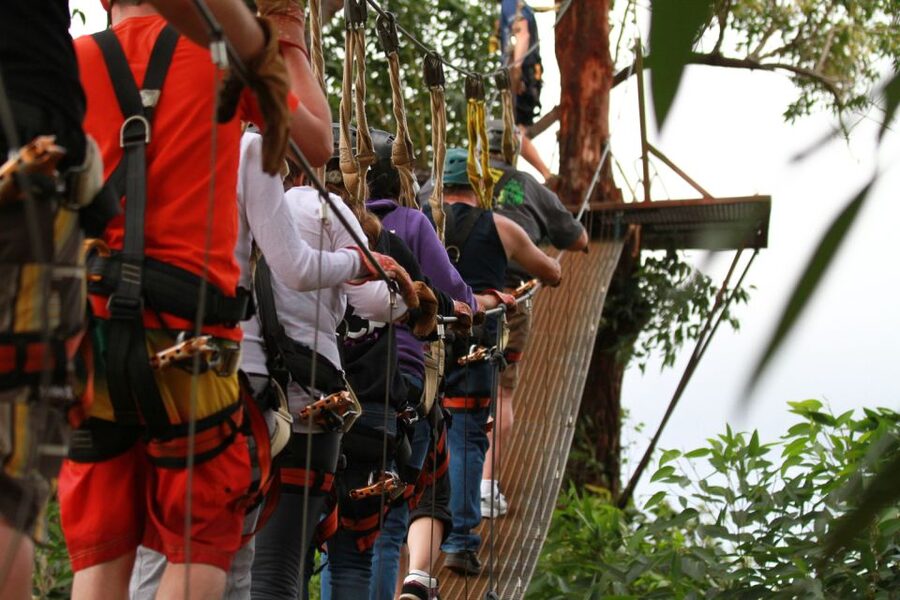
A zipline course can be well built and still feel flat if the staff simply clips people in and sends them off. Here, the guide interaction is part of the value.
The available guide names include Trev, Ocean, Kayla, and Phi. The descriptions of their work point to three useful qualities: they keep the mood light, explain safety details, and help nervous participants take one step at a time. They also share comments about Hawaiian culture and offer island recommendations during the course.
That last point is helpful if this is early in your Maui stay. You can ask for ideas while moving between lines, though the tour is not presented as a full cultural lecture. Think of the local comments as extra context, not the main reason to book.
The strongest fit is a guide who can handle a mixed group. One person may be eager to race down the next cable, while another is gripping the platform railing. The course has a training stage and an exit option, and the staff’s patient approach makes those features useful rather than decorative.
Is $155 a fair price?
At $155 per person, this is not a cheap add-on. The price makes more sense if you want a full adventure activity with seven rides, safety instruction, equipment, scenic views, and access to the Camp Maui Museum.
You are paying for about two hours on site, not seven minutes of cable time. The bridges, platforms, training run, transitions, history, and guide interaction fill out the visit. The braking system and professional staff also have value because they reduce the stress that can spoil a first zipline outing.
Photos are not included. A professional photographer is present, and photos or videos are available to buy after the tour. Treat that as an optional extra rather than part of the $155 calculation. Small point-and-shoot cameras with wrist straps are allowed, but large DSLR cameras are not.
I would call the price reasonable for someone who wants ziplining to be a main Maui activity. It is harder to justify if you are only mildly curious and already have several paid excursions planned. The refund option during training lowers the risk, but you should still budget for transportation, possible photo purchases, and a cash tip for the guides.
Who should book this North Shore outing?
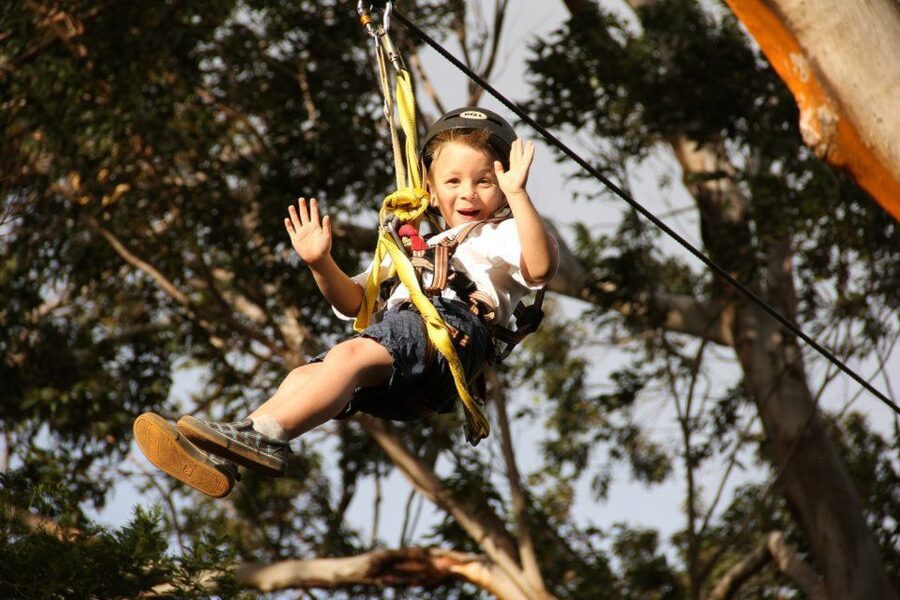
This course suits first-time zipliners because the instruction starts slowly and includes a practice line. It also suits families with children who meet the age and weight rules. The guides have helped nervous participants and children gain confidence, which is useful for a group with mixed comfort levels.
It is a good match for active couples and friends who want more than a viewpoint stop. You’ll be walking, climbing, crossing bridges, and managing a harness between rides. The seven-line format gives you time to get comfortable before the fastest finale.
It may not suit people with heart, neck, or back problems. Pregnant women cannot participate, and the activity is not available to anyone over 270 pounds or under 40 pounds. The minimum age is five.
Open-toed shoes are not allowed. People who dislike heights, speed, or physical activity should use the Trainer Line and refund policy honestly. You do not need to prove anything. A free walk-along option lets a nonparticipant enjoy the setting and watch six of the seven lines.
Timing, weather, and what to bring
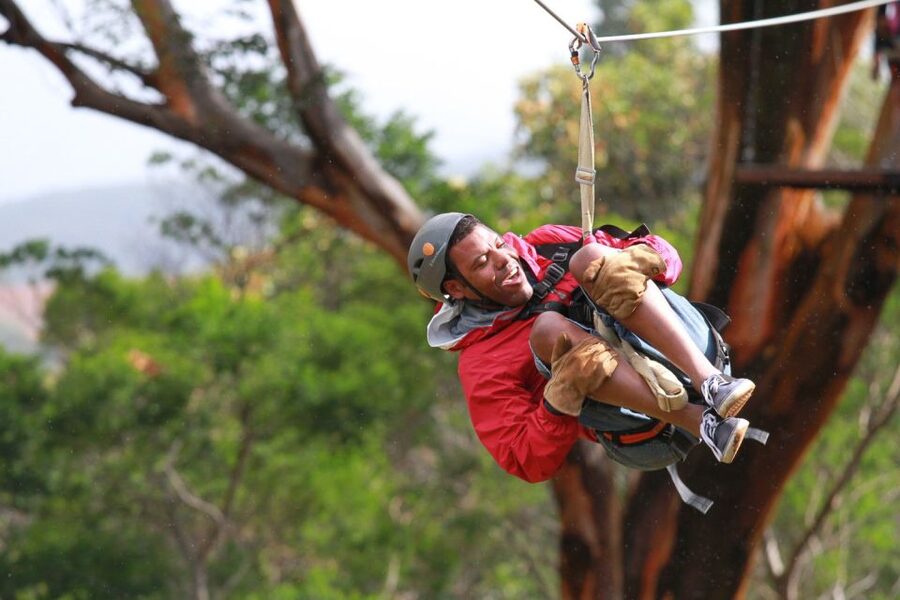
The tour is about two hours, with morning and afternoon times usually available. The duration is long enough to feel like a proper outing but short enough to fit beside another Maui plan.
Rain can occur in North Maui, and rain gear is included. Still, bring clothes you can move in and expect the forest to feel different from the dry resort areas. The course operates in a natural setting, so the views can change with weather and cloud cover.
Bring:
- Cash for tipping guides
- Closed-toe shoes
- A small camera with a wrist strap, if you want to take it on the course
Do not bring a large DSLR camera, and do not arrive in sandals or other open-toed shoes. Photos and videos taken by the professional photographer can be purchased afterward.
Free cancellation is available up to 24 hours before the activity for a full refund. You can also reserve and pay later, which helps if you are still arranging several Maui days.
Should you book the seven-line course?
Book it if you want an active North Maui outing with real time on the cables, ocean views, a fast final run, and a small dose of local wartime history. The training line and refund promise make it friendlier to beginners than many high-adrenaline activities.
Skip it if you want a quiet scenic stop, dislike heights, have a medical restriction listed above, or do not want to drive to Haiku. At $155, you should plan to take part in most of the course rather than treat it as a casual experiment.
For families and first-time zipliners, the combination of patient instruction, automatic braking, seven varied lines, and the Camp Maui setting gives the price a fair return. Pack proper shoes, follow the driving directions instead of relying on GPS, and let the Trainer Line decide how far you want to go.
FAQ
Where does the North Maui zipline tour meet?
Meet at NorthShore Zipline Co., Camp Maui, at 2065 Kauhikoa Road in Haiku, Hawaii.
How do I drive to the meeting point?
Take Hana Highway, or Highway 36 East, toward Hana. Pass Paia for 4.2 miles, turn right at mile marker 11 onto Haiku Road, and drive uphill for 1.3 miles. Turn left just past the Temple of Peace onto Kauhikoa Road, then continue 2.8 miles to the site on the left.
Should I use GPS or Google Maps?
The directions specifically say not to use GPS or Google Maps. Follow the provided driving instructions instead.
How long does the activity last?
The zipline experience lasts about two hours. Morning and afternoon times are usually available.
How many ziplines are included?
The activity includes seven ziplines, along with suspension bridges and aerial transfer platforms.
How fast is the final zipline?
The Grand Slam line can reach speeds of up to 45 miles per hour.
What are the age and weight limits?
Participants must be at least five years old and weigh between 40 and 270 pounds, or about 18 to 122.5 kilograms.
What shoes should I wear?
Closed-toe shoes are required. Open-toed shoes are not allowed. Closed-toe shoes may be available on request, but bringing your own is the safer choice.
Can I stop if I decide ziplining is not for me?
Yes. NorthShore offers a money-back guarantee during the safety training and Trainer Line. If you decide not to continue at that point, you can receive a full refund.
Is transportation or photography included?
Transportation is not included. A professional photographer is available, but photos and videos cost extra. Small point-and-shoot cameras with wrist straps are permitted, while large DSLR cameras are not.
Just added on Maui
- Two Site Snorkeling Adventure featuring the Molokini Crater★ 5.0 · 4 reviews
- Road to Hana Deluxe Rainforest & Waterfall Experience from Maui★ 5.0 · 116 reviews
- Traditional Airport Lei Greeting on Kahului Maui★ 5.0 · 95 reviews
- Turtle Town Clear Kayak & Snorkel Tour (8am-11am)★ 5.0 · 100 reviews
- The Best Maui 3 Hour Molokini and Turtle Town Snorkel★ 5.0 · 106 reviews
- 3-Hour Small-Group Maalaea Luxury Snorkel Cruise Tour★ 5.0 · 29 reviews
- Elite Private Tour★ 5.0 · 7 reviews
- VIP Premiere Whale Watch Kaanapali Beach MAX 12 PASSENGERS★ 5.0 · 78 reviews
Zip Lines, compared.
Oahu’s North Shore: 8-Line Zipline Adventure
Read our review →
Maui Zipline Eco Adventure: 8 Lines through the Jungle
Read our review →
Big Island Zipline Tour Near Akaka Falls (250-ft Waterfall!)
Read our review →
8-Zipline & Suspension Bridge Waterfall Adventure
Read our review →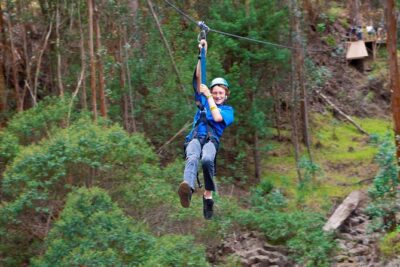
Browse the lists this tour appears in