
Reviewed · SNORKELING
Sea Scooter Snorkeling Tour with GoPro – Wailea Beach
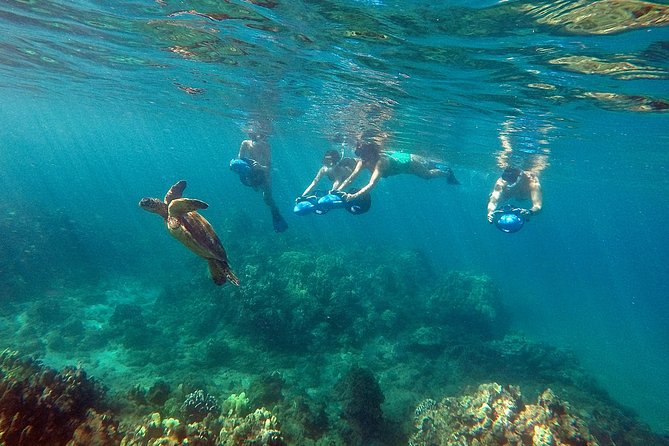
Makena Bay is a fine place to trade ordinary snorkeling for something with a little motor. On this small-group sea scooter tour, you can cover more reef with less kicking and follow guides who point out Hawaiian green turtles, eels, rays, reef fish, and other marine life. I like the calm, careful instruction and the personal attention from guides such as Tristan, Yuri, Seth, and Ryan. The early 8 a.m. departure is the best choice for calmer water.
I also like that the scooters help you spend more time looking around instead of working to stay in position. The catch is important: this is not a substitute for swimming ability. You must be able to swim lightly while wearing a life vest, and operating the scooter takes decent upper-body strength. The 9:10 a.m. outing can be challenging, so strong swimmers should choose it.
Key points to know before booking
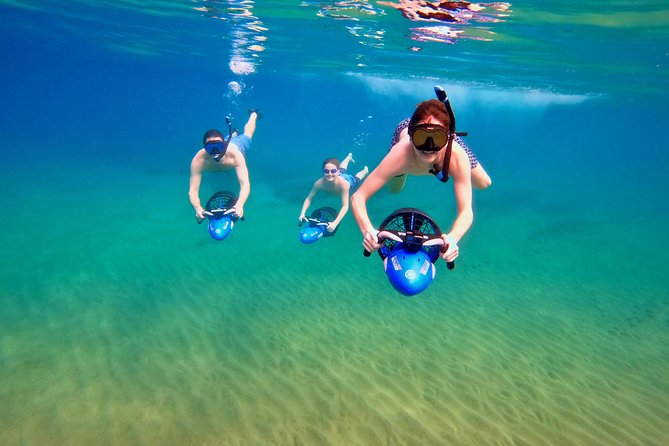
- A motorized shortcut through the reef: The sea scooter lets you move farther with less effort than ordinary snorkeling.
- Makena Bay wildlife: You might see Hawaiian green turtles, eels, stingrays, reef fish, sharks, or even a spotted manta ray.
- Small groups matter: With a maximum of 10 people, guides can help with equipment, comfort, and marine-life spotting.
- The 8 a.m. start is your best bet: Conditions are usually calmer then, while the 9:10 a.m. trip is recommended for strong swimmers.
- Photos and video are extra: Guides may document your time underwater, but video packages are sold separately.
- A physical activity, not a float trip: You need swimming skills, good general fitness, and enough upper-body strength to use the scooter.
Why a sea scooter changes the snorkeling game
Traditional snorkeling asks you to do several things at once: kick steadily, keep your face in the water, manage your breathing, and watch for fish. The sea scooter takes over much of the forward motion. You hold the unit and let its propeller pull you through the water.
That difference matters most when you want to see more of Makena Bay without tiring out early. You can move across a larger section of reef, pause to look at fish, and descend a little closer to the seafloor when conditions and your comfort allow. The scooter does not remove the need to swim, but it makes the outing less tiring for many people.
I would not call this an easy activity for every first-timer. You still need to stay calm in the ocean, understand the guide’s directions, and control the scooter with your arms. Several guests who were nervous in the water felt comfortable after patient instruction, but the tour’s own guidance is clear: you must be able to lightly swim with a life vest, and a strong physical fitness level is expected.
More snorkeling on Maui:
- Maui Snorkeling Adventure to Molokini and Turtle Town
★ 4.5 · 2,221 reviews - Maui Snorkeling Adventure From Ma’alaea Harbor to Molokini
★ 4.5 · 1,997 reviews - Maui: Turtle Town Snorkel with Photo and Video
★ 5.0 · 1,916 reviews
Arriving at Wailea Beach and getting ready
The meeting point is 3894 Wailea Alanui Drive, Kihei, and the tour ends back there. Plan to arrive ready for an ocean activity, with time to listen closely to the safety briefing before you enter the water.
The guides begin with ocean-safety instructions, an explanation of the snorkeling equipment, and a tutorial on the sea scooters. This part is more than a formality. The scooter is simple enough to learn, but you want to understand how to steer, stop, and stay with the group before you reach the reef.
The supplied equipment includes snorkeling gear, a life vest, and a wet-suit top. The tour uses high-quality goggles designed to reduce fogging and leaks, which can make a big difference. A leaking mask can turn a pleasant outing into a steady battle with water and frustration.
If you are new to snorkeling or uneasy in the ocean, say so early. Guides including Yuri and Seth have been especially patient with nervous participants, and the instruction can be adjusted to help you get comfortable before moving farther from shore. Groups may also be separated by skill level, which is useful when one person wants a relaxed pace and another is ready to explore more.
The first water practice builds confidence
After the briefing, you get time to become familiar with the scooter and mask before the main part of the tour. This practice period is one of the most valuable parts of the outing, especially for first-time snorkelers.
You will learn how the scooter moves and how to aim it. The guide can check your mask fit, help you settle into the life vest, and make sure you are comfortable breathing through the snorkel. Do not rush this stage. A few extra minutes of practice can make the rest of the tour much more enjoyable.
For families, this is where the activity either clicks or reveals its limits. Children who can swim and follow directions may find the scooter easy to handle. Kids as young as 10 have taken part, according to the supplied tour information, but the key test is swimming ability and comfort in the water, not simply age.
A paddle board may be available during the outing for anyone who gets tired or cold. That is a useful safety net, but it does not turn the activity into a non-swimmer tour. You still need to be capable of lightly swimming with the vest.
Following the reef through Makena Bay
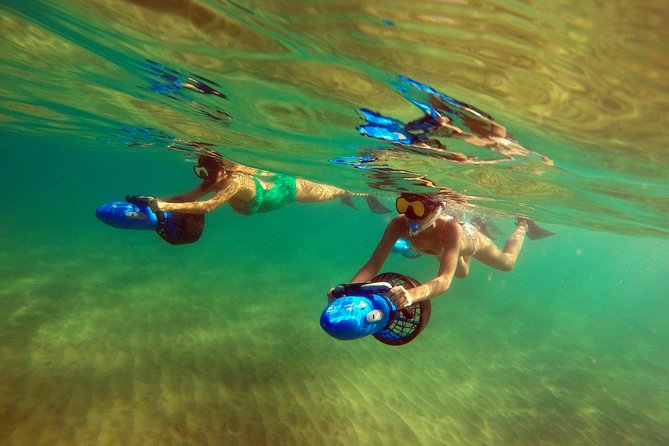
Once the group is ready, your guide leads you around the snorkeling areas of Makena Bay. The route is guided rather than a simple equipment rental, so you are not left to guess where the best marine life might be.
This is where the small group helps. A guide can point toward an eel tucked into the reef, signal when a turtle is nearby, or direct you toward a school of fish before it moves away. Guides also explain local marine flora and fauna, giving the underwater scenery some context instead of reducing it to a fast parade of colorful shapes.
The exact wildlife varies. You might see Hawaiian green turtles, several types of reef fish, eels, stingrays, sharks, coral, and other creatures. Some outings have produced sightings of more than 10 turtles, while others have included a spotted manta ray. Those animals are wild, so no guide can promise a particular sighting.
Water clarity can also change. One outing may have excellent visibility, while another may be cloudier. The guides cannot control that, though they can adjust the route and spend time looking for wildlife in better areas. Keep your expectations flexible, and remember that the sea scooter lets you cover more ground when visibility is only fair.
The water can reach about 40 feet in parts of the outing, according to the supplied details. You do not need to descend to that depth to enjoy the tour, but this detail makes the swimming requirement clear. If deeper water makes you anxious, tell your guide and stay within your comfort level.
Same island, a different kind of day:
- Small-Group Road to Hana Adventure Tour with Pickup & Lunch
★ 5.0 · 3,064 reviews - Maui Pineapple Farm Tour in Haliimaile
★ 5.0 · 2,855 reviews - Maui Eco-Raft Tour: Eye-Level Whale or Dolphin Watching – Lahaina
★ 5.0 · 2,482 reviews - Maui: Haleakala Sunrise Spectacular with Local Breakfast
★ 4.5 · 2,155 reviews
Sea turtles are the main event
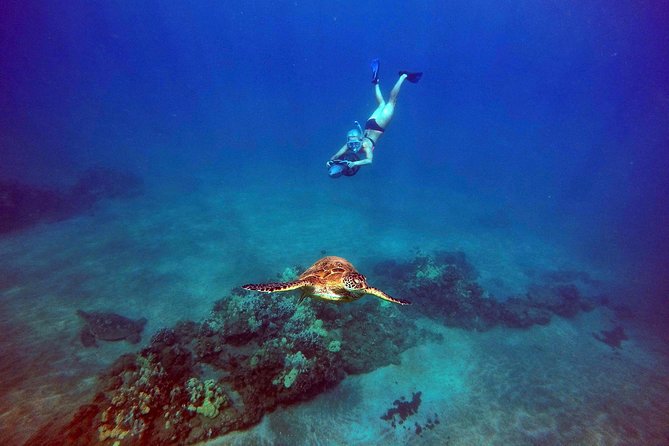
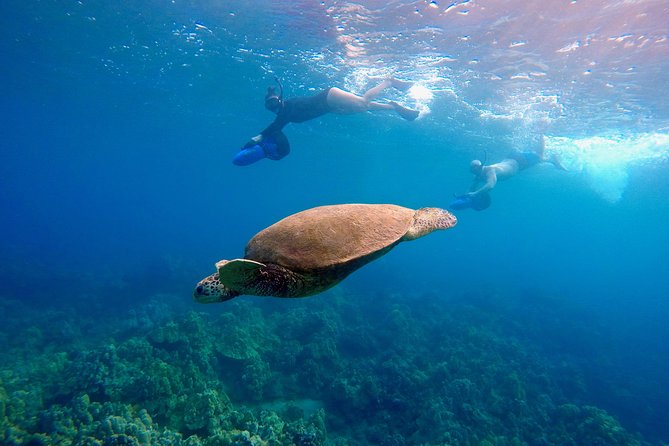
The Hawaiian green turtle, or honu, is the animal most people hope to see. Makena Bay provides a good setting for looking for them, and guides use their local knowledge to direct the group toward likely sightings.
The right way to watch a turtle is calmly and from a respectful distance. Your guide will help you understand where to look and how to move with the group. The scooter can be helpful here because you can keep pace without frantic kicking, but it should not be used to chase wildlife.
Turtles are not the only attraction. Eels tucked among rocks, schools of smaller fish, rays moving along the bottom, and reef structure all reward patient observation. One of the pleasures of a guided trip is that the guide often notices an animal before you do, then helps you locate it.
You may also hear whales singing during the right season and conditions, though this is not promised. The tour’s focus is the reef and its animals, not whale watching, so treat any underwater song as a bonus rather than a planned feature.
Guides make the difference
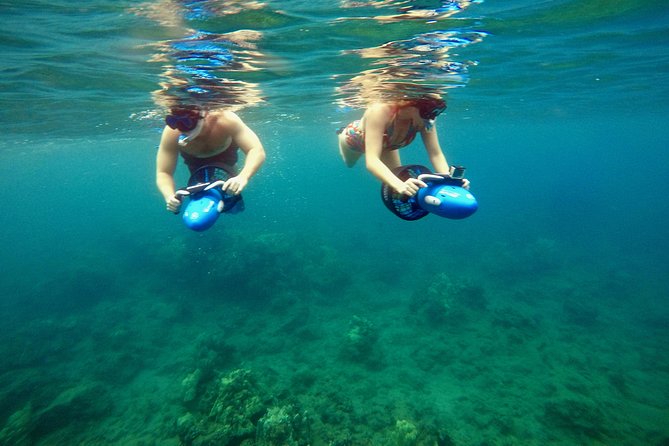
The strongest part of this activity is the guide-to-guest attention. A maximum of 10 people allows the staff to watch the group more closely than on a large boat outing.
Tristan is praised in the supplied information for clear explanations, good wildlife-spotting, and a playful approach that included showing participants how to do a backflip and barrel roll. Those tricks are optional, of course, and should only be attempted when your guide says conditions and skill level make them suitable.
Yuri has helped nervous swimmers practice in shallow water before heading to the main sites. Seth has been singled out for taking photos, spotting turtles and fish, and making families feel looked after. Ryan has also been noted for patience with an older participant. Shelby and other staff members have been described as calm and accommodating.
Guide names may change with the schedule, so you cannot count on a particular person unless the operator confirms it. Still, the pattern is clear: instruction and reassurance are central to the tour, not an afterthought.
Photos, video, and what you actually receive
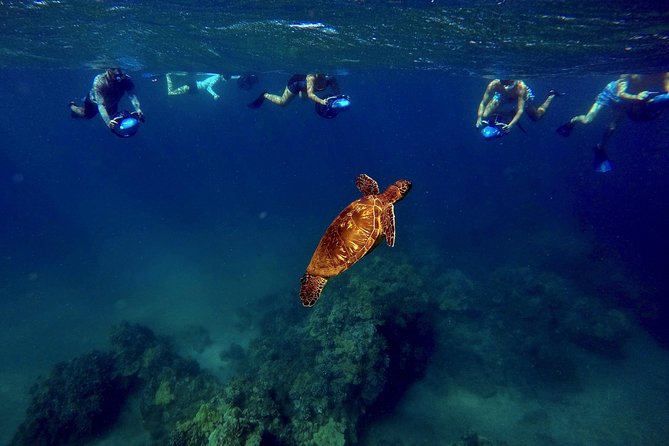
The tour includes underwater photos and video documentation as part of the guided experience in the description, but the fine print also says video packages are sold separately and are not included in the $149 price. Clarify exactly what is included when you book or before entering the water.
Some guides use a phone in a waterproof case to capture pictures of the group. That can be a nice advantage because you can concentrate on the reef instead of trying to manage a camera. It also means the amount and quality of documentation may depend on the day, guide, and conditions.
If photos are important to you, budget for the separate video package. If they are not, you can still enjoy the outing without treating the media add-on as part of the core value.
Timing, fitness, and the real drawbacks
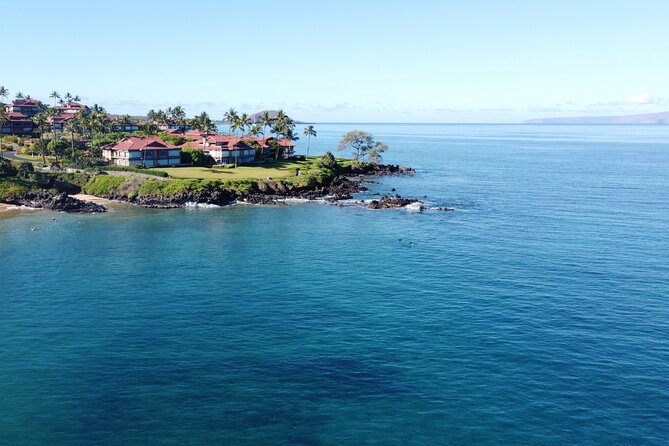
The tour lasts about 90 minutes. That is long enough to make the scooter worthwhile, but short enough to fit into a busy Maui day. You return to the original meeting point, so there is no second location to arrange afterward.
The 8 a.m. departure is the smart pick for most people. The water is generally calmer early, and calmer conditions make it easier to learn the scooter, keep your mask clear, and stay relaxed. The 9:10 a.m. departure is described as challenging and is best for strong swimmers.
The physical demands deserve plain language. You need:
- The ability to lightly swim while wearing a life vest
- Good general fitness
- Enough upper-body strength to operate the scooter
- Comfort following safety directions in open water
This may suit a nervous first-time snorkeler who can swim, but it is not suitable for someone who cannot swim or who becomes overwhelmed in deep water. The scooter reduces effort. It does not remove the ocean.
Use the restroom before you start, since the activity keeps you on the water for a sustained period. The tour provides the basic snorkeling equipment, so you do not need to bring your own mask or fins.
Is $149 a fair price?
At $149 per person, this costs more than simply walking into the water with rented mask and snorkel. You are paying for the scooter, equipment, safety briefing, guide service, a small group, and help finding marine life.
I think the price makes sense if you want a guided outing that covers more reef with less exertion. It is particularly reasonable for a family group, a first-time snorkeler who can swim, or an experienced snorkeler curious about trying a scooter. The personal instruction also adds value if someone in your party is nervous.
The price is harder to justify if you already own equipment, prefer exploring alone, or only want a short swim near shore. You should also account for the separate cost of any photo or video package.
The strong satisfaction record, with a 4.9 rating from 251 ratings and 98 percent recommending it, supports the idea that the service is reliable. I would still place more weight on the practical conditions: your swimming ability, your chosen start time, and your expectations about visibility and wildlife.
Who should book this Wailea snorkeling tour?
I would recommend it to confident beginners, families with swimming-age children, couples wanting a memorable ocean activity, and experienced snorkelers who want to range farther without constant kicking.
It is also a good fit if you are anxious in the water but can swim and want patient instruction. Tell the staff about your concern at the start, then take your time during the practice session.
I would skip it if you cannot swim, dislike wearing a life vest, have limited upper-body strength, or want a fully passive ride. The group moves through the ocean under its own power, even with the scooter’s help.
Book the 8 a.m. time if you have a choice. Bring a flexible attitude about wildlife and water clarity, and decide in advance whether you want to pay separately for media.
FAQ
Where does the sea scooter snorkeling tour meet?
It meets at 3894 Wailea Alanui Drive, Kihei, Hawaii. The tour ends back at the same meeting point.
How long does the tour last?
The activity lasts approximately 1 hour and 30 minutes.
How much does the tour cost?
The listed price is $149 per person.
Is snorkeling equipment provided?
Yes. Snorkeling equipment, a life vest, and a sea scooter are provided.
Do I need to know how to swim?
Yes. You must be able to lightly swim while wearing a life vest.
Is the tour suitable for non-swimmers?
No. The tour requires swimming ability, and participants should have a strong physical fitness level.
What time should I choose?
The 8 a.m. tour has the best calm conditions. The 9:10 a.m. tour can be challenging and is recommended for strong swimmers.
How many people are in each group?
The tour has a maximum of 10 participants.
Are photos and videos included in the price?
Underwater photos and video may be taken during the outing, but video packages are sold separately and are not included in the listed price.
Can I cancel for a refund?
You can cancel up to 24 hours before the experience for a full refund.
Should you book it?
Book this tour if you want more than a basic mask-and-snorkel outing. The scooter helps you cover reef with less effort, while the small group and active guides give you a better chance of finding turtles and understanding what you are seeing.
Choose the early start, be honest about your swimming ability, and treat the wildlife and water clarity as natural variables. For a capable swimmer, this is a lively, well-supported way to see Makena Bay. For a non-swimmer or anyone seeking a passive boat ride, it is the wrong match.
More Scooter Rentals on Maui
- Oahu: Submarine Scooter Adventure
★ 5.0 · 2,273 reviews - Hawaiian Style Moped Rental for the Day
★ 5.0 · 251 reviews
Just added on Maui
- Central Maui: Two-Island Scenic Helicopter Flight to Molokai★ 4.9 · 165 reviews
- Goat Yoga with Miniature Goats In Maui★ 5.0 · 55 reviews
- A Maui Beach Photoshoot in Wailea★ 5.0 · 154 reviews
- Small-Group Shark and Turtle Dive for Certified Divers★ 5.0 · 219 reviews
- From Ma’alaea: Sunset Dinner Cruise Aboard the Quicksilver★ 4.5 · 218 reviews
- Maui Lahaina Group Surf Lesson★ 4.9 · 235 reviews
- Maui: Guided Rainforest and Waterfall Walk & Swim★ 4.8 · 226 reviews
- South Maui: Gilligans’ Island Luau with Dinner and Drinks★ 4.2 · 254 reviews
Snorkeling, compared.

Grand Tour Around Island 16 Locations plus Snorkeling
Read our review →
Oahu’s Ultimate Tour: Dole, Turtle Snorkel, Pali Lookout & More
Read our review →
Oahu Circle Island Tour with Turtle Snorkeling— Small-Groups
Read our review →
Waikiki, Hawaii: Turtle Canyon Snorkel Excursion
Read our review →
Turtle Canyon Snorkel Adventure in Waikiki, Oahu
Read our review →
Kona Manta Ray Snorkel Tour in Keauhou Harbor
Read our review →
Captain Cook Snorkel On A Power Catamaran With Lunch
Read our review →Browse the lists this tour appears in