
Reviewed · WHALE WATCHING
VIP (12 Guests ONLY) Ultimate Whale Watch
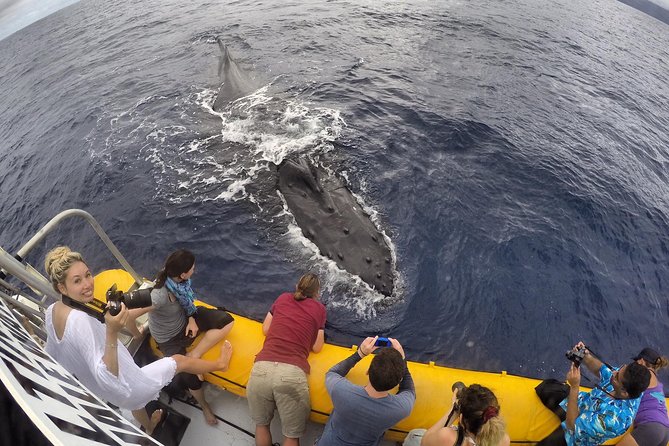
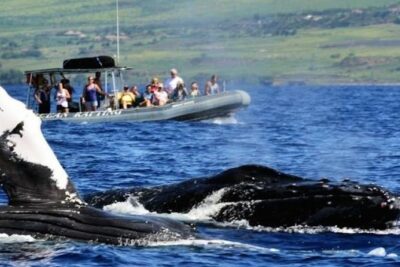
The best part of this Maui outing is its size. With no more than 12 people aboard, the low raft puts every seat close to the water, with very little structure blocking your view. You might watch a mother and calf pass below, hear singing through the hydrophone, or see competing males rush toward a female.
I like the efficient boat and the crew’s focus on finding active whales, not simply pointing at a distant blow. I also like the whale-sighting guarantee from December through April, which lets you return for free if the search comes up empty. The tradeoff is the ride: this is a raft, not a spacious cruiser, so expect a bumpy trip and possible spray.
Key points at a glance
- Maximum of 12 people: This is a genuinely small boat outing, not a large harbor cruise with a crowded viewing rail.
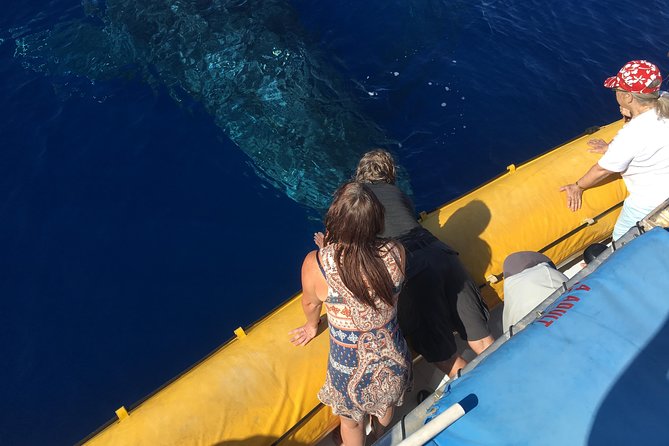
- Low Coast Guard-style raft: The boat gets you close to the water and gives every passenger a useful view, but the ride can be rough.
- Two hours from Lahaina Harbor: The trip begins and ends at 1229 Front Street, making it easy to fit into a Maui day.
- Hydrophone on board: You may hear humpback songs beneath the boat as well as watch surface behavior.
- December through April guarantee: If no whales are seen during the seasonal guarantee period, you can go again for free.
- Active naturalist commentary: The crew explains behavior such as breaching, fin slapping, mother-and-calf activity, and competition among males.
Why this small raft changes whale watching
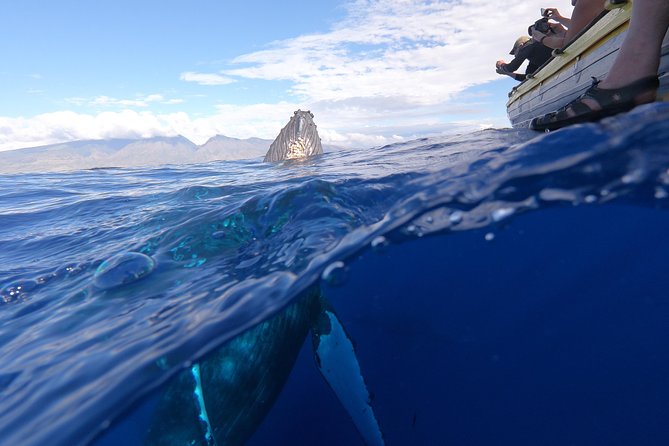
A whale watch from a large catamaran gives you room to walk around, but it can also put you several rows away from the rail. Here, the low raft keeps you close to the waterline. That matters when a whale surfaces beside the boat or swims underneath it, because your view is not filtered through a tall cabin or a line of people.
The boat is described as a Coast Guard-style raft, built for speed and efficient movement. That helps the captain cover more water during the two-hour outing. The crew can leave the harbor, search likely areas, and move toward fresh activity without spending the whole trip making a slow crossing.
The same design creates the main compromise. The raft has less shelter than a larger boat, and the ride may feel lively in wind or chop. Several outings were described as bumpy but safe, while another noted that passengers sometimes got wet. Bring a light jacket and protect your camera and phone.
The boat works best for people who value access and a close view more than cushioned comfort. If you are prone to seasickness, the raft deserves serious thought. A larger vessel may be a better choice for you, even if its viewing experience is less intimate.
More whale watching on Maui:
- Maui Eco-Raft Tour: Eye-Level Whale or Dolphin Watching – Lahaina
★ 5.0 · 2,482 reviews - From Maalaea: Whale Watching Tour Aboard the Quicksilver
★ 4.5 · 1,461 reviews - Maui: Ultimate Whale Watch from Lahaina
★ 5.0 · 1,162 reviews
Leaving Lahaina Harbor for the whale grounds
You meet at 1229 Front Street in Lahaina, then return to the same point at the end. The listed duration is about two hours, so you are not committing to a full-day activity. That makes it practical before dinner, after breakfast, or alongside another West Maui plan.
Once underway, the captain uses the raft’s speed to search for whale activity. The exact pattern changes from day to day. Some departures find whales quickly, while others spend close to an hour looking before reaching a busy group. The end-of-season outing described in the trip notes is a good reminder that patience can pay off: after a long search, the boat reached an area with repeated breaches for roughly 45 minutes.
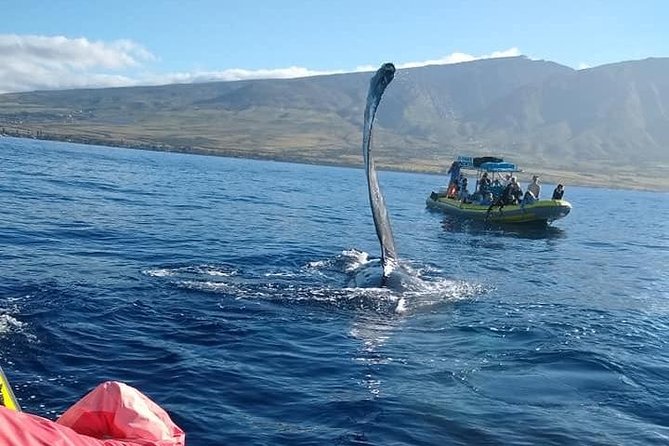
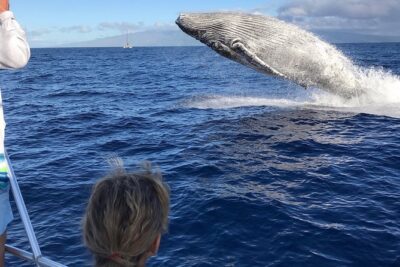
You may see one animal at a time, a mother with her calf, or several males competing around a female. The more active encounters can include breaching, tail or fin slaps, rolling, and whales surfacing near the raft. None of these behaviors can be promised on a particular departure, but the small boat gives the crew a strong position when activity appears.
The captain may also travel farther from the harbor when the best action is not nearby. One outing followed activity toward Lanai and found a mother and calf surrounded by several males. That kind of search can use more of your two-hour window, but it may reward you with a much better encounter than stopping for a single distant blow.
Watching humpbacks without crowding the action
The strongest part of this experience is not simply seeing a whale. It is having time to watch what the whale is doing.
A mother and calf may surface together, with the calf playing near the surface while the mother rests below. Male humpbacks may compete for access to a female, creating sudden bursts of movement and noise. One reported encounter involved whales circling the raft, rolling near the surface, splashing passengers, and passing close beneath the boat.
The crew’s role is important here. Captains John, Jeremiah, Sarah, Emma, Kalli, Kayli, Lisa, Christina, Lacey, Pat, and others are named in the supplied trip records, but you should not assume a particular person will lead your departure. What you can expect is a captain and marine naturalist who explain whale behavior and answer questions as the trip develops.
One useful phrase used by the crew is whale jail. It describes the moment when whales are active around the boat and the captain must hold position rather than move. That is a good thing. The raft is there to observe, not chase, and holding still can give you a better chance to watch a natural sequence unfold.
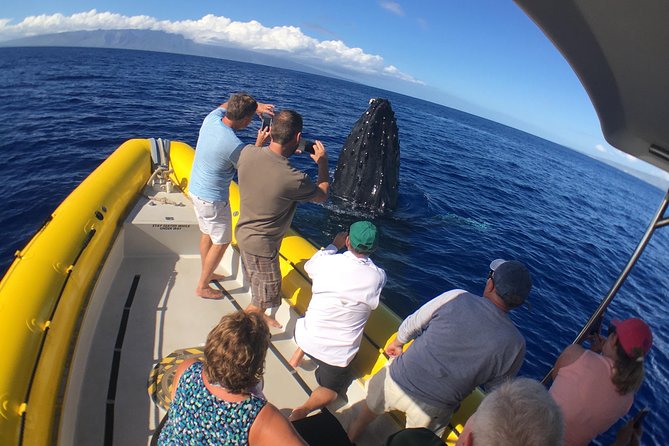
The boat’s low profile also helps with photography. There is less railing and boat structure in front of you, and every seat is described as a front-row seat. Still, keep your camera ready. A breach lasts only seconds, and a whale may appear on the opposite side of the raft from where you expect.
Hearing whale songs through the hydrophone
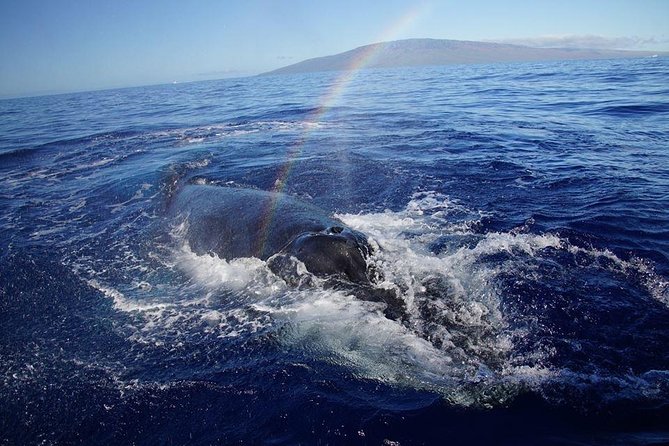
Visual sightings get most of the attention, but the hydrophone adds another layer. The crew can lower a microphone into the water so you can hear humpback songs beneath the boat. You may not hear a long performance every time, since the crew controls when and where the hydrophone is used, but the sound helps you understand that whales are communicating below the surface even when you cannot see them.
The naturalist commentary also gives shape to what you see. Rather than treating every splash as the same, the crew can help you distinguish a breach from a fin slap, identify a mother and calf, or explain why several males are moving together.
One less satisfied account felt the hydrophone was used too briefly and the commentary did not match the expected VIP service. That criticism is worth keeping in mind. This is a compact whale watch with marine interpretation, but it is not presented as a formal lecture or luxury yacht service. The experience depends in part on the crew assigned that day and on how active the whales are.
Same island, a different kind of day:
- Small-Group Road to Hana Adventure Tour with Pickup & Lunch
★ 5.0 · 3,064 reviews - Maui Pineapple Farm Tour in Haliimaile
★ 5.0 · 2,855 reviews - Maui Snorkeling Adventure to Molokini and Turtle Town
★ 4.5 · 2,221 reviews - Maui: Haleakala Sunrise Spectacular with Local Breakfast
★ 4.5 · 2,155 reviews
What the $125 price really buys you
At $125 per person, the tour costs more than a basic large-boat whale watch in some Maui comparisons. The value comes from the small group and the raft rather than from food, drinks, or upscale facilities.
You are paying for a maximum of 12 people, a fast boat, a two-hour search, and a crew focused on positioning you near active whales. If the boat fills with 12 passengers, it is still much less crowded than a standard harbor vessel. If your departure has fewer people, the feeling becomes even more personal.
This is not a meal cruise. Water is not specifically listed as being provided, and one disappointed account expected more VIP touches. Plan around that. Bring what you need for two hours on the water, including sun protection and a jacket that can handle spray.
The seasonal guarantee improves the value. From December through April, whale sightings are guaranteed, and if no whales appear, you can go again for free. It does not mean you will see breaches, calves, or whales at close range. It means the company offers a return opportunity if the trip produces no sighting at all.
Choosing the best time and season
The stated whale season is December through April. This is the period when the sighting guarantee applies, so it is the safest window if whales are the main reason you are booking.
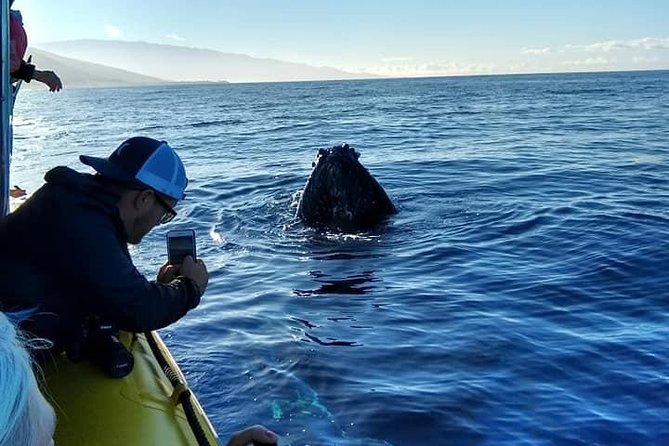
Late season can still be rewarding. One April departure searched for an hour and then found males, females, and calves breaching repeatedly. Another end-of-season trip found whales after covering much of the basin, even though activity was less certain. The lesson is simple: April can work well, but you may need more patience.
The supplied experiences include morning and afternoon departures. One earlier boat was described as having a smooth ride, while another afternoon outing found several whales and calves. You cannot choose a time based on a guaranteed behavior pattern, but an early departure may appeal to you if you prefer a calmer start and cooler conditions.
Book ahead if your dates are fixed. This experience is often reserved well in advance, and the 12-person limit can make popular dates disappear before larger boat tours fill.
Who should book this raft
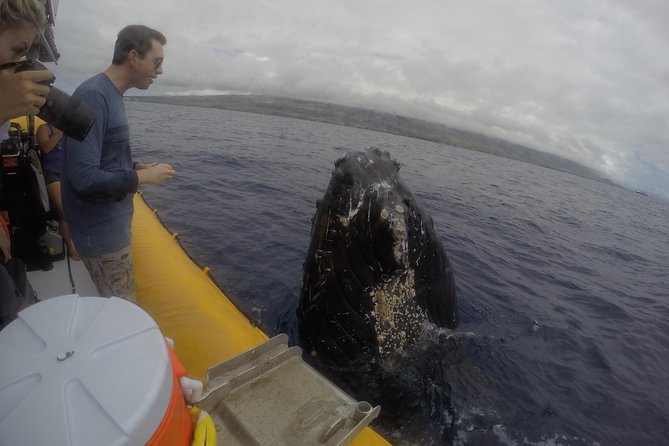
I would choose this tour if you want a small group, close water access, and active searching. It suits photographers, couples, families with older children, and anyone who finds a big boat too impersonal.
It also works well for repeat visitors to Maui. A local customer described using this company when bringing visitors because the close encounters and informed crew make the outing feel special. That is a useful sign for someone who has already seen whales from shore or taken a standard cruise.
Families should note the age rule. Children under three cannot participate. Most other visitors can take part, and service animals are allowed. Pregnant passengers cannot be accepted, so choose a different activity if that applies to anyone in your party.
I would be cautious if you get seasick, dislike spray, or need a stable platform. The boat can be fun and fast, but it is not the calmest way to travel. The raft also has fewer comforts than a large vessel, and there is no promise of refreshments or a luxury setup.
Practical details before you go
Confirmation is sent at booking, and the ticket is mobile, so you can keep it on your phone. Public transportation is nearby, and the outing begins and ends at the listed Lahaina meeting point.
Wear clothing you can move in and do not mind getting damp. A jacket is useful even on a warm Maui day because the raft is moving quickly and sits low on the water. Keep cameras secured, especially when whales surface close by.
Free cancellation is available until 24 hours before the start time for a full refund. Changes or cancellations inside that 24-hour window are not accepted, and the amount paid is not refunded. The local cut-off time applies.
Weather can cancel the trip. If that happens, you are offered another date or a full refund. The same options apply if the minimum number of participants is not reached.
Should you book the Ultimate Whale Watch?
Book it if your priority is the whale encounter itself: a small group, a low raft, useful sight lines, and a captain willing to search for active behavior. The strongest outings have included mothers and calves, male competition, whales under the boat, repeated breaches, and songs through the hydrophone.
Skip it if you want a smooth, sheltered ride or expect VIP treatment to include drinks and extra comforts. The $125 price makes sense for close access and a 12-person limit, not for luxury amenities.
For most people who can handle a bumpy boat, I would choose this over a crowded vessel. Just bring a jacket, protect your camera, book during the December through April season if possible, and remember that wild whales set the schedule.
FAQ
Where does the whale watch begin?
The tour begins at 1229 Front Street in Lahaina, Hawaii, near Lahaina Harbor.
Where does the activity end?
The boat returns to the same meeting point at the end of the approximately two-hour outing.
How long is the whale-watching trip?
The listed duration is about two hours.
How many people can join the boat?
The maximum is 12 people.
What kind of boat is used?
The tour uses a fast, low Coast Guard-style raft designed for small groups and close water-level viewing.
When are whale sightings guaranteed?
Whale sightings are guaranteed from December through April. If no whales are seen during that period, you can go again for free.
Can children take part?
Children under three years old are not permitted. Most other visitors can participate.
What happens if the weather cancels the tour?
You will be offered a different date or a full refund if poor weather causes the activity to be canceled.
Just added on Maui
- Two Site Snorkeling Adventure featuring the Molokini Crater★ 5.0 · 4 reviews
- Traditional Airport Lei Greeting on Kahului Maui★ 5.0 · 95 reviews
- Turtle Town Clear Kayak & Snorkel Tour (8am-11am)★ 5.0 · 100 reviews
- Road to Hana Deluxe Rainforest & Waterfall Experience from Maui★ 5.0 · 116 reviews
- The Best Maui 3 Hour Molokini and Turtle Town Snorkel★ 5.0 · 106 reviews
- 3-Hour Small-Group Maalaea Luxury Snorkel Cruise Tour★ 5.0 · 29 reviews
- Elite Private Tour★ 5.0 · 7 reviews
- VIP Premiere Whale Watch Kaanapali Beach MAX 12 PASSENGERS★ 5.0 · 78 reviews
Whale Watching, compared.
Maui Eco-Raft Tour: Eye-Level Whale or Dolphin Watching – Lahaina
Read our review →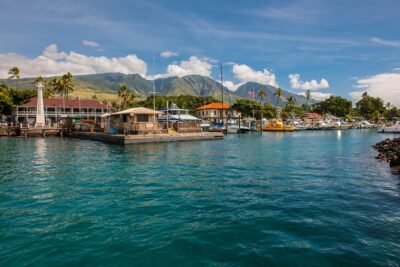
2-Hour Oahu Whale Watch from Ala Wai Harbor, Waikiki
Read our review →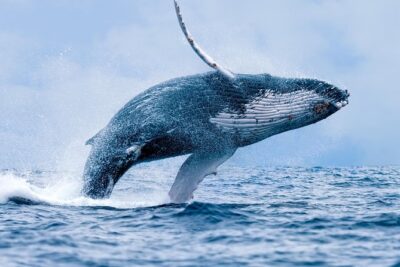
Luxury Snorkel Cruise, Local Buffet with Whale & Dolphin Watch
Read our review →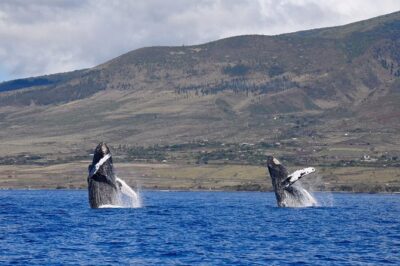
WHALES GUARANTEED Maui Whale Watching Makai Adventures
Read our review →
Waikiki, Oahu 2-Hour Whale Watching: Guaranteed Sightings
Read our review →
Ma’alaea Harbor: Whale Watching Tour Aboard Power Catamaran
Read our review →Browse the lists this tour appears in