
Reviewed · SURF LESSONS
Surf with the Pros
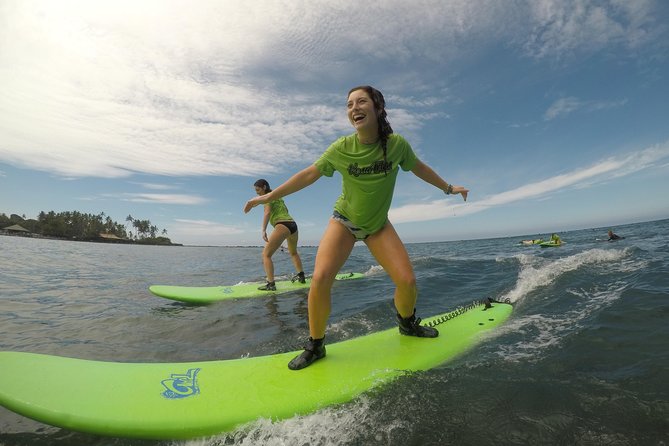
The best part of Surf with the Pros is its setting: Kahaluu Beach Park gives beginners gentle Kona waves instead of throwing them straight into a rough break. I like the small maximum group of eight and the fact that boards, reef shoes, and surf shirts are included. Instructors such as Hauns, Taj, Zion, and Tegan have helped first-timers and children stand up on their first lesson.
The main catch is that surfing is harder work than it looks. You may spend plenty of time paddling and getting tired, and the beach is more gravel than soft sand. Public parking costs $12, and one account describes the session lasting closer to two hours than the advertised hour and a half.
Key points to know before you paddle out
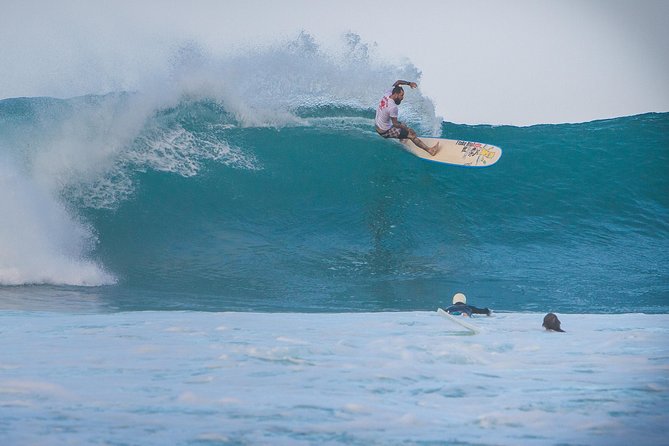
- Gentle Kahaluu waves: The lesson takes place at a beginner-friendly Kona beach, though wave size depends on the day.
- Small groups: A maximum of eight participants gives you a better chance of receiving direct coaching.
- Gear is supplied: Your package includes a surfboard, reef shoes, and a surf shirt.
- Several instructors earn strong praise: Hauns, Taj, Zion, and Tegan are all described as patient, helpful, or effective with beginners.
- Plan for a gravelly beach: It is useful for watching from shore, but do not expect a broad, soft-sand beach.
- Good for first-timers and families: No previous surfing experience is required, and children have managed to stand up during their first lesson.
Learning to surf at Kahaluu Beach Park
Kahaluu Beach Park is a sensible place to learn. The waves are described as gentle, which gives you a fair shot at learning the basic movements without facing the full force of a larger surf break. That does not make surfing easy, but it makes the first attempt less intimidating.
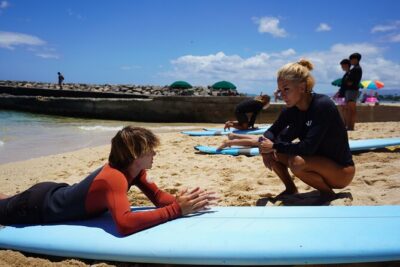
Your lesson begins at 78-6702 Ali‘i Drive in Kailua-Kona. From there, the focus is on getting you onto the board and helping you read the timing of a wave. The supplied information describes a safety briefing, instruction, and practice in the water. One account puts the safety talk at about five minutes, followed by coaching and repeated attempts.
You should expect the first part to feel awkward. Standing on a surfboard asks you to coordinate your hands, knees, feet, and balance while a moving wave pushes underneath you. That is why the instructor matters so much. Taj, for example, is described as safety-focused and willing to let a tired participant rest before going back out. He also helped explain what was happening rather than simply pushing people into the water.
You may stand up on your first lesson, as some children did with Tegan, but that is not something anyone can promise. Wave shape, timing, fitness, and simple luck all matter. A good goal is to learn the basic technique and enjoy the attempts, with standing fully upright as a welcome bonus.
More surf lessons on Big Island of Hawaii:
- Private Surf Experience
★ 5.0 · 200 reviews - Kona Surf Lesson in Kahaluu
★ 5.0 · 152 reviews - 2-Hour Guided Private Surf Lesson in Kona
★ 5.0 · 84 reviews
What the small group of eight changes
The maximum group size is eight people. That is not a private lesson, but it is small enough to make a real difference compared with a large class. You are less likely to disappear in a crowd, and the instructor has a better chance of seeing how you are paddling, positioning your feet, and reacting to the wave.
This matters most when you are new. A short correction at the right moment can save several failed attempts. The strongest accounts describe instructors who were patient with children, careful about safety, and willing to offer encouragement while participants worked out the basics.
The quality of instruction may depend on the individual coach. Hauns is described as patient with first-time surfers. Zion helped two beginners pick up the basics quickly, while Tegan worked well with children. Taj offered clear information and practical help. One less positive account found Tosh’s instruction less explicit and less interactive than needed.
That mixed note is worth taking seriously, but it does not cancel the overall picture. It tells you to speak up if you need a clearer explanation. Ask the instructor to show you the movement again, explain where your feet should go, or tell you what to change on the next wave. You will get more from the lesson if you treat it as an active exchange rather than waiting silently for corrections.
The supplied gear keeps the lesson simple
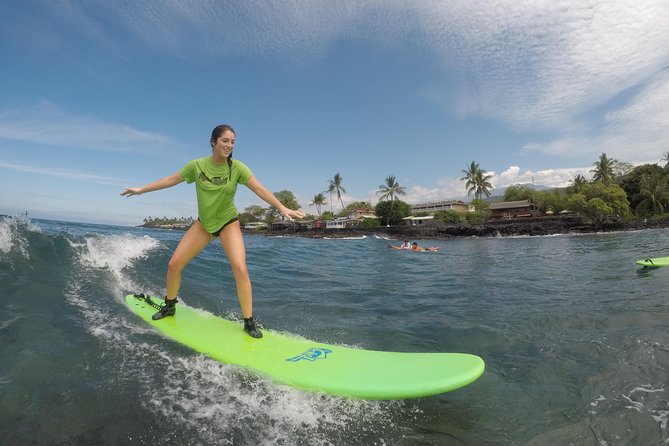
You receive a surfboard, reef shoes, and a surf shirt. That removes several chores from your morning and means you do not need to pack or rent the basic equipment separately.
The reef shoes are especially useful here. The beach is described as gravelly rather than sandy, so footwear can make getting in and out of the water more comfortable. The surf shirt also gives you a standard piece of water gear for the lesson, while the board is the central tool for learning.
The information does not state whether towels, swimsuits, sunscreen, or personal storage are provided. Plan around the confirmed inclusions and bring what you normally need for a beach activity. You should also expect to get wet and to spend physical energy paddling, balancing, and repeatedly climbing back onto the board.
A realistic look at the 90-minute session
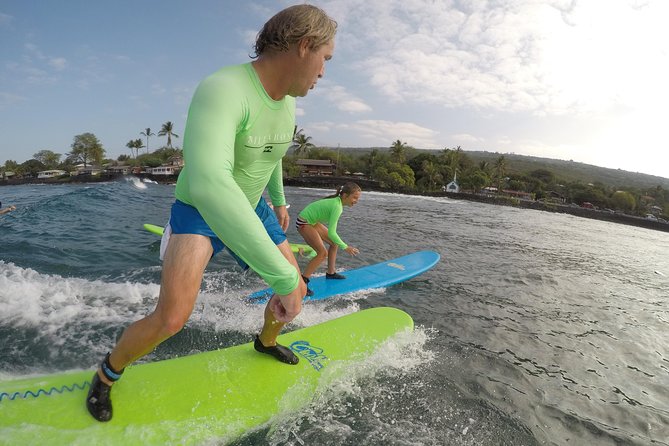
The advertised duration is approximately one hour and 30 minutes. That is enough time for a safety introduction, basic instruction, and several attempts in the water, but it is not a full-day surf course.
One account describes the activity as lasting about two hours. That could reflect the pace of that particular session, but you should use the official approximate duration for planning. Allow extra time around it rather than scheduling a tight connection, meal, or other activity immediately afterward.
A typical flow should include:
- Meeting at the Ali‘i Drive starting point
- A short safety briefing
- An explanation of how to position yourself and rise from the board
- Guided practice in the water
- Breaks as needed, especially if you become tired
- A return to the same meeting point
The exact order and water time can change with conditions. Surfing is not like a museum visit with fixed opening hours. The instructor has to work with the waves available that day, and the session may feel different if the surf is small, choppy, or more active.
One participant wished for bigger waves. That is a fair reminder that gentle conditions help beginners but may disappoint anyone hoping for a dramatic ride. The trade-off is clear: small waves are better for learning, while larger waves can be more exciting but less forgiving.
Same island, a different kind of day:
- Big Island in a Day: Volcanoes Waterfalls Sightseeing and History
★ 5.0 · 6,569 reviews - Big Island Manta Ray Night Snorkel
★ 5.0 · 5,656 reviews - Big Island: Kona Manta Ray Snorkel Tour in Keauhou Harbor
★ 4.5 · 2,465 reviews - Hilo Shore Excursion: Volcanoes National Park & Black Sand Beach
★ 4.5 · 2,338 reviews
How hard is this for a first-time surfer?
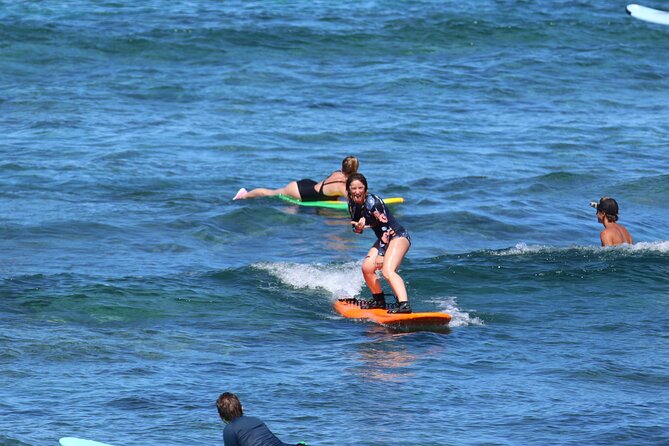
Surfing is tiring. You will paddle, push yourself up, balance, fall, and repeat the process. Taj reportedly offered a rest break and the choice to return to the water, which is the right approach for an activity that can wear you out faster than expected.
I would rate this as a physically active beginner lesson, not a passive sightseeing stop. You do not need prior surfing experience, but you do need to be ready for exertion and repeated attempts. The fact that children have stood up on their first lesson shows that the activity can be approachable, not that it is effortless.
The small waves at Kahaluu help. So does having an instructor nearby who can explain the timing. Still, avoid judging the lesson by how quickly you stand. A useful session can teach you how to paddle, how to place your hands, and how to get your feet under you even if you do not ride a wave all the way to shore.
What people on shore should expect
Friends and family can watch from the beach, but the shoreline is not presented as a soft, sandy resort beach. One account specifically describes it as mostly gravel. That makes the beach workable for watching, but less inviting if your plan is to lounge barefoot for hours.
This is useful if part of your group wants to surf and part prefers to stay out of the water. The non-surfers can see the lesson from shore, though the quality of their view will depend on the conditions and where the class is positioned.
The setting also gives you a more grounded Kona experience than a polished resort pool lesson. You are learning in an actual coastal park, with the inconveniences that come with it. Bring realistic expectations: this is about getting onto a board in the ocean, not sitting in a beach chair with a perfect stretch of sand.
Is $169 a fair price?
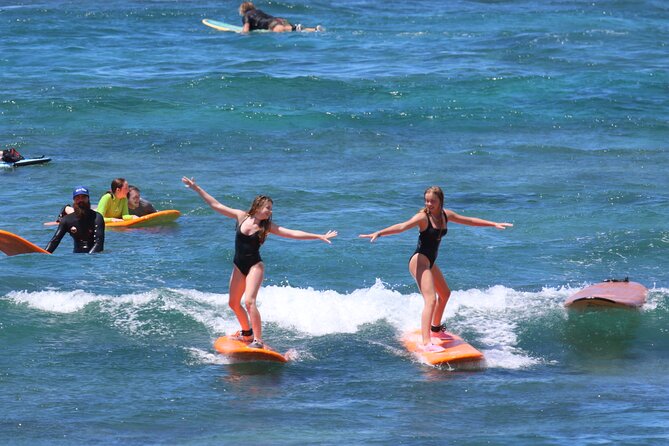
The cost is $169 per person. That is a substantial charge for a roughly 90-minute activity, so the value depends on what you want from the lesson.
The price includes the board, reef shoes, surf shirt, and instruction. It also gives you a small group, with no more than eight participants. If you would otherwise need to arrange equipment and find a beginner lesson separately, the package is easier to manage and gives you a clear plan.
The value is strongest for a first-time surfer who wants an organized introduction. You are paying for more than board access. You are paying for safety guidance, coaching, equipment, and the chance to practice at a beginner-friendly beach with an instructor watching the group.
The value is weaker if you already surf confidently or mainly want a few casual waves. You may find the instruction too basic, and the wave conditions may not deliver the size you hope for. It is also worth adding the $12 public parking charge at the main beach area to your budget.
Getting there and planning your day
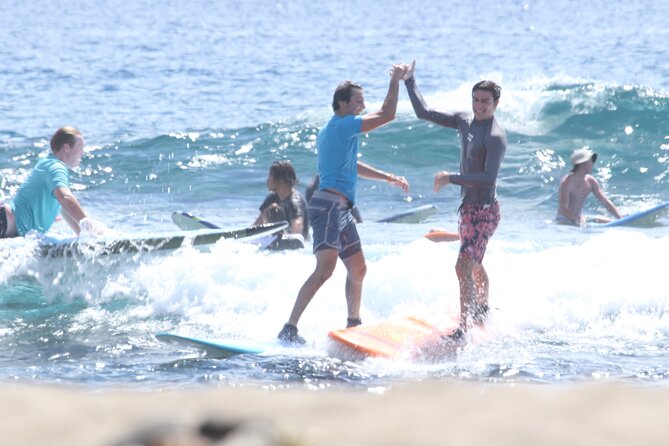
The meeting point is 78-6702 Ali‘i Drive, Kailua-Kona, Hawaii 96740. The activity ends back at that same meeting point, so you do not need to arrange a separate pickup location.
Public transportation is nearby, and service animals are allowed. Most people can participate, according to the supplied activity information, though surfing remains a physical water activity. If you have concerns about your ability to paddle, balance, or handle repeated movement, you should consider them before booking.
The experience is offered in English. Confirmation arrives when you book, and the activity usually fills its schedule about 16 days in advance on average. That does not mean you must book exactly 16 days out, but it is a useful sign that leaving this until the last minute may limit your choices, especially during a busy Hawaii visit.
Weather matters. If poor conditions force a cancellation, you can receive a different date or a full refund. For your own schedule, avoid placing this lesson on the final morning of your trip if possible. A weather change is easier to handle when you still have another day available.
The instructors make the biggest difference
The strongest part of this experience is the human element. Hauns is described as patient with first-time surfers, which is exactly what you want when the board seems determined to send you in every direction. Zion helped beginners pick up the basics quickly, and Tegan helped children stand up during their first lesson.
Taj’s approach sounds particularly useful for adults who underestimate the physical effort. He focused on safety, explained what was happening, and allowed time to rest. That combination matters more than flashy surf talk. You need a coach who can keep the lesson fun while also noticing when you are tired.
At the same time, your exact instructor is not guaranteed in the information provided. The account involving Tosh shows that not every teaching style will fit every learner. If you prefer detailed coaching, ask direct questions and request specific feedback. A small group gives you a good chance to do that.
Who should book this lesson?
I would recommend it to:
- First-time surfers who want equipment and instruction handled together
- Families with children who are ready for an active water lesson
- Couples or friends who want to try surfing without committing to a long course
- Visitors staying near Kailua-Kona who can reach the Ali‘i Drive meeting point
- Beginners who prefer a small group over a crowded class
You may want to reconsider it if you need a soft sandy beach, dislike physical exertion, or want guaranteed large waves. You should also allow for the possibility that the lesson runs longer than 90 minutes and that you may be tired afterward.
Cancellation and weather details
You can cancel for a full refund up to 24 hours before the local start time. Changes or cancellations made within 24 hours are not refunded or accepted.
Poor weather is handled differently. If the operator cancels the lesson because conditions are unsuitable, you can choose another date or receive a full refund. That policy protects you from losing the full $169 when the ocean does not cooperate.
Should you book Surf with the Pros?
Book it if learning to stand on a surfboard matters more to you than maximizing beach comfort or chasing big waves. The gentle Kahaluu conditions, provided gear, and maximum group of eight create a sensible entry point, while the strongest instructors appear to bring patience and practical safety coaching.
I would especially favor this for families and first-timers who want a real Hawaii water experience without arranging equipment on their own. Go in ready to work, expect a gravelly shoreline, budget for $12 parking, and treat standing up as a bonus rather than a guarantee. At $169, it is not a cheap hour at the beach, but it can be a worthwhile introduction to surfing if personal instruction and a simple setup are what you need.
FAQ
Where does the surf lesson meet?
The meeting point is 78-6702 Ali‘i Drive, Kailua-Kona, Hawaii 96740. The activity ends back at this same meeting point.
How long does the experience last?
The stated duration is approximately one hour and 30 minutes. One account describes a session lasting about two hours, so allow some extra time in your schedule.
Do I need previous surfing experience?
No. Previous surfing experience is not required, and the lesson is designed for beginners.
What equipment is included?
The experience includes a surfboard, reef shoes, and a surf shirt. Instruction is also provided.
How many people can join the group?
The maximum group size is eight participants.
What happens if the weather is poor?
If the activity is canceled because of poor weather, you can choose another date or receive a full refund. You can also cancel at least 24 hours before the start time for a full refund.
Just added on Big Island of Hawaii
- Volcano National Park and Rainbow Fall in Hilo, Hawaii★ 5.0 · 53 reviews
- Volcanoes National Park Adventure Tour – Hilo Shore Excursion★ 4.5 · 104 reviews
- Volcanoes National Park and Hilo Private Tour★ 5.0 · 3 reviews
- Private VAN Tour Hilo★ 4.5 · 5 reviews
- Volcanoes Adventure Tour from Hilo★ 4.0 · 29 reviews
- Majestic Waterfall Tour★ 5.0 · 31 reviews
- Private Shore Excursion Hilo Volcanoes National Park up to 10 PPL★ 5.0 · 36 reviews
- 5 Hour Custom Private Tour of Hawaii★ 5.0 · 9 reviews
Surf Lessons, compared.
Beginner-Friendly Waikiki Beach Surfing Lesson
Read our review →

Private Hanalei Sandy Bottom Surf Lesson on Kauai
Read our review →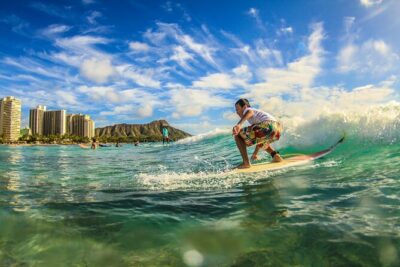
Browse the lists this tour appears in