
Reviewed · WHALE WATCHING
Whale Watch by Kayak-No Time Limit
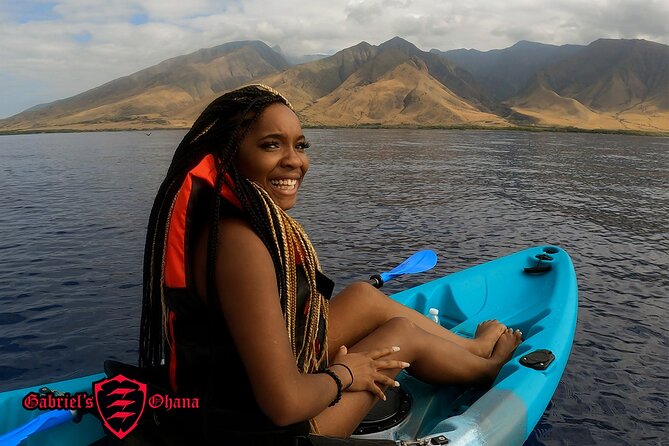
Paddle quietly into Maui’s whale waters, where the lack of an engine lets you hear the sea and, if conditions cooperate, the haunting calls of humpback whales. Gabriel’s Ohana keeps groups small, brings experienced CPR-trained guides such as Gabriel, Jason, and Nicholas, and does not rush you back to shore.
I especially like the quiet kayak setting, which feels far more personal than watching whales from a large boat. I also like the extra time in the water, plus the clear-bottom kayaks, long fins, reef-safe sunscreen, snacks, and dry bags. The main consideration is simple: whale sightings and ocean conditions are never guaranteed, and four hours on the water still requires comfort with paddling and snorkeling.
Key points to know before you book
- Whale season runs from December through April, when humpback whales visit Maui waters.
- Olowalu Beach is the only listed stop, so the tour stays focused on one coastal area rather than moving between several sites.
- Gabriel’s Ohana uses a quiet, small-group approach, with a maximum of 20 people.
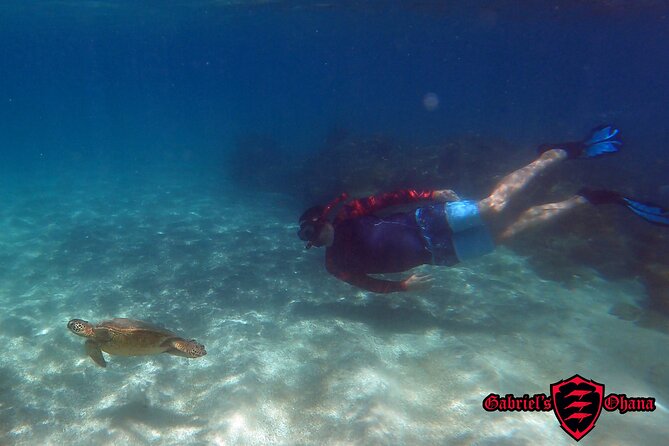
- Snorkeling is a major part of the outing, with turtles, fish, coral heads, and other sea life possible.
- There is no fixed watch limit, though the total experience lasts about four hours.
- The $129 price includes equipment, food, taxes, and a $10 contribution per seat to the University of Hawaiʻi Maui College.
Starting from historic Olowalu Beach
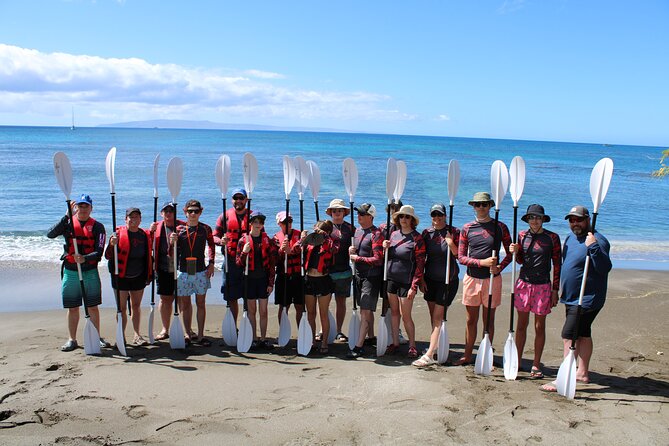
Your morning begins at Olowalu Beach at 8:30 a.m. This coastal setting gives the outing a calm start. Instead of boarding a large motorboat at a busy harbor, you meet the family-run team on the beach, get fitted for gear, and head directly onto the water.
Gabriel’s Ohana supplies a rash guard, life vest, reef-safe sunscreen, dry bag, and snorkeling equipment. Life vests come in sizes small through XXXL, with under-leg straps designed to keep the vest centered. That is useful if you are not a strong ocean swimmer or tend to tire in open water.
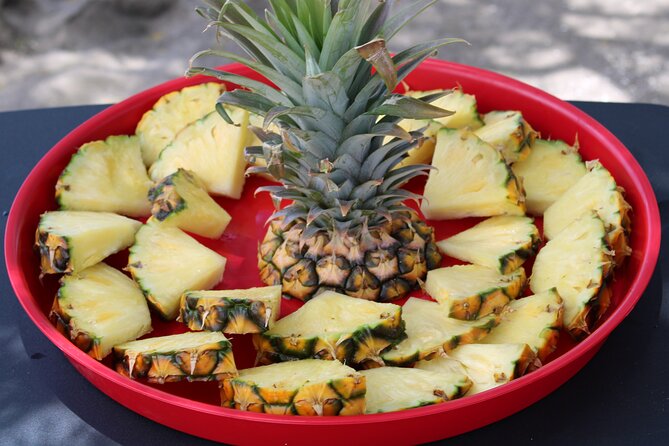
You also receive bottled water, granola, and pineapple. The food is modest, but it is exactly the sort of small provision that matters after paddling and snorkeling. Your kayak carries the water and granola, while the dry bag gives you a place for items that must stay protected.
You should bring a hat and sunglasses, since those are not included. The sun can feel strong on open water, and a hat with a secure fit may be more useful than a loose one that can blow away. The supplied reef-safe sunscreen is a thoughtful touch, especially around coral.
More canoes & kayaks on Maui:
- Maui Clear Kayak and Snorkel Tour: Swim with turtles (Makena)
★ 5.0 · 551 reviews - Maui: Turtle Town Kayak and Snorkel Tour
★ 4.7 · 345 reviews - Turtle Reef Kayak Tour of Makena, Maui
★ 4.5 · 328 reviews
Why a kayak changes whale watching
The main appeal here is the quiet. A kayak has no engine noise or fuel smell, so you can sit on the water and listen. If a whale surfaces nearby, the moment may feel less staged than it would from a crowded boat surrounded by conversation and motor noise.
That does not mean you will approach whales on demand. Wildlife sets the schedule. Your guides paddle toward areas where whales may be active, then wait and watch. A typical encounter might involve a mother and calf, an escort, a breach, or a tail slap, but the exact show belongs to the whales.
The supplied experience includes reports of at least two mother-and-calf pairs, escorts, breaching, and tail slapping. Those are exciting possibilities, not promises. The honest advantage is the setting: you are low on the water, close to the sounds and movement of the ocean, with more time to watch instead of following a strict boat timetable.
The phrase no time limit needs a little context. The overall activity is listed at about four hours, but the team does not appear to rush you away from a good snorkeling or whale-watching moment simply because the clock has reached a particular viewing limit. Ask the guides about the day’s timing when you arrive, since weather and sea conditions always affect the plan.
Paddling with Gabriel, Jason, and Nicholas
Gabriel, Jason, and Nicholas are named members of the guiding team. Gabriel’s mother also helps lead some outings. The company is family owned and operated, which shapes the feel of the trip: less like a large production and more like being taken out by people who know the area and want the day to go well.
The guides are CPR trained and certified. They also explain the reef, nearby islands, and local sea life as you paddle and snorkel. Gabriel has been praised for checking that everyone is doing well, avoiding a rushed schedule, and spending extra time with the group when conditions allow.
That personal attention is important in a kayak. A large boat can carry more people, but it cannot give the same level of help to each swimmer. Here, the team can pay closer attention to comfort, equipment, and where the group should pause.
The maximum group size is 20. That is not a private tour, and the experience may feel different depending on how many people are booked that morning. Still, it is smaller than many boat-based whale excursions, and the guides can keep the group centered around the same reef and whale-watching area.
Snorkeling above coral heads and sea life
Whale watching is the headline, but snorkeling may become your favorite part. The outing includes snorkeling equipment, long fins, soft silicone masks, and life vests. The fins help with propulsion and can reduce fatigue, especially for swimmers who are used to spending only short periods in open water.
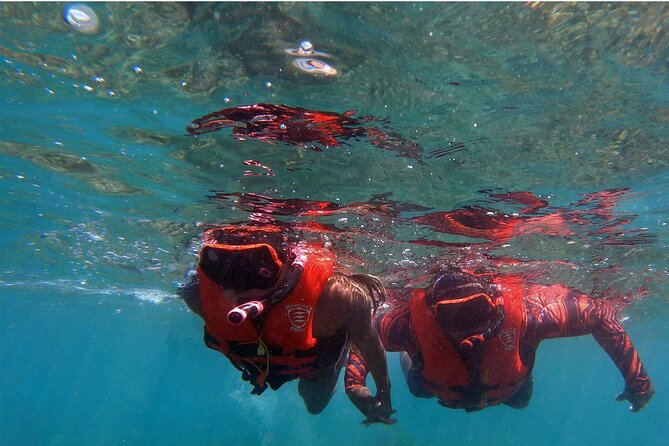
Olowalu’s reef area gives you a chance to look for ancient coral heads, schools of fish, and sea turtles. A turtle may simply pass by, or it may remain in view long enough for the group to watch. The guides can point out sea life and may retrieve small creatures for you to see, as long as the situation is suitable and safe.
Clear-bottom kayaks add another layer. You can look beneath the kayak while paddling, which makes the ride more than a transfer to the snorkeling area. You might spot movement below before entering the water, and the boats offer a way to watch the reef if you prefer to take a break from swimming.
One practical tip comes directly from the nature of the activity: use a life vest while snorkeling if you are not fully comfortable in the ocean. Even confident swimmers can become tired after paddling, floating, and kicking against current. The supplied long fins and fitted vests help, but they do not remove the need to pace yourself.
More whale watching on Maui:
- Maui Eco-Raft Tour: Eye-Level Whale or Dolphin Watching – Lahaina
★ 5.0 · 2,482 reviews - From Maalaea: Whale Watching Tour Aboard the Quicksilver
★ 4.5 · 1,461 reviews - Maui: Ultimate Whale Watch from Lahaina
★ 5.0 · 1,162 reviews - WHALES GUARANTEED Maui Whale Watching Makai Adventures
★ 5.0 · 1,081 reviews
What the four-hour outing feels like
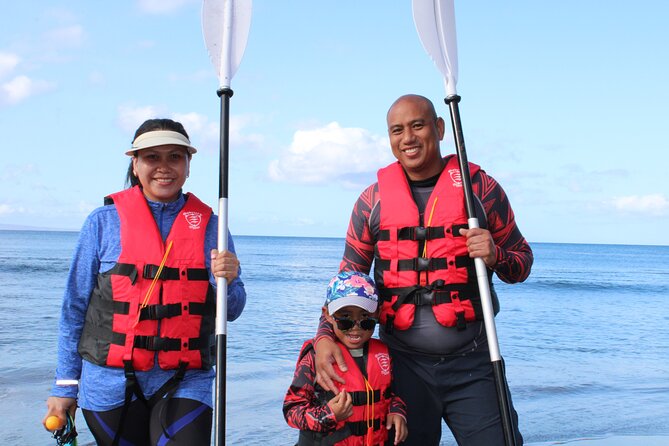
The day follows one main route from Olowalu Beach and back. You meet at 8:30 a.m., receive your rash guard and life vest, collect a paddle and dry bag, and get settled in your kayak.
From there, the group heads out in search of whales during the December to April season. Your guides choose the best available spots based on what they see, then allow time for observation. You may spend part of the morning watching the surface for a blow, fin, tail, or breach.
The outing also includes snorkeling around the reef. Depending on the conditions, you may see turtles, fish, coral formations, flying fish, or other sea life. The exact order of whale watching and snorkeling can vary, so you should expect a flexible morning rather than a rigid sequence of timed stops.
The trip ends back at Olowalu Beach. Since no transportation between sites is provided or needed, you avoid the extra loading and unloading that comes with a multi-stop excursion. The tradeoff is that you will not visit several separate snorkeling locations.
What the $129 price includes
At $129 per person, this is not the cheapest way to spend a morning on Maui. Its value comes from how much is bundled into the price and from the time spent on the water.
Included are:
- Snorkeling equipment
- Long fins and soft silicone masks
- Rash guard
- Reef-safe sunscreen
- Life vest in sizes small through XXXL
- Dry bag
- Bottled water
- Granola and pineapple
- All fees and taxes
- A $10 contribution from each booked seat to the University of Hawaiʻi Maui College
You are not paying only for a kayak rental. You are paying for guides, instruction, equipment, food, safety gear, whale-searching time, reef interpretation, and the chance to snorkel in the same outing. The contribution to the college is also a useful part of the price, since it gives the booking a small educational benefit beyond the activity itself.
The value is strongest if you want both whales and snorkeling. If your only goal is to see humpbacks, a larger boat may offer more room and less paddling. If you want a quiet outing with time for reef life, the kayak format makes the $129 easier to justify.
The tradeoffs of a small kayak tour
The same features that make this outing appealing also create limits. Kayaking requires some physical effort, even though most people can participate according to the supplied activity information. You will paddle, balance in a kayak, and possibly swim or float in open water.
The sea may be calm, rough, clear, or less inviting on a given morning. The activity requires good weather, and poor conditions can lead to a new date or a full refund. That policy protects you from being sent onto unsafe water, but it also means your plans can change.
Whales are wild animals, not scheduled performers. You could have a spectacular morning with several whales, or you could spend more time looking and listening than watching dramatic surface action. The snorkeling portion gives the outing a second focus, which helps make the experience worthwhile even when whale activity is quiet.
There is also no hat or sunglasses supplied. Bring those yourself, along with anything else you need to stay comfortable in strong sun. The supplied dry bag helps with protection, but you should still ask the guides what personal items are best left behind.
Who will like this experience most
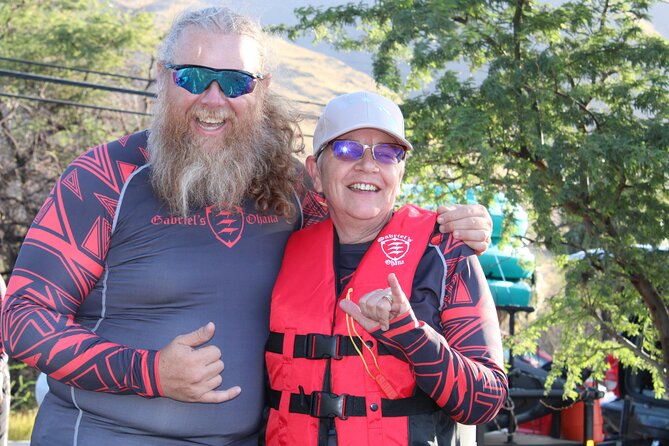
I would choose this for you if you want a personal, low-noise way to explore Maui’s coastal water. It suits people who prefer a small family business to a large commercial operation and who like combining wildlife watching with snorkeling.
It is also a good fit if you dislike being hurried. The guides make room for extra time in the water and can adjust the pace to the group. That matters when you are watching a turtle, waiting for whales, or simply getting comfortable with your mask and fins.
Families and mixed-ability groups may appreciate the broad range of life vest sizes and the guides’ attention to individual comfort. Still, everyone should be ready for paddling and ocean conditions. If you want a completely passive excursion, a motorboat would be easier.
I would think twice if you need a guaranteed whale sighting, dislike open water, or want to visit several different reefs. This is one beach, one coastal area, and one flexible morning. Its strength is focus, not variety.
Booking details and cancellation terms
The experience is offered in English and uses a mobile ticket. Confirmation arrives at booking, and service animals are allowed. Most people can participate, but the maximum group size is 20.
Free cancellation is available up to 24 hours before the 8:30 a.m. start time for a full refund. Changes made within 24 hours are not accepted, and cancellations inside that period are not refunded. Since weather can affect the outing, a cancellation by the operator for poor conditions brings the choice of another date or a full refund.
The activity is popular enough that it is booked about 28 days ahead on average. If your Maui dates are fixed, booking early is sensible, especially during the December to April whale season.
Should you book Gabriel’s Ohana?
Book it if you want a quiet whale watch with a real snorkeling component, personal help from a family-run team, and more freedom than a tightly timed boat trip. The best reasons are the silent kayak approach, the chance to hear whales without an engine, and the guides’ willingness to spend time with you in the water.
Do not book it expecting guaranteed close whale encounters or a completely effortless morning. You will be paddling, snorkeling, and responding to the sea’s conditions. For the right person, the $129 price buys more than a sighting: it buys a slower, more direct way to experience Olowalu’s reef and whale waters.
FAQ
Where does the kayak and whale-watching tour begin?
It begins at Olowalu Beach in Olowalu, Hawaii, with an 8:30 a.m. start time.
Where does the activity end?
The activity ends back at the Olowalu Beach meeting point.
When is humpback whale season for this tour?
The whale-watching portion operates from December through April.
How long does the experience last?
The activity lasts approximately four hours, with no fixed watch limit stated for time spent exploring and watching.
What equipment is provided?
Snorkeling equipment, long fins, soft silicone masks, a rash guard, reef-safe sunscreen, a dry bag, and a life vest are provided.
What food and drinks are included?
Bottled water, granola, and pineapple are included.
How many people can join the tour?
The activity has a maximum of 20 participants.
What happens if bad weather cancels the tour?
You will be offered a different date or a full refund. Free cancellation by you is also available up to 24 hours before the start time.
Just added on Maui
- Two Site Snorkeling Adventure featuring the Molokini Crater★ 5.0 · 4 reviews
- Road to Hana Deluxe Rainforest & Waterfall Experience from Maui★ 5.0 · 116 reviews
- Traditional Airport Lei Greeting on Kahului Maui★ 5.0 · 95 reviews
- Turtle Town Clear Kayak & Snorkel Tour (8am-11am)★ 5.0 · 100 reviews
- The Best Maui 3 Hour Molokini and Turtle Town Snorkel★ 5.0 · 106 reviews
- 3-Hour Small-Group Maalaea Luxury Snorkel Cruise Tour★ 5.0 · 29 reviews
- Elite Private Tour★ 5.0 · 7 reviews
- VIP Premiere Whale Watch Kaanapali Beach MAX 12 PASSENGERS★ 5.0 · 78 reviews
Whale Watching, compared.
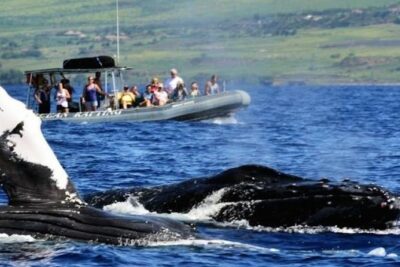
Maui Eco-Raft Tour: Eye-Level Whale or Dolphin Watching – Lahaina
Read our review →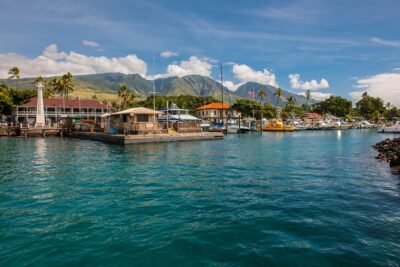
2-Hour Oahu Whale Watch from Ala Wai Harbor, Waikiki
Read our review →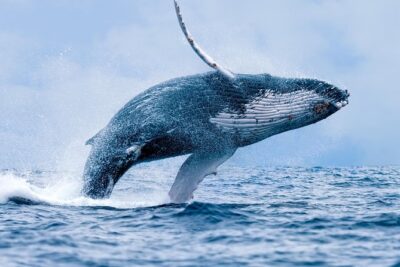
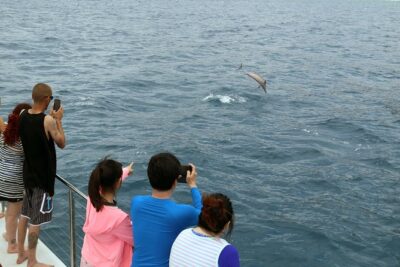
Luxury Snorkel Cruise, Local Buffet with Whale & Dolphin Watch
Read our review →
WHALES GUARANTEED Maui Whale Watching Makai Adventures
Read our review →
Waikiki, Oahu 2-Hour Whale Watching: Guaranteed Sightings
Read our review →
Ma’alaea Harbor: Whale Watching Tour Aboard Power Catamaran
Read our review →Browse the lists this tour appears in