Reviewed · TOURS IN THE BIG ISLAND
Maunakea Stellar Explorer HILO
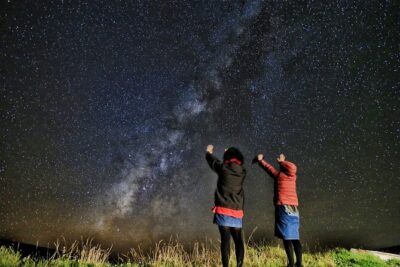
Maunakea Stellar Explorer Hilo saves its best trick for after sunset: from a dark site between Mauna Kea and Mauna Loa, you may view Saturn, Jupiter, star clusters, the Orion Nebula, Andromeda, and other sky objects through a large Dobsonian telescope. The guides, including Eric, Rich, Henry, and Nate, are also a major part of the experience, bringing astronomy, Hawaiian culture, geology, and local stories into the drive.
I like the way the tour combines Hilo’s waterfalls and lava tube with a proper night-sky session, rather than asking you to spend seven hours focused on one subject. I also like the practical touches: hotel pickup, hot drinks, dinner, flashlights, and warm parkas can make a cold evening on Maunakea much easier.
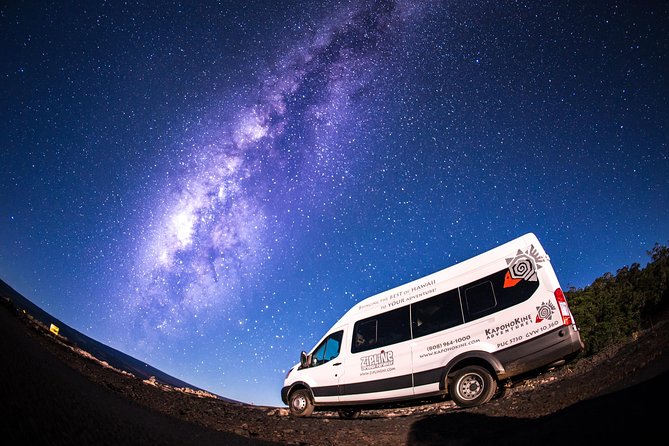
The key point to understand before booking is this: you do not visit the summit observatories or the Maunakea Visitor Information Station. The telescope is set up at a lower location near Saddle Road, sometimes described as a roadside or rest-stop area. That can still produce excellent views, but it is not the summit experience some advertising images may suggest.
What makes this Hilo stargazing tour worth considering
- See Saturn, Jupiter, nebulae, and galaxies through a large telescope, when weather and the night sky cooperate.
- Visit Rainbow Falls, Boiling Pots, and Kaumana Caves before the astronomy portion begins.
- Watch the sun through a solar telescope, with possible views of sunspots, prominences, and solar flares.
- Learn from guides such as Eric, Rich, Henry, and Nate, who are praised for astronomy, geology, Hawaiian culture, and local history.
- Use hotel pickup, dinner, hot drinks, bottled water, flashlights, and warm jackets without arranging each item yourself.
- Know the limits before paying: the tour does not go to Maunakea’s summit observatories, and cloud, smoke, moonlight, or equipment trouble can affect the viewing.
From Hilo waterfalls to the Wailuku River
The tour begins at 3:30 p.m. from 93 Banyan Drive in Hilo, with pickup available at major hotels. Confirm your hotel details in advance, since the exact pickup arrangement matters when an afternoon tour starts on a fixed schedule.
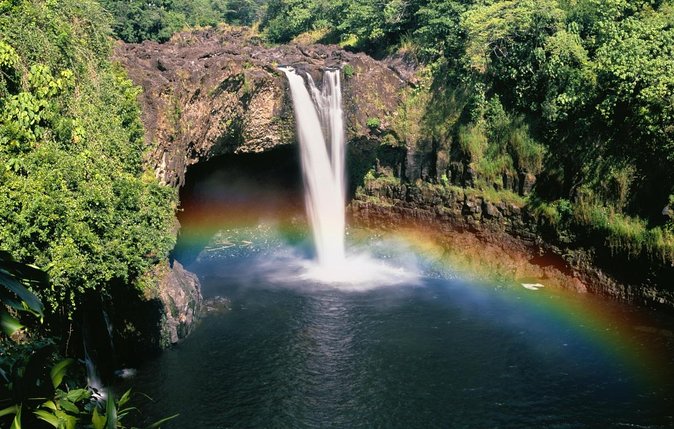
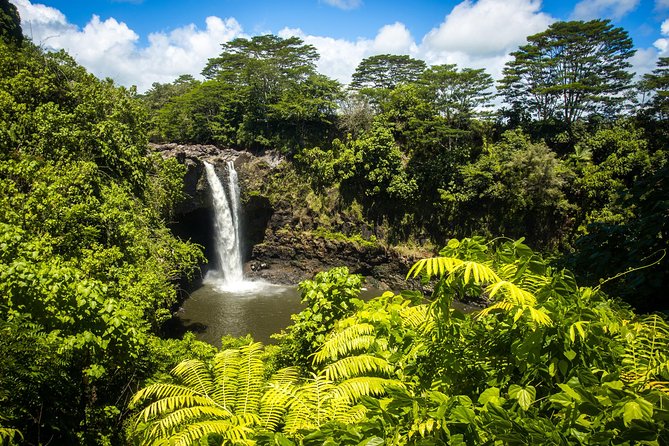
Your first stop is Rainbow Falls, an 80-foot twin waterfall just outside central Hilo. You have about 20 minutes here, enough for photographs and a quick look from the viewing area. The name comes from the rainbow effect that can appear in the spray, though you should not count on seeing one during an afternoon visit.
Rain can actually add drama to this stop. Bring a poncho if the forecast is wet, and wear shoes with a firm grip. One guide may keep the visit short, while another may add local stories or details about the river and surrounding forest, so the guide’s style shapes how much you get from this quick stop.
The next stop is Boiling Pots, also on the Wailuku River. Here, water pushes through depressions in the lava rock, creating a churning effect when conditions are right. You get another 20-minute photo stop, not a long walk or swimming break. Treat the rocks and water with respect, especially after rain.
These first two stops help the tour make sense as a Hilo-area outing, not just a ride up a mountain for a telescope. If you have already visited the waterfalls independently, this portion may feel repetitive. If it is your first afternoon on the Hilo side, it is an efficient introduction.
Other trips people book on Big Island of Hawaii:
- Big Island in a Day: Volcanoes Waterfalls Sightseeing and History
★ 5.0 · 6,569 reviews - Big Island Manta Ray Night Snorkel
★ 5.0 · 5,656 reviews - Big Island: Kona Manta Ray Snorkel Tour in Keauhou Harbor
★ 4.5 · 2,465 reviews
Kaumana Caves and the short walk underground
Kaumana Caves is one of the more unusual stops. The cave is part of a lava tube formed by the 1881 flow, which carried lava about 1.5 miles from the Hilo area. You enter a broad, cathedral-like section of the tube, then return above ground for a picnic-style meal.
Allow about an hour here. The cave is not a polished attraction with a smooth walkway, and you need to watch your head and footing. Guides have provided flashlights, which is useful, but closed-toe shoes with good traction are still the right choice. If you dislike uneven ground or steep steps, this may be the least comfortable part of the tour.
The wording around the meal can be a little confusing. The details describe a quick picnic lunch at the cave, while the overall experience includes dinner later in the outing. In practice, expect simple picnic-style food rather than a full restaurant meal. Dietary requirements, including vegetarian, gluten-free, or dairy-free needs, can be supplied when booking.
Several guides have made this stop better by explaining the lava tube and surrounding plants. Other people have found the cave portion shorter or less impressive than expected. I would treat it as a quick geological encounter, not as the main attraction.
Saddle Road between Mauna Kea and Mauna Loa
After the Hilo stops, the van heads across Saddle Road, the broad high-elevation area between Mauna Kea and Mauna Loa. Your National Park Service trained guide provides information about volcanic rock, lava flows, native plants, wildlife, and the two massive volcanoes.
This drive is where the tour gains much of its sense of place. You are not simply being transported to a telescope site. You get an explanation of how the island was built, how old lava flows differ, and why the upper slopes look so unlike tropical Hilo.
The views depend on clouds, light, and the condition of the day. Smoke from a fire, low fog, or poor weather can reduce what you see. One group dealt with smoke, an uncertain forecast, and equipment problems, which shows why you should not treat the astronomy portion as guaranteed.
Dinner is served around this part of the tour as the daylight fades. It is included, along with bottled water, coffee or tea, and other beverages. Portions are described as simple, so I would eat a proper meal before departure if you tend to get hungry. One meal-order mix-up resulted in a group receiving the wrong sandwiches, a small issue but a useful reminder to check your food before leaving Hilo.
Solar viewing with a specialized telescope
The solar portion is one of the tour’s unusual features. Your guide sets up a solar telescope so you can safely view the sun through the proper equipment. Depending on solar activity and weather, you might see sunspots, prominences, flares, or other details on the solar surface.
Never look directly at the sun without the correct solar equipment. The value here is not simply seeing a bright disk. It is having a guide explain what is changing and help you notice features that would otherwise look like tiny marks.
Solar viewing is not guaranteed on every departure. Weather, timing, and current solar activity all matter. Some outings have focused on night stargazing and did not include a solar session, so book this as an added possibility rather than the central reason for choosing the tour.
Same island, a different kind of day:
- Hilo Shore Excursion: Volcanoes National Park & Black Sand Beach
★ 4.5 · 2,338 reviews - Big Island: Captain Cook Snorkel On A Power Catamaran With Lunch
★ 5.0 · 2,232 reviews - KONA Manta Ray Night Snorkel – FREE re-ride if no Sightings
★ 5.0 · 2,212 reviews - Manta Ray Night Snorkel at Kona, Big Island
★ 5.0 · 1,758 reviews
Stargazing below the summit observatories
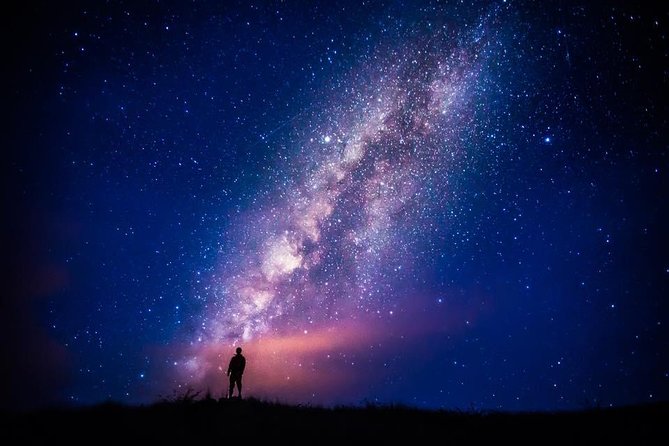
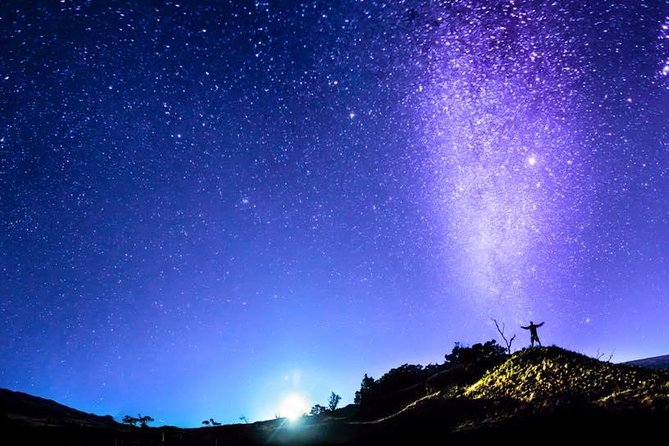
Night stargazing is the main event. The guide chooses one of the company’s preferred sites near Mauna Kea, generally at a lower elevation along or near Saddle Road. A large-aperture Dobsonian telescope is set up for viewing.
A Dobsonian is a practical choice for showing groups wide, bright views of large sky objects. You may see planets, double stars, star clusters, the moon, galaxies, and nebulae. Actual targets depend on the time of year, weather, cloud cover, moon phase, and what is visible above the horizon.
Past outings have included Saturn, Jupiter, Orion Nebula, Andromeda Galaxy, star clusters, the moon, and many constellations. A full moon does not erase every star, but bright moonlight makes faint objects harder to see. If your priority is galaxies and nebulae, check the lunar phase and avoid a full moon when possible. If the moon is your priority, choose a date when it is visible during the evening.
The guide makes a major difference here. Eric has been especially effective at explaining astronomy patiently to children and adults. Rich has been praised for combining astronomy with local knowledge and for making extra stops when time allowed. Henry has helped people get both unaided views and telescope photographs of the moon. Nate is known for connecting the sky session with Hawaiian culture and the island’s geology.
Ask questions and request objects you want to see. The telescope session is not a silent viewing line. If Jupiter is on your list, say so. If you want help finding Orion or a particular constellation, ask. A good guide can adjust the explanation for a family, a couple, or someone who already knows a little astronomy.
You should also know what you are not getting. This is not a visit to the famous summit observatories. Park rules and operating conditions mean the tour stays lower, at a location where the company can set up its own telescope. If standing beside a road or at a rest area does not match your idea of a dark-sky experience, you may find the setting underwhelming even when the telescope view is excellent.
The published stargazing time is about 90 minutes. That is enough for several objects, but it is not a private observatory session. With up to 26 people, you may need to wait your turn at the eyepiece. Smaller groups may feel more personal, while a full vehicle can make the telescope portion slower.
Cold weather, transport, and the real value of $240.73
The price is $240.73 per person, and the tour runs about seven hours. That is a fair but not bargain-level price for a full afternoon and evening with transport, a professional guide, multiple Hilo stops, dinner, drinks, solar equipment, and a large telescope.
I would compare it with the cost and effort of arranging the day yourself. You would need to drive from Hilo to the waterfalls, Kaumana Caves, and Saddle Road, bring suitable food and warm clothes, handle the night drive, and provide your own astronomy equipment. The tour bundles those tasks into one outing.
The value drops if you only want stargazing. Since the tour does not reach the summit observatories, you should compare it with a dedicated lower-elevation stargazing experience if astronomy is your only goal. The value improves if you want a guided Hilo highlights tour and an evening under the stars in the same package.
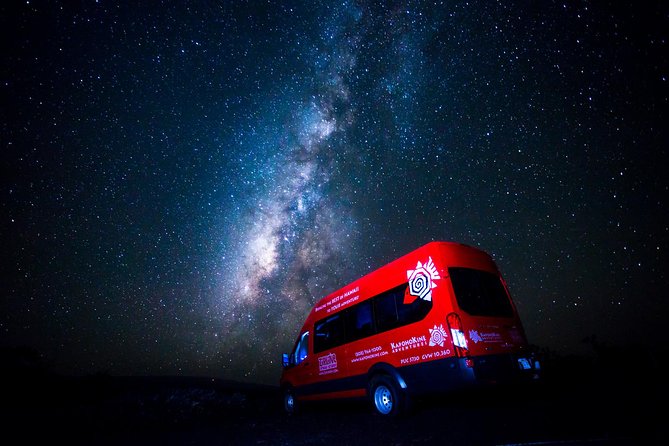
The van is a practical part of the experience, but vehicle quality can vary. One outing had an air-conditioning problem, while another involved a telescope repair. These were not typical features to expect, but they show why a smooth day depends on the operator’s equipment and the guide’s ability to handle surprises professionally.
Warm parkas, snacks, hot drinks, and flashlights have made the evening more comfortable for many groups. Still, bring layers. Maunakea’s upper areas can feel cold after a warm Hilo afternoon, and you may spend time outside while the telescope is being set up.
Who will enjoy this tour most
I would recommend it most strongly if you:
- Want a mix of waterfalls, a lava tube, volcanic geology, and astronomy.
- Are staying in Hilo and prefer not to drive unfamiliar roads after dark.
- Enjoy asking questions and listening to a guide explain the sky.
- Are traveling with children or adults who need different kinds of entertainment.
- Want a telescope session without buying or carrying your own equipment.
- Can accept that weather and moonlight may change the result.
I would hesitate if you expect to enter the summit observatories, visit the top of Mauna Kea, or sit in a private dark-sky setting. I would also think twice if you need a substantial dinner, dislike uneven cave floors, or want a fixed list of stars and planets guaranteed in advance.
Free cancellation is available up to 24 hours before the 3:30 p.m. start time. Within 24 hours, changes and refunds are not accepted, except when poor weather causes the operator to cancel, in which case you are offered another date or a full refund.
Should you book Maunakea Stellar Explorer Hilo?
Book it if you want a full Hilo-side day with a strong astronomy finish and you understand the summit limitation. The best parts are the guides, the telescope, the chance to see planets and nebulae, and the way the waterfalls, cave, lava flows, and night sky fit together.
Do not book it expecting a tour of the observatories. Treat the telescope site as a practical dark-sky stop rather than a grand mountain-top setting. Check the moon phase, wear grippy closed-toe shoes, bring rain protection and layers, and tell the operator about dietary needs and your hotel pickup point.
For the right person, this is a memorable way to connect Hilo’s volcanic ground with the sky above it. For someone chasing only the summit or a guaranteed perfect night, the mismatch in expectations could cost more than the price.
FAQ
How long is the Maunakea Stellar Explorer Hilo tour?
The experience lasts about seven hours, beginning at 3:30 p.m. and returning to the meeting point in Hilo.
Where does the tour begin?
The listed meeting point is 93 Banyan Drive, Hilo, Hawaii 96720. Pickup is available from major hotels, and you should provide your hotel information when booking.
Does the tour visit the Maunakea summit observatories?
No. The tour uses a preferred stargazing site near Saddle Road and does not go to the summit observatories or the Maunakea Visitor Information Station.
What stops are included?
The route includes Rainbow Falls, Boiling Pots, Kaumana Caves Park, Mauna Kea area stargazing, and a drive across Saddle Road between Mauna Kea and Mauna Loa.
Is dinner included?
Yes. Dinner is included, along with beverages, bottled water, coffee or tea. The meal is described as picnic-style and may be a simple sandwich meal.
Can dietary requirements be accommodated?
Yes. Vegetarian, allergy-related, gluten-free, and dairy-free requirements can be provided in the special requirements section when booking or sent to the operator afterward.
Will I see the sun through a telescope?
Solar viewing is part of the planned experience, with possible views of sunspots, prominences, and flares. It depends on weather, timing, and current solar activity, and some departures may focus only on nighttime viewing.
What might I see at night?
Depending on weather and visibility, the telescope may show galaxies, nebulae, star clusters, planets, double stars, the moon, and other sky objects. Previous viewing has included Saturn, Jupiter, Orion Nebula, Andromeda, and star clusters.
What happens if bad weather cancels the tour?
If poor weather causes the operator to cancel, you are offered a different date or a full refund. You can cancel for a full refund up to 24 hours before the experience begins.
Just added on Big Island of Hawaii
- Volcano National Park and Rainbow Fall in Hilo, Hawaii★ 5.0 · 53 reviews
- Volcanoes National Park and Hilo Private Tour★ 5.0 · 3 reviews
- Volcanoes National Park Adventure Tour – Hilo Shore Excursion★ 4.5 · 104 reviews
- Private VAN Tour Hilo★ 4.5 · 5 reviews
- Volcanoes Adventure Tour from Hilo★ 4.0 · 29 reviews
- Majestic Waterfall Tour★ 5.0 · 31 reviews
- Private Shore Excursion Hilo Volcanoes National Park up to 10 PPL★ 5.0 · 36 reviews
- 5 Hour Custom Private Tour of Hawaii★ 5.0 · 9 reviews
Tours in the Big Island, compared.
Big Island in a Day: Volcanoes Waterfalls Sightseeing and History
Read our review →
Kona Manta Ray Snorkel Tour in Keauhou Harbor
Read our review →
Hilo Shore Excursion: Volcanoes National Park & Black Sand Beach
Read our review →
Captain Cook Snorkel On A Power Catamaran With Lunch
Read our review →
KONA Manta Ray Night Snorkel – FREE re-ride if no Sightings
Read our review →
Big Island GOAT Experience: Mauna Kea Summit, Sunset & Stars
Read our review →