Reviewed · TOURS IN THE BIG ISLAND
MaunaKea Stellar Explorer From Kona
The best part of this Kona tour is the switch from daytime solar viewing to night-sky observing. You may watch sunspots and solar flares through a special telescope, then later see planets, galaxies, and star clusters through a large Dobsonian telescope. I also like the drive itself, which crosses Saddle Road between Mauna Kea and Mauna Loa and includes geology, lava flows, Hawaiian history, and native plants.
I like that the tour avoids Mauna Kea’s summit and Visitor Center out of respect for Native Hawaiian concerns, while still reaching dark skies at a lower viewing point. Dinner and hotel pickup add real convenience. The catch is weather: clouds can block much of the night viewing, and a bright full moon can wash out faint stars. At $239, this is a serious astronomy outing, not a cheap sunset ride.
Key points to know before booking
- Solar viewing comes first: Your guide sets up a solar telescope so you can safely view sunspots, prominences, and solar flares, weather permitting.
- The route has its own appeal: Saddle Road crosses the broad volcanic terrain between Mauna Kea and Mauna Loa, with commentary on lava, geology, plants, and wildlife.
- Boiling Pots adds a daytime stop: You get more than a telescope session, with time to see and explore this notable Big Island feature.
- Night viewing uses a large Dobsonian telescope: This design gives wide views of star fields and deep-sky objects.
- The tour stays below the summit: It does not visit the summit or Visitor Center, respecting Native Hawaiian concerns and avoiding the longest, highest route.
- Come prepared for cold and changing skies: Wear long pants, closed-toe shoes, and a jacket. Gloves are also a smart addition.
Why this is more than a standard stargazing trip
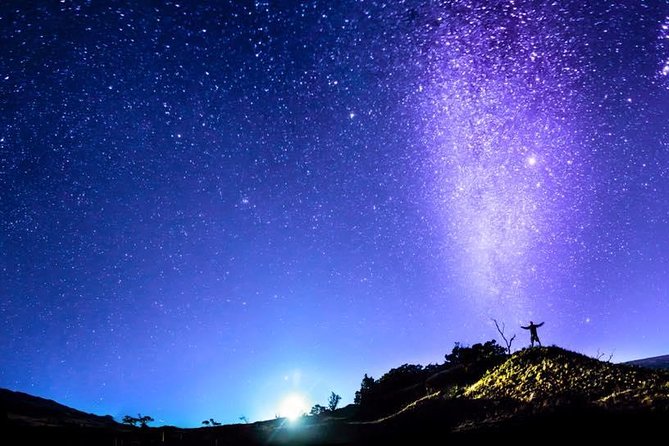
Many night-sky outings begin and end with a telescope. This one gives you a fuller picture of the island. You spend part of the day learning how Mauna Kea and Mauna Loa were built, then watch the sun through a solar scope before returning after dark to study the sky from another angle.
That contrast is the real strength. The sun is not just a bright disk. Through the right equipment, you may see dark sunspots, prominences, and flares. At night, the same sky becomes a place of galaxies, nebulae, planets, double stars, and star clusters.
The guides are a major part of the experience. The company’s stellar explorers include people with long experience in Hawaii astronomy and at professional observatories. One helped create the Mauna Kea Visitor’s Center and ran it for ten years. Guides such as Marcus, Thiago, Nate, Rich, Todd, and others have led outings with clear explanations of constellations, Hawaiian culture, island lore, and volcanic science.
You should not expect a formal university lecture. The appeal is more personal. A good guide points to an object, explains what you are seeing in plain language, and adjusts the talk to your questions. Marcus, for example, has been praised for moving easily between astronomy, Hawaiian culture, and local history. Thiago has been noted for his work with stars and constellations, while Nate has a gift for making complex subjects easy to follow.
Other trips people book on Island Of Hawaii:
- Kailua Kona: Night Manta Ray Adventure on the Big Island
★ 4.8 · 1,199 reviews - Big Island: Night Swim with Manta Ray with Hot Chocolate
★ 4.9 · 420 reviews - Kailua-Kona: Whale Watching Cruise on the Big Island
★ 4.7 · 273 reviews
The drive across Saddle Road
Hotel pickup from major Kona hotels keeps the day simple. The group is limited to 13 people, which matters on a six-hour outing. You spend a fair amount of time in the vehicle, so a smaller group means easier conversation and less crowding when the telescope comes out.
The route crosses Saddle Road between Mauna Kea and Mauna Loa. These are two of the largest volcanoes on Earth, and the drive gives your guide plenty to explain. You’ll hear about volcanic rock, old lava flows, native plants, animals, and the way the island was shaped over time.
This is not a quick transfer to a telescope site. Your guide provides narration along the way, and the drive can feel like a moving geology lesson. It also gives you a look at the Big Island beyond the coast and resort areas.
Some outings include views of fields, local wildlife, military training areas, and native owls. These details depend on the route and conditions, so treat them as possible extras rather than guaranteed stops. The main value is the setting itself: broad, high volcanic country with a very different feel from Kona.
Boiling Pots and the daytime side of the tour
Boiling Pots gives the outing a useful change of pace. Rather than spending all six hours seated or standing beside a telescope, you get a chance to explore a natural feature during daylight.
The name refers to the churning appearance of water moving through a series of pools. Your guide can connect the stop to the island’s volcanic past and the way water works through rugged terrain. The exact viewing experience depends on conditions, but it gives you a physical sense of the Big Island instead of only hearing about its geology.
Wear shoes you can walk in comfortably. Open-toed shoes are not allowed, and closed-toe shoes are required for the full tour. Long pants are also advised, since the day moves from warm lowland conditions toward a much colder high-country evening.
Solar viewing in full color
The solar telescope is one of the most unusual parts of the trip. Your specially trained guide sets up equipment designed for safe solar observation, so you are not simply staring at the sun through ordinary binoculars or a standard telescope.
Weather permitting, you may see sunspots, prominences, solar flares, and other activity. The view changes from day to day because the sun is always active. That makes the stop less predictable than looking at a fixed object such as the moon, but also more rewarding when activity is visible.
This is a good point in the tour for children and teenagers. The sun is familiar, yet the telescope reveals details that are invisible to the naked eye. It also helps you understand that astronomy is not only about stars after dark.
Clouds can affect this part too. If the sun is covered, the guide cannot create a clear view. Keep that in mind when deciding how much weight to place on the solar stop.
Same island, a different kind of day:
- From Keauhou Bay: Snorkel Cruise to Captain Cook’s Monument
★ 4.8 · 242 reviews - Big Island, Hawaii: Volcano and Stargazing Tour with Dinner
★ 4.8 · 179 reviews - From Kona: Big Island Underwater Submarine Adventure
★ 4.6 · 162 reviews - From Hawaii: Eco-Friendly Snorkeling Experience with BBQ
★ 4.8 · 151 reviews
Dinner before the cold sets in
Dinner is included, and it breaks up the long afternoon and evening. The meal is part of the price, so you do not have to organize food while moving between Kona, the volcanic interior, and the viewing site.
The dining stop also gives you a warm indoor pause before the night portion. One past outing included an especially well-liked restaurant with comfortable facilities and a relaxed atmosphere. The exact restaurant and menu are not specified, so do not book this expecting a particular dish.
The practical benefit is bigger than it may sound. You will be outside in cold conditions later, often for an extended period while the telescope is set up and used. Eating before stargazing means you can focus on the sky instead of wondering when the next meal will come.
Stargazing through a large Dobsonian telescope
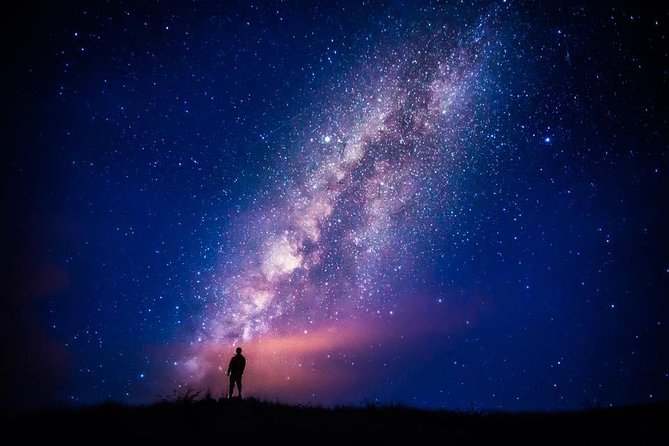
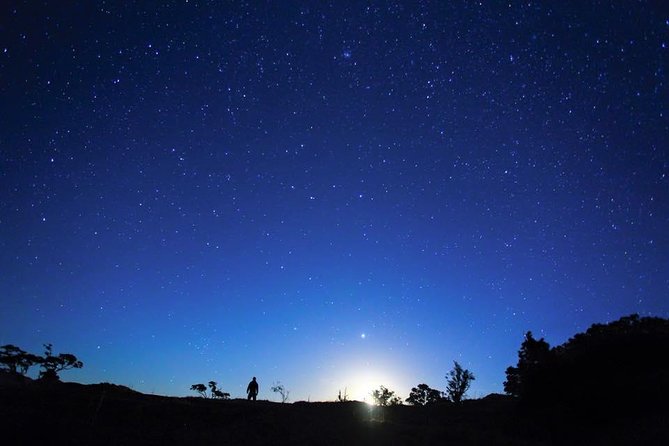
The night viewing is the main event for many people. The guide chooses a preferred Mauna Kea viewing area away from the summit and Visitor Center, then sets up a large-aperture Dobsonian telescope.
Dobsonian telescopes are valued for their simple, light-gathering design. Their fast focal ratio can show broad views of star fields and large celestial objects. That gives you a different experience from a narrow, highly magnified view through some smaller telescopes.
Depending on the season, weather, moonlight, and what is visible, you might see:
- Galaxies
- Nebulae
- Star clusters
- Planets and their moons
- Double stars
- The moon
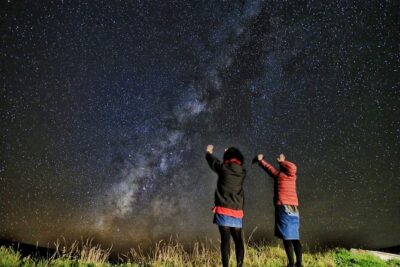
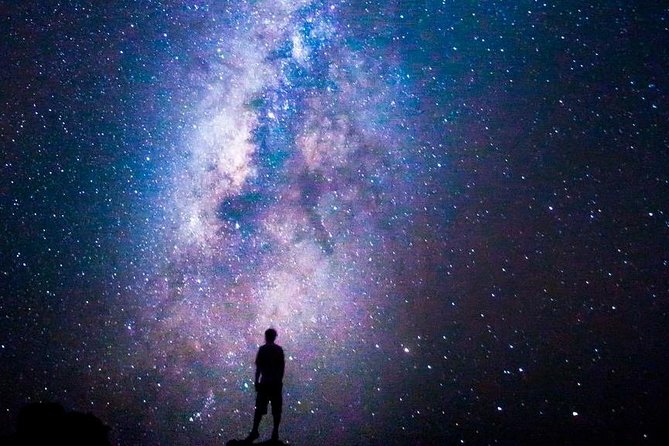
- Constellations and broad sections of the Milky Way
No guide can promise a particular object. Jupiter, its moons, galaxies, and star clusters have been visible on past outings, but the sky changes every night. Clouds may force the group to shift to another location or wait for a break. That flexibility is useful, though it can make the schedule less predictable.
A full moon is another important factor. It can be beautiful, but its brightness reduces the contrast of faint galaxies and nebulae. If your main goal is seeing the Milky Way in its darkest form, choose a night away from the full moon when possible.
The guides often make the viewing more engaging by taking time with each object. You might look through the telescope, then step back to learn how the object fits into the wider sky. If you bring a phone, the guide may be able to help you capture a telescope image, but photography is not the central purpose of the outing.
Why the lower viewing point matters
This experience does not visit Mauna Kea’s summit or Visitor Center. That is a deliberate choice, made out of respect for Native Hawaiian concerns about the summit area.
For you, the lower location also changes the practical side of the trip. Past outings have used a viewing point around 7,000 feet. You still get a high, dark location, but without the summit drive and the same degree of exposure to altitude.
Do not mistake this for a lesser version of summit access. The tour is selling the night sky, the guide’s interpretation, and the telescope experience rather than access to observatory buildings. If standing at the summit or seeing the observatories is essential to your plans, this is the wrong tour.
If you care more about astronomy than checking off the summit, the lower location makes sense. You spend less time on the road and more time with the guide and telescope.
Cold-weather planning and comfort
The temperature can drop sharply after sunset. Bring a jacket and long pants, and wear closed-toe shoes. Gloves are worth packing even if Kona feels warm when you leave.
Some guides have carried spare warm jackets for people who underestimated the cold. That is helpful, but you should still dress properly rather than count on extra clothing being available. Hot chocolate has also been served on past outings, a small comfort after time outside.
Restrooms are available at some viewing points, and dinner provides another useful break. Still, this is an outdoor astronomy tour. You may stand around while the guide changes equipment or waits for clouds to pass.
You are asked to bring binoculars. They are not a replacement for the Dobsonian telescope, but they let you scan the sky between telescope turns and make the experience more active.
Is $239 a good value?
At $239 per person, this is not a bargain excursion. The price makes more sense when you count what is included: hotel pickup, dinner, entrance fees, a six-hour guided outing, solar equipment, and night-sky equipment.
You are also paying for a small group capped at 13 people and for guides with serious astronomy experience. A cheaper activity may offer a short telescope session, but it may not include solar viewing, geology commentary, dinner, or a full day-to-night route.
The value drops if clouds block both the sun and stars. Weather is the unavoidable weak point. One outing had heavy cloud cover and produced little galaxy viewing, even though the guide searched for better spots. Another group waited and relocated until the sky cleared.
You should also compare this cost with your priorities. If your dream is to enter an observatory or reach the summit, the lack of summit access will feel like a major omission. If your goal is to see the sky through quality equipment while learning about the island, the price is easier to justify.
Who will enjoy this experience most?
I would choose this tour for anyone who wants more than a quick look at the stars. It suits couples, families with older children, and small groups who enjoy asking questions and spending time outdoors.
Teenagers can get a lot from it because the solar telescope and large night telescope provide something concrete to see. The astronomy is not limited to names of constellations. You may watch solar activity, see Jupiter and its moons, or study a distant galaxy.
It is also a good fit if you value cultural and geological context. The drive is part of the day, and the guide may discuss Hawaiian history, local lore, volcanic science, and native life along the way.
I would be cautious if you dislike long drives, cold weather, or uncertain results. You should also think twice if your schedule allows only one clear night and you cannot accept the possibility of clouds. Astronomy always involves some luck.
Booking, cancellation, and basic logistics
The tour lasts six hours, with starting times based on availability. Pickup is included from major hotels, and the live guiding is in English.
You can reserve now and pay later, which helps if your Big Island plans are still shifting. Cancellation is free up to 24 hours before departure for a full refund.
The experience is rated 4.2 from 82 ratings, with repeated praise for the guides’ astronomy explanations, warmth, and ability to discuss Hawaiian culture. The main concerns are the price, cloud cover, full-moon conditions, and the fact that the tour does not go to the summit.
Should you book the MaunaKea Stellar Explorer?
Book it if you want a well-rounded astronomy day with solar viewing, dinner, volcanic scenery, and a serious night telescope. The strongest part is the guide-led interpretation, especially when someone like Marcus, Thiago, Nate, or Rich turns the sky into a clear, understandable story.
Skip it if summit access is your priority, or if paying $239 for a weather-dependent activity feels risky. For the best chance at dark-sky viewing, avoid nights near the full moon, dress for cold conditions, and accept that clouds may change the plan.
For many visitors staying in Kona, this is a thoughtful way to experience Mauna Kea without entering the summit area. You get the stars, the science, and a closer look at the island itself.
FAQ
How long does the MaunaKea Stellar Explorer tour last?
The tour lasts six hours.
How much does the tour cost?
The listed price is $239 per person.
Is hotel pickup included?
Yes. Pickup is included from all major hotels.
Does the tour visit Mauna Kea’s summit or Visitor Center?
No. The tour does not visit the summit or Visitor Center out of respect for Native Hawaiian concerns.
Is dinner included?
Yes. Dinner is included in the tour price.
Can I view the sun during the tour?
Yes. A solar telescope is set up for daytime viewing, weather permitting. You may see sunspots, prominences, solar flares, and other solar activity.
What can I see through the nighttime telescope?
Depending on weather and what is visible, you may see galaxies, nebulae, star clusters, planets, double stars, the moon, and constellations.
What should I wear?
Wear long pants, a jacket, and closed-toe shoes. Open-toed shoes are not allowed. Gloves are also useful because the viewing site can be cold.
Can I cancel the tour for a full refund?
Yes. You can cancel up to 24 hours in advance for a full refund.
Just added on Island Of Hawaii
- Mauna Kea: Stargazing Experience with Free Photos★ 4.8 · 29 reviews
- Mauna Kea: Stellar Explorer Tour from Hilo★ 4.5 · 67 reviews
- Manta Ray Snorkel in Kailua-Kona with Hot Cocoa★ 4.8 · 115 reviews
- Big Island: Luxury Catamaran Trip along the Kona Coast★ 5.0 · 5 reviews
- Kona Deluxe Catamaran Whale Watching Cruise★ 4.4 · 18 reviews
- Kona Turtle Snorkel Sail with Lunch and Drinks★ 4.9 · 19 reviews
- Kona: KOA Airport Private Transfer to Kona City|Hotels★ 5.0 · 5 reviews
- Kona Honeymoon Airport Lei Greeting★ 4.8 · 5 reviews
Tours in the Big Island, compared.
Big Island in a Day: Volcanoes Waterfalls Sightseeing and History
Read our review →
Kona Manta Ray Snorkel Tour in Keauhou Harbor
Read our review →
Hilo Shore Excursion: Volcanoes National Park & Black Sand Beach
Read our review →
Captain Cook Snorkel On A Power Catamaran With Lunch
Read our review →
KONA Manta Ray Night Snorkel – FREE re-ride if no Sightings
Read our review →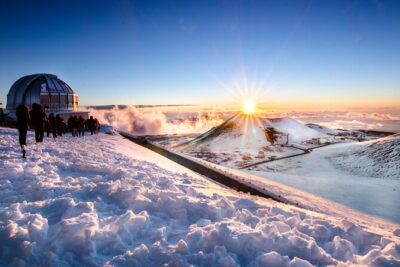
Big Island GOAT Experience: Mauna Kea Summit, Sunset & Stars
Read our review →