
Reviewed · MANTA RAY NIGHT SNORKELS
Manta Ray Night Snorkel Kona – Coral Reef Snorkel Adventures
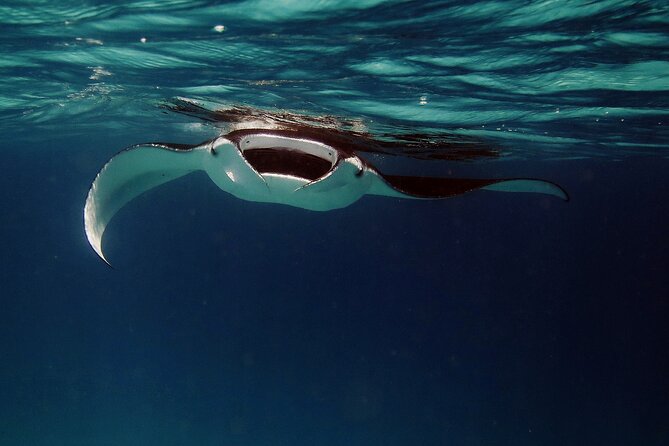
Kona’s manta rays turn a dark patch of ocean into a natural theater. You hold the rails of a floating lightboard while plankton gathers below and manta rays sweep through the glow, sometimes rolling within inches of your face. The reported sighting rate is above 90 percent, though wild animals never come with a guarantee.
I like the small-boat format, which can get you to the viewing area quickly and gives the guide time to help you. I also like the strong crew presence, with guides such as Jacob, Jeff, Cody, Erika, and Louie praised for clear safety briefings and fascinating manta facts. The catch is the ride: this is a small Zodiac-style boat, and open-ocean water can be rough.
Key points to know before booking
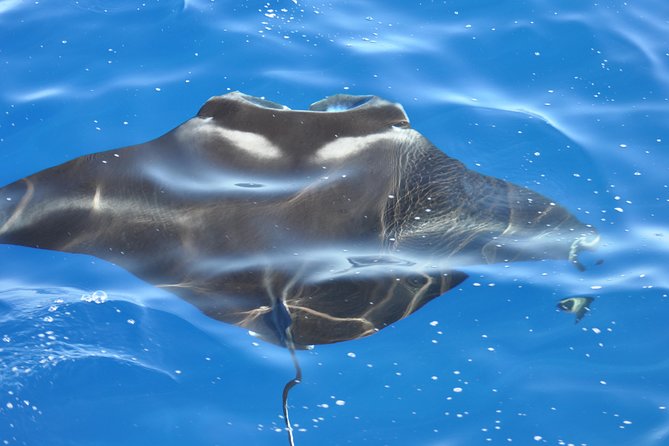
- Mantas feed beneath a lightboard: You float at the surface and watch the rays gather around the plankton-lit water.
- A 90 percent-plus sighting chance is not a promise: You may see one manta or a dozen, and poor conditions can change the evening.
- The boat ride can be rough: Expect a speedy trip of roughly 20 to 25 minutes each way, with spray, bouncing, and a chilly return.
- The group-size information needs care: The tour is promoted as intimate, with a maximum of six in some descriptions, while the operating information also lists a maximum of 12.
- You need to swim independently: A floatation device cannot replace swimming ability, and you must hold the board for about 30 to 45 minutes.
- Bring only a towel: Snorkeling equipment is supplied, while belongings and shoes stay secured on the boat.
Why Kona’s night mantas are worth seeing
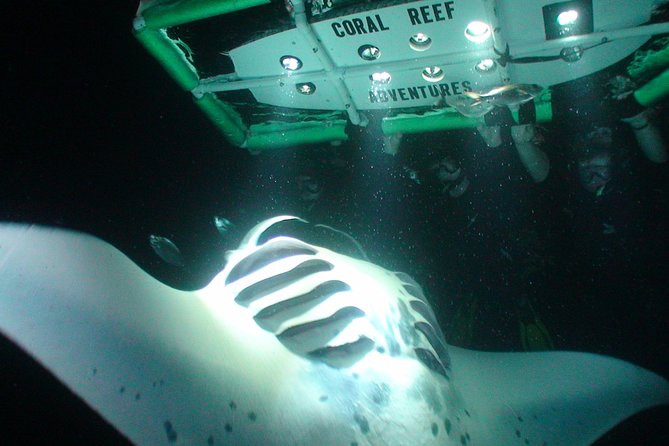
The manta ray night snorkel is one of the Big Island’s most unusual water outings. You are not simply looking for wildlife from a boat. You are in the water after dark, face down at the surface, watching large rays feed on plankton drawn toward underwater lights.
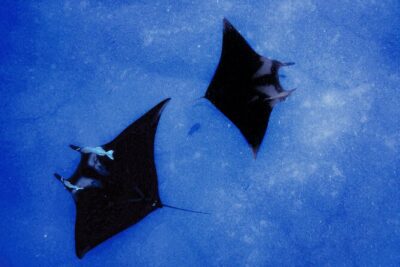
Manta rays are gentle filter feeders. They do not hunt people, and the feeding behavior makes the encounter so close. A ray may glide under the board, turn upside down, make several slow rolls, and pass just inches below your mask. Some outings produce a single ray that returns again and again. Others bring a small group of six, 10, 11, or even about a dozen.
That range matters. The advertised chance of seeing mantas is excellent, but the quality of the show still depends on the animals. You should book this because the setting and possibility are special, not because you expect a guaranteed underwater performance.
More snorkeling on Big Island of Hawaii:
- Big Island Manta Ray Night Snorkel
★ 5.0 · 5,656 reviews - Big Island: Kona Manta Ray Snorkel Tour in Keauhou Harbor
★ 4.5 · 2,465 reviews - Big Island: Captain Cook Snorkel On A Power Catamaran With Lunch
★ 5.0 · 2,232 reviews
From Honokohau Harbor to the open water
The meeting point is Coral Reef Snorkel Adventures at 74-425 Kealakehe Parkway in Kailua-Kona. From there, the crew escorts you to the boat at Honokohau Small Boat Harbor and gets you ready for the trip.
The outing lasts about 90 minutes. That includes the ride out, safety instructions, time in the water, and the ride back. In several accounts, the boat ride took around 20 to 25 minutes each way, leaving roughly 30 to 45 minutes at the lightboard.
That timing is useful to understand. You are not spending an hour and a half snorkeling. A good part of the evening is spent getting to the feeding area and returning to land. The boat ride itself can be fun, especially with a sunset behind you and stars appearing overhead, but it can also be the hardest part for anyone prone to motion sickness.
This is a small Zodiac-style vessel, not a large sightseeing boat with a broad deck and a quiet ride. You sit on the pontoon edges, and the boat can bounce over open-ocean swells. Conditions vary, but several outings were described as very rough, with one person deciding not to enter the water after the ride.
I would plan for motion sickness rather than hope for calm seas. Ask a medical professional about suitable prevention before you go, especially if you already know that boat rides trouble you. The operator says the captain will cancel when conditions are unsafe, but a safe trip can still feel uncomfortable.
The lightboard encounter
After dark, the boat reaches the manta feeding area. The crew gives instructions on entering the water, using the mask and snorkel, and holding the board without disturbing the animals.
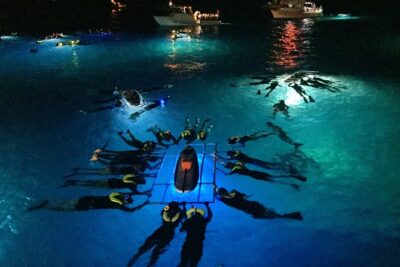
The lightboard is the center of the outing. Underwater lights draw plankton, and manta rays follow the food. You hold the board’s rails at the surface while looking down into the illuminated water. The rays may pass beneath you, turn on their backs, and loop back for another feeding pass.
This is a passive wildlife encounter. You do not chase the mantas or touch them. Your job is to hold your place, keep your kicks controlled, and let the animals choose how close to come. That approach protects the rays and gives you a better view.
You may need to balance two things at once. Submerging your head gives you the best view, but you can miss the guide’s explanations. Keeping one ear partly above the water lets you hear information about manta behavior and habitat. I would watch closely when the guide is speaking, then return your attention to the water when a ray appears.
The animals may be so close that one brushes your torso. That is thrilling, but it is also a reminder to stay calm. Sudden kicking can push the rays away and make the board less comfortable for everyone.
The physical side of the snorkel
The tour requires a moderate level of fitness. You must be able to swim without a floatation device, and you will hold the board with your arms extended for much of the water portion.
That position can become tiring. A few minutes of gripping tightly may leave your shoulders and arms sore the next day. The smart move is to loosen your hands and relax your shoulders while keeping a secure hold. The ocean may knock you around, so you need enough strength to stay with the board for about 30 to 45 minutes.
Getting back onto the boat can be another challenge. You climb a ladder from the water, and the motion of the boat makes the step harder for anyone with knee, neck, or upper-body problems. The tour is not recommended for people with neck problems, and the listed maximum weight is 280 pounds per person.
The crew has helped people who needed extra time, including someone with a serious knee problem. Still, you should discuss any mobility concern before booking rather than count on managing it once offshore.
Other night swims with the mantas from Big Island of Hawaii:
- KONA Manta Ray Night Snorkel – FREE re-ride if no Sightings
★ 5.0 · 2,212 reviews - Manta Ray Night Snorkel at Kona, Big Island
★ 5.0 · 1,758 reviews - Glow of the Deep: Night Snorkeling with Manta Rays
★ 4.5 · 1,254 reviews - Kailua Kona: Night Manta Ray Adventure on the Big Island
★ 4.8 · 1,199 reviews
Crew instruction and the small-group question
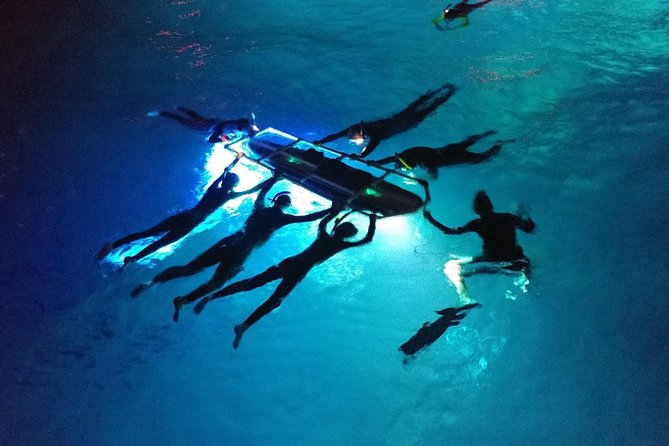
The guides are a major part of the evening. Jacob is repeatedly praised for his calm explanations and manta facts. Jeff, Cody, Erika, Danny, Adam, and Captain Alexis also received specific praise, while Louie was remembered for making the ride entertaining.
Good instruction matters here. Night snorkeling can feel strange at first, and the crew must explain how to enter the water, where to hold the board, and how to avoid disturbing the animals. A reassuring guide can make the difference between tense arm-gripping and a relaxed half hour watching rays glide below.
There is one important point to clarify before you pay. The tour is presented in some material as a small-group trip capped at six people, but the additional operating information gives a maximum of 12. One outing had 13 people, and another description specifically complained about a boat of 12 despite paying for a six-person experience.
That does not mean every departure has 12 people. It does mean you should ask Coral Reef Snorkel Adventures to confirm the group size for your date. If six or fewer people is essential, ask about a private charter. The regular boat is still smaller than many Kona manta operations, but do not assume the strict six-person limit without written confirmation.
What to bring, and what stays on the boat
Bring your own towel. It becomes particularly useful after the snorkel, when the ride back can feel cold and windy.
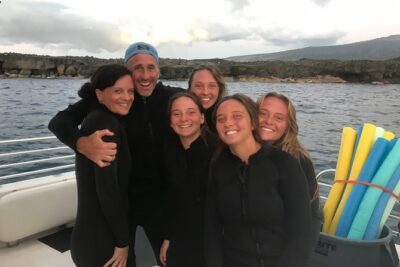
Snorkeling equipment is supplied. In described outings, the crew also fitted people with wetsuits or wetsuit jackets, though the formal inclusion is listed as snorkeling equipment, so ask what thermal gear is provided when you book. A thin person may still feel cold, especially on the return ride.
Shoes and aquasocks come off when you board. Bags and other belongings stay in a dry storage area for the trip. Keep your packing simple, and do not expect to carry a phone or camera while holding the board.
A GoPro has been used successfully on this trip, but any camera must be secured and handled without touching the rays. The supplied information does not promise photography equipment, so bring your own only if you are comfortable managing it in the water.
Snacks and non-alcoholic drinks are included. The timing may vary, and some people received drinks after the water portion rather than before it. Think of these as a welcome recovery snack, not a meal.
Is $125 a fair price?
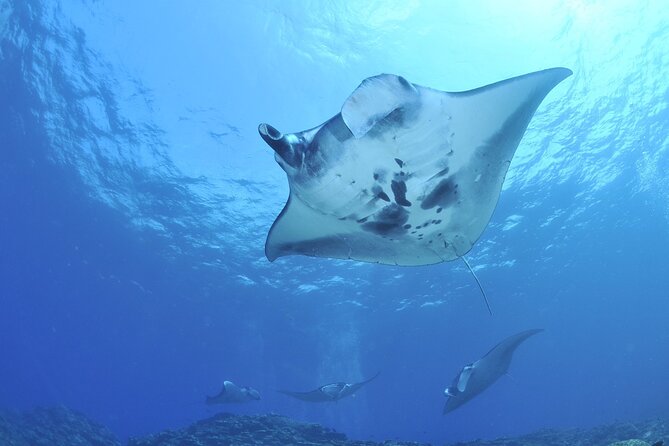
At $125 per person, this is priced as a specialty wildlife outing rather than a basic snorkel. You are paying for the boat, crew, gear, safety guidance, and access to one of Kona’s best-known manta viewing areas.
The value is strongest when you want close access and a smaller operation. Seeing several giant rays roll beneath you can become one of the defining moments of a Big Island visit. The experience also includes the excitement of an evening boat ride, sunset or stars, and time in the ocean after dark.
The value is weaker if you dislike rough water, get seasick easily, or need a roomy boat. You may spend nearly half the tour riding out and back, and the small vessel offers less space and stability than a larger boat. The advertised small-group promise also needs confirmation because the stated limits do not fully match.
The company offers a free return opportunity when no manta is seen, according to the supplied tour information and customer response. That can matter if the animals do not appear, but you should book early in your vacation to make use of it. Someone who schedules this on the final night has no practical chance to try again.
Free cancellation is available up to 24 hours before the start time. Weather cancellations can lead to another date or a full refund, and a minimum-number cancellation receives the same type of choice. Changes made within 24 hours are not accepted for a refund.
Who will enjoy this most
I would recommend this outing to confident swimmers, families with older children, couples seeking a memorable evening, and anyone who values wildlife encounters over comfort. Children have enjoyed the mantas, and guides have helped nervous young participants feel safe.
It suits you if the thought of entering dark water feels exciting rather than alarming. You should also be comfortable floating in waves while holding a board and listening to instructions around other swimmers.
I would hesitate to recommend it if you have serious motion sickness, limited shoulder strength, neck problems, or difficulty climbing a ladder. A knee issue does not automatically rule it out, but you should contact the operator before booking and explain what help you need.
The water can also feel crowded. Other manta boats may be in the same area, and feet can occasionally bump near the boards. The small boat helps reduce the crowd around your own group, but it does not guarantee a private patch of ocean.
My booking advice
Book this early in your Big Island stay, not on your last night. That leaves room for a second attempt if weather cancels the trip or the mantas stay away.
Before paying, confirm two details: the expected number of people on your departure and what thermal gear is supplied. If motion sickness is a concern, ask about current sea conditions and prepare in advance.
I would book Coral Reef Snorkel Adventures if you want a close, guide-led manta encounter and can accept a rough boat ride. I would skip it in favor of a larger vessel if stability and space matter more to you than an intimate setting. For most capable swimmers, the chance to watch a manta ray turn beneath a glowing board is worth the $125, but only if you arrive ready for the ocean’s less polished side.
FAQ
Where does the manta ray night snorkel start?
The tour starts at Coral Reef Snorkel Adventures, 74-425 Kealakehe Parkway, Kailua-Kona, Hawaii 96740. The crew meets you there and escorts you to the boat at Honokohau Small Boat Harbor.
How long does the tour last?
The experience lasts approximately 1 hour and 30 minutes. The trip includes the boat ride to the manta viewing area, safety instruction, time in the water, and the return ride.
How likely am I to see manta rays?
The tour gives a reported sighting chance of more than 90 percent. Manta rays are wild animals, so the number you see and how close they come can vary.
How many people are on the boat?
The tour is described as an intimate small-group experience with a maximum of six in some information. The additional operating details list a maximum of 12, so confirm the expected group size directly before booking.
Do I need to know how to swim?
Yes. You must be able to swim without the help of a floatation device. You also need to hold onto the lightboard while floating in the ocean.
Is snorkeling equipment provided?
Yes. Snorkeling equipment is included. Bring your own towel.
Can the boat ride be rough?
Yes. The small boat travels across open ocean, and conditions can produce a fast, bumpy ride. People who are prone to seasickness should prepare in advance.
Is food or drink included?
Snacks and non-alcoholic drinks are included. The drinks may be served after the water portion of the outing.
What happens if the tour is canceled?
If poor weather causes a cancellation, you can receive a different date or a full refund. If the minimum number of participants is not met, you are offered a different date or experience, or a full refund.
Just added on Big Island of Hawaii
- Kailua-Kona: Big Island Morning Snorkeling Tour with Lunch★ 4.9 · 7 reviews
- Big Island: Hawaii Volcanoes National Park and Hilo Tour★ 5.0 · 118 reviews
- Kailua-Kona: Hualalai Volcano Doors On/Off Helicopter Tour★ 4.7 · 12 reviews
- Big Island: Full Day Adventure Tour of the Kohala Waterfalls★ 5.0 · 41 reviews
- Big Island Hawaii: Craft Chocolate Tasting and Farm Tour★ 5.0 · 14 reviews
- Big Island: Evening Volcano Explorer from Hilo★ 4.7 · 31 reviews
- Big Island: Off the Beaten Path Volcano Crater Hike★ 5.0 · 15 reviews
- Big Island: Full-Day Kohala Zipline and Waterfall Adventure★ 4.8 · 36 reviews
Manta Ray Night Snorkels, compared.
Kona Manta Ray Snorkel Tour in Keauhou Harbor
Read our review →
KONA Manta Ray Night Snorkel – FREE re-ride if no Sightings
Read our review →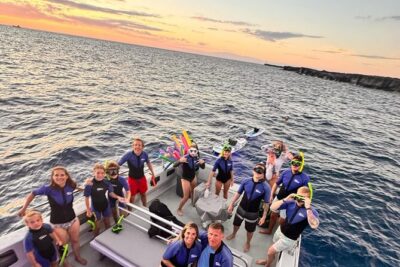
Glow of the Deep: Night Snorkeling with Manta Rays
Read our review →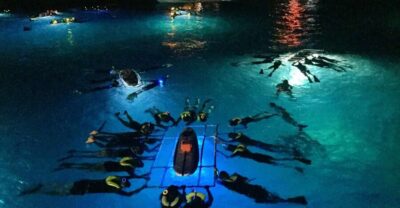
Manta Magic: Small-Group Manta Ray Night Snorkel in Kailua Kona
Read our review →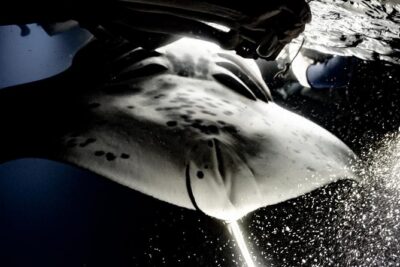
Browse the lists this tour appears in