
Reviewed · VOLCANOES NATIONAL PARK TOURS
Hilo: Hawaii Volcanoes National Park Flight
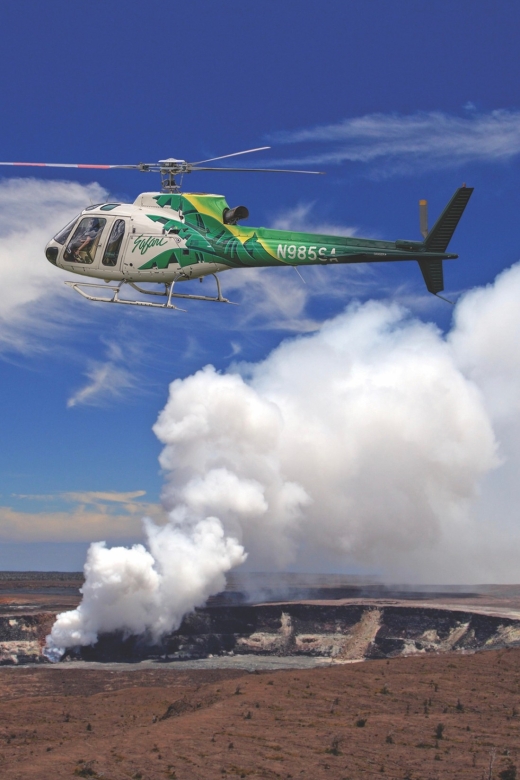
The best part of this flight is the quick change from Hilo’s green coast to the raw volcanic ground of Hawaii Volcanoes National Park. From the helicopter, Kilauea’s caldera, old lava flows, black sand beaches, and Pu‘u ‘Ō‘ō fit into one sweeping view. It is a powerful way to understand how the Big Island keeps changing.
I like the small six-person limit, which gives the flight a more personal feel, and I like the way the route can shift toward better weather. Pilots such as Drew, Sam, and Franklin have been praised for calm, clear commentary and a strong safety focus. The main drawback is simple: this is a weather-dependent one-hour flight, so clouds may block some of the promised volcano or waterfall views.
Key points to know before booking
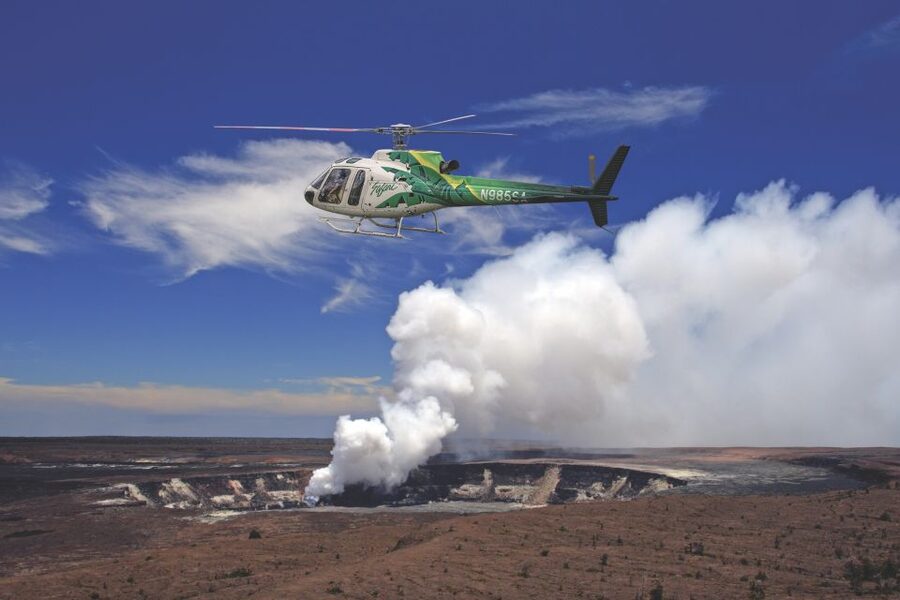
- Kilauea from above: See the caldera and the volcanic ground around one of the island’s most important active areas.
- A compact one-hour route: The flight covers a lot quickly, from Hilo to the national park and back.
- Small group size: The helicopter carries no more than six participants.
- Waterfalls and jungle: The route can include waterfalls dropping into dark blue pools among thick greenery.
- Weather controls the show: Clouds and visibility may change the route or hide certain sights.
- Extra-seat rules matter: A passenger weighing 250 pounds or more must buy another seat, and two people whose combined weight is 420 pounds or more also need an additional seat.
Seeing the Big Island in a single hour
At $379 per person, this is not a casual sightseeing ride. It is a premium experience, but the value comes from the amount of ground you cover in about 60 minutes. From Hilo, you fly toward Hawaii Volcanoes National Park instead of spending hours driving through changing elevations and stopping at separate viewpoints.
That speed matters on the Big Island. Mauna Kea, Mauna Loa, Kilauea, lava fields, waterfalls, and the coast are spread across a huge area. A ground visit gives you time to walk and study individual places. This helicopter tour gives you scale. You can see how the volcanoes, jungle, coast, and lava fields fit together.
The flight begins and ends at the Safari Helicopters office at 2220 Kekuanaoa Street in Hilo. You meet the crew there, take the one-hour flight, and return to the same point. The arrangement is easy, but you should allow time for check-in and the required safety procedures beyond the advertised flight time.
The group limit is six people. That is small enough to feel more focused than a large sightseeing outing, though the exact seat and viewing angle can still affect your experience. One passenger specifically praised having the best spot in the helicopter, so it is sensible to ask the crew about seating before departure rather than assuming every seat offers the same view.
More volcano trips from Hilo:
- Big Island: Volcanoes, Waterfalls, & Coffee Farm Day-Trip
★ 4.9 · 414 reviews - Volcano Adventure: Hilo Sightseeing w/ Optional Helicopter Tour
★ 4.5 · 412 reviews - Hilo Shore Excursion: Active Volcano, Lava Tube, Waterfall and Gardens
★ 5.0 · 393 reviews
From Hilo to Hawaii Volcanoes National Park
The route heads out from Hilo toward Hawaii Volcanoes National Park. The change in scenery is part of the appeal. Hilo is associated with heavy greenery, waterfalls, and the Pacific coast, while the national park offers broad areas of hardened lava and volcanic openings.
You will not be walking into the park or stopping on the ground. This is an aerial tour, so the helicopter becomes your moving viewpoint. That is useful for seeing patterns that are hard to grasp from a trail, including the edges of lava fields and the way vegetation returns around older flows.
The pilot provides live commentary in English. The best pilots on this type of flight do more than point out names. They help you understand what you are seeing, especially when a black field below looks similar to another black field below. Sam, Drew, and Franklin are among the pilots associated with especially strong experiences on this route, with praise for friendly explanations, safety awareness, and route decisions based on weather.
Do not expect a fixed script. A pilot may adjust the route if clouds close in over one part of the island and visibility improves elsewhere. That flexibility can produce better photographs, but it also means your exact flight path may differ from the printed sequence of sights.
Kilauea’s caldera from the air
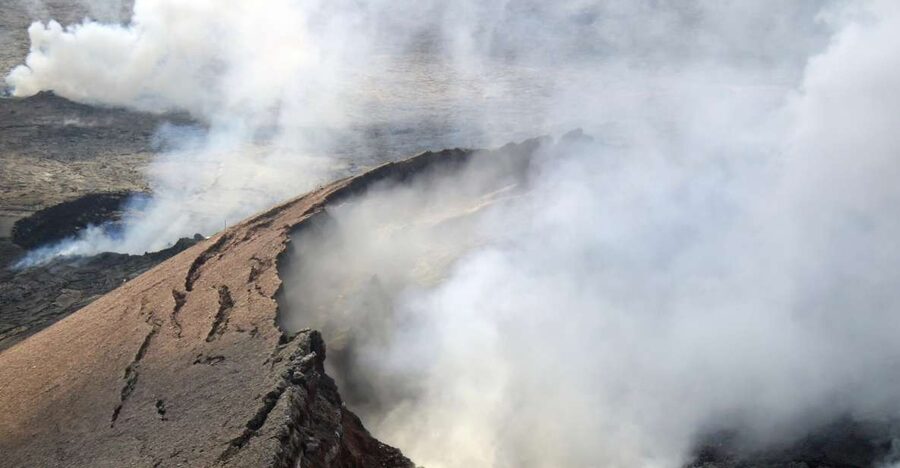
Kilauea is the main dramatic point of the flight. Looking down toward its caldera gives you a sense of the volcano’s size and force that is difficult to get from one ground viewpoint. The helicopter also lets you see the caldera as part of a much wider volcanic zone rather than as an isolated stop.
The exact appearance can change with weather and current volcanic conditions. The tour description promises views of the caldera and the changing volcanic ground, but it does not promise a visible lava lake or active lava fountain. That distinction matters. You are booking a flight over a dynamic volcanic area, not a guarantee of glowing lava.
I like this part of the trip because it puts geology in plain view. You can compare older flows with newer-looking areas and see how the island is still being shaped. The pilot’s commentary adds value here, since a short explanation can make the difference between simply seeing dark rock and understanding why one area looks different from another.
Photographs are possible, but helicopter photography has limits. Reflections, rotor movement, changing light, and a short viewing window can make it hard to capture everything. Keep your camera ready, but do not spend the whole flight looking at a screen.
Pu‘u ‘Ō‘ō and the changing lava fields
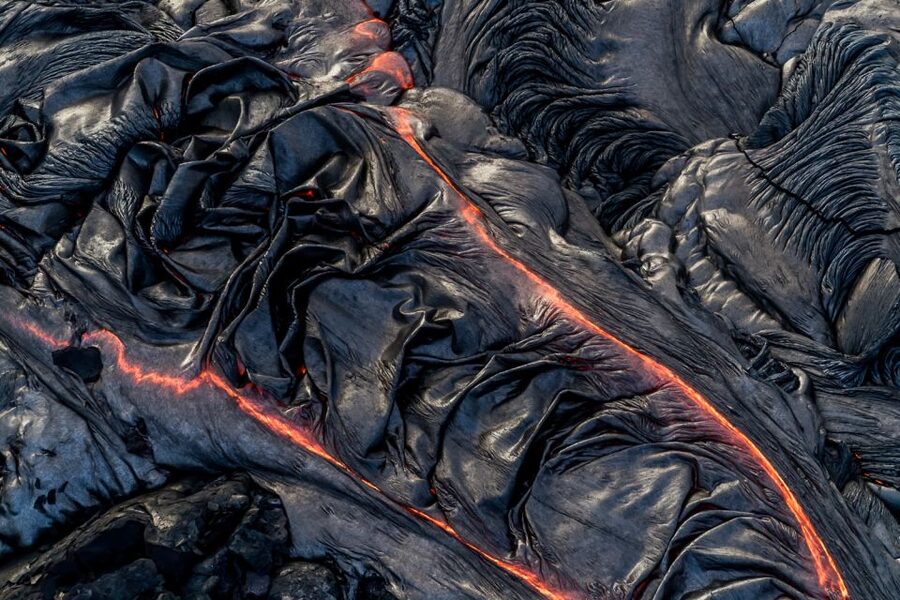
The flight also passes over Pu‘u ‘Ō‘ō, a volcanic cone associated with the island’s long history of eruptions. From above, a volcanic cone is easier to understand as a landform. You can see its position within the surrounding lava fields and the way volcanic activity has altered the ground around it.
This is one of the tour’s strongest features for anyone interested in geology. You get both old lava fields and areas described as newly forming. That contrast helps you see the Big Island as a place still under construction, not simply an island with volcanoes on it.
The route may include black sand beaches where lava once reached the sea. These beaches connect the volcanic story to the coast. Lava does not stop being part of the story when it reaches the ocean. From the air, you can view the relationship between the dark shoreline and the older, greener areas inland.
The drawback is that weather can be especially important around the volcanoes. Cloud cover may soften the shapes or hide parts of the terrain. A flexible pilot can change course, but no route change can guarantee a clear view of every site.
A few more things to do on Hilo worth a look
- Hawaii Volcanoes National Park and Hilo Highlights Small Group Tour
★ 5.0 · 260 reviews - Hawai’i’s Volcanoes National Park from Hilo Only
★ 5.0 · 167 reviews - Big Island: Hawaii Volcanoes National Park and Hilo Tour
★ 5.0 · 118 reviews - Volcanoes National Park Adventure Tour – Hilo Shore Excursion
★ 4.5 · 104 reviews
Mauna Kea and Mauna Loa on the horizon
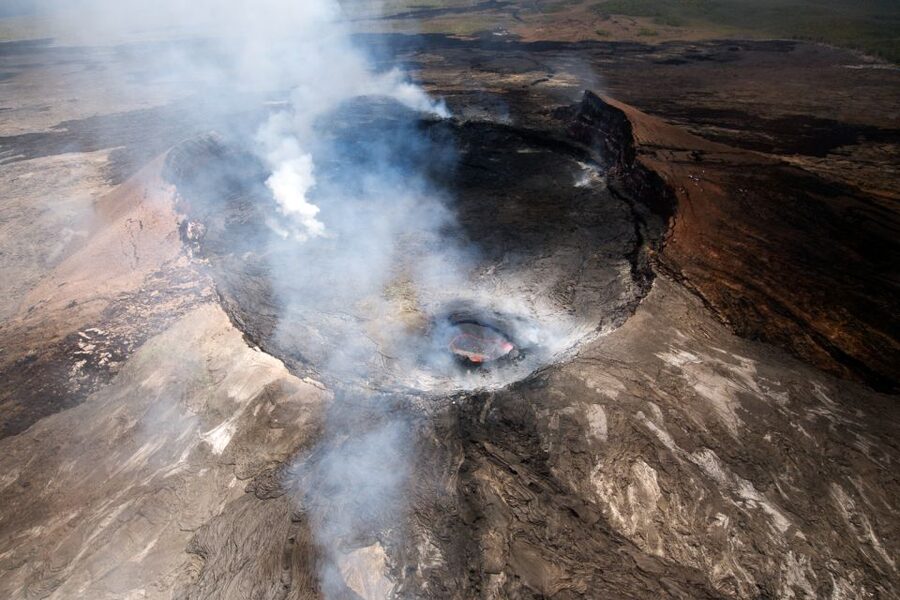
Mauna Kea and Mauna Loa provide the large-scale backdrop. The flight offers views of both massive volcanoes in the distance, giving you a better sense of how much of the island is shaped by volcanic mountains.
These are not necessarily close-up visits. The itinerary identifies them as scenic views during the flight, so you should think of them as major reference points rather than separate landings or extended stops. Their value is in proportion. Once you see the two mountains in relation to the park and coast, the Big Island feels much larger than it does from Hilo’s streets.
Weather can make a big difference here. High cloud may cover the upper slopes, while clear conditions can open broad views. One pilot has been praised for changing the planned route after receiving better weather information farther up the mountain. That is the kind of practical judgment you want from an aerial pilot, even if it means the flight does not follow the expected order.
If you want to photograph Mauna Kea or Mauna Loa, listen closely to the pilot’s timing. The clearest view may last only a short time as the helicopter turns or moves across the route.
Waterfalls over jungle and dark blue pools
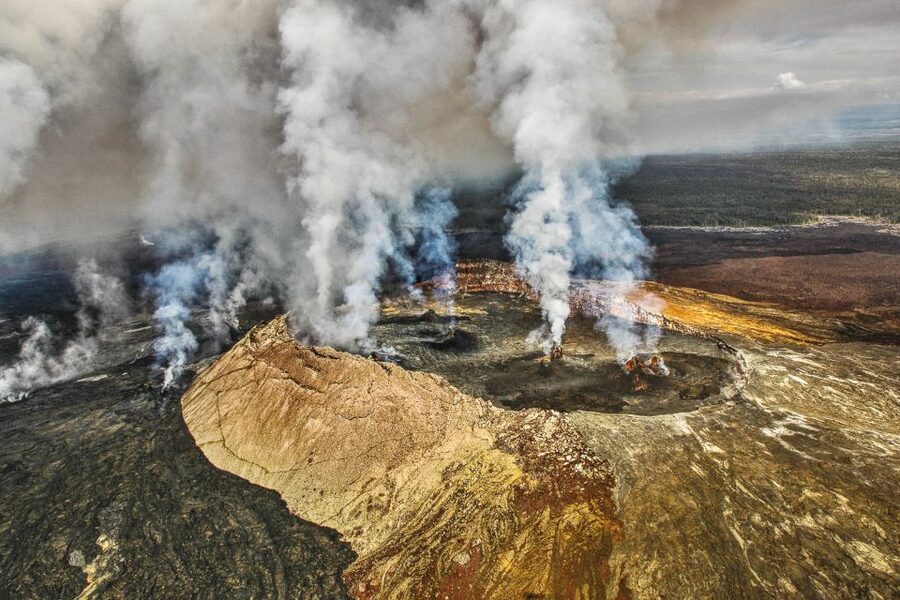
The volcanic portion is the headline, but the waterfall segment adds a welcome change of mood. The helicopter may pass over waterfalls dropping through thick jungle into deep blue pools. After the broad black rock of the volcanic zone, the green vegetation can feel like an entirely different island.
This contrast is one reason the flight works so well as a Big Island introduction. You see both extremes: exposed volcanic ground and dense tropical growth. The transition also shows how water and vegetation soften terrain that may once have been bare rock.
The route is weather dependent, and waterfall views are not guaranteed. One passenger specifically found the flight enjoyable but noted that no waterfall view was included. That is an important caution. If waterfalls are the main reason you want to book, this may disappoint you on a cloudy day or on a route adjusted for visibility.
Treat the waterfalls as a valuable possibility rather than the central promise. The volcano views remain the core of the experience, while the jungle section gives the flight more variety when conditions allow.
What the one-hour format means for you
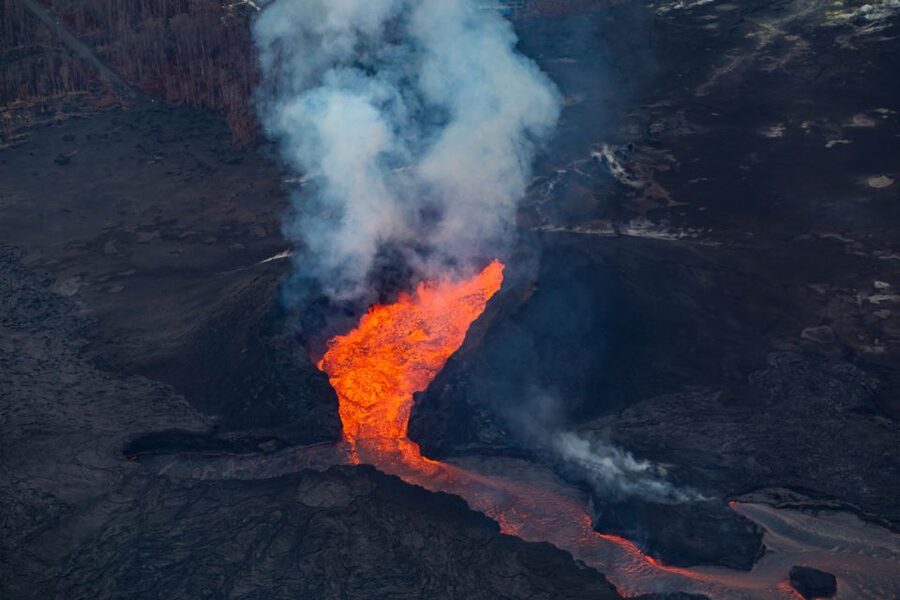
One hour is long enough to see a remarkable amount from the air, but it is not long enough for a slow, detailed survey. You will move from one sight to the next without getting out, walking, or lingering at a viewpoint.
That makes this a strong choice if you have limited time in Hilo or want a broad orientation before exploring the island by road. It is less suitable if you prefer quiet observation, hiking, or close study of one volcanic area. The helicopter shows you the big picture. A ground visit gives you texture, footpaths, and time.
The small group helps keep the experience focused. A maximum of six people means fewer voices competing with the pilot and less of the feel of a large sightseeing operation. Still, helicopter seating is a real factor. Ask about the seating arrangement, and be prepared for the possibility that your view will not be identical to another passenger’s.
The tour is conducted in English with a live pilot guide. Several pilots, including Drew, Sam, and Franklin, have been singled out for friendly, informative, and safety-conscious service. The quality of the narration matters because the scenery passes quickly.
Price, weather, and practical limits
The $379 price is high, but it is in line with the cost of a small-group helicopter experience covering a large section of the Big Island. You are paying for access to views that would take much longer to reach by road, plus the chance to see volcanic terrain from a viewpoint unavailable on ordinary park trails.
I would call it good value for a first visit if you care about volcanoes, photography, geography, or seeing the island’s scale. I would be more cautious if you are mainly hoping for waterfalls or visible flowing lava. The route depends on weather, and the supplied information does not promise active glowing lava.
Safety and weight rules are important. Anyone weighing 250 pounds or more must purchase an additional seat. Two people who are individually below 250 pounds but together weigh 420 pounds or more must also purchase an additional seat. Passengers must be able to sit upright.
The flight is not suitable for children under two, pregnant women, people with claustrophobia, people afraid of heights, people with vertigo, people with motion sickness, or people with a cold. Bring a passport or ID card and a credit card. You can cancel up to 24 hours before departure for a full refund, and the reserve-now, pay-later option can help if your Big Island plans are still shifting.
Who will enjoy this flight most
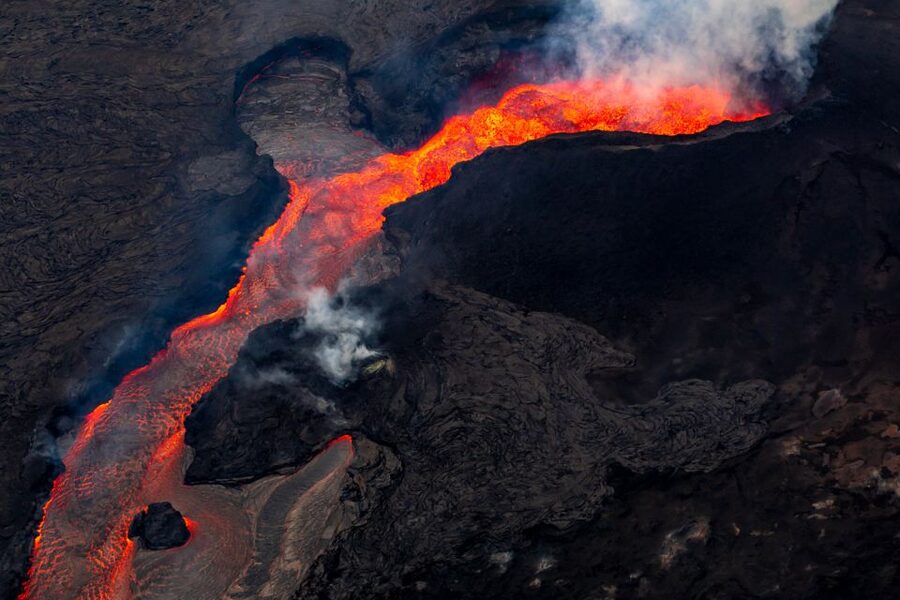
I would recommend this experience to you if you want to understand the Big Island as a whole. It suits people who enjoy volcanoes, aerial photography, geology, and short, high-impact tours. It is also useful for anyone who does not have time to drive through every part of the park area.
Families with very young children should note the age restriction. Anyone uneasy in enclosed spaces or uncomfortable with heights should choose a ground-based volcano visit instead. Motion sickness is another serious consideration, since this is a helicopter flight rather than a gentle scenic drive.
You should also set realistic expectations. The helicopter can show you a caldera, volcanic cone, lava fields, mountains, coast, jungle, and waterfalls in one outing, but each sight may appear briefly. The reward is range and scale, not a long stop at a single site.
Should you book the Hawaii Volcanoes flight?
Book it if you want the fastest way to see how Kilauea, Pu‘u ‘Ō‘ō, Mauna Kea, Mauna Loa, the coast, and the jungle relate to one another. The small group, flexible routing, and pilots praised for strong safety and clear commentary add real value to the $379 price.
Skip it if your main goal is a guaranteed waterfall view, a ground walk, or active flowing lava. Weather can change the route, and the experience moves quickly. For the right person, though, this is an exciting and practical way to see the Big Island’s volcanic power from above.
FAQ
Where does the helicopter tour begin and end?
You meet at the Safari Helicopters office at 2220 Kekuanaoa Street in Hilo. The activity ends back at the same meeting point.
How long is the flight?
The helicopter tour lasts one hour. Starting times vary, so check availability when you book.
How many people can join the tour?
The group is limited to six participants.
Is the route guaranteed to include every listed site?
No. The tour is weather dependent, and the pilot may change the route based on visibility and conditions. Specific areas, including waterfalls, may not be visible on every flight.
What weight rules apply?
Anyone weighing 250 pounds or more must purchase an additional seat. Two people who are individually under 250 pounds but have a combined weight of 420 pounds or more must also purchase an additional seat.
Can I cancel for a refund?
Yes. You can cancel up to 24 hours in advance for a full refund. You can also reserve now and pay later.
Just added on Hilo
- Volcano National Park and Rainbow Fall in Hilo, Hawaii★ 5.0 · 53 reviews
- Volcanoes National Park Adventure Tour – Hilo Shore Excursion★ 4.5 · 104 reviews
- Volcanoes National Park and Hilo Private Tour★ 5.0 · 3 reviews
- Private VAN Tour Hilo★ 4.5 · 5 reviews
- Volcanoes Adventure Tour from Hilo★ 4.0 · 29 reviews
- Majestic Waterfall Tour★ 5.0 · 31 reviews
- Private Shore Excursion Hilo Volcanoes National Park up to 10 PPL★ 5.0 · 36 reviews
- 5 Hour Custom Private Tour of Hawaii★ 5.0 · 9 reviews
Volcanoes National Park Tours, compared.

Big Island in a Day: Volcanoes Waterfalls Sightseeing and History
Read our review →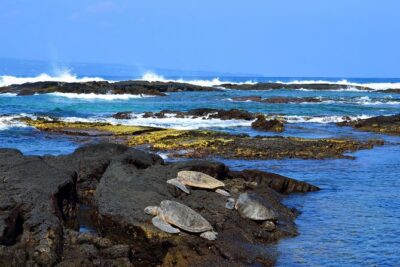
Hilo Shore Excursion: Volcanoes National Park & Black Sand Beach
Read our review →
Small Group Big Island Twilight Volcano and Stargazing Tour
Read our review →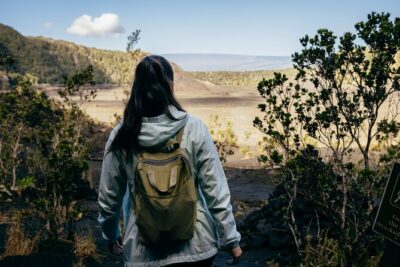
Big Island Highlights: Coffee, Volcano, Black Sands & Waterfall
Read our review →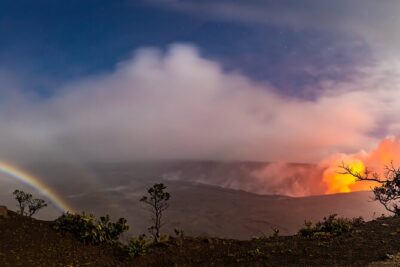
Deluxe Volcano Experience with Restaurant Dinner
Read our review →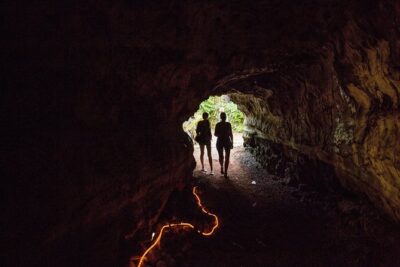
Captain Cook Snorkel Tour with Sea Caves and Lava Tubes
Read our review →
Fat Tire E-Bike Tour through Volcanoes National Park
Read our review →Browse the lists this tour appears in