
Reviewed · VOLCANOES NATIONAL PARK TOURS
Big Island: Fat Tire E-Bike Tour through Volcanoes National Park
Hawaii Volcanoes National Park feels very different from behind a car window. On this fat-tire e-bike tour, you ride through cool forest, volcanic country, and paved park roads while guides such as Nicole, Derek, Tyler, Scott, and Bill explain the plants, geology, culture, and past eruptions. The pedal assist helps on hills, and the bikes let you move past parking lines and cover more ground than you could on foot.
I like two things right away: the small groups of up to 12 make it easier to ask questions, and the guides make a real effort to help each rider get comfortable. The fat tires, throttle, torque sensors, water, snacks, goggles, and bike storage also make this more than a bare-bones rental.
The main caution is simple: you must already know how to ride a bicycle and feel ready to handle a heavy e-bike. The bikes weigh about 65 pounds, the practice area includes slopes, and there is no refund if you cannot ride safely. Bring layers and rain protection, too. Volcano weather can be cool and wet even when Kona is sunny.
Key points to know before booking
- The route covers about 12 to 15 miles: Expect a steady, relaxed ride rather than an adrenaline outing, with an average pace near 8 mph.
- The route uses paved park roads and paths: You will ride through forest, stop at volcanic viewpoints, visit a lava tube area, and see major park sights.
- The guides add real value: Nicole, Derek, Tyler, Scott, and Bill are praised for explaining geology, plants, animals, Hawaiian history, and eruption activity.
- The bikes are heavy but forgiving: Fat tires, pedal assist, a throttle, and torque sensors help with hills, but they do not replace basic riding skills.
- Weather can change fast: Pack a rain jacket, warm layer, hat, and possibly gloves, even if you leave a sunny resort area in shorts.
- The price is $199 per person: That is fair if you value instruction, equipment, park access, and efficient sightseeing, but less appealing if you mainly want long stretches of uninterrupted biking.
Starting at Kilauea Lodge with a careful bike briefing
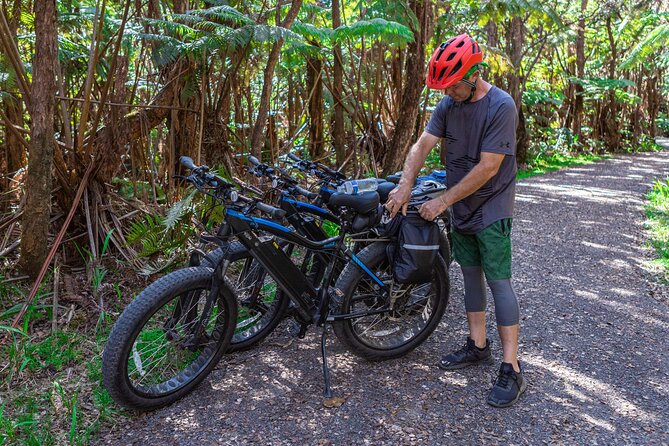
The tour begins at the Kilauea Lodge and Restaurant extension parking lot at 19-3948 Old Volcano Road in Volcano. You meet the guide there, receive a helmet, water, snacks, and your bike, then go through the controls before entering Hawaii Volcanoes National Park through the Escape Route gates.
The first part matters. These are not lightweight city bicycles. The fat-tire e-bikes weigh about 65 pounds, and the motor responds through pedal assist, a throttle, and torque sensors. The guides allow time for practice, and the better sessions include a short ride in the parking area before the group sets off.
You should be comfortable starting, stopping, turning, braking, and controlling a bicycle at low speed before you arrive. Several people with little or no e-bike experience found the controls easy after practice, including older riders and people who had not cycled in years. Still, this is not a bicycle lesson. If you cannot ride a standard bike, or if a heavy bike on a slope makes you nervous, this is the wrong place to learn.
The operator provides helmets and riding goggles. If you prefer, sunglasses can work in place of the goggles. Each bike also has a small pack with room for a phone, wallet, camera, and other small items. A towel or shammy cloth is useful in rain, and water is included.
More volcano trips from Big Island of Hawaii:
- Big Island in a Day: Volcanoes Waterfalls Sightseeing and History
★ 5.0 · 6,569 reviews - Hilo Shore Excursion: Volcanoes National Park & Black Sand Beach
★ 4.5 · 2,338 reviews - Small Group Big Island Twilight Volcano and Stargazing Tour
★ 5.0 · 1,619 reviews
Forest roads, flowers, and the first volcanic stories
Once you are moving, the early ride takes you along paved roads and forested paths. This is not a rough mountain-bike route. The fat tires smooth out the ride, while the motor takes much of the sting out of long rises.
The forest gives the tour its first strong change of pace. You are not simply staring at black lava rock. You may pass flowers, foliage, and native plants while the guide points out how life takes hold in a volcanic setting. Guides also discuss animals and the park ecosystem, so the ride becomes more than a scenic loop.
I especially like this part for first-time visitors to the park. A car can get you from one overlook to the next, but it does not give you the same sense of temperature, scent, wind, and distance. On a bike, you notice the shift from forest to open volcanic country as it happens.
The pace is relaxed. One account describes an average speed of about 8 mph, with the full ride covering roughly 12 to 15 miles. That is enough distance to see several areas without turning the outing into a race. You will stop often for explanations and photographs, so do not expect three hours of continuous pedaling.
The lava tube walk and a short break from the saddle
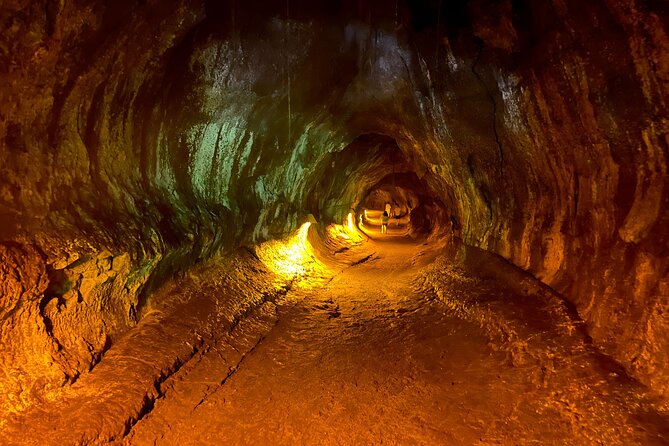
One part of the route includes a ride through the forest to a lava tube, followed by a short walk inside. This is a useful change of rhythm. You get off the bike, enter a volcanic feature, and see how flowing lava can leave a hollow passage behind.
The walking section is brief, but it surprises some people because the activity is marketed as a bike tour. You should expect a mix of riding and walking, not a pure cycling workout. Wear shoes that are comfortable for both. The supplied information does not promise a particular walking distance, so anyone with walking difficulty should ask the operator before booking.
The lava tube also gives the guides a natural opening to explain volcanic activity in plain terms. That kind of context is one of the strongest reasons to choose a guided ride instead of renting a bicycle or driving yourself. You can see the feature on your own, but you may miss the connection between the tube, the surrounding forest, and the park’s volcanic past.
Crater viewpoints, open roads, and active Kilauea
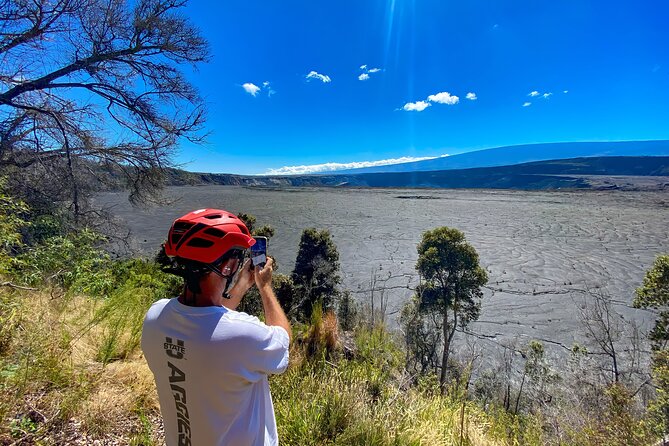
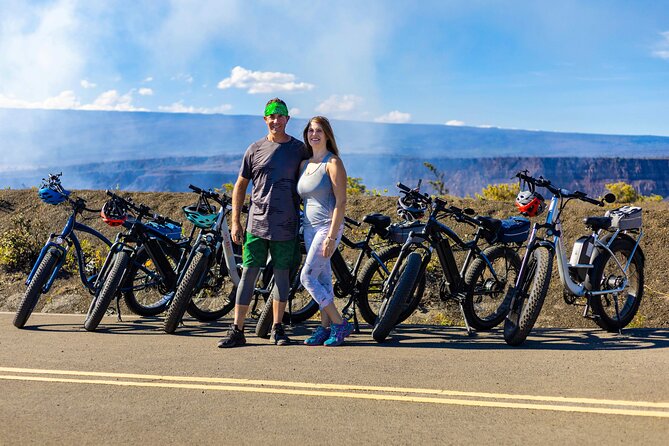
The ride continues on paved roads toward volcanic viewpoints and open sections of the park. Stops may include crater views, lookout points, the Volcano House area, and routes toward seaside views. The exact experience can shift with weather, traffic, park conditions, and volcanic activity.
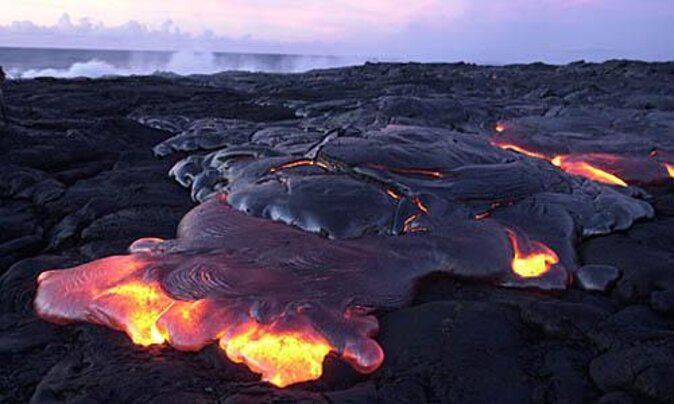
Kilauea can change the mood of the day. During one recent outing, an eruption episode began, with falling tephra and heavy traffic causing delays. The park eventually closed and the group had to leave, cutting the riding time short. That was disappointing, but it also shows why conditions here cannot be treated like a fixed museum schedule.
If the volcano is active, your guide must follow park instructions and safety rules. You might see an eruption or unusual volcanic activity, but no tour can promise it. The useful promise is access to a guide who can explain what you are seeing and adjust the route when conditions require it.
At the viewpoints, expect time for photos and short talks. Guides explain the volcano’s past, the surrounding plants, and the forces that shaped the park. Nicole and Derek receive repeated praise for clear explanations and calm group management, while Tyler, Scott, and Bill are also singled out for patient instruction and strong park knowledge.
There is one tradeoff. Some groups stop so often that the actual riding feels limited. If you want a fast, athletic route with long stretches on the bike, you may find the schedule too stop-and-start. If you want stories, photos, and a broad introduction to the park, those stops are the point.
More bike tours on Big Island of Hawaii:
- Haleakala Sunrise Best Self-Guided Bike Tour
★ 4.5 · 745 reviews - Waimea Canyon Downhill Bike Ride
★ 5.0 · 650 reviews - Best Haleakala Downhill Self-Guided Bike Tour with Maui Sunriders
★ 5.0 · 496 reviews - Water Bike Tour in South Maui
★ 5.0 · 372 reviews
Why the bike beats a car for this visit
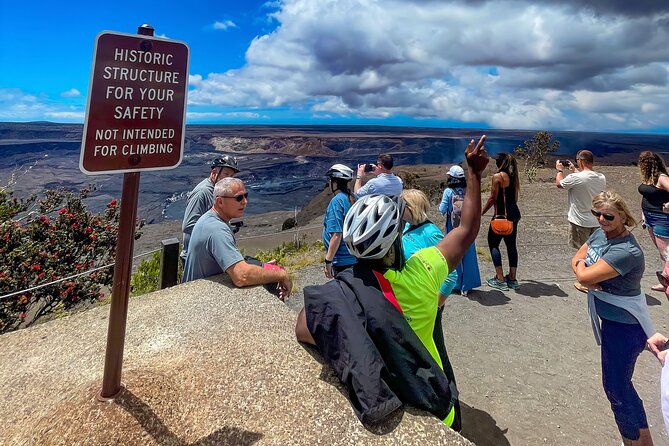
The biggest practical advantage is access. Cars can clog the roads and fill parking areas near popular sights. A bicycle lets the group move through some of that congestion more easily, though the park can still become crowded and road conditions can still affect the plan.
You also stay outside. Instead of stepping from a hot car into a viewpoint, you ride through the forest and feel the cooler elevation air. The experience is more personal and more physical without being especially strenuous for riders who use the motor wisely.
That said, this is not a private backcountry expedition. The ride follows paved roads and paths, and the major stops are places you could visit by car. You are paying for the equipment, route planning, group support, safety briefing, and interpretation. The added value comes from seeing those places in a different way, not from reaching secret areas closed to self-guided visitors.
The small-group format helps. With a maximum of 12 people, the guide can watch the pace, help with controls, and answer individual questions. It is still possible for the group to spread out, especially on a hill, so riders should stay alert and follow instructions.
What $199 buys you, and when it feels fair
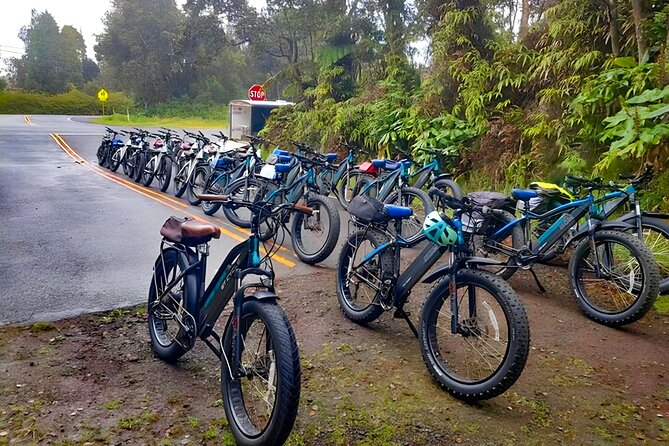
At $199 per person, this is not a cheap park transfer or a simple bicycle rental. The price includes the fat-tire e-bike, helmet, operating instructions, snacks, and water. It also covers about three hours with a guide and the convenience of having a planned route through a large national park.
I consider the price reasonable for a first visit if you want a guided overview and do not want to manage parking, route choices, or equipment. The motor also lets a mixed group ride together when fitness levels differ. One person can use more assistance on a hill while a stronger cyclist uses less.
The value drops if you already know the park well and mainly want uninterrupted time on a bicycle. One three-hour outing included many stops and not as much trail time as expected. Another group spent a long pause in the Volcano House lobby during rain and felt the route was shortened. Delays, weather, late arrivals, bike trouble, road congestion, and eruption closures can all reduce riding time.
The experience is also best judged against the price of a private day of sightseeing. You are not getting hotel pickup, transport from Kona or Waikoloa, beginner lessons, or a full-day park tour. You need to reach the meeting point yourself, and the activity ends there.
Weather, clothing, and the small details that matter
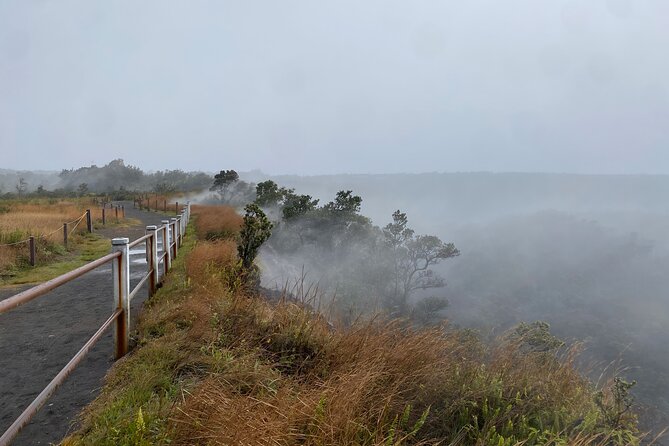
Do not dress for the weather at your resort. Volcano sits at a higher elevation, and the air can be cool, damp, and windy. Bring a waterproof rain jacket, a warm layer, long pants or capris, and a hat. Gloves are useful if you get cold easily.
Loose pants work better than tight clothing for the ride. Sunglasses can protect your eyes, while the supplied goggles are handy in rain. Keep your phone and wallet in the bike pack, but remember that the route is outdoors and conditions can be wet.
The tour requires moderate physical fitness. You do not need to sprint or climb every hill under your own power, but you must mount, steer, brake, and walk at the stops. A rider who struggles with balance, hills, or a heavy bicycle should contact the operator before paying.
Youth age 15 and older may ride the e-bikes. For anyone younger than 15, call ahead to discuss possible arrangements. Do not assume a child can join simply because they can ride a regular bicycle.
Who should book this Volcanoes National Park ride
I would choose this tour for a first visit to the park, especially if you have about half a day and want a clear introduction to the volcanoes without spending the whole time in a car. It also suits couples, families with teenagers, solo riders, and mixed-ability groups who want to stay together.
It is a good fit for riders who have basic bicycle skills but do not want a hard workout. The motor handles much of the climbing, and the pace is calm. The guides are patient with nervous first-time e-bike users, but that patience has limits. You still need to arrive ready to ride.
I would hesitate if your priority is technical cycling, remote trails, or a long free-form route. I would also hesitate if you dislike frequent stops, walking sections, rain, or group schedules. The park is unpredictable, and a three-hour plan can change quickly when roads close or volcanic conditions shift.
Free cancellation is available up to 24 hours before the start time. Changes or cancellations within 24 hours are not refunded, and poor weather or an insufficient group may lead to a new date or a full refund.
Should you book it?
Book this tour if you want to see Hawaii Volcanoes National Park from a bicycle, learn what you are looking at, and cover more ground than walking allows. The strongest reasons are the well-equipped bikes, careful instruction, small group, and guides such as Nicole, Derek, Tyler, Scott, and Bill.
Skip it if you cannot already ride a bicycle or if you expect a nonstop cycling adventure. Arrive prepared for cool rain, some walking, frequent stops, and possible changes caused by the volcano. For the right rider, $199 buys a lively and practical way to experience Kilauea without spending the day behind a windshield.
FAQ
Where does the e-bike tour start and end?
The tour starts at the Kilauea Lodge and Restaurant extension parking lot at 19-3948 Old Volcano Road, Volcano, Hawaii 96785. It ends back at the same meeting point.
How long is the tour?
The experience lasts about three hours. The route may cover roughly 12 to 15 miles, depending on conditions and the group’s pace.
What is included in the price?
The price includes a fat-tire e-bike, helmet, instructions on operating the bike, snacks, and water. Hotel pickup and drop-off are not included.
Do I need previous e-bike experience?
You do not need previous e-bike experience, but you must already know how to ride a bicycle and have moderate physical fitness. The tour does not provide beginner bicycle lessons, and there is no refund if you cannot ride the e-bike.
Can children join the tour?
Youth age 15 and older may participate on the e-bikes. If someone younger than 15 wants to join, contact the operator to discuss accommodation options.
What happens if the weather is poor or I need to cancel?
You can cancel at least 24 hours before the start time for a full refund. Cancellations or changes made less than 24 hours before the start time are not refunded. If poor weather or an insufficient number of participants causes the operator to cancel, you will be offered another date or a full refund.
More National Parks on Big Island of Hawaii
- Big Island, Hawaii: Volcanoes National Park Safari
★ 4.5 · 545 reviews - Small-Group Big Island Tour: Hawaii Volcanoes National Park and Kona Coffee Farm
★ 5.0 · 343 reviews - Volcano National Park Adventure From Kona
★ 5.0 · 339 reviews - Private Tour: Hawaii Volcanoes National Park Eco Tour
★ 5.0 · 276 reviews
Just added on Big Island of Hawaii
- Kailua-Kona: Big Island Morning Snorkeling Tour with Lunch★ 4.9 · 7 reviews
- Big Island: Hawaii Volcanoes National Park and Hilo Tour★ 5.0 · 118 reviews
- Kailua-Kona: Hualalai Volcano Doors On/Off Helicopter Tour★ 4.7 · 12 reviews
- Big Island: Full Day Adventure Tour of the Kohala Waterfalls★ 5.0 · 41 reviews
- Big Island Hawaii: Craft Chocolate Tasting and Farm Tour★ 5.0 · 14 reviews
- Big Island: Evening Volcano Explorer from Hilo★ 4.7 · 31 reviews
- Big Island: Off the Beaten Path Volcano Crater Hike★ 5.0 · 15 reviews
- Big Island: Full-Day Kohala Zipline and Waterfall Adventure★ 4.8 · 36 reviews
Volcanoes National Park Tours, compared.
Big Island in a Day: Volcanoes Waterfalls Sightseeing and History
Read our review →
Hilo Shore Excursion: Volcanoes National Park & Black Sand Beach
Read our review →
Small Group Big Island Twilight Volcano and Stargazing Tour
Read our review →
Big Island Highlights: Coffee, Volcano, Black Sands & Waterfall
Read our review →
Deluxe Volcano Experience with Restaurant Dinner
Read our review →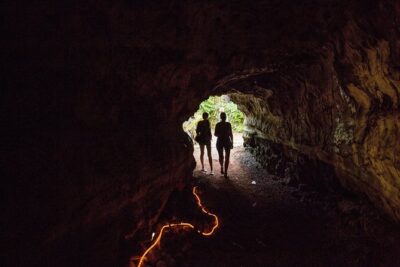
Captain Cook Snorkel Tour with Sea Caves and Lava Tubes
Read our review →
Big Island, Hawaii: Volcanoes National Park Safari
Read our review →Browse the lists this tour appears in