Reviewed · TOURS IN THE BIG ISLAND
Hawaiian Tikis and Guava Tea
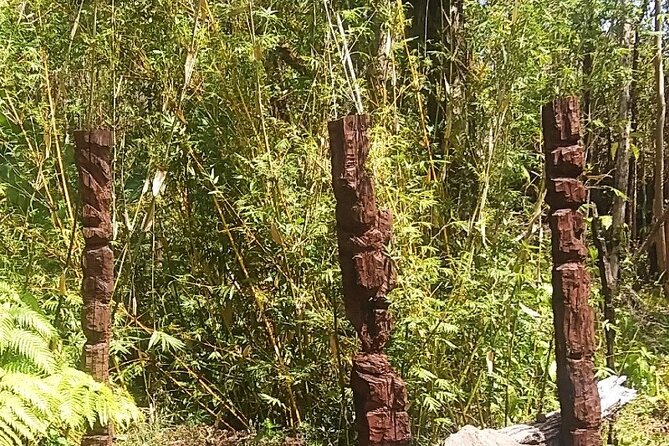
The most unusual part of this Big Island outing is not a lookout or a luau. It is a hand-built forest property where seven life-sized tiki statues form a chess set, recycled pallets become walls and hallways, and volcanic stone becomes art. Jason and Nikki guide you through the work they created themselves, then explain how they live with solar electricity and rainwater collection.
I like the direct, personal feel here. You get close to the art, plants, and structures instead of simply taking photos from a path. I also like the chance for children to try wood carving and rock chiseling under supervision, an especially good touch for families. The main consideration is the uneven lava-flow path, so this is not a polished garden stroll or a fully predictable walk.
Key details before you book
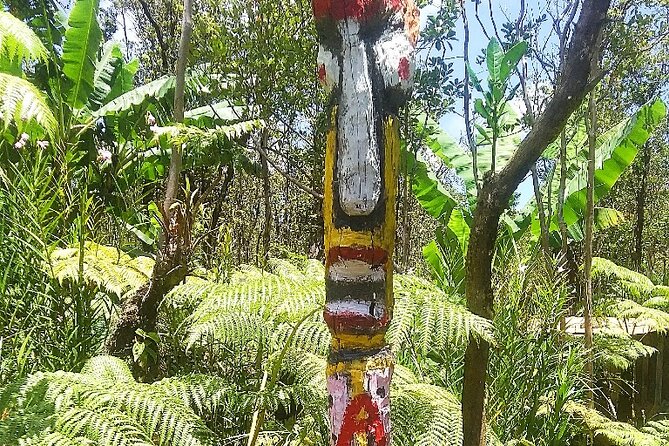
- Seven chess-piece tikis: Life-sized, hand-carved statues greet you at the entrance and set the tone for the visit.
- More than 300 hapu’u ferns: The fern collection grows in its natural setting along a rough lava path.
- The Okina: This recycled-pallet art structure includes a small sleeping area, solar electricity, and a water-catchment system.
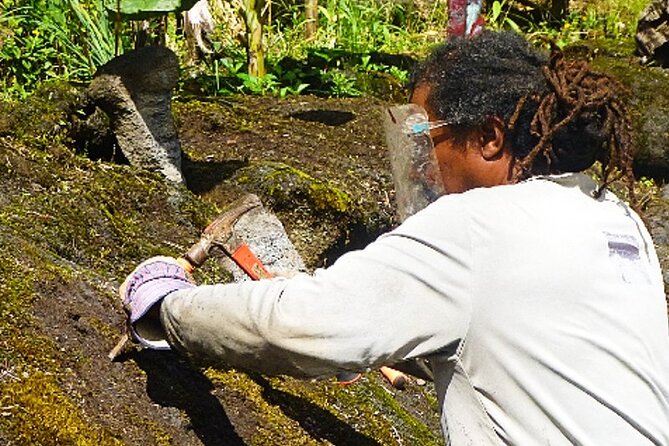
- Hands-on craft: Jason may let children try carving wood and chiseling rock, making the visit more active than a standard garden tour.
- Small group format: The tour has a maximum of 10 people, which suits the personal nature of the property.
- Two-hour afternoon visit: You meet at Jungle King Avenue in Fern Forest at 2:30 pm and return to that same point.
A forest tour built from lava, wood, and imagination
Hawaiian Tikis and Guava Tea is a small-scale experience in Fern Forest, on Hawaii’s Big Island. The setting matters. This is not a formal botanical garden with signs, paved loops, and a gift shop. It is a privately developed property shaped by hand, with tropical growth, volcanic rock, recycled materials, artwork, and practical off-grid systems sharing the same space.
Jason and Nikki lead the visit. Their story is part of what you are paying for. They cleared the property and built the structures, giving you a chance to ask about the work rather than simply view finished displays. The result feels more like a visit to an unusual creative homestead than a standard sightseeing stop.
The tour lasts about two hours. That is enough time to see the main features without turning the visit into an all-day commitment. Since the group limit is 10 people, you should expect a more intimate pace and a better chance to hear the explanations clearly.
The advertised title includes guava tea, but the supplied details do not specify exactly when or how it is served. If the tea is an important part of your plans, ask the operator about it before booking. The strongest confirmed focus is the property itself, especially the tikis, ferns, lava sculptures, and recycled structures.
Other trips people book on Big Island of Hawaii:
- Big Island in a Day: Volcanoes Waterfalls Sightseeing and History
★ 5.0 · 6,569 reviews - Big Island Manta Ray Night Snorkel
★ 5.0 · 5,656 reviews - Big Island: Kona Manta Ray Snorkel Tour in Keauhou Harbor
★ 4.5 · 2,465 reviews
Starting with seven chess-piece tikis
Your first visual cue is a row of seven life-sized tiki statues along a fence made from 100 percent recycled pallets. The tikis represent the game of chess, so this is more than a line of decorative carvings. You get a playful introduction to Jason’s work and to the way ordinary materials are reused throughout the property.
The fence also shows the practical side of the project. Pallets are not hidden behind a glossy finish or used as a vague eco-friendly talking point. They form part of the structure you see right away. That makes the tour useful for anyone interested in recycling, handmade art, or low-cost building ideas.
I would give yourself a few minutes here before moving on. The statues are large and distinctive, and the opening explanation helps you understand the rest of the property. This is also a natural place for family photos, although the experience is more rewarding when you listen to how the pieces were made rather than treating them as a quick backdrop.
Walking the uneven lava-flow path
From the entrance, the route follows a naturally formed, uneven lava-flow path. Along it, you see more than 300 hapu’u ferns growing in their natural environment. For many people, this will be the most recognizably Hawaiian part of the experience: not a planted display, but thick tropical growth shaped by volcanic ground and wet forest conditions.
The ferns are valuable because they give the property a living setting. The art does not sit in an empty yard. Trees, tropical plants, and wildlife surround the carvings and structures, so the walk changes as you go. You may find yourself paying as much attention to the plant life and sounds around you as to the next sculpture.
The path is also the clearest physical caution. Uneven lava can make footing less certain, and the information provided does not describe a paved or step-free route. Most people can participate, and service animals are allowed, but anyone who has trouble with rough ground should consider the route carefully and ask the operator about current conditions.
Wear sensible shoes. That advice is grounded in the surface itself, not in a need for strenuous hiking. The tour is only about two hours, but a rough natural path can be tiring or awkward if you arrive in flimsy footwear.
Lava-rock sculptures with a personal touch
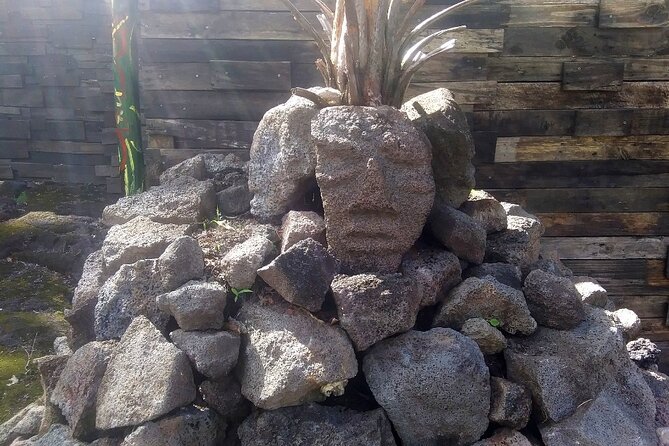
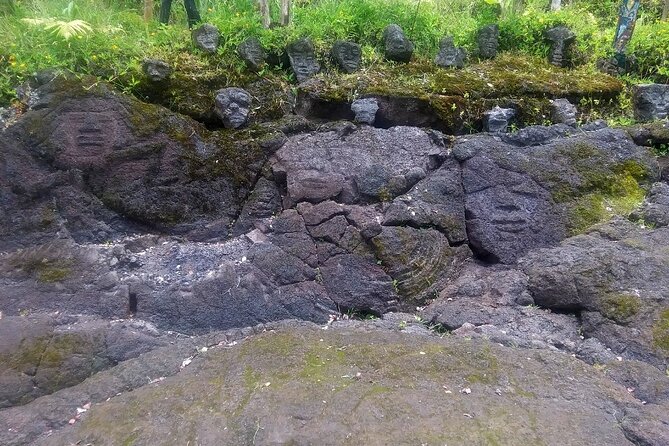
The property includes several lava-rock sculptures, including a Rasta stone sculpture that remains in its original setting. The phrase in situ matters here. You are not seeing every piece in a gallery or a carefully arranged exhibit. Some of the art belongs to the place where it was created.
That makes the experience different from a normal sculpture garden. The volcanic material connects the artwork to the island, while the tropical plants soften and surround it. Jason’s work also gives you a chance to see how a local creator uses what is already present instead of bringing in a polished collection from elsewhere.
One especially appealing feature is the chance for a child to try carving wood and chiseling rock. This is not presented as a formal workshop with a long list of tools or a separate class schedule, so do not book it expecting a guaranteed craft lesson. Still, the opportunity can turn a family visit from passive sightseeing into something your child remembers.
The hands-on element also reveals scale. It is easy to admire a finished tiki and forget the labor behind it. Seeing the process, even briefly, helps you understand why these pieces feel personal rather than mass-produced.
Same island, a different kind of day:
- Hilo Shore Excursion: Volcanoes National Park & Black Sand Beach
★ 4.5 · 2,338 reviews - Big Island: Captain Cook Snorkel On A Power Catamaran With Lunch
★ 5.0 · 2,232 reviews - KONA Manta Ray Night Snorkel – FREE re-ride if no Sightings
★ 5.0 · 2,212 reviews - Manta Ray Night Snorkel at Kona, Big Island
★ 5.0 · 1,758 reviews
Inside The Okina recycled-pallet structure
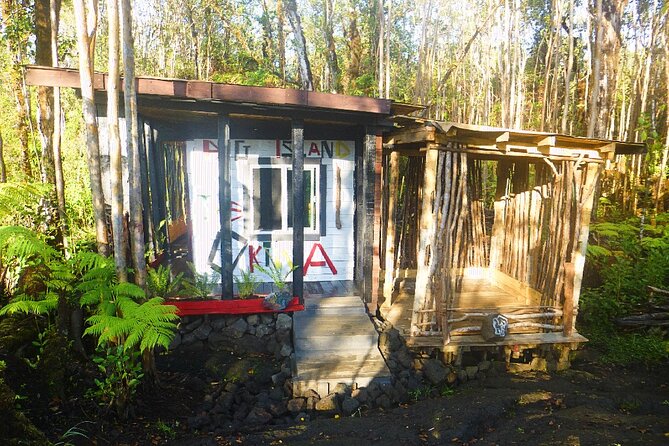
The Okina is the property’s most inventive building. It is an art installation made from 100 percent recycled pallets, with hallways and a sleeping area covering about 100 square feet. Several original mixed-media artworks are displayed inside.
The structure is small, and that is part of its point. You are not touring a spacious vacation house. You are seeing how a compact space can combine art, shelter, and basic systems. The Okina includes solar electricity and a water-catchment system, so the visit also offers a practical look at off-grid living.
If you have an interest in alternative housing, this may be the most useful section of the tour. You can see the ideas in physical form instead of hearing a general talk about sustainability. The small size also makes the limitations clear. Compact, recycled construction can be clever and creative, but it is not the same as a conventional home with broad rooms and generous storage.
The Okina can also be booked through Airbnb, according to the supplied information. One family used an overnight stay to hear the jungle at night and extend the visit beyond the afternoon tour. That is a separate booking, not part of the $75 experience, so treat it as an optional add-on rather than a promised feature of the tour.
Why the personal guide makes a difference
Jason and Nikki’s role is central. Because they cleared the property and built the structures, they can connect the visible details to their daily choices. You are not just told that the property uses recycled materials. You can ask about the pallet fence, the tiny cabin, the solar power, and the water catchment while standing beside them.
Their enthusiasm is especially useful for families. An 11-year-old can learn about plants and off-grid living without sitting through a long formal lecture. The chance to handle carving tools, where offered, gives the visit a physical edge that many garden tours lack.
The small group limit helps. With no more than 10 people, the setting should not feel like a crowded attraction. You can focus on the guide’s explanation and ask questions without competing with a large group.
Still, the experience depends partly on your interests. If you want polished interpretation, extensive historical background, or a major collection of traditional Hawaiian artifacts, this is probably not the right choice. The focus is personal creativity, tropical plants, recycled construction, and a working approach to off-grid life.
What the $75 price buys you
At $75 per person, this is more expensive than a quick self-guided stop at a public garden, but the comparison is not quite fair. You are paying for a two-hour guided visit, a maximum group size of 10, access to a private creative property, and direct time with the people who built it.
The value is strongest if you care about the story behind the place. You see seven large tikis, lava-rock art, the hapu’u fern collection, the pallet fence, The Okina, mixed-media artwork, and practical off-grid systems in one visit. A family may also get more from the outing because the carving opportunity adds participation.
The value is weaker if you simply want a scenic walk. The route is short, the path is uneven, and the property is not described as a large formal garden. You should book this for its character and access to Jason and Nikki’s work, not because it covers a long list of major attractions.
The experience is offered in English and accepts mobile tickets. It is generally suitable for most people, though the natural path deserves attention. Since it is often booked about 33 days ahead, planning early is sensible if your dates are fixed.
Timing, meeting point, and cancellation
The tour begins at 2:30 pm at Jungle King Avenue in Fern Forest, Hawaii 96778. It ends back at the same meeting point, which keeps the logistics simple. The location is near public transportation, according to the supplied information.
The afternoon start may work well if you are spending the morning elsewhere on the Big Island. It also gives you a clear two-hour block instead of taking over an entire day. Plan around the stated start time, since the tour has a small group and late changes may be difficult.
You can cancel for a full refund up to 24 hours before the local start time. Cancellations or changes made within 24 hours are not refunded or accepted. That policy is fairly straightforward, but it means you should confirm your island plans before the cutoff.
Who will enjoy this most
I would recommend Hawaiian Tikis and Guava Tea to people who prefer personal places over polished attractions. It suits families, especially those with children interested in making things, plants, unusual buildings, or practical sustainability.
It also fits couples and curious solo visitors who want to meet local creators and see an artistic property from the inside. The visit gives you a story to tell beyond another beach or viewpoint.
You may want to skip it if you need a smooth, fully paved route, a large formal garden, or a tightly scripted cultural show. The natural path and handmade setting are central to the experience, not minor details to work around.
Should you book Hawaiian Tikis and Guava Tea?
Book it if the idea of walking through a tropical property filled with handmade tikis, lava carvings, recycled-pallet structures, and off-grid systems sounds more appealing than a standard attraction. The strongest reasons to go are Jason and Nikki’s personal involvement, the small group size, the 300-plus hapu’u ferns, and the chance for children to try carving.
Before paying $75, be clear about the tradeoff. This is a rough, creative property rather than a polished park, and the advertised guava tea is not explained in the available details. If you are comfortable with the uneven path and want an authentic, hands-on look at one couple’s art and homesteading choices, it is a distinctive Big Island stop.
FAQ
Where does Hawaiian Tikis and Guava Tea meet?
The tour meets at Jungle King Avenue, Fern Forest, Hawaii 96778, USA.
What time does the tour start?
The start time is 2:30 pm.
How long does the experience last?
The tour lasts approximately two hours.
Where does the tour end?
The experience ends back at the meeting point.
How much does the tour cost?
The listed price is $75 per person.
How many people can join the tour?
The maximum group size is 10 people.
Is the tour offered in English?
Yes. The experience is offered in English.
Can I cancel for a full refund?
Yes. You can cancel at least 24 hours before the local start time for a full refund. Cancellations and changes made within 24 hours are not refunded or accepted.
Just added on Big Island of Hawaii
- Volcano National Park and Rainbow Fall in Hilo, Hawaii★ 5.0 · 53 reviews
- Volcanoes National Park Adventure Tour – Hilo Shore Excursion★ 4.5 · 104 reviews
- Volcanoes National Park and Hilo Private Tour★ 5.0 · 3 reviews
- Private VAN Tour Hilo★ 4.5 · 5 reviews
- Volcanoes Adventure Tour from Hilo★ 4.0 · 29 reviews
- Majestic Waterfall Tour★ 5.0 · 31 reviews
- Private Shore Excursion Hilo Volcanoes National Park up to 10 PPL★ 5.0 · 36 reviews
- 5 Hour Custom Private Tour of Hawaii★ 5.0 · 9 reviews
Tours in the Big Island, compared.
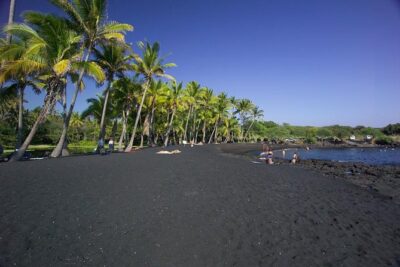
Big Island in a Day: Volcanoes Waterfalls Sightseeing and History
Read our review →
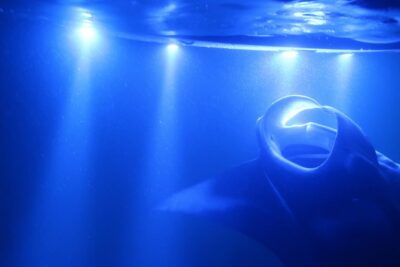
Kona Manta Ray Snorkel Tour in Keauhou Harbor
Read our review →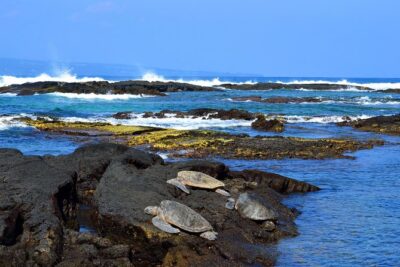
Hilo Shore Excursion: Volcanoes National Park & Black Sand Beach
Read our review →
Captain Cook Snorkel On A Power Catamaran With Lunch
Read our review →
KONA Manta Ray Night Snorkel – FREE re-ride if no Sightings
Read our review →
Big Island GOAT Experience: Mauna Kea Summit, Sunset & Stars
Read our review →