Reviewed · TOURS IN THE BIG ISLAND
Hawaiian Floral Crown Weaving in Hilo
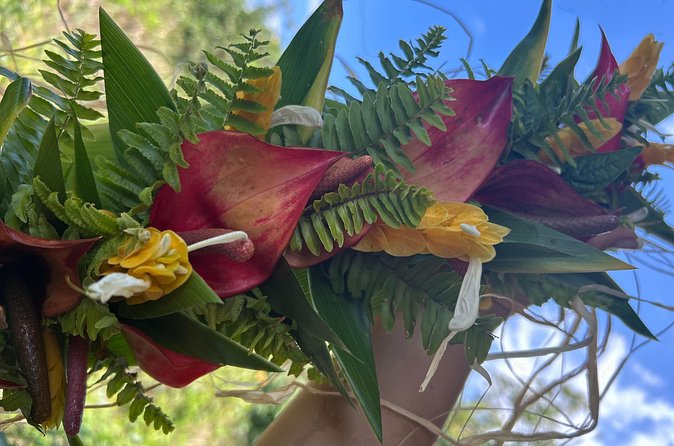
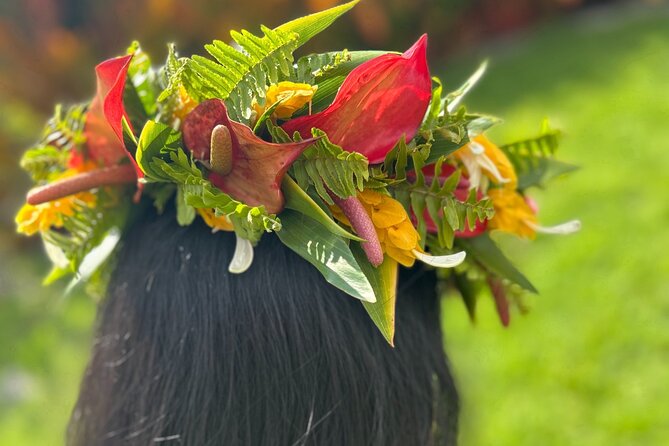
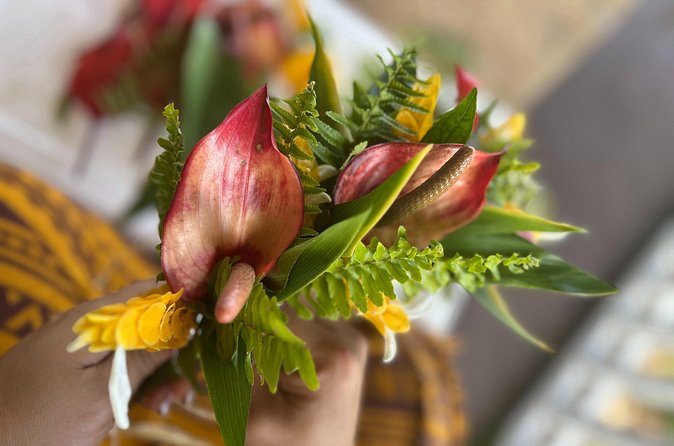
Hilo’s most memorable souvenir may be one you make yourself. With Poerava as your guide, you begin with a ceremony honoring the aina, or land, then gather seasonal plants before weaving them into a Hawaiian lei po’o, a floral crown worn on the head. This is not a quick craft table. It connects the finished piece to the place where you made it.
I like two things right away: the chance to learn about plants through Poerava’s family stories, and the small group size, capped at 10 people. The main consideration is weather. The activity needs good conditions, and mosquitoes may be part of the setting, so bring repellent.
Key points at a glance
- Start with a land-honoring ceremony: Poerava introduces the group to the aina and explains why the setting deserves respect.
- Gather fresh garden materials: You walk through the garden, learn about seasonal foliage, and pick greenery for your own crown.
- Learn the Hawaiian wili method: Poerava guides you through the wrapping and weaving technique using raffia and cordage.
- Take home a personal creation: Your finished lei po’o is made from the plants you selected and assembled yourself.
- Small groups keep the class personal: A maximum of 10 people allows room for questions and hands-on help.
- Plan for a 2:00 pm start in Hilo: The experience lasts about two hours and returns to the same meeting point.
Beginning with Respect for the Aina
The class begins at Onekahakaha Road in Hilo at 2:00 pm. Before anyone starts picking plants or handling materials, Poerava leads a ceremonial introduction to the aina. The purpose is to recognize the land as more than a backdrop for an activity.
That opening matters. You are not simply walking into a garden, cutting greenery, and making a decoration. You are being asked to consider the place, its past, and your own presence there. For me, this gives the workshop a stronger sense of purpose than a standard craft lesson.
The ceremony is also a useful introduction to Hawaiian customs for anyone who has limited experience with local traditions. It sets a respectful tone without requiring you to know the right words or actions beforehand. Poerava provides the guidance, so you can listen and take part at your own comfort level.
Because the group is small, this first portion should feel more personal than a large commercial demonstration. The maximum is 10 people, and the experience is offered in English. That combination makes it easier to follow the explanation and ask questions as the activity moves along.
Other trips people book on Big Island of Hawaii:
- Big Island in a Day: Volcanoes Waterfalls Sightseeing and History
★ 5.0 · 6,569 reviews - Big Island Manta Ray Night Snorkel
★ 5.0 · 5,656 reviews - Big Island: Kona Manta Ray Snorkel Tour in Keauhou Harbor
★ 4.5 · 2,465 reviews
Walking the Garden for Seasonal Greenery
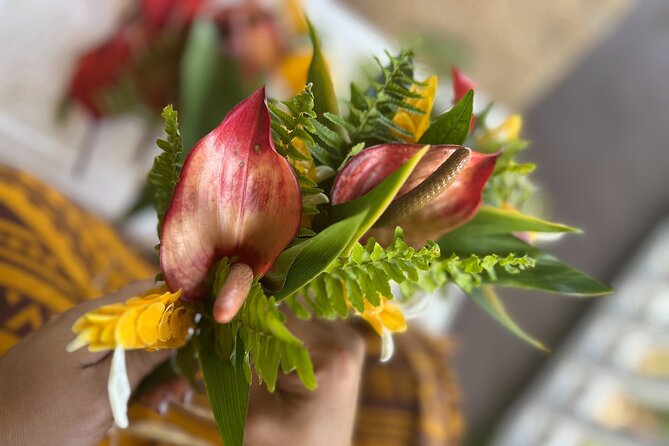
After the introduction, you take a stroll through the garden. The purpose is practical and educational at the same time. You become familiar with the plants that are available during the season, then select a few pieces of fresh greenery for the crown you will make later.
The selection process gives your lei po’o a personal connection to the afternoon. You are not choosing from a sealed kit of identical flowers. The materials change with the season, and your finished crown will reflect what is growing at that time.
Poerava also shares stories about plants her family used medicinally during her childhood. She connects those older family practices with the nature-based solutions she uses with her own children today. These details turn the garden walk into more than a supply-gathering stop.
I particularly like this part because it places plant knowledge in a family setting. You are hearing how plants fit into daily life, not just memorizing botanical names. The information is presented as personal experience and practical tradition, which gives the walk a warm, grounded feel.
Still, keep your expectations sensible. The exact plants and foliage available are seasonal, and the experience description does not promise a particular flower or plant. If you have your heart set on a specific color or bloom, you may want to treat that as a bonus rather than a guarantee.
A picking basket is provided, so you do not need to bring a container for your garden finds. The supplied equipment also includes raffia, cordage, and scissors. That keeps the focus on the activity instead of making you assemble craft supplies before arriving.
Learning the Wili Method Under the Pavilion
Once you have collected a few garden treasures, you sit at a picnic table beneath a spacious pavilion. This is where the workshop shifts from walking and listening to making.
Poerava teaches the Hawaiian wili technique, the method used to wrap and secure plant material into a lei. She presents it as a series of easy-to-follow steps, guiding you as you work rather than expecting you to figure out the process alone.
The table setup is useful for several reasons. You have a stable surface for sorting greenery, a place to keep the cordage and raffia close at hand, and enough room to work without standing for the full class. The pavilion also provides shelter, although the activity still depends on good weather overall.
Craft classes can be frustrating when the instructor moves too quickly or presents a complicated technique with little help. Here, the stated format is hands-on instruction, and the small group limit supports that approach. Poerava can give individual attention as you learn how to position, wrap, and secure the greenery.
Your first attempt may not look perfectly even. That is part of the appeal. The goal is not to produce a factory-perfect crown. It is to understand the method and create something with your own hands. The finished lei po’o carries the marks of your choices, including the plants you picked and the way you arranged them.
I would allow yourself to work at a relaxed pace. The total activity lasts about two hours, and that time includes the ceremony, garden walk, plant stories, selection process, and weaving. This is a short cultural workshop, not a full-day class, so the finished piece may be simple rather than elaborate.
Why the Finished Lei Po’o Matters
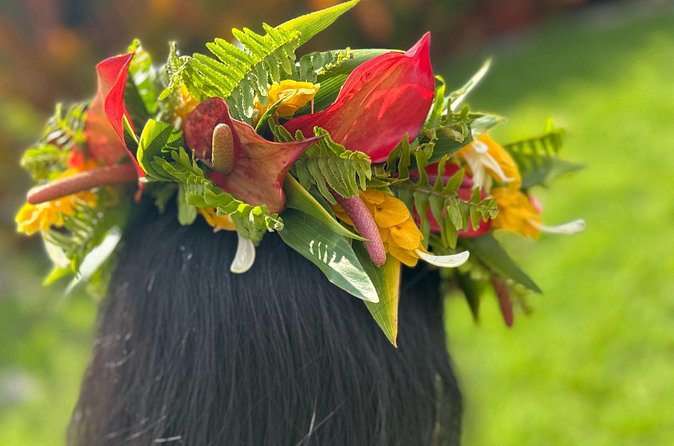
A lei po’o is a floral crown worn on the head. In this experience, its value comes from the full process: learning about the land, gathering materials, and practicing the wili method.
You leave with more than a decorative object. You have a physical reminder of a particular afternoon in Hilo, made from seasonal greenery and shaped by your own decisions. That makes it a better souvenir than something picked up quickly in a shop, especially if you enjoy crafts or prefer activities with a clear connection to local culture.
The crown is also useful during the rest of your Big Island visit. Some people have worn their finished leis to Hawaiʻi Volcanoes National Park and received compliments, while another person wore one on the flight home. Those details suggest the piece can travel beyond the class and become part of your trip photographs and memories.
Of course, a fresh floral crown has a limited life compared with a carved souvenir or a piece of jewelry. You should enjoy it as a temporary creation. Its changing condition is part of what makes it seasonal, though you should not expect a permanent keepsake unless you preserve it yourself, and no preservation service is included.
The class works well for adults, children, and families who like making things together. It also suits people who want a quieter cultural activity instead of a performance or a large group excursion. If you dislike crafts, handling plant material, or spending time seated at a picnic table, the experience may feel less rewarding.
Same island, a different kind of day:
- Hilo Shore Excursion: Volcanoes National Park & Black Sand Beach
★ 4.5 · 2,338 reviews - Big Island: Captain Cook Snorkel On A Power Catamaran With Lunch
★ 5.0 · 2,232 reviews - KONA Manta Ray Night Snorkel – FREE re-ride if no Sightings
★ 5.0 · 2,212 reviews - Manta Ray Night Snorkel at Kona, Big Island
★ 5.0 · 1,758 reviews
The Value of $75 for Two Hours
The cost is $75 per person for roughly two hours. That is not the cheapest way to fill an afternoon in Hilo, but the price covers more than the finished crown.
You are paying for direct instruction, a cultural introduction, a guided garden walk, the plant materials, and the use of raffia, cordage, scissors, and a picking basket. You also receive a small-group setting, with no more than 10 people. For someone who values personal teaching and hands-on work, that is a fair package.
The strongest value comes from the combination of place and instruction. You could buy craft supplies elsewhere, but you would not get the same connection to the garden, the seasonal greenery, or Poerava’s family stories. The setting gives the project meaning.
The price is less attractive if you only want a quick souvenir or a highly polished floral arrangement. In that case, a shop purchase may be simpler. This experience is aimed at people who want to spend time learning and making, not just receiving an object.
It is worth noting that the class is popular enough to be booked an average of 34 days ahead. That does not guarantee every date will sell out, but it is a strong reason to reserve early if your Hilo schedule is fixed. With free cancellation up to 24 hours before the start time, early planning carries less risk, provided you watch the local cancellation deadline.
Planning Around the 2:00 pm Meeting Time
The class begins at Onekahakaha Road, Hilo, and ends back at the same meeting point. You should plan your day around a 2:00 pm start rather than treating it as a flexible drop-in activity.
Because the workshop includes a ceremony, a garden walk, and a guided craft, arriving on time is important. A late arrival could mean missing the introduction or interrupting the group while everyone is learning the wili method.
The mobile ticket makes arrival straightforward, and confirmation is sent when you book. The activity is offered in English. Transportation to the meeting point is not listed, so you should arrange your own way there and allow enough time to find the start location.
The experience requires good weather. If conditions force a cancellation, you can choose a different date or receive a full refund. Since the class involves walking through a garden and gathering plant material, this weather rule is practical rather than surprising.
Bring mosquito repellent. It is not included, and a garden setting in Hilo can mean insects. You may also want comfortable clothing suitable for sitting at a picnic table and walking outdoors, though no special dress code is stated.
Who Will Get the Most from This Hilo Workshop
I would recommend this class most strongly to people who fit one or more of these descriptions:
- You enjoy making something with your hands.
- You want a cultural activity tied to the place you are visiting.
- You prefer a small group over a large organized tour.
- You are traveling with children who like practical, creative activities.
- You want a souvenir you create rather than purchase.
- You appreciate learning through family stories and local plant traditions.
It can work well for a parent and child, a couple, or a small family group. The activity is designed for both children and adults, and most people can participate. Service animals are allowed.
The class may be less suitable if you need a fully indoor activity, have a tight schedule before or after 2:00 pm, or want a polished professional floral arrangement. The weather requirement and garden setting are central to the experience, not minor details.
There is also a difference between appreciating Hawaiian tradition and treating it as a photo prop. The opening ceremony asks you to approach the land with respect. If you are willing to listen and take part thoughtfully, the workshop has greater value than a simple souvenir-making session.
A Personal, Small-Group Way to Connect with Hilo
Poerava is the heart of the experience. Her teaching brings together ceremony, plant stories, family knowledge, and practical instruction. The result is a class that feels personal without requiring advanced craft skills.
The strongest praise centers on her teaching and the pleasure of wearing the finished crowns afterward. That makes sense. A good craft instructor does not just show you the final product. She helps you understand how to get there, fixes small problems as they appear, and lets you feel that the finished piece belongs to you.
The group limit of 10 supports that style. You are not one face in a crowd watching a demonstration from a distance. You have your own materials, your own greenery, and a chance to receive help as you work.
The class also has a family connection. Poerava’s stories about medicinal plants from childhood, along with the nature practices she uses with her children, make the lesson feel lived-in. You are learning from a person with a relationship to the plants, rather than from a script focused only on the finished craft.
Should You Book the Hawaiian Floral Crown Workshop?
I would book this experience if you want a hands-on Hilo activity with cultural meaning, personal instruction, and a souvenir you can wear during the rest of your trip. The $75 price is reasonable for the small group, materials, garden walk, ceremony, and two hours of teaching.
I would skip it if you are looking for a quick stop, a guaranteed selection of particular flowers, or a weather-proof indoor class. Bring mosquito repellent, arrive ready for the 2:00 pm start, and leave room in your schedule for the activity to unfold at an easy pace.
For craft lovers, families, and anyone who prefers authentic local encounters over packaged sightseeing, this is a thoughtful choice. Reserve ahead, since it is often booked more than a month in advance.
FAQ
Where does the Hawaiian floral crown workshop begin?
The activity begins at Onekahakaha Road, Hilo, Hawaii 96720.
What time does the experience start?
The scheduled start time is 2:00 pm.
How long does the workshop last?
The experience lasts approximately two hours.
Where does the activity end?
The activity ends back at the meeting point.
What is included in the price?
Raffia, cordage, scissors, and a picking basket are included.
Is mosquito repellent provided?
No. Mosquito repellent is not included.
How many people can join the class?
The activity has a maximum capacity of 10 people.
What happens if bad weather cancels the experience?
You will be offered a different date or a full refund if the activity is canceled because of poor weather.
Just added on Big Island of Hawaii
- Volcano National Park and Rainbow Fall in Hilo, Hawaii★ 5.0 · 53 reviews
- Volcanoes National Park Adventure Tour – Hilo Shore Excursion★ 4.5 · 104 reviews
- Volcanoes National Park and Hilo Private Tour★ 5.0 · 3 reviews
- Private VAN Tour Hilo★ 4.5 · 5 reviews
- Volcanoes Adventure Tour from Hilo★ 4.0 · 29 reviews
- Majestic Waterfall Tour★ 5.0 · 31 reviews
- Private Shore Excursion Hilo Volcanoes National Park up to 10 PPL★ 5.0 · 36 reviews
- 5 Hour Custom Private Tour of Hawaii★ 5.0 · 9 reviews
Tours in the Big Island, compared.

Big Island in a Day: Volcanoes Waterfalls Sightseeing and History
Read our review →

Kona Manta Ray Snorkel Tour in Keauhou Harbor
Read our review →
Hilo Shore Excursion: Volcanoes National Park & Black Sand Beach
Read our review →
Captain Cook Snorkel On A Power Catamaran With Lunch
Read our review →
KONA Manta Ray Night Snorkel – FREE re-ride if no Sightings
Read our review →
Big Island GOAT Experience: Mauna Kea Summit, Sunset & Stars
Read our review →