
Reviewed · FARMS
Big Island Hawaii: Craft Chocolate Tasting and Farm Tour
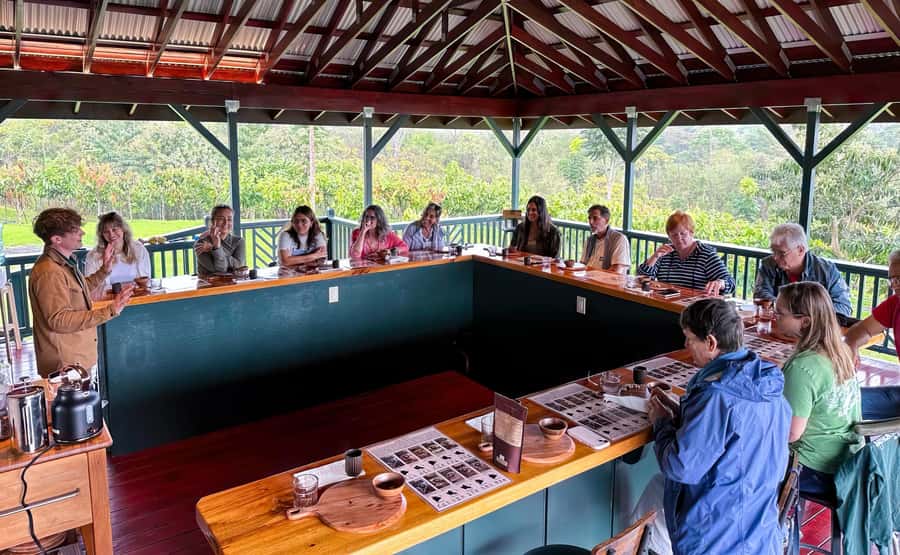
The best part of this Big Island outing is that it treats chocolate as agriculture, not just dessert. At Honolii Orchards, you follow cacao from tree to fermented bean, then taste how soil, climate, and genetics shape the finished bar. The setting helps too: the tasting room looks over the orchard canopy, valley, and ocean.
I like the farm-to-bar explanation, which gives the tasting real purpose. I also like the range of samples, including fresh cacao juice, roasted beans, cacao tea, chocolate-covered macadamias, and seasonal fruit. The main drawback is the road and meeting point. Puia Road is mislabeled in places, and rideshare pickup can be difficult after the tour, so you should plan your arrival and departure carefully.
Key points at a glance
- Ten or more Hawaiian chocolate bars: Taste single-origin bars from farms across the islands and compare their distinct flavors.
- Cacao from tree to bar: Walk the orchard and see how pods are grown, harvested, and processed.
- Fermentation room visit: Learn why post-harvest fermentation is one of the most important steps in making fine chocolate.
- A scenic tasting room: Relax above the orchard canopy with broad views toward the ocean and valley.
- Guides with real passion: Wren is noted for his clear, energetic teaching, while Jude helps serve the tasting and chocolate drink.
- A three-and-a-half-hour commitment: At $130 per person, this is best for serious chocolate fans and curious food lovers, not for a quick snack stop.
A cacao farm five minutes from Hilo
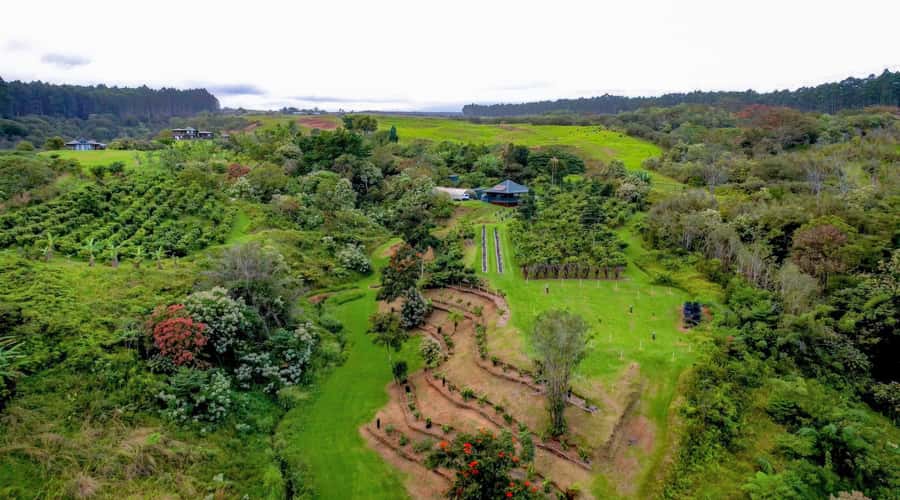
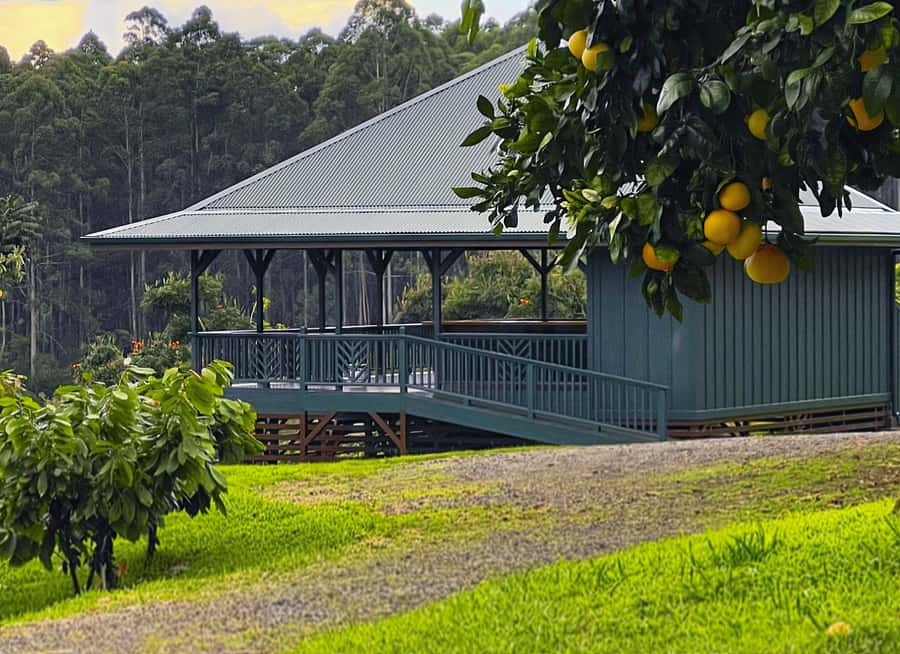
Honolii Orchards sits in Paukaa, about five minutes from Hilo by car. The route takes you away from the main highway and onto Big Island backroads, with old agricultural land along the way. The farm is set among historic breadfruit, sugarcane, macadamia, and cattle land, giving the visit a wider connection to Hawaii’s farming past.
You turn from Mamalahoa Highway onto Kulana Street, pass through Paukaa Town, and then turn onto Puia Road near the Paukaa Kingdom Hall of Jehovah’s Witness Church. The road is mislabeled as Woa Road in some places, so follow Google Maps rather than relying on road signs. Drive about 1.7 miles uphill for five to ten minutes, then look for the open green gate and large entrance sign on the left.
That last stretch matters. This is not a polished attraction beside a major road. It is a working family farm reached by a local backroad. I like that sense of place, but you should not leave navigation until the last minute. One person had trouble getting an Uber driver to find the farm afterward, so arranging your return ride in advance is sensible.
Other coffee and chocolate farms to visit on the Big Island:
- Big Island Highlights: Coffee, Volcano, Black Sands & Waterfall
★ 5.0 · 1,054 reviews - Hawaiian Salt Farm Tour in Kona
★ 5.0 · 767 reviews - Award Winning Farm Tour: Coffee, Chocolate and Unique Gifts
★ 5.0 · 484 reviews
Starting in the orchard canopy
The visit begins in the tasting room, where you can settle in and meet your guide before heading outside. The room sits above the orchard canopy and has wide views of the surrounding valley and ocean. It gives the experience a calm start, especially after the drive up Puia Road.
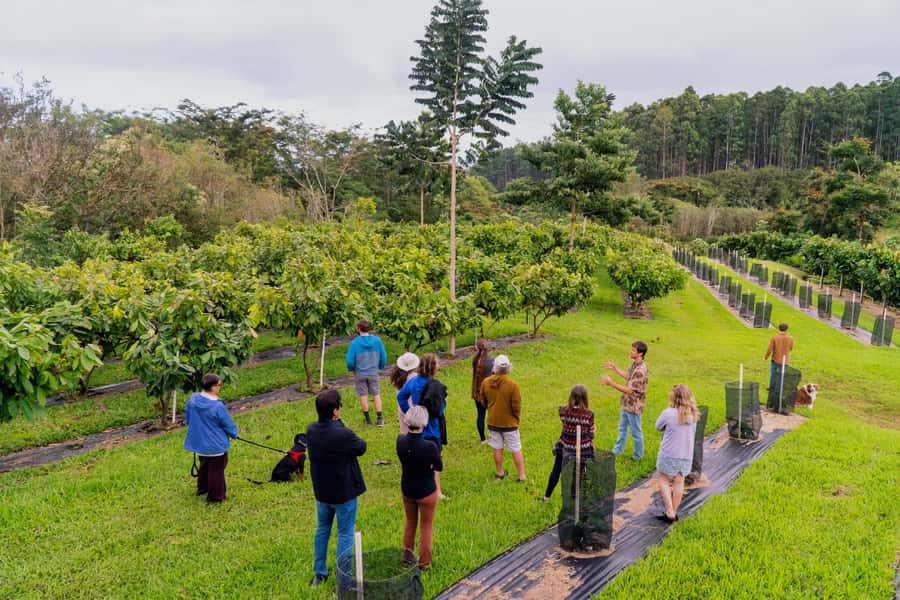
The orchard walk is more than a stroll among attractive trees. Your guide explains how cacao is cultivated and how the fruit develops before harvest. You learn to think of chocolate as a crop shaped by growing conditions, rather than a factory product that begins with a familiar candy bar.
The exact pace will depend on questions and the group, but the farm encourages curiosity. If you want to know about tree care, harvest, crop quality, or the work involved in producing cacao in Hawaii, this is the time to ask. The guides have a strong interest in explaining the practical side of farming, and the tour does not treat the orchard as a backdrop for photographs alone.
The broader farming context is useful. The Hamakua Coast and nearby parts of the Big Island were shaped by sugarcane, and the tour connects cacao with that earlier agricultural economy. You get a sense of how one crop can influence land use, work, and local identity, then how a newer crop is finding its place.
Why fermentation matters so much
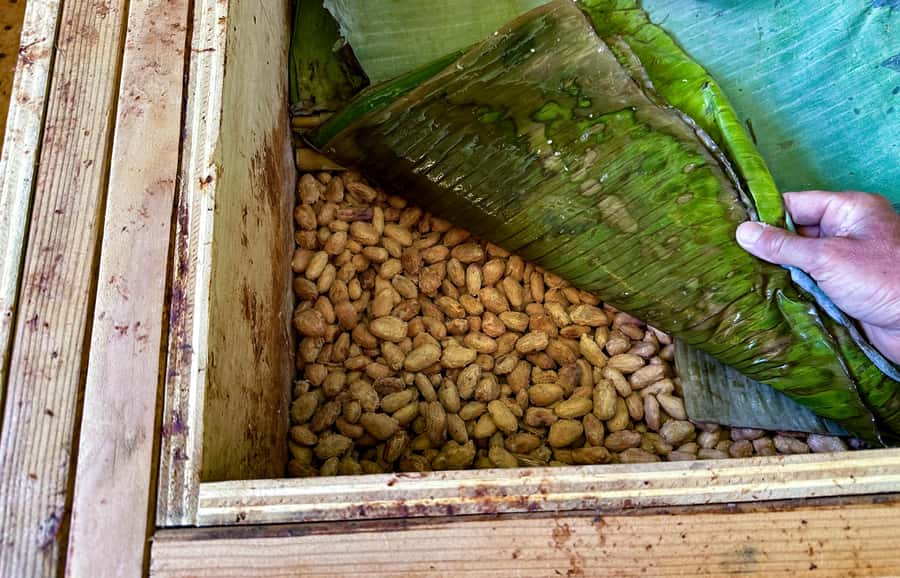
After the orchard, you visit the Honolii Orchards fermentation room. This is one of the most valuable parts of the tour because fermentation is easy to overlook when chocolate is sold as a finished bar.
Fresh cacao beans do not taste like the chocolate you know. Fermentation changes the beans after harvest and prepares them for later roasting and chocolate making. At the farm, your guide explains the science and practical decisions involved in this stage of processing.
You do not need a food science background to follow the lesson. The teaching is aimed at curious visitors, and the guides explain technical ideas in accessible language. One guide, Wren, is especially noted for making complex agricultural subjects understandable without leaning on fancy terms.
This stop also explains why two bars made from different cacao can taste so unlike each other. Bean genetics matter, but so do the farm’s soil, weather, harvest decisions, and post-harvest handling. Fermentation is not a minor footnote. It is one of the reasons craft chocolate can have such a broad range of flavors.
Chocolate history from Mesoamerica to Hawaii
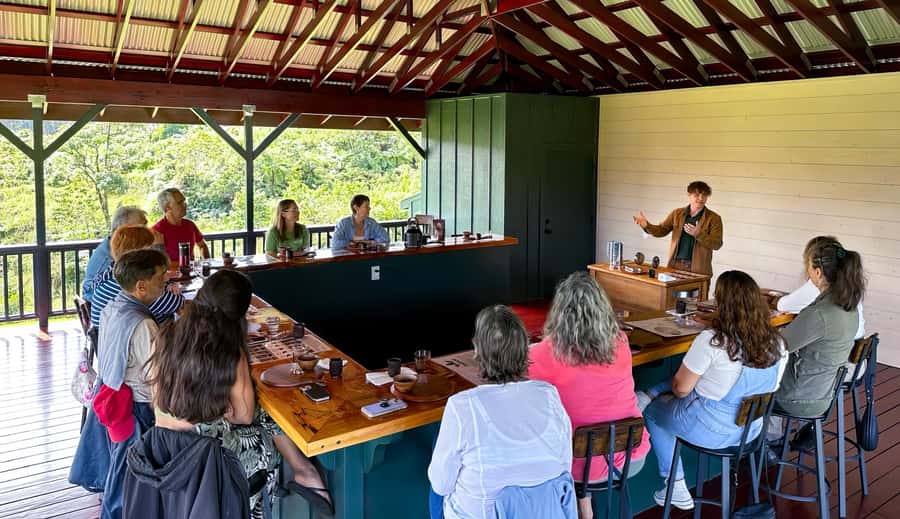
Back in the tasting room, the tour shifts from farm work to chocolate’s long story. You learn about cacao’s origins in ancient Mesoamerica and follow its path into the modern craft chocolate movement.
That background adds useful context to the tasting. You are not simply handed ten bars and asked which one you prefer. You first learn how cacao became a food and how modern makers differ from large-scale chocolate producers.
The contrast with mass-produced chocolate is part of the lesson. The tour explains what craft chocolate aims to show: the character of the cacao itself, rather than a uniform flavor designed to taste the same every time. This does not mean every craft bar will suit your palate. In fact, one tasting can include favorites, surprises, and bars you like less. That is useful. You are learning your own preferences, not being told that one style is automatically better.
The experience also places Hawaii within the wider craft chocolate world. The farm compares the islands to Napa Valley for craft chocolate, a bold claim, but the tasting gives you a way to judge the idea for yourself. The islands have different growing areas and conditions, and the point is to notice those differences in the cup and on the palate.
A few more things to do on the Big Island worth a look
- Kona Walking Food Tour
★ 5.0 · 402 reviews - Big Island: Abalone Farm Guided Tour with Tasting
★ 5.0 · 4 reviews - Lahaina: Maui Ku’ia Estate Guided Cacao Farm Tour and Tasting
★ 5.0 · 1,103 reviews - Oahu Catamaran Waikiki Sunset on 40 Foot Catamaran: Food and BYOB
★ 5.0 · 836 reviews
Ten Hawaiian bars, plus a few extras
The formal tasting includes at least ten single-origin craft chocolate bars sourced from farms across the Hawaiian Archipelago. Some tastings may include more. One recent session included 15 types, while another included 11, so the precise number can vary.
Single-origin means each bar is tied to a particular source rather than being a general blend. That makes the comparison more interesting. You can pay attention to how the bars differ in aroma, sweetness, bitterness, texture, and finish. You may also find that your favorite is not the bar you expected to like.
The tasting is supported by several other samples:
- Fresh cacao juice
- Roasted cacao beans
- Cacao tea
- Chocolate-covered macadamias
- Seasonal fruit and other farm-fresh treats
- A chocolate drink
The fresh cacao juice is particularly useful because it shows the fruit before it is turned into a dry bean and then chocolate. Roasted cacao beans offer another step in the chain. Cacao tea gives you yet another way to experience the plant.
Jude is associated with serving the tasting and chocolate drink, and the drink has been a memorable part of the visit for some people. The service is described as relaxed and gracious, which suits the setting. This is not a rushed counter tasting where you sample a square and move on before you can think about it.
You may purchase the bars, chocolate tea, or brewing chocolate after the tour, but those purchases are not included in the $130 price. That is worth noting if you are planning to take several favorites home. The tasting helps you buy with more confidence, but the final shopping bill is separate.
What the $130 price includes
At $130 per person, this is one of the pricier food activities near Hilo. The value depends on what you want from a chocolate visit.
You are paying for about 210 minutes, a guided orchard tour, a fermentation-room visit, a history lesson, a scenic tasting-room setting, and a broad selection of Hawaiian chocolate and farm products. For someone who only wants a quick taste of local candy, the price will feel high. For someone interested in agriculture, food production, and careful tasting, the three-and-a-half-hour format gives the cost more weight.
I see the strongest value in the access to the production side. Many chocolate tastings focus almost entirely on the finished bar. Here, you see the trees and the post-harvest work that make the bars possible. That connection makes the tasting more memorable and gives you a better sense of why small-batch chocolate costs more.
The price also covers a personalized format with a live English-speaking guide. Names and staffing may vary, but Wren and Jude have been part of recent visits. Wren’s enthusiasm for cacao production and Jude’s role in the tasting help explain why the experience receives such strong marks.
Who will enjoy this, and who may not
I would choose this tour if you like food experiences with substance. It suits chocolate fans, gardeners, farmers, cooks, and anyone who enjoys learning how a product is made. It is also a good choice if you want a quieter Big Island activity that connects scenery with local agriculture.
You do not need to be an expert. The tour works for beginners because the guides explain the basics clearly, then add more detail for people who ask questions. It is also suitable for visitors who speak English as a second language, provided they can follow an English-language tour. The explanations are designed to avoid unnecessary jargon.
Children under nine are not permitted. Older children may enjoy the tasting and orchard walk, but the three-and-a-half-hour length and technical material are better suited to people who can stay engaged for a long food lesson.
The farm also asks visitors not to bring large luggage, coolers, strollers, bikes, handcarts, scooters, or oversized bags. Smoking, alcohol, drugs, weapons, and sharp objects are not allowed. If standing for extended periods or walking through the orchard is difficult for you, contact the farm ahead of time so they can discuss your needs.
Timing, transport, and practical planning
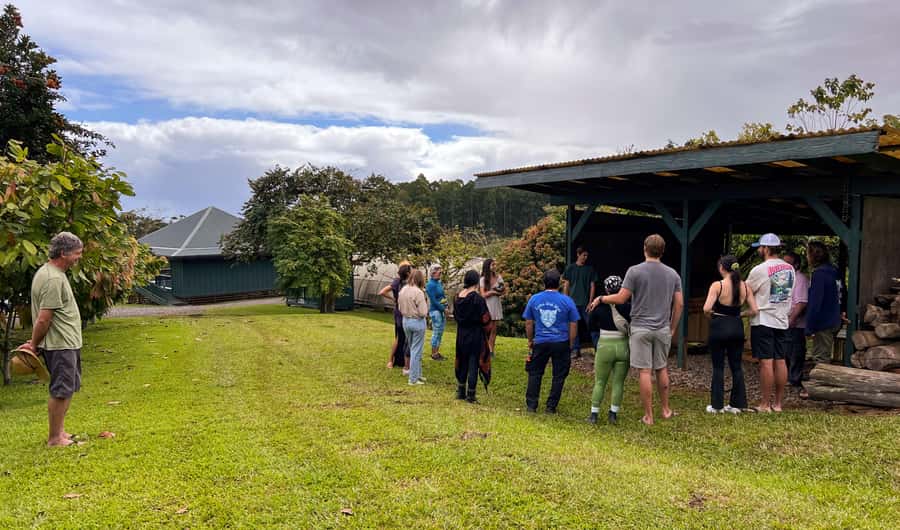
The activity lasts 210 minutes, so do not schedule it as a quick stop between tightly timed Hilo plans. Give yourself room before and after the visit, especially because the final approach is a narrow backroad route with a confusing street name.
Use the supplied Google Maps pin and follow Google Maps street names. Ignore private-road warnings along the way if they conflict with the farm’s directions, then look for the green gate and entrance sign. The farm is close to Hilo in distance, but the last 1.7 miles can take longer than you might expect.
Plan your return transportation before you arrive. A rideshare may have trouble locating the entrance, and the farm is not presented as a place with regular public transportation. If you drive, the directions are simpler, but you should still use the pin rather than typing only the farm name.
The cancellation terms are friendly: you can cancel up to 24 hours ahead for a full refund, and you can reserve now and pay later. That flexibility is useful when your Big Island schedule depends on weather or changing plans.
The best way to approach the tasting
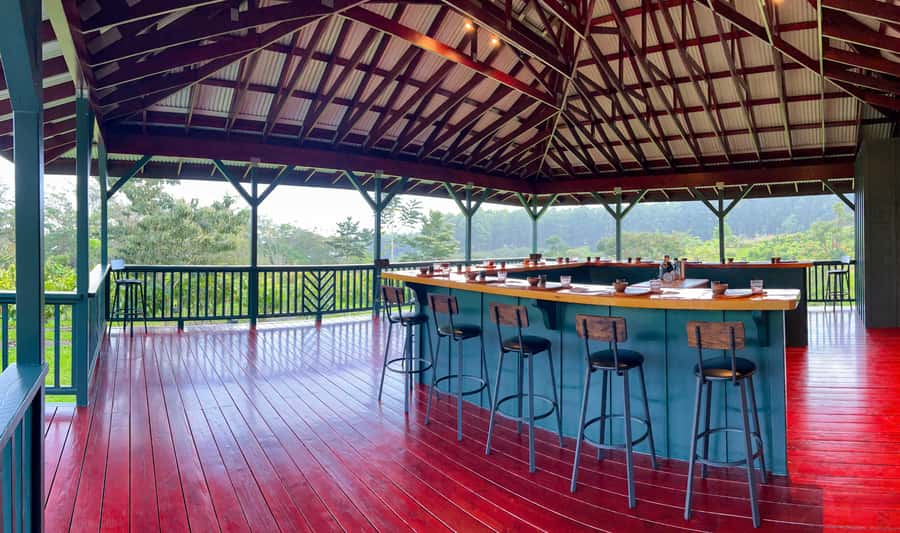
Come ready to compare, not just consume. With ten or more bars in front of you, the experience is more rewarding if you slow down and notice differences instead of eating each sample quickly.
I would keep a mental note of which bars taste fruitier, nuttier, more bitter, or smoother. You can ask how growing conditions and processing affect those impressions. The point is not to identify a single winner. It is to learn what you enjoy and why.
The extra samples make the tasting broader than a standard bar comparison. Fresh cacao juice shows the fruit at an early stage, roasted beans highlight the effect of heat, and cacao tea offers a lighter preparation. The seasonal items also reinforce the farm setting rather than making the visit feel like a packaged retail event.
After the formal portion, you can remain in the tasting room or take a leisurely walk through the orchard. That extra time is valuable if you want to enjoy the views instead of rushing straight back to Hilo.
Should you book Honolii Orchards?
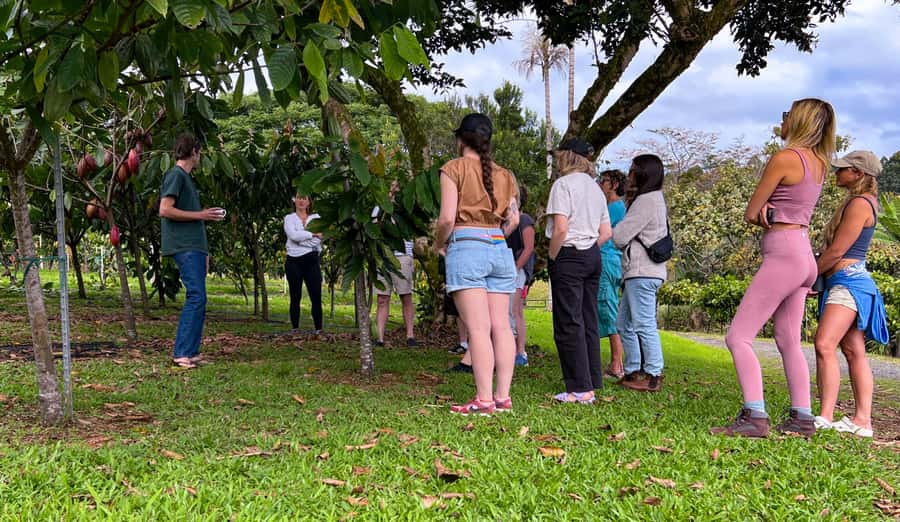
Book it if you want the full story behind Hawaiian chocolate, including cultivation, fermentation, history, and tasting. The strongest reasons are the access to the orchard and fermentation room, the large range of Hawaiian bars, and the clear instruction from guides such as Wren and Jude.
Think twice if you want a short, inexpensive activity or if you are not interested in the farming and processing behind the food. At $130, this is a focused specialty tour, not a casual candy stop. For the right visitor, though, it offers a rare look at a growing Hawaiian industry and leaves you with a sharper sense of how cacao becomes chocolate.
FAQ
Where is Honolii Orchards?
Honolii Orchards is at 1533 Puia Road in Paukaa, Hawaii, about five minutes from Hilo. The farm is 1.7 miles up Puia Road.
How do I find the farm?
Use the provided Google Maps pin and follow Google Maps street names. Puia Road may be mislabeled as Woa Road. Look for an open green gate and a large vinyl entrance sign on the left.
How long does the chocolate tour last?
The experience lasts 210 minutes, or about three and a half hours.
What is included in the tasting?
The tasting includes at least ten single-origin Hawaiian craft chocolate bars, fresh cacao juice, roasted cacao beans, cacao tea, seasonal fruits, and other farm-fresh treats.
Are the orchard and fermentation room included?
Yes. The visit includes a guided tour of the Honolii Cacao Orchards and a guided tour of the Honolii Orchards Fermentation Room.
Are children allowed?
Children under nine are not permitted. Unaccompanied minors are also not allowed.
Can I cancel or pay later?
You can cancel up to 24 hours before the activity for a full refund. You can also reserve now and pay later.
Just added on the Big Island
- Kailua-Kona: Big Island Morning Snorkeling Tour with Lunch★ 4.9 · 7 reviews
- Big Island: Hawaii Volcanoes National Park and Hilo Tour★ 5.0 · 118 reviews
- Kailua-Kona: Hualalai Volcano Doors On/Off Helicopter Tour★ 4.7 · 12 reviews
- Big Island: Full Day Adventure Tour of the Kohala Waterfalls★ 5.0 · 41 reviews
- Big Island: Evening Volcano Explorer from Hilo★ 4.7 · 31 reviews
- Big Island: Off the Beaten Path Volcano Crater Hike★ 5.0 · 15 reviews
- Big Island: Full-Day Kohala Zipline and Waterfall Adventure★ 4.8 · 36 reviews
- Big Island: Native Bird Watching & Hiking Tour★ 5.0 · 5 reviews
Farms, compared.
Oahu’s Ultimate Tour: Dole, Turtle Snorkel, Pali Lookout & More
Read our review →
Maui Ku’ia Estate Guided Cacao Farm Tour and Tasting
Read our review →
Big Island Highlights: Coffee, Volcano, Black Sands & Waterfall
Read our review →
Road to Hana Adventure with Farm to Table Lunch
Read our review →
Pearl Harbor, Dole Plantation, and Polynesian Center from Waikiki
Read our review →
Princeville Botanical Gardens Tour and Chocolate Tasting Ticket
Read our review →
Browse the lists this tour appears in