
Reviewed · SURF LESSONS
Open Group Surfing Lesson in Waikiki, Hawaii
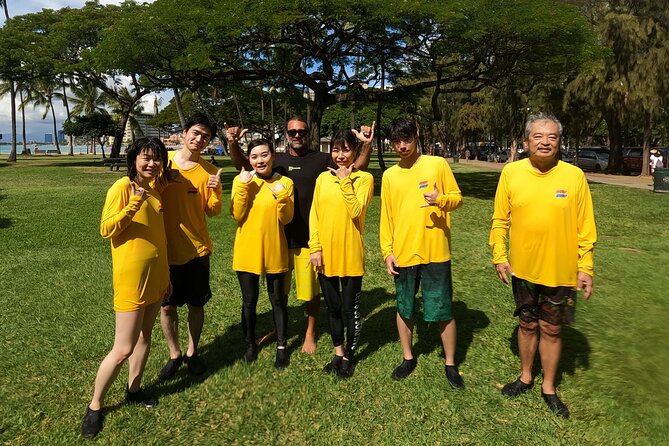
Waikiki is one of the easiest places in Hawaii to try surfing for the first time. This two-hour lesson starts with safety and dry-land practice, then puts you in the water with an instructor close by to help you paddle, stand, turn, and catch small waves. Niko, Luis, Charlie, and Tyson are among the instructors singled out for patient coaching and clear advice.
I like that the price includes nearly everything you need: a surfboard, rash shirt, reef shoes, and a locker. I also like the small teaching groups within the larger class, with some sessions dividing into just one to three students per instructor. The main consideration is that a two-hour booking does not mean two full hours riding waves. One recent session used about 45 minutes for the video, walk to the beach, and land practice, leaving roughly 1 hour and 15 minutes in the water.
Key points to know before booking
- Waikiki location: Meet at 150 Kapahulu Ave, a handy starting point near public transportation.
- Beginner-friendly coaching: No previous surfing experience is needed, but you should be able to swim.
- Gear is included: You receive a surfboard, rash shirt, reef shoes, and access to a storage locker.
- Small working groups: A class can include up to 40 people, but instructors may split the class into smaller groups for hands-on help.
- Flexible timing: Morning and afternoon lesson times are available.
- Strong track record: The activity has a 4.7 rating from 581 reviews, with 93 percent recommending it.
Waikiki is a sensible place to learn your first wave
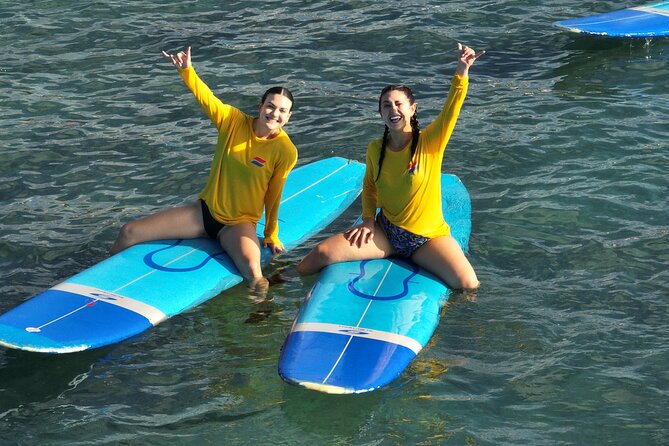
Waikiki Beach gives beginners a useful mix of access and instruction. You do not need to arrange a separate board rental or carry wet gear across Honolulu. You meet the school at 150 Kapahulu Ave, get fitted for the equipment, and finish at the same location after the lesson.
The school was founded by surf instructor Hans Hedermann and has taught in Waikiki for years. That matters for a first lesson because the session follows a clear progression rather than throwing you straight into the ocean. You start with basic safety, surfing etiquette, and a short explanation of the equipment.
The aim is not to turn you into an expert in two hours. It is to give you a safe first look at surfing and enough coaching to help you catch and stand on a few waves. Several people have managed to stand multiple times during the lesson, including complete beginners who arrived with low expectations.
More surf lessons on Oahu:
- Oahu: Beginner-Friendly Waikiki Beach Surfing Lesson
★ 4.9 · 425 reviews - Surfing Lessons On Waikiki Beach
★ 4.5 · 317 reviews - Waikiki Private Group Surf Lesson
★ 5.0 · 298 reviews
What happens before you reach the water
Arrive at the meeting point at the time you selected. The staff will size you for a surfboard and rash shirt, while reef shoes are available if you want them. A locker is included, so you have a place to store belongings while you are in the water.
The lesson begins with a safety video or slideshow. You learn basic ocean safety, surf etiquette, and the main steps for handling the board. This part can feel slow if you are eager to reach the beach, but it gives the class a common set of rules before anyone paddles out.
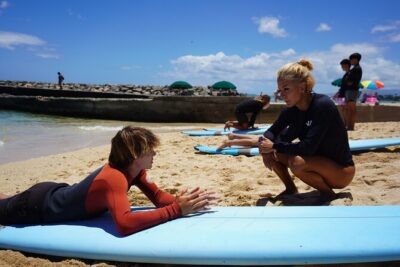
You then spend about 10 minutes practicing on the board on land. This is where the instructor explains the body position, paddling motion, turning, and the movement needed to stand. Pay close attention here. The reviews make clear that the instructors can correct small problems early, which often makes the difference between kneeling on the board and getting upright.
The walk from the school to the beach also takes part of the scheduled time. One session described about 45 minutes for the safety presentation, beach walk, and dry-land work. That leaves substantial water time, but you should not book this expecting 120 minutes of continuous surfing.
The Waikiki water session
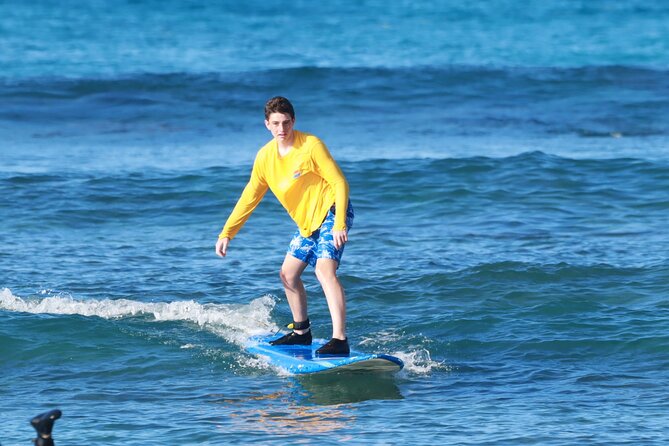
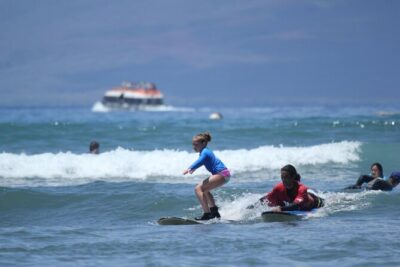
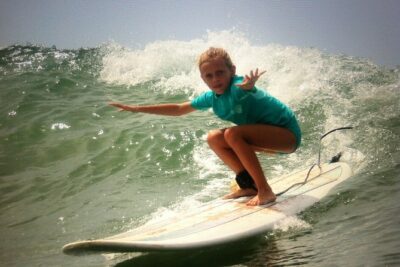
Once you reach the surf break, your instructor helps you apply the land exercises. You work on paddling, turning the board, timing the wave, standing up, and steering once you are on the wave.
The instructor stays nearby throughout the water portion. That is especially helpful for first-timers, since the hardest part is often knowing when to paddle and when to wait. You may also need repeated reminders about foot placement and balance. The coaching is active rather than a one-time demonstration at the shore.
The class can include as many as 40 people, so the total number may sound large. In practice, instructors split people into smaller working groups. One session described groups of one to three students per instructor, allowing the coach to tailor advice to each person. This is one of the most valuable parts of the lesson.
The conditions will affect how many waves you catch. Some beginners get upright on their first few attempts, while others need more time to find the balance. The instructors can help, but they cannot control the wind, waves, or your own comfort in the water. If you fall repeatedly, that is normal. The lesson is built around trying again.
After roughly two hours, you paddle back to shore and return to the meeting point. The activity ends there, with no hotel pickup or drop-off.
The instructors make the biggest difference
The clearest praise goes to the teaching staff. Niko is repeatedly described as patient and good at adjusting instructions for beginners. Luis, Charlie, Tyson, Sergio, Ella, Gavin, Kiva, Kilani, Parker, Shantay, and others have also received strong marks for encouragement and clear coaching.
That range of names matters because your experience will depend partly on the instructor assigned to your group. A good surf teacher does more than push your board into a wave. The best feedback helps you understand what went wrong and what to change on the next attempt.
Parents have found the coaching useful for children and teenagers. One family described Niko helping both a parent and daughter get comfortable on the board. Another family said Kilani explained each step clearly, kept the teenagers safe, and made the lesson feel approachable.
The teaching also appears to work for solo visitors. You may arrive alone and end up sharing the first-wave excitement with other beginners. The group setup gives you a social activity without requiring you to bring a partner or family member.
One particularly important example involved a student with mild autism. The instructors adjusted their explanations, stayed patient, and helped the student ride waves throughout the session. That does not guarantee the same result for every participant, but it shows that the staff have experience adapting their teaching style.
Same island, a different kind of day:
- Oahu Grand Circle Island and Haleiwa Tour: 9-Hr Deluxe Experience
★ 5.0 · 17,387 reviews - Oahu: Grand Tour Around Island 16 Locations plus Snorkeling
★ 5.0 · 8,669 reviews - Parasailing Experience in Waikiki, HI
★ 5.0 · 7,692 reviews - Salute to Pearl Harbor Including USS Arizona
★ 4.5 · 7,433 reviews
Gear, lockers, and what the $112.31 price covers
At $112.31 per person, this is not the cheapest way to stand on a surfboard in Hawaii. It is more useful to compare the price with what it includes.
You receive:
- Certified professional instruction
- Surfboard
- Rash shirt
- Reef shoes
- Locker storage
- Taxes and fees
That package removes several small costs and decisions. You do not need to rent a board separately, hunt for reef shoes, or find a place to leave your wallet and clothes. The equipment is supplied at the school, and the lesson includes instruction rather than just beachside rental time.
The value is strongest if this is your first attempt. A board rental alone will not teach you when to paddle, how to stand, or how to avoid interfering with another surfer. Here, the teacher gives you a structured start and watches your technique.
The price is less attractive if you already surf and only want equipment. Experienced surfers may prefer a simple rental or a more private lesson. This open group class is designed for learning, encouragement, and a first taste of Waikiki surfing.
Souvenir photos are available to purchase after the lesson, but they are not included. Treat those as an optional extra rather than part of the advertised value.
Morning or afternoon: choosing your lesson time
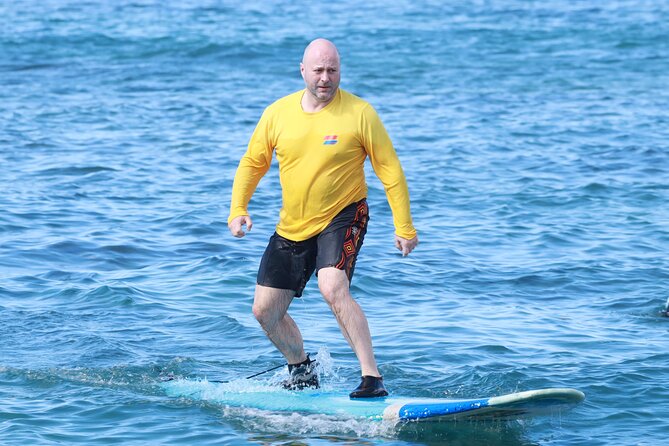
Morning and afternoon sessions are offered, so fit the lesson around your day in Honolulu. An early session may suit you if you want to surf before other plans or prefer to get an active outing finished early. One group reported catching better waves before the water became more crowded, though conditions vary and no particular wave quality is promised.
An afternoon booking can work well if you need a slower start or want to keep your morning free. Remember that you should leave enough time around the lesson for changing, walking to the beach, and returning equipment.
Try not to schedule a tight connection immediately afterward. The official duration is about two hours, and you may want extra time to change clothes and collect your belongings. The activity returns to the same meeting point, which makes planning simpler.
Physical demands and who should skip it
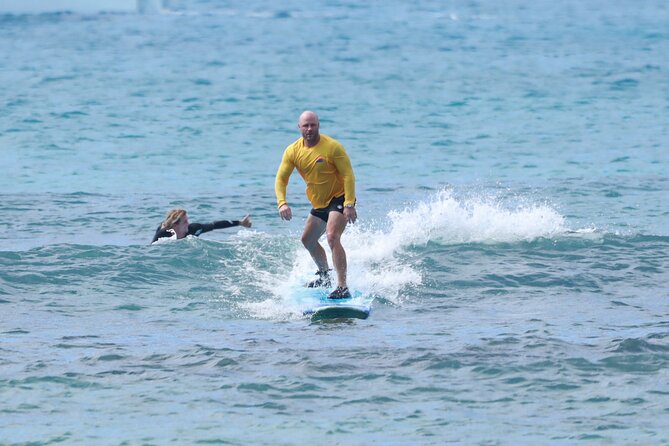
This is an active water lesson. You will carry or handle a surfboard, paddle, repeatedly attempt to stand, and spend time in the ocean. Falling is part of the process, so you should be comfortable getting wet and trying again.
The activity is not recommended for non-swimmers. Most travelers can participate, and service animals are allowed, but the provided information does not promise special medical or adaptive arrangements. If you have a health concern, contact the provider before booking rather than assuming the standard lesson will suit you.
Families with teenagers, couples, solo visitors, and adults trying surfing for the first time are a good match. The lesson also suits people who want a social introduction rather than a private coaching session.
You may want another option if you need a quiet, private class, dislike group instruction, or mainly want unrestricted time on a board. The class can have up to 40 participants, even though the water work may be split among smaller groups.
Sea turtles and the unexpected Waikiki bonus
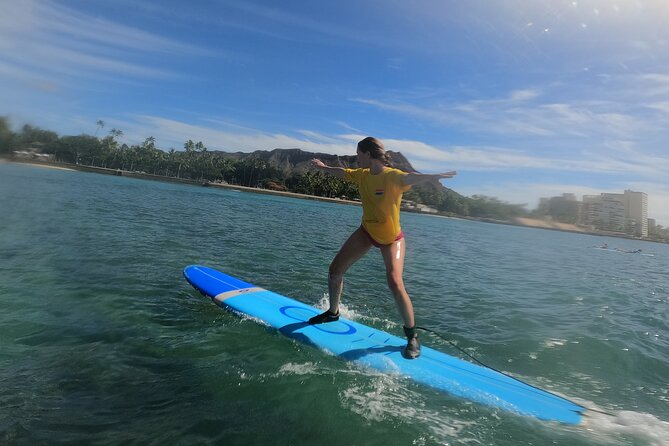
The main purpose is surfing, not wildlife viewing. Still, several people have spotted sea turtles from the water, and one account also described seeing a seal. These sightings are never guaranteed, so do not book the lesson as a wildlife tour.
They do add to the sense of place. You are not practicing on an artificial wave or in a pool. You are learning in the Pacific at Waikiki, with the chance to notice marine life between attempts. Keep your attention on the instructor and water safety first, but enjoy the setting when conditions allow.
The setting also helps make the activity feel like more than a gym class. You learn a practical skill in the same ocean that has shaped Hawaiian surf culture for generations. The instruction covers etiquette as well as mechanics, which is important because surfing depends on sharing the break responsibly.
What the high rating tells you, and what it does not
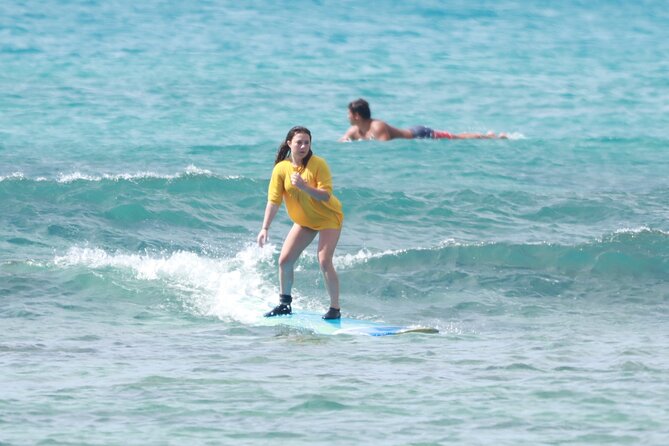
The activity has a 4.7 rating from 581 reviews, and 93 percent recommend it. The repeated praise centers on patient instructors, beginners standing on waves, clear safety guidance, convenient gear, and a fun group atmosphere.
That is a strong pattern. It suggests the school is particularly good at helping nervous first-timers feel capable. It also suggests that families and solo visitors receive plenty of support when the instructor-to-student split works as intended.
The rating does not mean everyone will stand up on the first try. Surfing is difficult, even when the water is friendly. One person summed it up well: it looks easier than it is. Go in expecting effort, falls, and repeated attempts. If you get upright once, treat that as a real success.
The class also cannot promise a certain amount of water time. The safety talk and land practice are necessary, but they reduce the time spent riding waves. This is a lesson first, not a two-hour free surf.
Booking, cancellation, and practical details
Confirmation is provided when you book, and mobile tickets are accepted. The lesson is offered in English, and the location is near public transportation.
Free cancellation is available up to 24 hours before the local start time for a full refund. Cancellations or changes made within 24 hours are not accepted for a refund. The class also requires a minimum number of participants, so if the provider cancels because that minimum is not met, you will be offered another date or experience, or a full refund.
Bring only what you need to the school. A locker is included, but it is still wise to avoid carrying valuables. Since the activity ends back at the meeting point, you can plan your next stop from there without arranging a separate return ride.
Should you book the Hans Hedemann Waikiki lesson?
Book it if you want your first surf lesson to be easy to arrange, gear-inclusive, and supported by active coaching. The strongest reason to choose it is the teaching setup: safety instruction on land, practice before entering the water, and small instructor groups once you reach the break.
I would especially recommend it to solo visitors, families with teenagers, and beginners who want a real chance to stand on a wave without having to figure everything out alone. The patient coaching from instructors such as Niko, Luis, Charlie, Tyson, and Kilani is a major part of the value.
Skip it if you are already comfortable surfing, want a private instructor, or expect two full hours of uninterrupted wave riding. At $112.31, the lesson earns its price through instruction and included equipment, not sheer time on the board.
For a first attempt in Waikiki, it offers a practical balance: clear preparation, friendly coaching, and a genuine chance to catch your first wave in the Pacific.
FAQ
Where does the surfing lesson start?
The lesson starts at 150 Kapahulu Ave, Honolulu, Hawaii 96815. The activity ends back at the same meeting point.
How long is the lesson?
The lesson lasts approximately two hours. This includes the safety presentation, walk to the beach, land practice, and time in the water.
Is surfing experience required?
No. The lesson is designed for beginners, and no previous surfing experience is required.
Do I need to know how to swim?
The activity is not recommended for non-swimmers. You should be comfortable in the water before booking.
What equipment is included?
The price includes a surfboard, rash shirt, reef shoes, safe storage in a locker, professional instruction, taxes, and fees.
Can I cancel for a refund?
Yes. You can cancel at least 24 hours before the local start time for a full refund. Cancellations or changes made less than 24 hours before the start time are not refunded.
Just added on Oahu
- Big Island Hawaii Volcano Day tour from Oahu and Hotel PU★ 4.8 · 29 reviews
- Best of Oahu in One Day★ 4.9 · 11 reviews
- Oahu: Beauty and the Feast Circle Island Experience★ 4.6 · 83 reviews
- Amazing Circle Island Tour★ 4.4 · 4 reviews
- Arrival Lei Greeting –HNL to Waikiki Private Transfer★ 5.0 · 3 reviews
- Oahu: Waikiki 2-Hour Semi-Private Surfing Lesson★ 4.9 · 5 reviews
- (2nd)Diamond Head Hike w/ Malasada Starts at 7:00 a.m.★ 3.3 · 3 reviews
- 3-Hour Honolulu Bottom Fishing Adventure★ 4.6 · 25 reviews
Surf Lessons, compared.
Beginner-Friendly Waikiki Beach Surfing Lesson
Read our review →

Private Hanalei Sandy Bottom Surf Lesson on Kauai
Read our review →
Browse the lists this tour appears in