
Reviewed · SCUBA DIVING
Certified Diver: 2-Tank Shallow Reef Dives off Oahu
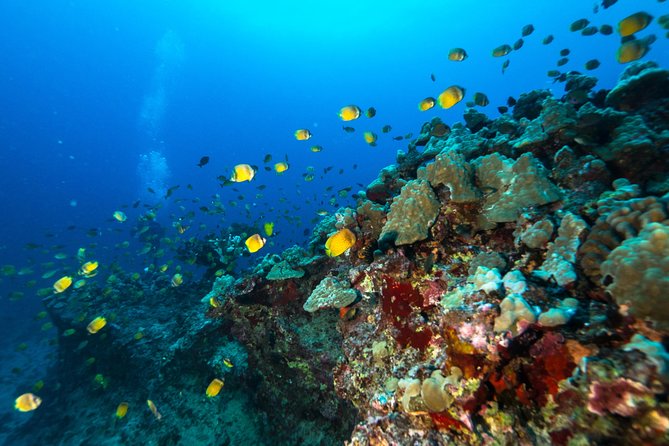
Oahu’s south coast gives certified scuba divers a friendly way to get back underwater without committing to a full-day expedition. The two tank trip visits shallow reefs such as Turtle Canyons, Kaiser’s, and Secrets, where green sea turtles, moray eels, rays, octopus, and reef fish are regular targets.
I like the simple value: gear, snacks, and refreshments are included, and the short three-hour schedule leaves room for the rest of your Honolulu day. I also like the patient approach from guides such as Heather, Jordan, Ami, Nacho, and Rachel, especially for divers who are rusty or nervous. The main caution is the ocean itself. Choppy water can cause seasickness, and you must arrive early, prove your certification, and avoid flying for 24 hours afterward.
Key points to know before booking
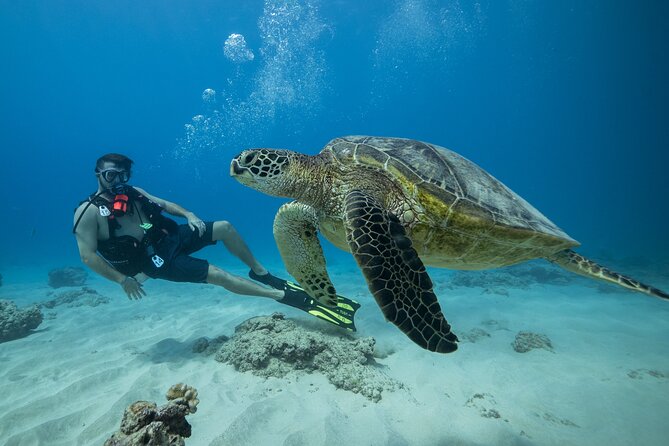
- Two shallow tank sessions: Expect depths of about 25 to 50 feet, suitable for relaxed reef exploration and refreshing basic skills.
- Turtle Canyons is a wildlife favorite: Green sea turtles, moray eels, octopus, pufferfish, rays, and reef fish may appear.
- Full equipment is included: The package covers premier gear rental, snacks, refreshments, and a guided outing with a PADI professional.
- Mixed groups can work well: Snorkelers, scuba participants, and even a non-diving family member can share the same boat.
- Small enough for personal help: The boat carries no more than 21 people, and staff regularly assist with equipment and equalizing.
- Plan around the water: Be at the harbor 30 minutes early, take seasickness precautions if needed, and do not fly within 24 hours.
Leaving Kewalo Basin for a short ocean outing
You meet Dive Oahu at Kewalo Basin Harbor, at 1085 Ala Moana Boulevard, Suite 109. The trip lasts about three hours and returns to the same harbor, so it fits neatly into a morning or afternoon plan around Waikiki and central Honolulu.
You need to arrive 30 minutes before departure. That time is used for waivers, equipment fitting, and the final checks before boarding. Do not treat the early arrival as optional. A rushed start is a poor way to begin a scuba trip, especially if you have not used rental equipment recently.
Bring proof of certification from PADI or another approved course. You must also provide your weight and date of birth, be able to swim, and be in good health. The operator says most people can participate, but this is still a certified scuba outing, not a first-time introductory lesson.
The boat carries up to 21 people. That is not a private charter, but it is a more manageable size than a large sightseeing boat. The crew may divide people among guides, snorkel groups, and scuba groups. This setup is useful for families or couples who want to share the boat even if everyone does not plan to use an air tank.
Parking is not included, so check your parking plan before you arrive. The harbor is near public transportation, which may be helpful if you are staying in Waikiki and do not want to deal with parking.
More scuba diving on Oahu:
- First-Time Scuba Diving in Honolulu + Free Videos
★ 5.0 · 3,123 reviews - Oahu Shark Dive
★ 5.0 · 2,903 reviews - Oahu: Shark Cage Dive on the North Shore
★ 4.8 · 1,485 reviews
What makes the 25 to 50 foot depth range useful
The listed sites reach roughly 25 to 50 feet. That range gives you enough depth for coral formations and marine life while keeping the outing approachable for newly certified divers or anyone returning after a long break.
Shallow water also makes the two sessions feel less demanding than a deep technical trip. You can spend more time checking your buoyancy, equalizing, and looking carefully at the reef instead of worrying about a demanding profile. Several guides are praised for allowing extra time for equalizing and for helping rusty divers settle in.
Still, shallow does not mean effortless. Conditions can change, and the ocean may be choppy on the ride or at the site. One participant had to end a session early because of seasickness, while another found that medication helped with rough water. If you are prone to motion sickness, speak with a medical professional about suitable precautions before the trip. The crew can be kind and supportive, but they cannot make the ocean flat.
Water temperature can also feel cool if you are used to the Gulf Coast or southern Atlantic. Ask about the available exposure protection when you are fitted for equipment, and make sure you are comfortable before entering the water.
Turtle Canyons and the reef wildlife
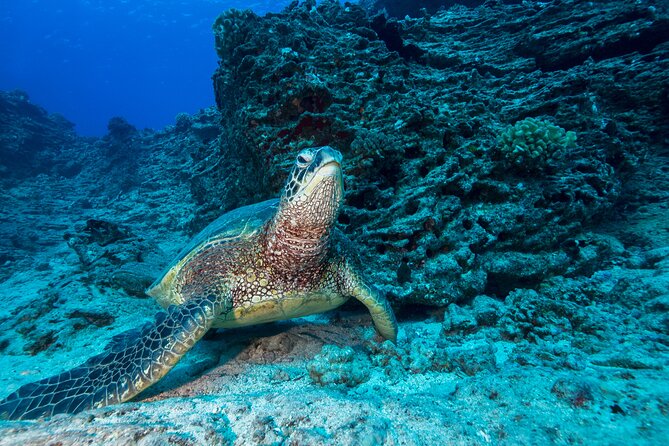
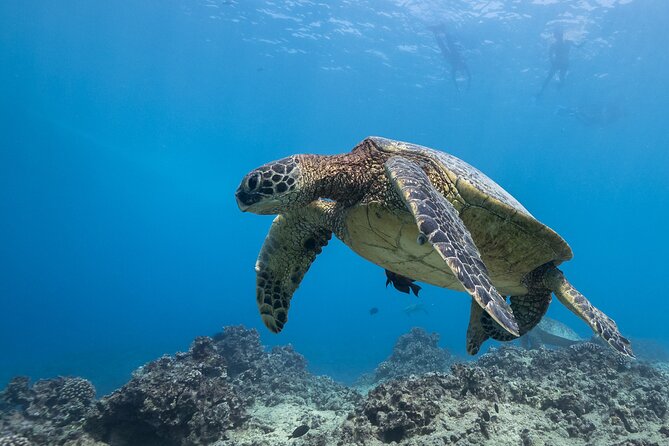
The exact site order can vary, but Turtle Canyons is the clear wildlife draw. It is associated with a turtle cleaning area, where green sea turtles may gather. Sightings of several large turtles are common in the supplied trip information, with one account describing more than 20 turtles during the visit.
Give these animals space and let your guide control the approach. The best encounter is usually the calm one, when you watch the turtle move through the water rather than chase it for a photograph. Guides such as Jordan are praised for spotting small creatures that an untrained eye might miss.
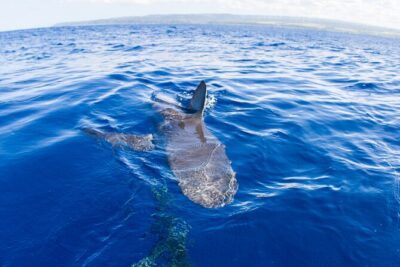
Green sea turtles are not the only attraction. You might see moray eels, octopus, stingrays, crabs, pufferfish, colorful reef fish, and reef sharks. One outing included a whitetip shark, and another reported two reef sharks. Wildlife is never fully predictable, but the operator guarantees wildlife sightings, and the range of reported animals gives you a good idea of what may turn up.
The coral and reef structure matter just as much as the larger animals. The shallow setting lets you slow down and study the smaller life around the formations. If your guide points out a concealed eel or octopus, stay close and keep your attention on the reef rather than only searching for turtles.
Kaiser’s, Secrets, and the second tank session
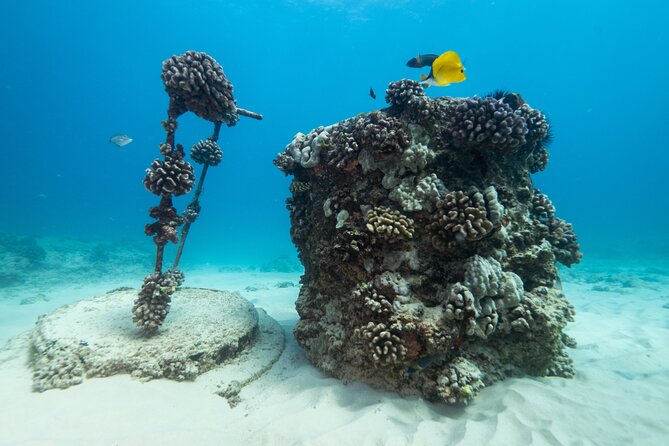
The second site may be Kaiser’s, Secrets, or another nearby reef chosen for the day’s conditions. These sites offer a change of scenery and a second chance to see wildlife if the first location is quiet.
I like the two-session format because it gives you more than a single quick look. You can get comfortable during the first session, review your air use and buoyancy between sessions, then approach the second site with a better feel for the equipment.
The tradeoff is that the outing is still short. You are not spending the whole day at sea, and the route is not a fixed promise of three named sites. Boat staff choose locations based on practical conditions, so you should book this for a solid half-day reef outing rather than a guaranteed tour of every famous site around Honolulu.
The second session can be especially useful for families with mixed interests. Snorkel participants may enter the water while scuba participants use tanks. One family member who could not scuba on the day was taken snorkeling and saw a pufferfish and other fish and coral. That sort of flexibility can save a family vacation day from splitting into separate activities.
Same island, a different kind of day:
- Oahu Grand Circle Island and Haleiwa Tour: 9-Hr Deluxe Experience
★ 5.0 · 17,387 reviews - Oahu: Grand Tour Around Island 16 Locations plus Snorkeling
★ 5.0 · 8,669 reviews - Parasailing Experience in Waikiki, HI
★ 5.0 · 7,692 reviews - Salute to Pearl Harbor Including USS Arizona
★ 4.5 · 7,433 reviews
The crew’s role in making the trip comfortable
The strongest part of this outing is the crew’s attention to safety and comfort. Guides named in the supplied material include Heather, Jordan, Ami, Rachel, Matt, Lindsey, Travis, Jared, and others, with Nacho and Adam among the captains. Staff assignments can change, but the pattern is clear: you can expect an active crew rather than a simple boat transfer.
Heather is singled out for helping divers who had not been underwater for several years. Ami is praised for giving a diver time to equalize properly. Rachel is noted for calm guidance, while Jordan is described as careful about group safety and good at pointing out creatures.
That matters because rental equipment and rusty skills can make the first few minutes awkward. A good guide does not just lead the route. The guide checks your comfort, watches the group, and helps you regain a steady rhythm. You should still be honest about your experience level and tell the crew if you need more time.
The boat and equipment also receive strong marks. Premier gear rental is included, and several accounts describe the equipment as clean or top quality. Shampoo and conditioner are available after the sessions, a small touch that is welcome when you are heading straight back into a busy Honolulu day.
What is included for the $141.10 price
At $141.10 per person, the cost is reasonable if you need rental equipment. The price includes the boat outing, two tank sessions, a PADI-guided trip, gear rental, snacks, and refreshments. Buying equipment rental separately could narrow the price difference between this and a cheaper-looking package.
The value is also in the short schedule. You get a real reef outing without giving up an entire day of your vacation. For a certified diver who wants turtles and shallow coral rather than a highly specialized trip, the package is easy to understand.
Extras cost more. Available add-ons include a GoPro rental, an underwater scooter, a Nitrox tank, a private guide, and a private photographer. I would consider a private guide if your group has very different ability levels or you want a slower pace. A camera rental is useful only if you are comfortable managing buoyancy while filming. Otherwise, watch the animals and let the guide handle the route.
The price does not include parking. Factor that into your total if you are driving.
Who will get the most from this reef trip
This is a good choice for certified divers who want a relaxed return to the water. The shallow depth, short duration, and attentive guides suit newly certified participants, solo divers, couples, and families with mixed water activities.
It also works for experienced divers who prefer wildlife and an easy pace over deep wrecks or demanding current. Several accounts describe large turtles, eels, fish, sharks, rays, and an octopus, so the animal encounters can satisfy people who already have plenty of scuba experience.
You may want something else if you want a private boat, advanced depth, a full-day trip, or complete control over the exact sites. You should also reconsider if you are not certified, cannot swim, are in poor health, or plan to fly within 24 hours.
The same boat may carry snorkelers, discover-scuba participants, and certified scuba participants. That makes it practical for a group with mixed plans, but it may not feel as focused as a private scuba charter.
Booking, weather, and cancellation details
Confirmation is sent at booking, and you should provide a valid email address so you receive Dive Oahu’s own confirmation message. Read it carefully for the meeting time and equipment details.
The information supplied gives two cancellation references. The booking terms allow a full refund when you cancel at least 24 hours before the start time, while the operator information also cites a 48-hour cancellation policy. Because those terms do not match perfectly, confirm the applicable cutoff directly before you book, especially if your schedule may change.
Weather can cancel the outing. If that happens, you are offered another date or a full refund. The same applies if the minimum number of participants is not met. Do not schedule a flight within 24 hours after the trip, even though the boat returns after only about three hours.
Should you book this Oahu scuba outing?
Book it if you are certified, want a short south-coast boat trip, and care more about turtles and reef wildlife than about advanced underwater challenges. The included gear, refreshments, small maximum group, and patient staff make the $141.10 price easy to justify for many visitors.
I would especially choose it for a rusty diver, a solo participant, or a family that includes snorkelers. I would skip it if rough water is a serious concern, if you need a private schedule, or if you are looking for deep or technical scuba. Arrive early, bring certification proof, plan for possible motion sickness, and leave a full 24 hours before flying.
FAQ
Where does the scuba trip begin and end?
It begins and ends at Dive Oahu at Kewalo Basin Harbor, 1085 Ala Moana Boulevard, Suite 109, Honolulu, Hawaii 96813.
How long does the outing last?
The activity lasts about three hours, including the boat trip and two tank sessions.
What depth should I expect?
The reef sites range from about 25 to 50 feet deep.
Is equipment included?
Yes. Premier gear rental, snacks, and refreshments are included, along with guidance from a PADI professional.
Do I need proof of certification?
Yes. Every scuba participant must show proof of certification through PADI or another approved course before boarding.
Can I fly after the trip?
No. You must not fly within 24 hours of the scuba outing.
Just added on Oahu
- Big Island Hawaii Volcano Day tour from Oahu and Hotel PU★ 4.8 · 29 reviews
- Best of Oahu in One Day★ 4.9 · 11 reviews
- Oahu: Beauty and the Feast Circle Island Experience★ 4.6 · 83 reviews
- Amazing Circle Island Tour★ 4.4 · 4 reviews
- Arrival Lei Greeting –HNL to Waikiki Private Transfer★ 5.0 · 3 reviews
- Oahu: Waikiki 2-Hour Semi-Private Surfing Lesson★ 4.9 · 5 reviews
- (2nd)Diamond Head Hike w/ Malasada Starts at 7:00 a.m.★ 3.3 · 3 reviews
- 3-Hour Honolulu Bottom Fishing Adventure★ 4.6 · 25 reviews
Scuba Diving, compared.
First-Time Scuba Diving in Honolulu + Free Videos
Read our review →
Beginner Scuba Diving Experience with Video Package in Honolulu
Read our review →
Safe and Educational Shark Dive from Haleiwa: Sharks Guaranteed
Read our review →
2 Tank Lanai Cathedral Scuba Dive Via Boat for Certified Divers
Read our review →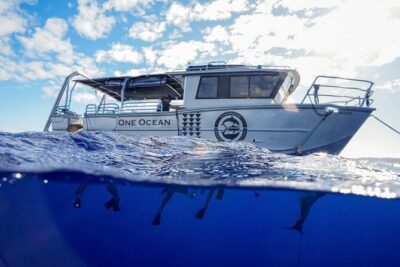
Dive with Sharks in Hawaii: Shark Tour from Haleiwa
Read our review →Browse the lists this tour appears in