
Reviewed · SHARK CAGE DIVES
Safe and Educational Shark Dive from Haleiwa: Sharks Guaranteed
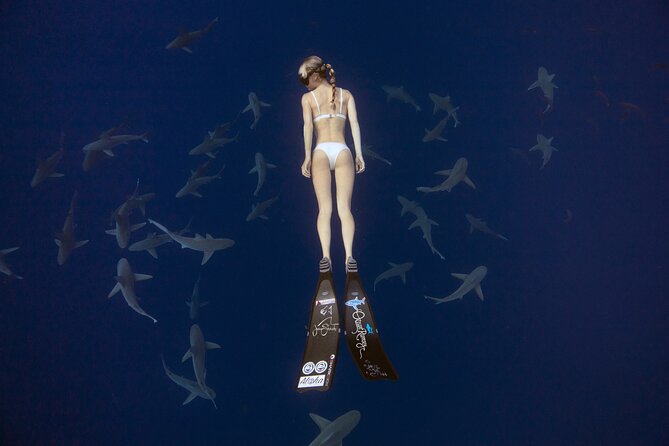
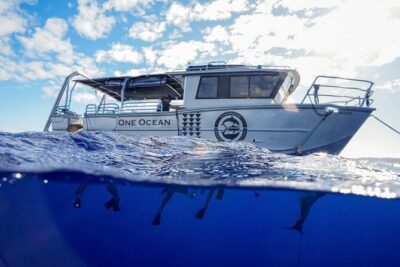
Swimming with sharks in open water is the headline here, but the real strength of this Haleiwa excursion is the careful preparation before you enter the sea. One Ocean Diving grew from a research program, and the crew uses the boat ride to explain shark biology, body language, species, gender, and conservation.
I especially like the research-based teaching and the steady presence of trained safety divers in the water. I also like that you can see more than sharks: whales, turtles, pelagic fish, and sometimes dolphins may appear. The main consideration is that this is still an ocean activity. Seasickness, cloudy weather, rough water, and a larger group can affect the day.
What makes this Haleiwa shark swim special
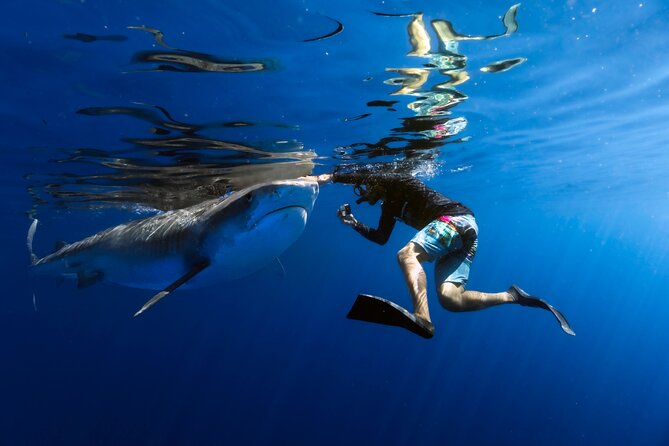
- Sharks are guaranteed, giving you a strong chance to see the main subject of the trip rather than simply hoping for a sighting.
- Marine biologists teach on the ride out, covering species, behavior, gender, body language, and current research.
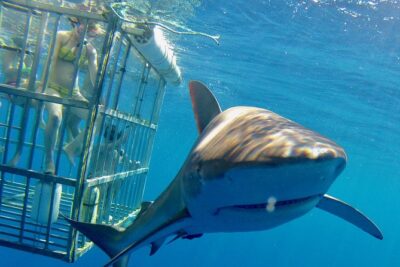
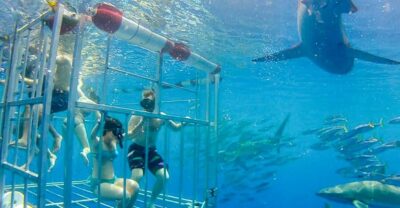
- You enter the open ocean without a cage, holding a secure rope near the boat while snorkeling and watching the sharks below.
- Safety divers remain close, with guides such as Gina helping nervous swimmers feel calm during free swims.
- Wildlife sightings can extend beyond sharks, including whales, turtles, fish, and occasional dolphins.
- The tour connects sharks with Hawaiian culture, including the importance of mano, the Hawaiian word for sharks.
Leaving Haleiwa for the open Pacific
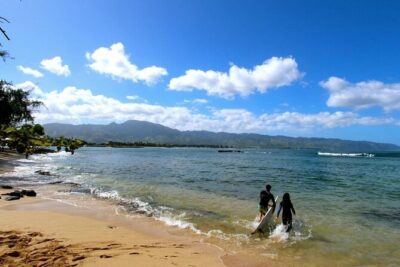
You meet at the Haleiwa Commercial Loading Dock, at 66-101 Haleiwa Road. The activity lasts about two hours and returns to the same point, which keeps the logistics simple if you are staying on Oahu’s North Shore or building a day around Haleiwa.
The trip begins with a boat ride out to the shark area. This is not wasted time. The crew uses it to explain what you may see and how to behave around it. You learn how to tell different shark species apart, how to identify males and females, and how weather and seasons may change shark behavior.
That briefing matters. A shark encounter can feel very different when you understand what the animal is doing. The crew explains how a shark’s body and senses affect its movements, how your own actions can alter its response, and what body language deserves attention.
The program also discusses other pelagic animals, including fish and whales. This gives you something useful to watch for during the ride and in the water. You are not simply waiting for a shark to appear. You are learning to read the whole ocean scene.
More shark cage dives from Oahu:
- Oahu Shark Dive
★ 5.0 · 2,903 reviews - Oahu: Shark Cage Dive on the North Shore
★ 4.8 · 1,485 reviews - Shark Cage Diving on Oahu’s North Shore
★ 5.0 · 1,391 reviews
Learning shark behavior before entering the water
The educational side is unusually strong for an ocean outing. You cover the difference between species, possible behavior patterns, and ways to encourage or discourage a shark or other pelagic animal from approaching.
That last point is especially useful because it turns safety into something practical. You learn that your movement, position, and reactions matter. The goal is not to make you fearless. It is to help you remain calm, observant, and predictable.
The crew also explains how shark behavior changes with weather and season. This helps set realistic expectations. Even with sharks guaranteed, the exact setting may vary from one outing to another, and the animals may not behave in the same way every day.
One of the most meaningful parts is the discussion of Hawaiian and Polynesian culture. Mano are not presented simply as frightening movie creatures. You get cultural context and a clearer sense of why protecting sharks matters to the health of the ocean.
You also hear about the Hawaii Shark Count identification program and ways to support it. That connection gives the activity a purpose beyond taking a dramatic photograph. You leave with a better idea of how ordinary people can contribute to shark research.
Holding the boat rope beside wild sharks
Once the boat reaches the viewing area, you receive snorkeling and safety equipment. The experience is conducted in the open ocean rather than inside a shark cage. You hold a secure rope connected to the boat while looking down at the sharks, and safety staff remain nearby.
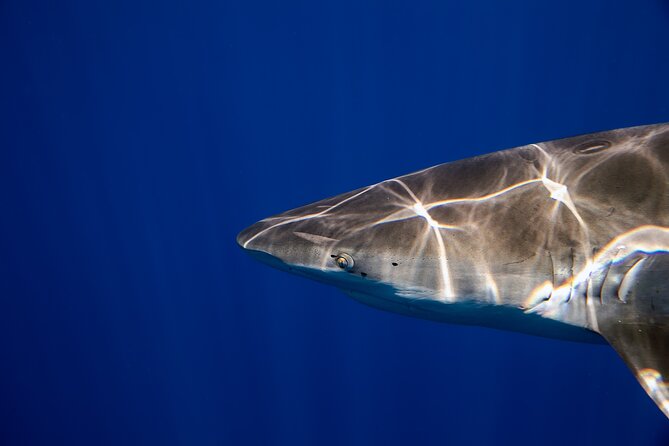
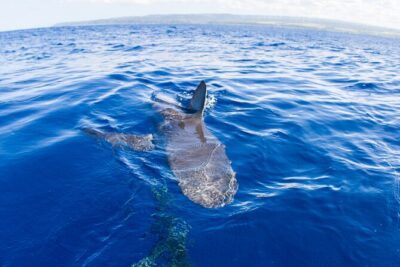
The animals generally move below and around the boat while you watch from the surface. Several accounts describe sharks coming within a few feet, which is close enough to make the encounter thrilling without requiring you to chase or touch anything.
The water portion can last about an hour, depending on conditions and how the outing develops. Some people remain at the rope, while others are guided into short free swims near the boat. One account described getting three to five assisted swims, with a guide nearby and a photographer recording the moment.
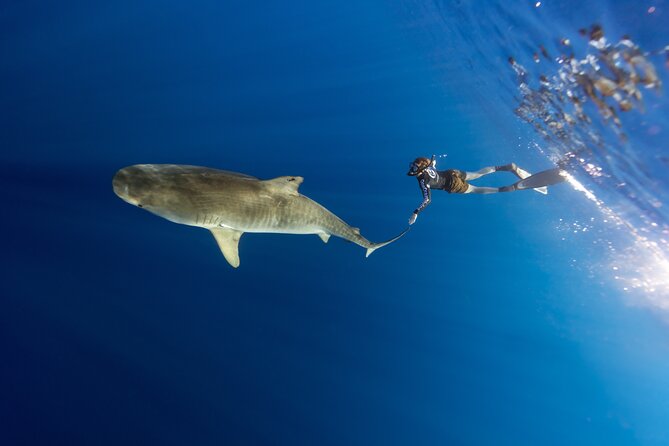
That setup is a good compromise for first-timers. You can begin with the security of the rope, then decide if you want more movement. A guide such as Gina may stay beside you during the free-swimming portion, which can make a major difference if your nerves rise once you see the sharks.
You should not expect a private aquarium-style encounter. These are wild animals, and the crew’s job is to protect the people and the sharks by controlling the interaction. At least one account described staying in line at the rope rather than swimming freely for the full session. Instructions may also be firm when people are moving on the boat stairs or preparing to enter the water.
That firmness is not always delivered warmly. Most accounts describe a friendly, reassuring crew, but one person found a water guide abrupt with nervous participants. If you need a gentle, patient tone at every step, tell the crew early that you are anxious. If you are comfortable following direct instructions, the structure should feel more reassuring than restrictive.
More than sharks: whales, turtles, and pelagic life
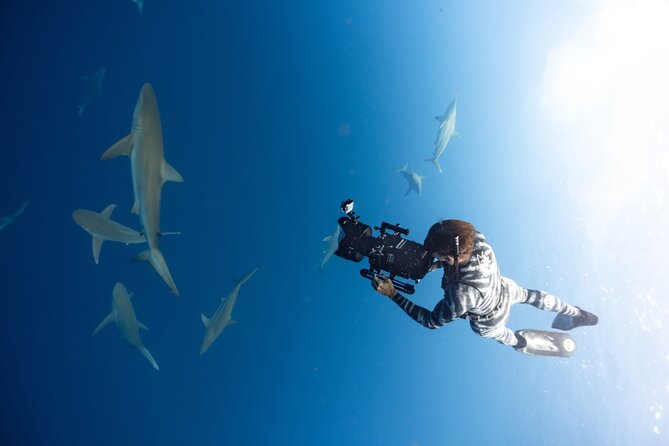
Sharks are the guaranteed focus, but the North Shore ocean can add surprises. Sightings have included whales, including a mother with a new baby, turtles, and a variety of fish. Dolphins have also appeared, though they are not guaranteed.
This makes the snorkeling portion worthwhile even during a cloudy or rainy outing. One wet-weather trip still included whales, a calf, turtles, and fish. The conditions may not produce postcard-blue skies, but marine life can remain active.
Do not treat these sightings as promises. The only guaranteed feature listed for the tour is the sharks. Whales, dolphins, turtles, and other fish are welcome additions, not scheduled stops.
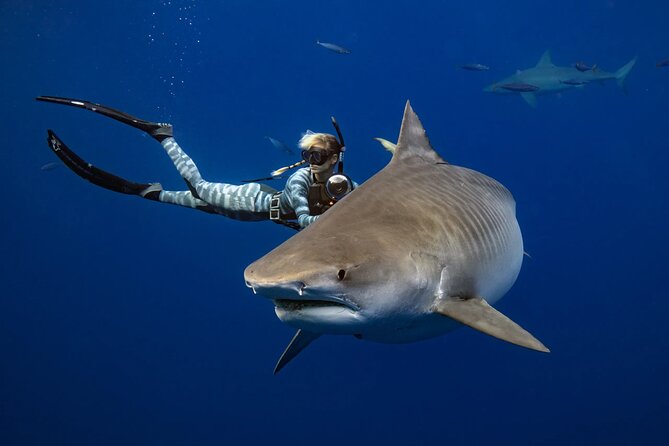
Tiger sharks may also appear during the right season. They are larger and more imposing than the sharks many people expect, so seeing one can raise the excitement level quickly. The crew’s briefing and safety presence become especially valuable at that moment.
More scuba diving on Oahu:
- First-Time Scuba Diving in Honolulu + Free Videos
★ 5.0 · 3,123 reviews - Beginner Scuba Diving Experience with Video Package in Honolulu
★ 5.0 · 877 reviews - Dive with Sharks in Hawaii: Shark Tour from Haleiwa
★ 5.0 · 468 reviews - Certified Diver: 2-Tank Deep Wreck and Shallow Reef Dive Off Oahu
★ 5.0 · 331 reviews
How safe does the open-water format feel?
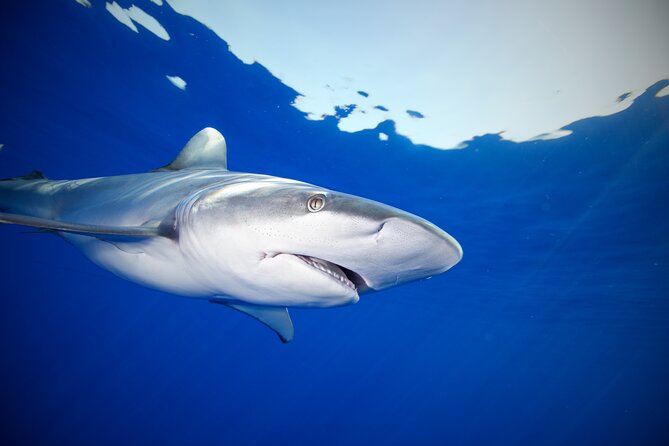
The strongest repeated feature of this activity is the attention to safety. You receive instruction before entering the sea, snorkeling and safety equipment are supplied, and a safety diver or divemaster accompanies the group.
You are not left to figure out the procedure alone. The crew explains how to interact with sharks and how your conduct affects their behavior. In the water, guides can help with positioning, free swims, and keeping the group organized.
This is still not a risk-free activity. You are entering the ocean near wild animals, and the tour requires good weather. The safest approach is to listen closely, avoid sudden reactions, and accept that the crew may limit where and how you move.
The experience suits people who are nervous about sharks but willing to follow instructions. Several accounts describe people arriving frightened and leaving amazed by how peaceful the encounter felt. The open-water format can be less intimidating than it sounds once you understand the rules, though it may be too intense if even a controlled ocean setting causes serious distress.
Children and teenagers have taken part, including a family with two teenage daughters, but the supplied information does not provide a minimum age or swimming requirement. You should confirm those details when booking if they matter for your group.
Group size, crew style, and the human side
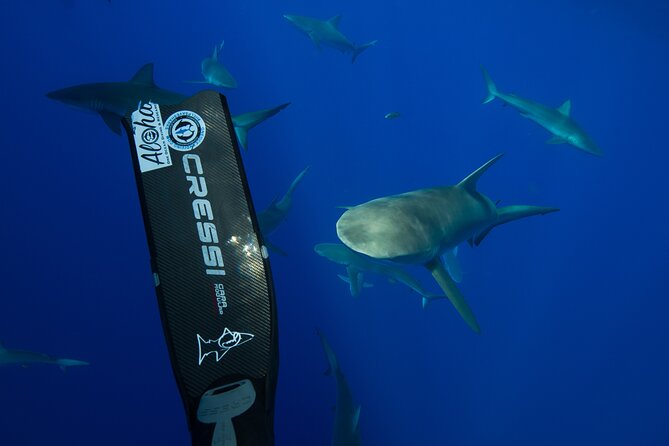
The activity is described as private, meaning only your group is meant to participate. That is appealing if you want a more personal briefing and do not want to share the boat with unrelated parties.
There is an important practical wrinkle: one outing was described as having 12 participants. That is not necessarily inconsistent with a private booking if you reserve as a group, but it means you should clarify the expected group size before paying if a small party matters to you.
Crew assignments vary, but named staff in the accounts include Gina, Faith, Mariah, Kevin, Matt, Hayley, Drew, and others. Gina received especially warm praise for helping people feel secure during the free swims. Captains and boat staff have also been credited with keeping outings on schedule and maintaining a good mix of seriousness and humor.
The overall tone appears professional and upbeat, but it is not identical every day. Most people found the crew friendly and helpful, while a few found some instructions too sharp or the group management less polished. I would consider that a minor but real trade-off: the staff must move people efficiently around a boat, yet frightened first-timers still deserve patience.
Is $165.71 a fair price?
At $165.71 per person, this is not a cheap add-on. The value depends on what you want from an Oahu boat outing.
If you only want a quick look at sharks, cheaper options with fewer people may exist. One account specifically felt that 12 people was too many and that other trips offered better value. You should compare group size, water time, equipment, and whether a marine biologist is included in the price.
The price makes more sense if you value the full package: about two hours, a long period in the water, provided equipment, a detailed briefing, safety divers, research context, and the chance to see sharks in their natural setting. A family that wants one major adventure may find the cost easier to justify than a couple looking for a low-cost snorkeling trip.
Photo and video packages are extra. Some people considered them worth buying, especially when a crew member such as Bret captures close encounters. Another person found the video expensive and used a personal GoPro instead. If you already own a suitable camera, check the rules before bringing it. The supplied information confirms that some participants used their own GoPro, but it does not give the current camera policy.
Weather, seasickness, and what to plan for
The boat leaves from Haleiwa and returns to the same dock. Public transportation is nearby, and you receive confirmation at booking. The ticket is mobile, and the activity is offered in English.
Because this is an ocean trip, weather matters. If conditions are poor, the operator may offer another date or a full refund. The trip also requires a minimum number of participants, so a cancellation for that reason may result in a new date, another experience, or a full refund.
Motion sickness deserves more attention than it often gets. One person specifically wished they had followed the instructions for taking Dramamine. Read the operator’s guidance carefully before using any medication, and give yourself enough time to prepare according to those instructions.
Wear what you need for a wet boat outing and remember that clouds do not automatically mean poor wildlife viewing. One cloudy, rainy day still produced an excellent mix of marine life. The water and boat conditions, not just the sky, will shape your comfort.
You can cancel without a penalty up to 24 hours before the start time for a full refund. Inside 24 hours, the payment is not refunded, and changes are not accepted. Weather or minimum-participant cancellations are handled differently, with a new date or refund offered.
Who should book this shark encounter?
I would recommend it to you if you want a serious wildlife experience rather than a simple boat ride. It is especially well suited to:
- First-time shark swimmers who want a clear briefing and safety staff nearby
- Families with older children or teenagers who can follow water instructions
- Couples looking for one memorable North Shore activity
- Ocean lovers interested in shark biology and conservation
- Visitors who want open-water contact rather than a cage
I would think twice if you dislike boats, get severe motion sickness, or need complete control over your position in the water. You may also prefer another outing if a group of roughly 12 would feel crowded or if you are seeking a quiet, private session with no firm group instructions.
Should you book One Ocean Diving?
Book it if you want to meet sharks in the open ocean and learn how to observe them responsibly. The combination of research, cultural context, safety divers, and a long water session gives the price a reasonable foundation.
Go in expecting a structured group activity, not an unchaperoned swim. You may hold the rope for much of the session, and the crew may limit free movement. Take seasickness seriously, ask about group size, and decide in advance if you want to pay extra for photographs or use your own camera.
For a nervous first-timer, this is one of the better ways to approach sharks without a cage. For an experienced snorkeler, the value comes from the education, the guaranteed shark sightings, and the chance of whales, turtles, tiger sharks, or dolphins joining the scene.
FAQ
Where does the shark swim start and finish?
It starts at the Haleiwa Commercial Loading Dock, 66-101 Haleiwa Road, Haleiwa, Hawaii 96712. The activity ends back at the same meeting point.
How long does the experience last?
The tour lasts approximately two hours. The water portion may take about an hour, depending on conditions and how the outing develops.
Are sharks guaranteed?
Yes. The activity is promoted with guaranteed shark sightings. Other wildlife, including whales, dolphins, turtles, and fish, is possible but not guaranteed.
Is snorkeling and safety equipment provided?
Yes. Snorkeling and safety equipment are made available for the activity.
Is this a private tour?
The activity is described as private, with only your group participating. One account described an outing with 12 people, so confirm the expected group size if that is important to you.
What happens if the weather is bad or I need to cancel?
You can cancel at least 24 hours before the start time for a full refund. If the operator cancels because of poor weather or because the minimum number of participants is not met, you may be offered another date or experience, or a full refund.
Just added on Oahu
- Big Island Hawaii Volcano Day tour from Oahu and Hotel PU★ 4.8 · 29 reviews
- Best of Oahu in One Day★ 4.9 · 11 reviews
- Oahu: Beauty and the Feast Circle Island Experience★ 4.6 · 83 reviews
- Arrival Lei Greeting –HNL to Waikiki Private Transfer★ 5.0 · 3 reviews
- Amazing Circle Island Tour★ 4.4 · 4 reviews
- Oahu: Waikiki 2-Hour Semi-Private Surfing Lesson★ 4.9 · 5 reviews
- (2nd)Diamond Head Hike w/ Malasada Starts at 7:00 a.m.★ 3.3 · 3 reviews
- Oahu: Waikiki 2-Hour Beginner Group Surf Lesson★ 4.9 · 191 reviews
Shark Cage Dives, compared.
Dive with Sharks in Hawaii: Shark Tour from Haleiwa
Read our review →
Shark Cage Diving On “The World Famous North Shore of Oahu”, Hawaii
Read our review →
Small-Group Shark and Turtle Dive for Certified Divers
Read our review →Browse the lists this tour appears in