
Reviewed · FARMS
Big Island: Abalone Farm Guided Tour with Tasting
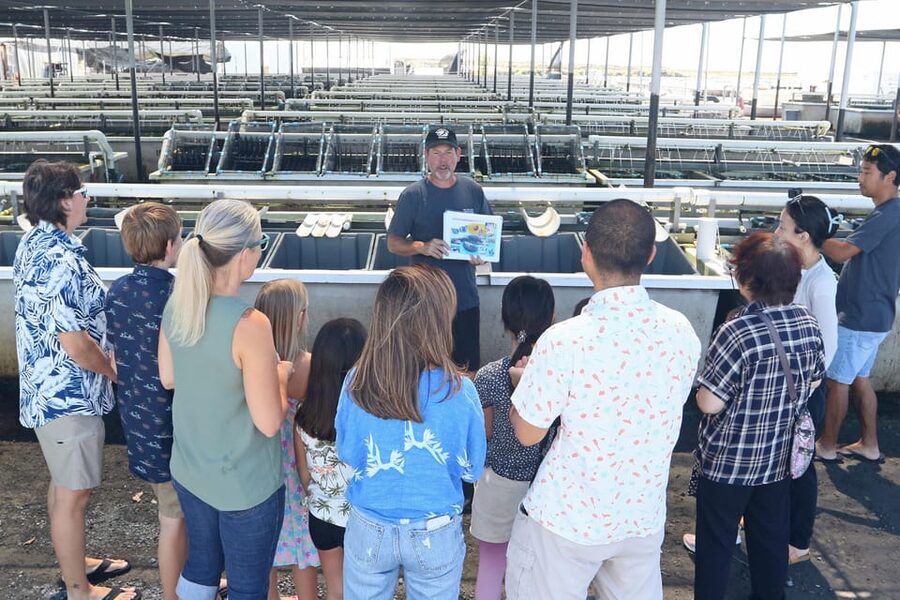
The most unusual part of this Big Island outing is also the simplest: you get to handle live abalone while learning how a shellfish can take up to 10 years to grow. This is a working farm tour, not a polished aquarium visit, and that gives it a useful, hands-on feel.
I like the mix of clear production facts and actual tasting. I also like the dulse seaweed tanks, since they show what feeds the abalone and introduce a food you may not have tried before. The main consideration is access: the tour is not suitable for wheelchair users, and its one-hour length means it offers a focused look rather than a long farm visit.
Key points at a glance
- A working abalone farm: Visit the largest abalone farm in the United States and see how production works.
- Hands-on learning: Touch abalone during the tour and view examples of their growth stages.
- A long growing cycle: Learn why some abalone may take as long as 10 years to reach maturity.
- Dulse seaweed tanks: See the organic seaweed fed to the abalone, and taste it if you choose.
- Two-part tasting: Try abalone grilled in its shell and a canned version for comparison.
- Simple, flexible booking: The tour lasts one hour, costs $31 per person, and allows cancellation up to 24 hours ahead for a full refund.
A one-hour look inside Hawaii’s abalone industry
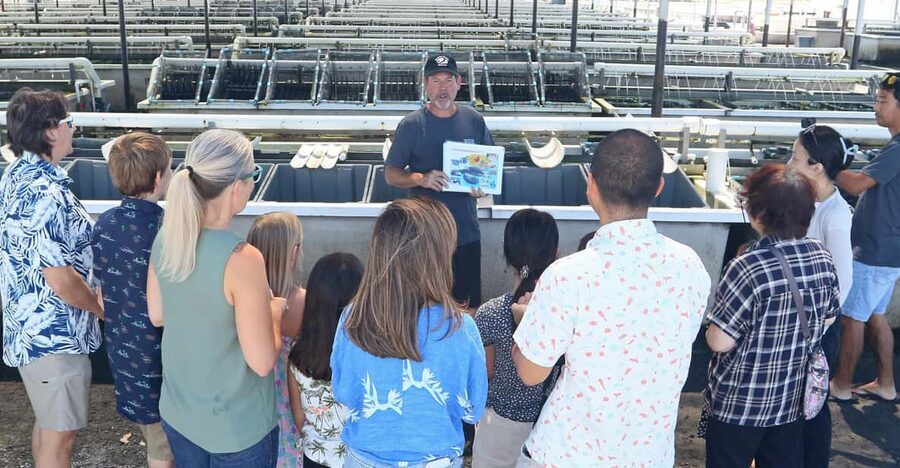
Big Island Abalone gives you a quick look at an unusual corner of Hawaii’s food world. At the farm, you are not simply shown a finished dish. You follow the process from breeding and early growth to the food served at the end.
The farm is described as the largest abalone farm in the United States. That matters because the visit has a scale and purpose beyond a small educational display. You are seeing a real production facility, with tanks, breeding work, seaweed cultivation, and a product prepared for the table.
Your guide begins with a short history of deep-water research and an introduction to the farm. This background helps explain why abalone production depends on careful conditions and long-term planning. You also learn about the different kinds of abalone used at the facility.
The live English-speaking guide makes this a better choice for anyone who wants explanations rather than a self-guided walk. Guide Kale is named in the tour feedback, and the comments specifically highlight the fun facts shared about abalone. If you enjoy asking questions, a guided format gives you more value than simply looking into tanks on your own.
Other coffee and chocolate farms to visit on the Big Island:
- Big Island Highlights: Coffee, Volcano, Black Sands & Waterfall
★ 5.0 · 1,054 reviews - Hawaiian Salt Farm Tour in Kona
★ 5.0 · 767 reviews - Award Winning Farm Tour: Coffee, Chocolate and Unique Gifts
★ 5.0 · 484 reviews
Starting at the blue farm office
The meeting point is easy to identify once you reach 73-357 Makako Bay Drive. Check in at the farm office, a blue building just after the entrance. The tour finishes at the same point, so you do not need to arrange a second pickup location.
The activity lasts one hour. That is long enough to cover the main stages of abalone production and include the tasting, but short enough to fit into a busy Big Island day. I would treat it as a focused stop, not an outing that fills an entire afternoon.
Starting times vary, so check availability before planning the rest of your day. The short format is useful if you are combining the farm with other stops, though you should avoid scheduling something immediately afterward if you want time for questions or shopping.
From deep-water research to farm production
The opening history of deep-water research gives the visit some context. You hear how work connected with the sea led to the farm operation and then learn how abalone are raised for food.
This is one of the more valuable parts of the tour because abalone can seem like a luxury ingredient with little connection to everyday food production. Here, you see the practical side: breeding, growth, feeding, care, and preparation.
The guide explains the types of abalone used at the farm and how production works over time. The key fact is patience. Some growth stages can last for years, with the full process reaching as long as 10 years. That changes the way you think about the serving at the end. A small tasting portion represents a long period of care.
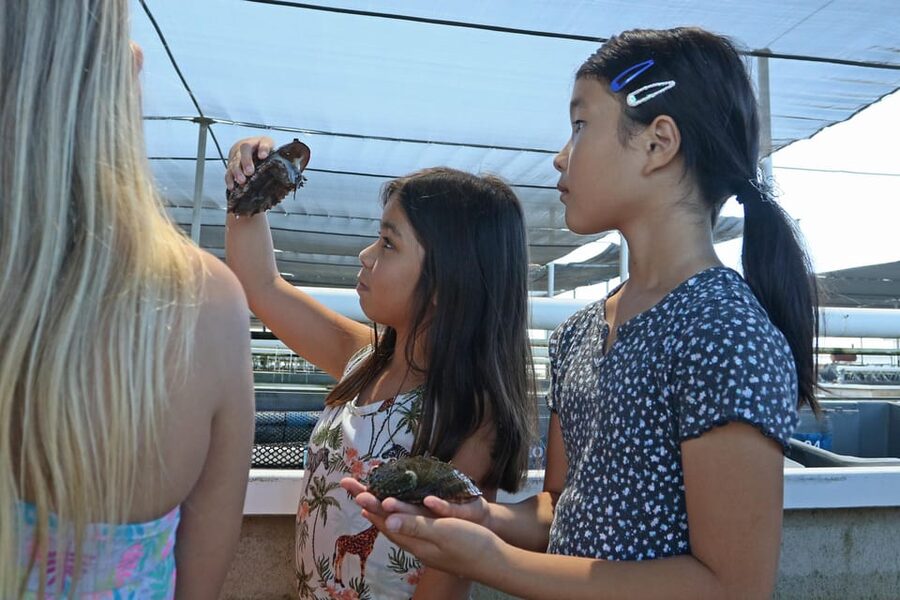
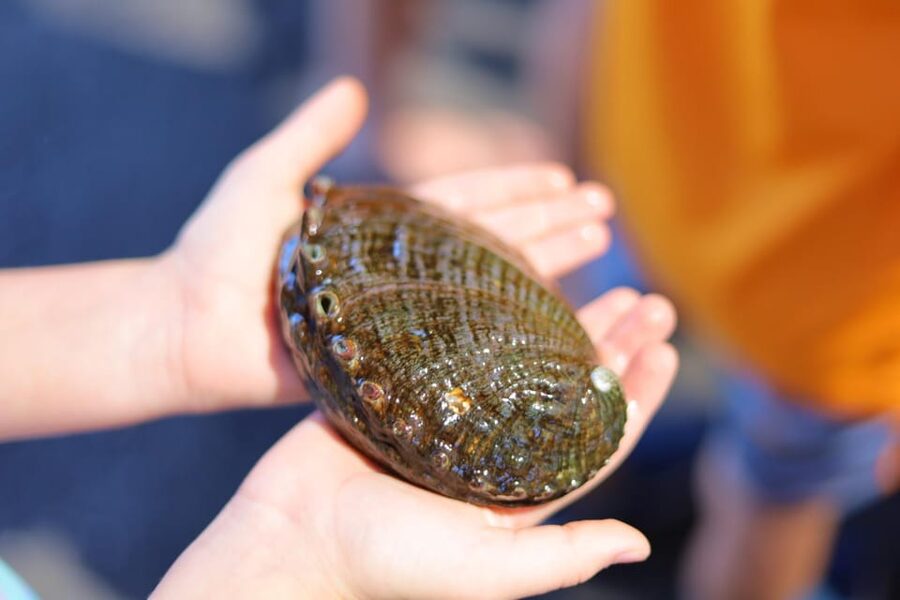
You also get demonstrations showing different stages of growth. These examples help you understand the size and development of the animals more easily than a single tank of mature abalone would. If you want a closer look, you can hold some of them.
That hands-on moment is likely to appeal to families and curious eaters. It also gives the tour a little humor and surprise. Abalone are not the animals most people expect to pick up on a Hawaii visit.
Touching the abalone and seeing how they grow
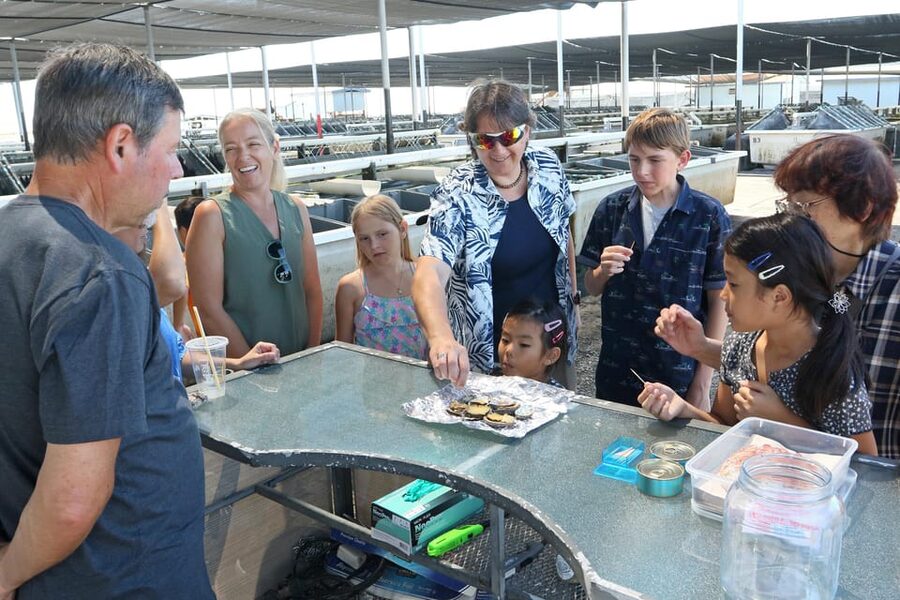
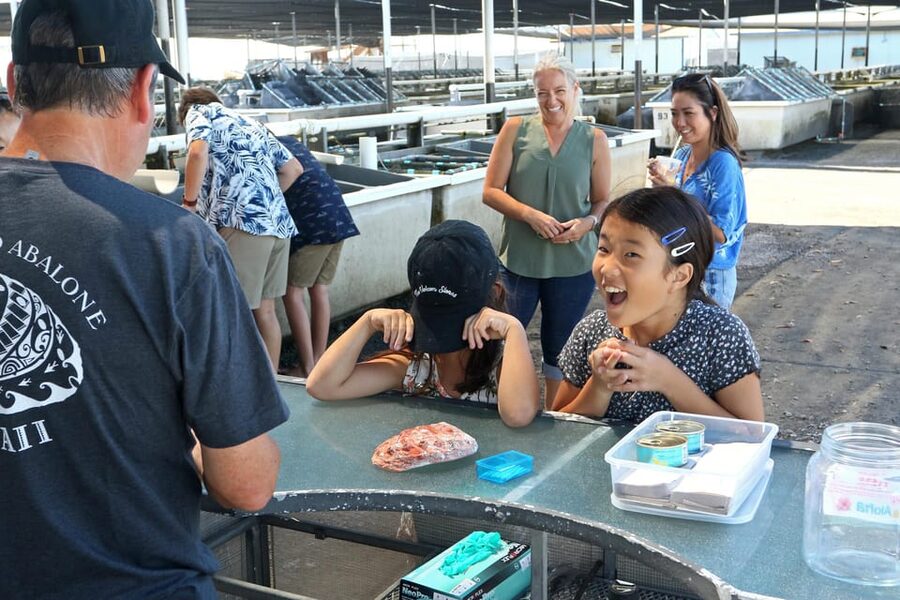
The chance to touch the abalone is optional. You can take part if you like, or simply listen and observe. That choice makes the activity easier for people who are interested in the biology but less eager to handle a live shellfish.
The growth demonstrations are the heart of the educational side. You learn how the animals progress through different stages and how the farm supports them over months and years. The guide also covers breeding, so you see that the operation involves more than keeping mature animals in tanks.
I would especially recommend this tour if you are interested in sustainable food, aquaculture, or marine science. You do not need a technical background. The format is built around seeing the animals, hearing the explanation, and then tasting the result.
The one limitation is that the supplied information does not give details about group size or the exact amount of time spent at each tank. You should expect a guided overview rather than a private laboratory visit or a long, highly technical class.
A few more things to do on the Big Island worth a look
- Kona Walking Food Tour
★ 5.0 · 402 reviews - Big Island Hawaii: Craft Chocolate Tasting and Farm Tour
★ 5.0 · 14 reviews - Lahaina: Maui Ku’ia Estate Guided Cacao Farm Tour and Tasting
★ 5.0 · 1,103 reviews - Oahu Catamaran Waikiki Sunset on 40 Foot Catamaran: Food and BYOB
★ 5.0 · 836 reviews
The organic dulse seaweed tanks
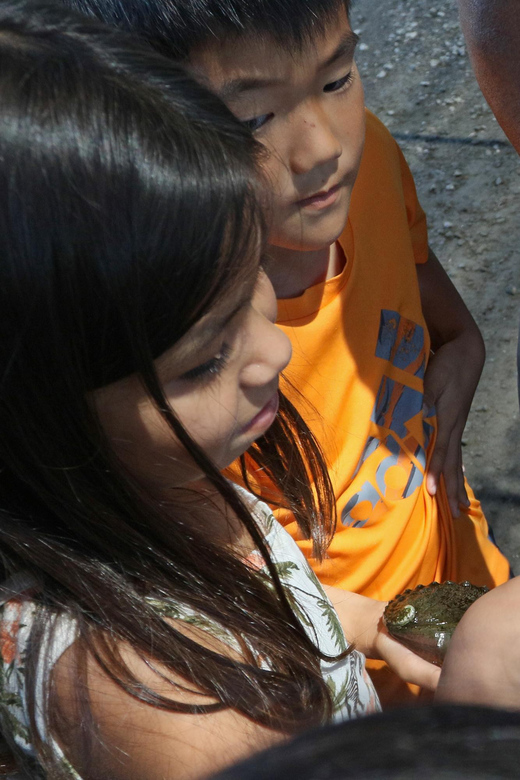
One of the most distinctive parts of the visit is the tour of the dulse seaweed tanks. Dulse is described as an organic seaweed fed to the abalone, and it is also a nutritious vegetable for people.
This section connects the farm’s food chain in a simple way. Instead of hearing only about the abalone, you see one of the foods used to raise them. It also gives you a chance to consider seaweed as something you might eat yourself, not just something growing in the ocean.
The farm describes its operation as 100% organic and sustainable. The dulse tanks help make that claim more tangible because you can see the seaweed cultivation rather than hearing only a general statement about responsible production.
You may find this part especially interesting if you like trying local ingredients. The tasting at the end focuses on abalone, but the tour also encourages you to sample the seaweed. Specific details about how much dulse you taste are not provided, so think of it as part of the farm presentation rather than a separate meal.
Two abalone tastings, two different impressions
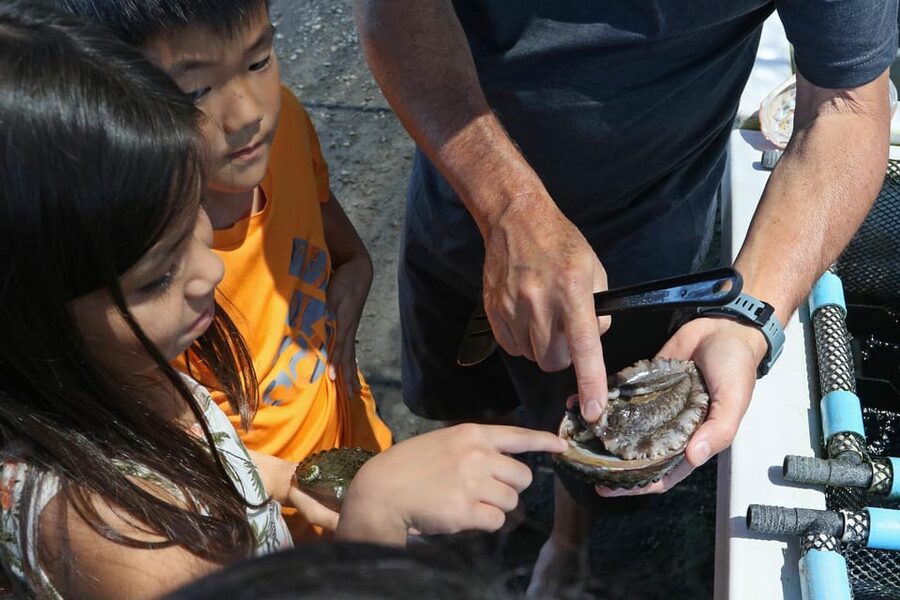
The tasting includes abalone grilled in its shell and a canned version. Having both matters because it lets you compare preparation and texture instead of judging the ingredient from one sample alone.
The grilled abalone is the main food moment. Garlic butter is specifically recommended in the tour feedback, so choose that option if it is available during your visit. The shell presentation also ties the tasting back to what you have just seen in the tanks.
The canned abalone gives you a second point of comparison. Canned seafood can taste quite different from a freshly grilled sample, and this side-by-side approach helps explain how abalone reaches the market in more than one form.
The tasting is included in the $31 price, which improves the value. You are paying for the guide, the farm visit, the educational material, and food samples, rather than adding a separate tasting fee at the end.
The portion should be viewed as a sample, not lunch. The activity information promises tasting, not a full meal. If you arrive hungry, plan another meal elsewhere.
A later barbecue option is also mentioned in the tour feedback. It was closed on a Sunday when one visitor went, and the barbecue involved cooking the abalone yourself. Since the supplied tour details do not confirm its schedule or availability, do not book this one-hour visit assuming that barbecue will be part of it. Ask the farm directly if that feature is important to you.
Is $31 a fair price?
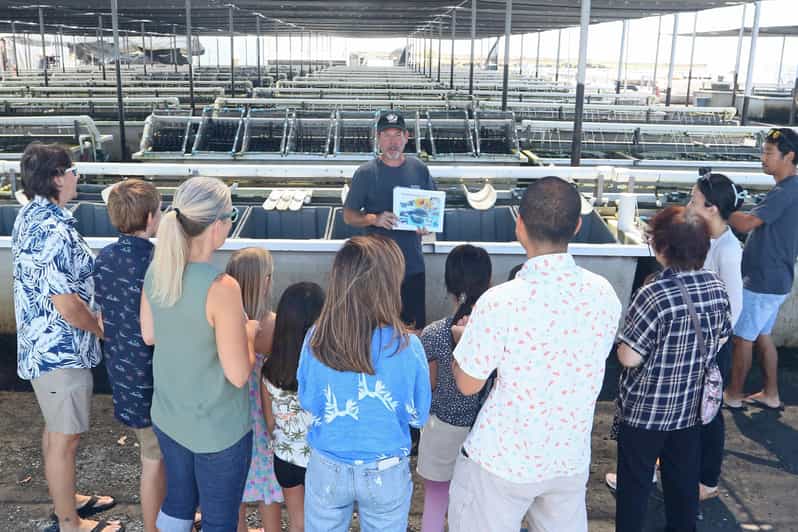
At $31 per person, this tour offers solid value for a specialty food experience. The price includes the guided tour, the farm visit, the abalone tasting, and a 10 percent shopping discount.
The value is strongest if you care about how food is produced. You are not merely buying a bite of abalone. You are paying to learn about breeding, growth, feeding, seaweed, and the path from farm to table.
The tasting also helps. Abalone can be expensive in restaurants, so trying both a grilled sample and a canned version gives you a practical sense of the ingredient without committing to a costly full meal.
The 10 percent shopping discount adds a little more value if you plan to buy farm products. It is less useful if you are traveling light or do not want to carry food with you.
I would not choose this tour based only on the tasting. The portion is not described as a meal, and the one-hour visit is primarily educational. But if you are already interested in seafood, sustainable farming, or unusual Big Island stops, the combination makes the price reasonable.
Who will enjoy this farm visit?
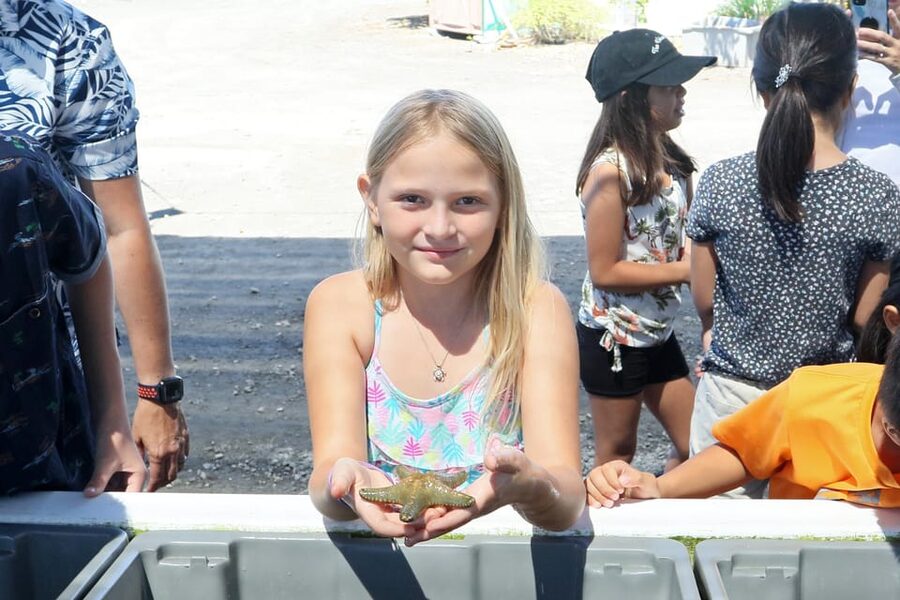
This outing suits curious eaters, families, seafood fans, and anyone who likes seeing how a local product is made. Children may enjoy the chance to touch the abalone, while adults may take more interest in breeding, aquaculture, and the long growing cycle.
It also works well for people who want a change from beaches and scenic viewpoints. The tour gives you a look at a working food operation and shows a side of Hawaii that is easy to miss when your schedule centers on nature and sightseeing.
You may want to skip it if you have little interest in marine life or shellfish. The tour is built around abalone production, so the subject stays consistent from the first explanation through the final tasting.
Accessibility is an important practical point. The activity is not suitable for wheelchair users. The information provided does not explain the walking surface, seating, or other mobility details, so anyone with access concerns should contact the farm before booking.
The tour is conducted in English. If you need another language, this activity may not be the right fit.
Booking, cancellation, and timing advice
You can reserve now and pay later, which helps if your Big Island schedule is still changing. Free cancellation is available up to 24 hours before the tour for a full refund.
I would schedule the visit when you can arrive calm and on time. Check in at the blue office just inside the entrance, then allow the guide to lead you through the facility and back to the same meeting point.
Because the tour is only one hour, the starting time matters. Check the available times before you plan driving connections or another timed activity. The tour does not include transportation, so you need to make your own way to the farm.
The 10 percent shopping discount is included, but the supplied information does not list the products or explain how long the discount lasts. Ask at the farm office if you are interested in buying something after the tour.
Should you book Big Island Abalone?
I would book this tour if you want a short, unusual Big Island activity with a real connection to food production. The best reasons are the chance to handle live abalone, see the dulse seaweed tanks, learn about a growth cycle that can last 10 years, and compare grilled and canned samples.
The tour is also a good value for $31 because the guide, tasting, and shopping discount are included. Guide Kale’s fun facts and the garlic butter tasting recommendation add useful details to keep in mind.
I would pass if you are looking for a full meal, a long farm visit, or an activity suitable for wheelchair users. For everyone else, this is a practical one-hour stop that offers something different from the usual Big Island schedule.
FAQ
Where does the abalone tour begin?
The tour begins at 73-357 Makako Bay Drive. Check in at the farm office, the blue building just after the entrance.
Where does the tour end?
The activity ends back at the meeting point at the farm office.
How long does the tour last?
The tour lasts one hour. Starting times vary, so check availability when booking.
How much does the tour cost?
The price is $31 per person.
Is abalone tasting included?
Yes. The tour includes a tasting of grilled abalone in its shell and canned abalone.
Can I touch the abalone?
Yes. You can hold some of the abalone during the tour if you want to.
What else will I see besides abalone?
You will visit the organic dulse seaweed growing tanks. Dulse is fed to the abalone and is also described as a nutritious vegetable for people.
What language is the tour conducted in?
The live tour guide conducts the experience in English.
Is the tour suitable for wheelchair users?
No. The activity is not suitable for wheelchair users.
Can I cancel for a refund?
Yes. You can cancel up to 24 hours in advance for a full refund. You can also reserve now and pay later.
Just added on the Big Island
- Kailua-Kona: Big Island Morning Snorkeling Tour with Lunch★ 4.9 · 7 reviews
- Big Island: Hawaii Volcanoes National Park and Hilo Tour★ 5.0 · 118 reviews
- Kailua-Kona: Hualalai Volcano Doors On/Off Helicopter Tour★ 4.7 · 12 reviews
- Big Island: Full Day Adventure Tour of the Kohala Waterfalls★ 5.0 · 41 reviews
- Big Island Hawaii: Craft Chocolate Tasting and Farm Tour★ 5.0 · 14 reviews
- Big Island: Evening Volcano Explorer from Hilo★ 4.7 · 31 reviews
- Big Island: Off the Beaten Path Volcano Crater Hike★ 5.0 · 15 reviews
- Big Island: Full-Day Kohala Zipline and Waterfall Adventure★ 4.8 · 36 reviews
Farms, compared.
Oahu’s Ultimate Tour: Dole, Turtle Snorkel, Pali Lookout & More
Read our review →
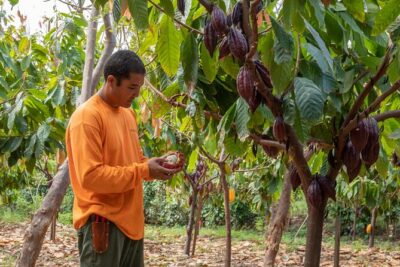
Maui Ku’ia Estate Guided Cacao Farm Tour and Tasting
Read our review →
Big Island Highlights: Coffee, Volcano, Black Sands & Waterfall
Read our review →
Road to Hana Adventure with Farm to Table Lunch
Read our review →
Pearl Harbor, Dole Plantation, and Polynesian Center from Waikiki
Read our review →
Princeville Botanical Gardens Tour and Chocolate Tasting Ticket
Read our review →
Browse the lists this tour appears in