
Reviewed · CYCLING TOURS
Poipu and Koloa E-Bike Scenic Tour
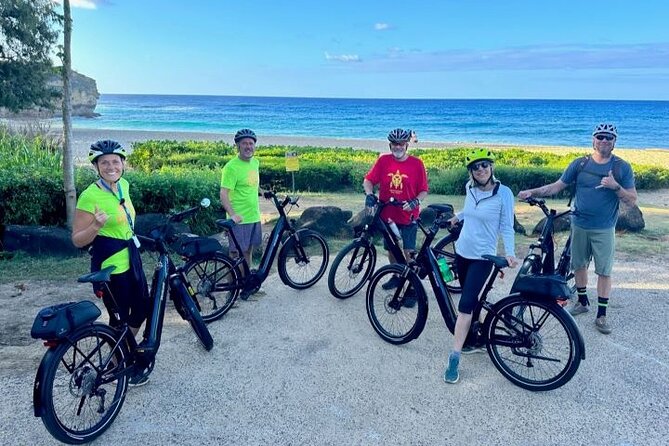
Kauai’s south shore makes more sense when you travel it slowly, with time to look around. This small-group e-bike tour links Poipu beaches, Koloa’s sugar past, Hawaiian royalty, missionary history, and a famous blowhole in about three hours. Lori and Eugen lead the ride, with safety support at the front and back when both are present.
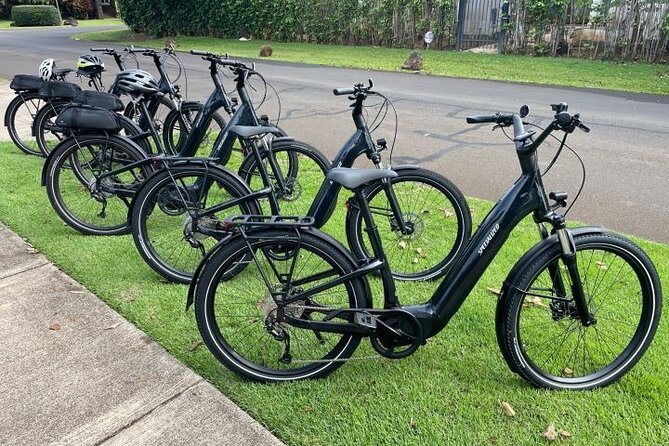
I especially like the top-quality Specialized Turbo Como bikes and the clear bike-mounted speaker system, which lets you hear the running commentary while riding. I also like the seven-person limit, since it keeps the group personal and makes it easier for the guides to adjust the pedal assistance and pace. The main drawback is the price, $167 per person, which is a serious outlay for a morning activity, and you need moderate fitness plus confidence on county roads.
Key points before you book
- A 14-mile route made easier by pedal assist: You still ride, but the motor takes the sting out of hills and helps riders with different fitness levels stay together.
- Six named stops plus a former port site: The route covers Shipwreck Beach, Koloa Plantation, Saint Raphael Catholic Church, Prince Kuhio’s birthplace, Spouting Horn, and Poipu Beach.
- A maximum of seven riders: This is a much more personal setup than a large coach tour, with room for questions and individual help.
- History is part of the ride: You learn about sugar, immigrant communities, Catholic history, Hawaiian royalty, local folklore, and Kauai’s former port trade.
- An early 7:15 a.m. check-in: The ride leaves at 7:30 a.m., so you get a useful start to the day and still have most of the afternoon free.
- Bring the basics yourself: A small water bottle, sunscreen, closed-toed shoes, and sunglasses or protective eyewear are not included.
Why this is a smart way to see Poipu and Koloa
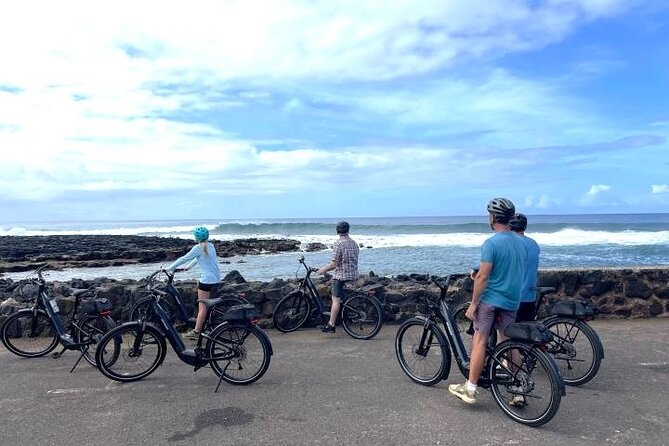
Many south shore activities focus on beaches and pretty water. This ride gives you more context. You see the places, then hear why they matter. That makes the route useful for a first morning in the area, especially if you want to decide where to return later for swimming, food, or more sightseeing.
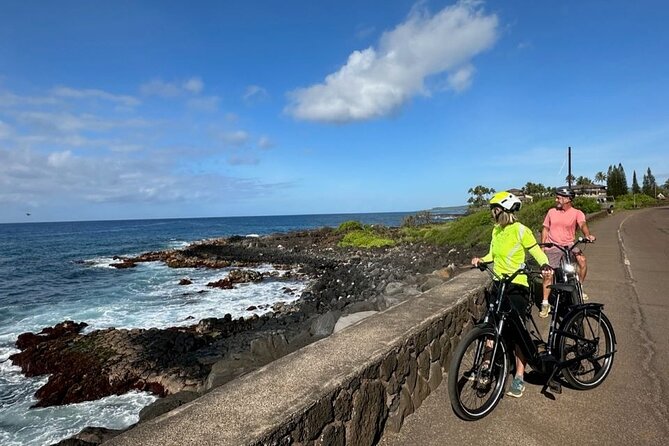
The ride covers about 14 miles, mainly on county roads according to the detailed ride description. That sounds demanding until you consider the e-bike assistance. You control how much help the motor provides, so a hill need not become a test of willpower. The guides can also help you find a comfortable setting.
Still, this is not a passive sightseeing excursion. You must know how to ride a bicycle, pay attention to traffic and instructions, and manage a moderate level of physical activity. The tour has a seven-person maximum, and the guides work to keep everyone together, but each rider remains responsible for steering, braking, and following the route.
The early departure is another practical advantage. Check-in is at 7:15 a.m. at Shipwreck Beach, with departure at 7:30. You return to the same meeting point after roughly two to three hours. That leaves the rest of the day open for a beach visit, lunch, or another Kauai activity.
More bike tours on Kauai:
- Waimea Canyon Downhill Bike Ride
★ 5.0 · 650 reviews - Haleakala Sunrise Best Self-Guided Bike Tour
★ 4.5 · 745 reviews - Big Island: Fat Tire E-Bike Tour through Volcanoes National Park
★ 5.0 · 546 reviews
Shipwreck Beach: setup before the ride
Shipwreck Beach is the starting point, and the first five minutes are devoted to bike setup, instructions, and safety information. This short briefing matters, especially if you have never used a pedal-assist bike.
You ride a Specialized Turbo Como, a comfortable electric bicycle designed to help as you pedal. The motor does not turn the outing into a scooter trip. You still pedal and steer, but you can choose how much assistance you want. Riders with different abilities can therefore take part in the same outing without one person constantly waiting for another.
Lori has been praised for explaining the controls clearly and patiently helping riders get comfortable. That is useful for beginners, while experienced e-bike riders can get moving without a long technical lesson. The bikes are described as well maintained, and the tour supplies fitted helmets and waterproof bags.
You need to bring closed-toed shoes. Protective eyewear or sunglasses, sunscreen, and a small water bottle are also your responsibility. Kauai mornings can feel easy at first, but three hours on a bike is a good reason to cover your skin and carry water.
Koloa Plantation and the sugar story
The stop near Koloa Plantation lasts only a few minutes, but it supplies some of the most important context on the route. This is the last operating mill in Koloa, and the guide explains how sugar shaped the town and the wider island economy.
The useful part is not simply seeing an old industrial site. You also hear about the ethnic groups who came to Kauai to work in the plantation industry. That gives you a clearer picture of how local communities developed and why the island’s culture includes many different influences.
Because the stop is brief, do not expect a long museum visit or an inside tour of the mill. The value comes through the guide’s explanation and the chance to connect the site with what you see around Koloa. If you want a full plantation museum experience, this ride does not promise one. If you want a compact introduction to sugar’s role in Kauai, it works well.
Saint Raphael Catholic Church and missionary-era Kauai
At 3011 Hapa Road, the group pauses at Saint Raphael Catholic Church. Dating to 1841, it is identified as the oldest Catholic church on Kauai.
The stop helps broaden the story beyond sugar. You learn about the Catholic presence on the island and the missionary influences that shaped local life. It is a modest stop, only about five minutes, so the emphasis is on explanation rather than a lengthy visit inside the church.
I like this kind of short historical pause because it breaks up the ride without turning the morning into a series of formal tours. You see an actual local landmark, hear why it matters, and then get back on the bike. The tradeoff is that anyone wanting extensive architectural detail or a long church visit may find the stop too quick.
Same island, a different kind of day:
- Koloa Zipline in Kauai
★ 5.0 · 6,764 reviews - Kauai Deluxe Sightseeing Flight
★ 5.0 · 2,162 reviews - Kauai Eco Adventure Helicopter Tour
★ 5.0 · 2,032 reviews - Kauai Airplane Tour: Na Pali Coast, Waterfalls & Window Seats
★ 5.0 · 1,964 reviews
Prince Kuhio’s birthplace and Hawaiian leadership
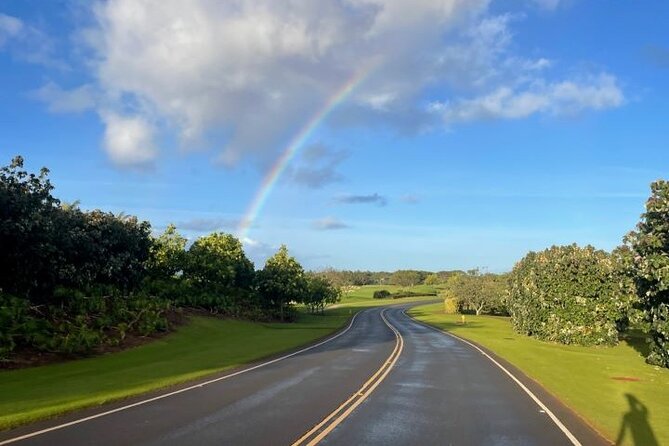
The next stop focuses on Prince Jonah Kuhio Kalanianaole Piikoi, one of the important figures in Hawaiian history. The guide discusses his influence and why his legacy still matters.
This is one of the places where a local guide adds real value. A sign or a quick photograph cannot explain the political and cultural importance of the person connected with the site. The talk gives you a better sense of Hawaiian leadership and the people who shaped the islands beyond the familiar beach-and-resort story.
Again, allow for a short interpretive stop rather than a long formal presentation. The tour is built around movement, scenery, and several compact stories. You gain a useful introduction, then continue through the south shore.
Spouting Horn: folklore, views, and a practical break
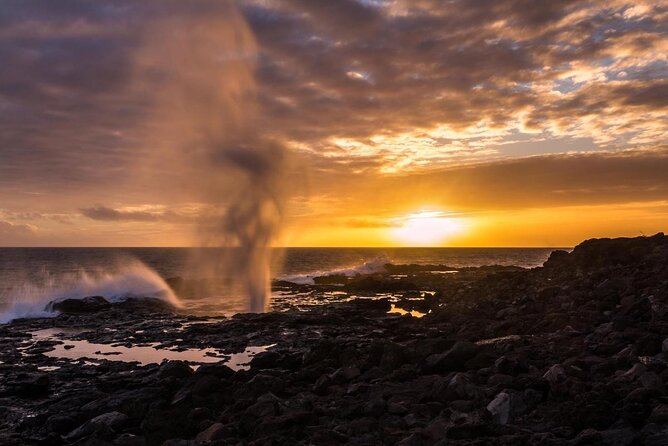
Spouting Horn is one of the route’s best-known natural sights. Waves push water through a lava tube, creating the blowhole effect, and the guide adds local history and Hawaiian folklore to the stop.
This is also a convenient place to pause. Restrooms and a water fountain are available, and there is time for photographs. Those small comforts matter on a three-hour ride, especially for families or riders who do not spend much time on bicycles.
The stop lasts about five minutes, so conditions may affect what you see. The experience centers on a quick look and a short explanation rather than waiting for a long dramatic display. Do not plan on a leisurely coastal walk here. Think of Spouting Horn as a lively scenic stop within a larger route.
The unnamed former port and the working coast
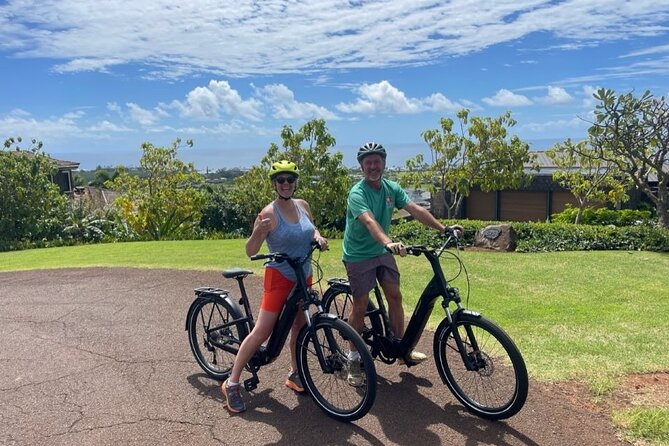
The route passes by a once-important port on Kauai, with the guides explaining its role in the island’s past. The supplied details do not identify the port by name, so I would treat this as a passing historical point rather than a separate attraction with a long stop.
That distinction is useful when setting expectations. You will not spend the morning at every landmark. Some places receive a few minutes of storytelling from the bike, which keeps the ride moving and allows the tour to cover more ground.
The port story also fits the broader theme of the tour. Kauai was not shaped only by scenery. Trade, sugar, immigration, religion, royalty, and coastal transport all played a part. The route gives you several pieces of that picture without asking you to spend a full day in a history museum.
Poipu Beach and the final scenic stretch
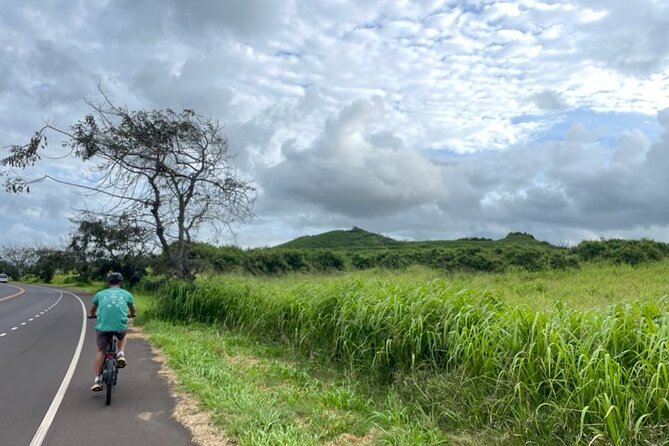
Poipu Beach is the last named stop. The guide points out this family-friendly beach, and it is a good place for photos and a look at one of the south shore’s most accessible coastal areas.
Several riders have particularly enjoyed seeing Hawaiian green sea turtles at Poipu Beach. Turtle sightings are never guaranteed, so you should treat that as a possible bonus, not a promised part of the tour. The beach itself is the reliable feature.
By this point, the route has given you a mix of coast, town streets, history, and viewpoints. You return to Shipwreck Beach after the final stop. Since the activity ends where it begins, you do not need to arrange a separate ride back to a hotel or rental car location, but you do need to plan your own way to the starting beach.
What the guides add to the morning
Lori and Eugen are central to the experience. Lori handles much of the practical side, including bike instruction, directions, communication, and keeping riders comfortable. Eugen is especially associated with the historical commentary, though both guides contribute to the friendly atmosphere and safety of the group.
When two guides are present, one rides near the front and one near the back. That arrangement helps the group stay together and gives riders more support on county roads. A microphone and small speakers on the bikes make it easier to hear the commentary while moving, rather than stopping every few minutes for a speech.
The tone appears friendly and relaxed, with guides willing to answer questions and offer suggestions for places to see or eat later. That personal contact is one reason the small group matters. With no more than seven riders, you are not just following a flag through town.
Price, value, and who gets the most from it
At $167 per person, this is not a bargain bike rental. You are paying for a guided route, electric bike, helmet, waterproof bag, local guides, equipment support, and several hours of interpretation. The small group also makes the price easier to justify than a basic self-guided rental.
I would compare it with the cost of renting an e-bike and planning the route yourself. A rental may cost less, but you would need to choose roads, find the historic sites, understand their importance, and manage the ride without a guide. This tour packages those tasks into one morning.
The value is strongest for riders who want both scenery and local context. It also suits families with older teenagers, couples, solo riders, and mixed-ability groups. Hawaii law requires every rider to be at least 15 years old, and the activity calls for moderate physical fitness.
You may want to skip it if you dislike bicycles, are uncomfortable riding on roads, or want a slow beach morning with no schedule. It is also not ideal if your main goal is a long swim or extended time at each stop. The tour offers snapshots and stories, not hours at one attraction.
Timing, equipment, and cancellation details
The start time is fixed: check in at 7:15 a.m. for a 7:30 departure. Confirmation arrives when you book, and the activity is offered in English through a mobile ticket.
The tour requires good weather. If poor weather cancels it, you can choose another date or receive a full refund. If the minimum number of riders is not met, the same options apply. You can cancel for a full refund up to 24 hours before the start time, but cancellations or changes inside that window are not refunded or accepted.
Those rules make early planning sensible, particularly since the activity is often reserved well ahead of time. A booking average of 39 days in advance suggests that you should not assume you can decide at the last minute during a busy Kauai visit.
Should you book the Poipu and Koloa e-bike tour?
Book it if you want an active morning that combines south shore scenery with real local stories. The route covers a lot without feeling like a race, and pedal assistance makes the 14-mile distance manageable for many riders with moderate fitness.
I would give it extra weight if you are new to Kauai, want a personal group setting, or have already seen the major beaches and now want to understand the places between them. The guides, equipment, and compact route all work in its favor.
Skip it if $167 feels too high for a guided morning, if you want a purely relaxing beach activity, or if riding on county roads is outside your comfort zone. For everyone else, the combination of good bikes, careful support, history, and viewpoints makes this one of the more useful ways to get oriented on Kauai’s south shore.
FAQ
Where does the Poipu and Koloa e-bike tour begin?
The tour begins at Shipwreck Beach in Poipu, Hawaii. Check-in is at 7:15 a.m., followed by a 7:30 a.m. departure.
Where does the tour end?
The activity ends back at the Shipwreck Beach meeting point.
How long does the tour take?
The tour lasts approximately two to three hours.
How far do you ride?
The route is about 14 miles, based on the detailed ride description.
What type of e-bike is provided?
The tour provides a Specialized Turbo Como electric bike with adjustable pedal assistance.
What stops are included?
Stops include Shipwreck Beach, Koloa Plantation, Saint Raphael Catholic Church, Prince Kuhio’s birthplace, Spouting Horn, and Poipu Beach. The route also passes a former important port on Kauai.
What should I bring?
Bring closed-toed shoes, sunglasses or protective eyewear, sunscreen, and a small water bottle. Helmets and waterproof bags are provided.
Is there an age requirement?
Hawaii law requires every bike rider to be at least 15 years old. The tour also recommends a moderate level of physical fitness.
Just added on Kauai
- Kauai Island Private Guided Tour-Waimea Canyon from Poipu/Koloa★ 5.0 · 9 reviews
- Waimea Canyon & Na Pali Driving Tour app★ 4.5 · 116 reviews
- Waimea Historical and Cultural Shared Tour★ 4.5 · 5 reviews
- Kauai Wailua Valley & Waterfalls Audio Driving Tour★ 4.5 · 23 reviews
- Kauai Island Private Guided Tour-Waimea Canyon from Lihue/Kapaa★ 5.0 · 17 reviews
- Kauai Island Private Guided Tour-Waimea Canyon from Princeville★ 5.0 · 3 reviews
- Wailua River Paddle★ 4.5 · 73 reviews
- 2-Hour Snorkeling Adventure in Kauai★ 5.0 · 18 reviews
Cycling Tours, compared.


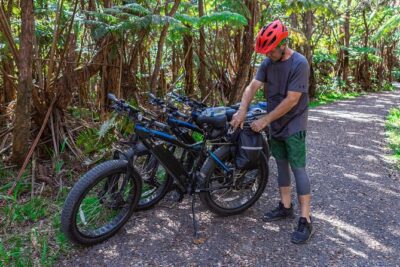
Fat Tire E-Bike Tour through Volcanoes National Park
Read our review →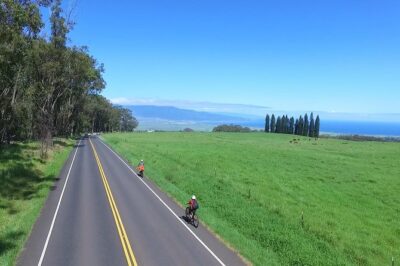
Best Haleakala Downhill Self-Guided Bike Tour with Maui Sunriders
Read our review →
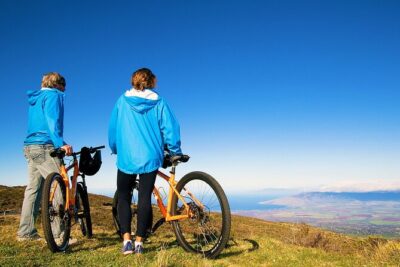
Haleakala Express Self-Guided Bike Tour with Bike Maui
Read our review →
Maui Haleakala Sunrise Downhill Bike Tour with Mountain Riders Rated #1
Read our review →
Browse the lists this tour appears in