
Reviewed · MANTA RAY NIGHT SNORKELS
Small Group, Kona Manta Ray Snorkel Adventure!
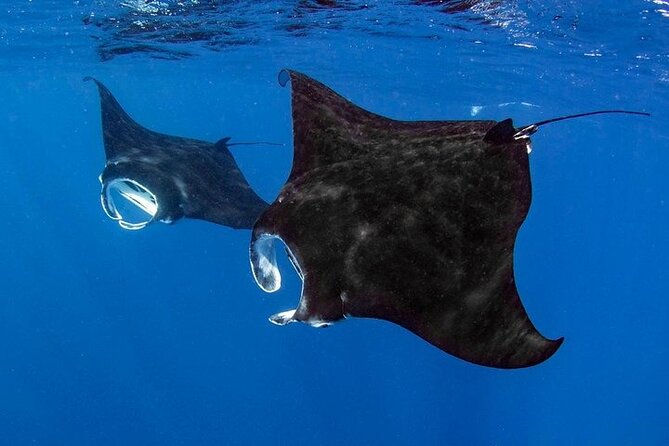
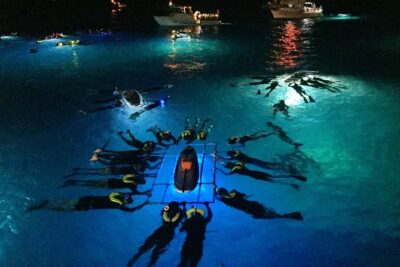
The magic here happens beneath a floating light board. Plankton gathers in the glow, and wild manta rays sweep in close, sometimes passing within inches of your face. You float at the surface while the crew keeps watch from the boat and water.
I like the 13-person limit, which gives this outing a more personal feel than boats carrying 20 to 50 people. I also like the short five-minute ride to the site, leaving more of your roughly one-hour outing for the actual manta viewing.
The main catch is that you need basic swimming and prior snorkeling skills. You must climb the boat ladder without help, and manta rays are wild animals, so no one can promise they will appear.
Key points at a glance
- Mantas feed beneath your light board: The lights draw plankton, which brings the rays close to the surface.
- Only 13 people per boat: The smaller group helps reduce crowding around the viewing board.
- Just five minutes to the site: You spend little time getting out to the nighttime viewing area.
- 20 to 40 minutes in the water: Your exact water time depends on conditions and how the outing unfolds.
- A professional crew stays close: An in-water guide, lifeguard, and captain manage the viewing area and safety instructions.
- Swimming ability matters: You need prior snorkeling experience and must climb a boat ladder independently.
Why Kona’s manta ray night watch is special
Kona’s manta outing is less about traveling across the ocean and more about waiting for a natural feeding show to form around you. The boat uses underwater lights and a custom light board to concentrate plankton. Manta rays then glide through the illuminated water, opening their wide mouths to collect food.
You are not chasing the animals. You hold onto the board and let them come to you. That makes the viewing feel calm and close, even though you are floating in open water at night.
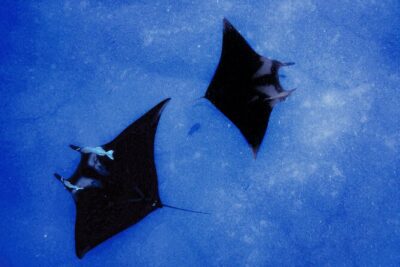
The rays are wild, not trained performers. Some outings see several animals, with reports of three, six, or even a dozen appearing around the board. Other nights may be quieter. You should book this for the chance to see manta rays, not as a guaranteed wildlife appointment.
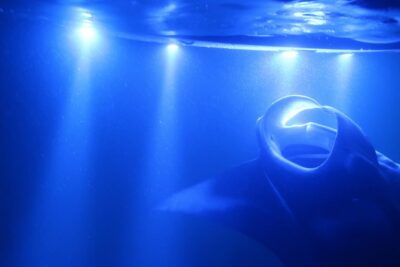
The best part is the unusual perspective. From above, you watch large wings move through the dark water. From below the board, underwater lights reveal plankton and the rays feeding around it. You may see a ray turn on its side, sweep beneath you, or pass close enough to make you forget the water is chilly.
More snorkeling on Big Island of Hawaii:
- Big Island Manta Ray Night Snorkel
★ 5.0 · 5,656 reviews - Big Island: Kona Manta Ray Snorkel Tour in Keauhou Harbor
★ 4.5 · 2,465 reviews - Big Island: Captain Cook Snorkel On A Power Catamaran With Lunch
★ 5.0 · 2,232 reviews
A quick ride from Kailua-Kona to the viewing site
The meeting point is at 78-7100 Kaleiopapa Street in Kailua-Kona. Free parking is available along the road, and the location is near public transportation. Arrive ready for a water activity, since the transition from meeting point to boat is part of a compact outing rather than a long marina visit.
The ride to the viewing site takes about five minutes. That is a real advantage. You do not spend most of your paid time bouncing across the coast before reaching the activity.
The short trip can still feel lively. Past outings have included a fast, bumpy ride with music and a playful crew, while other departures have felt more relaxed. Sea conditions make a difference, so you should be ready for some motion. If you are prone to seasickness, consider taking an appropriate remedy before departure. One person can enjoy the rays and still have the night spoiled by nausea.
The boat ride back may take place under the stars. It is a pleasant way to end the trip, but the ride can feel rough if the ocean has picked up. If you prefer a gentle cruise, this is not the right type of boat outing.
What happens at the light board
At the site, your guide places the light board in the water. Underwater lights attract plankton, and the manta rays gather to feed. You hold onto the board while floating face down with your mask in the water.
The standard water time is about 20 to 40 minutes. Several reports describe longer periods in the water when conditions allowed, but you should plan around the stated time rather than expect an extended session.
The crew’s job is important here. An in-water guide, lifeguard, and captain are stationed at the site. They explain how to position yourself, how to use the board, and how to watch the animals without touching them. The small group gives the crew more room to notice if someone needs help or wants to return to the boat.
The manta rays may arrive quickly, or you may wait. One outing included about 20 minutes of waiting before the animals appeared, followed by a close show. Patience matters. The light is doing its work, but nature sets the schedule.
The group may see two or three rays, or many more. Seeing one is still a memorable wildlife encounter, but a larger gathering makes the light board feel like a front-row seat. The rays may pass close to your face, but you should keep your hands to yourself and let them control the distance.
Small groups make a real difference
A maximum of 13 people is one of the strongest reasons to choose this trip. Large manta boats can place 20 to 50 people around several boards. That can mean more elbows, more fins, and more heads blocking your view.
With a smaller group, you have a better chance of holding a useful position at the board. The crew can also give more direct attention to first-time participants, nervous swimmers, and children who need clear instructions.
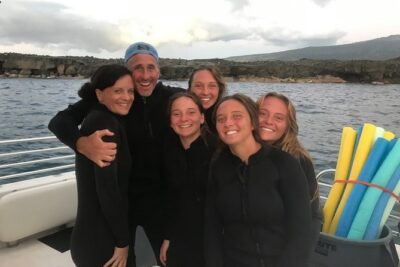
Several family outings have included children and teenagers, with ages ranging from around 10 to 19. The boat ride itself can be a hit with young people, especially if the sea is lively. Still, a child must have the swimming ability, confidence, and attention needed to follow a nighttime safety briefing.
The smaller group does not make the outing private. It is still a shared boat trip, and space in the water can feel tight when everyone gathers around the board. Your experience also depends on the behavior and ability of the other 12 people. The lower head count simply gives you better odds of a comfortable viewing area.
Other night swims with the mantas from Big Island of Hawaii:
- KONA Manta Ray Night Snorkel – FREE re-ride if no Sightings
★ 5.0 · 2,212 reviews - Manta Ray Night Snorkel at Kona, Big Island
★ 5.0 · 1,758 reviews - Glow of the Deep: Night Snorkeling with Manta Rays
★ 4.5 · 1,254 reviews - Kailua Kona: Night Manta Ray Adventure on the Big Island
★ 4.8 · 1,199 reviews
Crew support and the practical safety details
The crew includes a captain, an in-water guide, and a lifeguard. Names associated with past departures include Chase, Ryan, Kelly, Landon, Spinner, and Justin, but your crew may be different. The important point is that you have staff both on the boat and at the viewing site.
You must understand English well enough to follow verbal instructions and the safety briefing. Basic swimming skills and prior snorkeling experience are required. You also need to climb the boat ladder independently. If you are a weaker swimmer, ask the reservation team about a life jacket before the trip.
That ladder matters. Re-entering a boat from the water can be difficult for someone with limited upper-body strength, short reach, or poor mobility. If you are unsure, ask about the boarding setup before paying. This is not a good choice if you need physical assistance getting out of the ocean.
Equipment availability can vary by departure. Snorkel gear is part of the activity, and wetsuits may be available to rent or use depending on the arrangements. Prescription masks are not available, so bring your own prescription solution if you cannot see clearly without one.
A wetsuit can make a big difference. The water may feel chilly after you have been floating in one position for 20 to 40 minutes, even if you are comfortable swimming in Hawaii during the day. Ask about wetsuit availability before leaving the meeting point.
What to bring and what not to expect
Wear your swimsuit under whatever you arrive in. The supplied information says people may be asked to leave bags and towels in an unsecured container near the vehicle, so keep valuables to a minimum and ask the crew where personal items will be stored.
You should bring only what you need for the water activity. A towel is useful after the trip, but do not assume it can stay with you on the boat or at the viewing board. Secure your phone, wallet, and other valuables before departure.
The outing is short, so it does not function as a full beach day. You will not have a long stop for relaxing, changing, or eating. Think of it as a focused wildlife activity: a brief ride, a period at the light board, and a return to the starting point.
The tour ends where it begins in Kailua-Kona. Confirmation is provided when you book, and mobile tickets are accepted.
Is the $115 price good value?
At $115 per person, this sits in a reasonable range for a guided nighttime wildlife trip in Hawaii. The value comes from the small boat, short ride, safety staff, snorkel equipment, and access to a viewing setup that brings the manta rays close.
You are not paying for a guaranteed number of animals. You are paying for a well-planned chance to see them in their feeding area, with a crew handling the lights, boat position, and safety process.
The price looks strongest if you care about avoiding a crowded boat. A larger operation may offer a similar water activity, but the smaller group can make the actual viewing feel less hectic. If you are comparing prices, check the maximum group size rather than looking at cost alone.
This is also a good value for families and small parties that want to share one memorable activity. A group of eight, for example, can make up much of the boat while still leaving room for a few other people. You may get a lively ride, personal instruction, and a close view without paying for a private charter.
The value drops if you are not comfortable in open water or if you expect guaranteed manta activity. In that case, the risk of an unpleasant night is higher, no matter what the price is.
Who should book this Kona snorkel trip?
I would recommend it to confident swimmers, families with water-ready children, couples, friends, and solo visitors who want a close wildlife encounter without a large boat.
It suits you especially well if you:
- Want a short ride and more time near the manta site
- Prefer a maximum of 13 people
- Are comfortable floating in open water at night
- Can follow English safety instructions
- Have snorkeled before
- Can climb a boat ladder without help
- Are willing to accept that wild animals may not appear
I would hesitate to recommend it if you have no snorkeling experience, dislike boat motion, cannot swim independently, or need help climbing from the water. A life jacket may be available by request, but that does not remove the requirement for basic swimming ability.
Book early if your Hawaii schedule is tight. This activity has limited seats and is often reserved about 17 days ahead. Booking near the start of your island stay may also give you more flexibility if poor weather cancels the outing or if a replacement date is needed.
Free cancellation is available up to 24 hours before the start time. Inside that window, you will not receive a refund. If poor weather or an insufficient number of bookings cancels the activity, you can choose another date or receive a full refund.
My call: book it if you are ready for open water
This is a strong pick for a close-up manta encounter at a fair price. The five-minute ride, 13-person limit, and crew stationed both in the boat and water give it a practical advantage over crowded operations.
Go in with the right expectations. You may wait for the rays, the water may feel cold, and the boat may move sharply on the ride out. Most important, the manta rays are wild. If you can accept those limits and meet the swimming requirements, I would put this near the top of a Big Island activity list.
FAQ
How long does the manta ray tour last?
The activity lasts about one hour. The boat ride to the site takes about five minutes, and snorkeling time is generally 20 to 40 minutes.
Where does the tour meet?
The meeting point is 78-7100 Kaleiopapa Street in Kailua-Kona, Hawaii. The activity ends back at the same location.
How many people can join the boat?
The maximum is 13 people. The small group is intended to provide more personal attention and reduce crowding around the light board.
Do I need to know how to swim?
Yes. Basic swimming skills and prior snorkeling experience are required. You must also be able to climb the boat ladder independently.
Are manta rays guaranteed?
No. Manta rays are wild animals, so their presence cannot be guaranteed.
Are prescription snorkel masks available?
No. Prescription snorkel masks are not available for this activity.
What happens if weather cancels the trip?
If poor weather cancels the activity, you will be offered another date or a full refund. You can also cancel for a full refund if you do so at least 24 hours before the scheduled start time.
Just added on Big Island of Hawaii
- Volcano National Park and Rainbow Fall in Hilo, Hawaii★ 5.0 · 53 reviews
- Volcanoes National Park Adventure Tour – Hilo Shore Excursion★ 4.5 · 104 reviews
- Volcanoes National Park and Hilo Private Tour★ 5.0 · 3 reviews
- Private VAN Tour Hilo★ 4.5 · 5 reviews
- Volcanoes Adventure Tour from Hilo★ 4.0 · 29 reviews
- Majestic Waterfall Tour★ 5.0 · 31 reviews
- Private Shore Excursion Hilo Volcanoes National Park up to 10 PPL★ 5.0 · 36 reviews
- 5 Hour Custom Private Tour of Hawaii★ 5.0 · 9 reviews
Manta Ray Night Snorkels, compared.
Kona Manta Ray Snorkel Tour in Keauhou Harbor
Read our review →
KONA Manta Ray Night Snorkel – FREE re-ride if no Sightings
Read our review →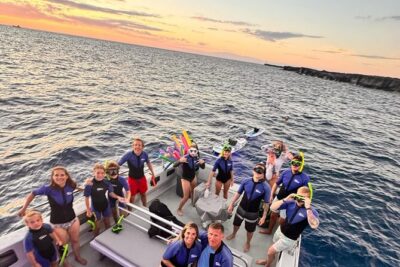
Glow of the Deep: Night Snorkeling with Manta Rays
Read our review →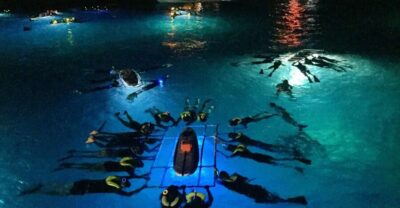
Manta Magic: Small-Group Manta Ray Night Snorkel in Kailua Kona
Read our review →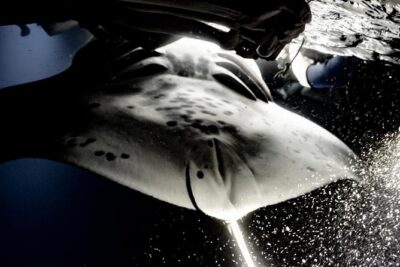
Browse the lists this tour appears in