
Reviewed · VOLCANOES NATIONAL PARK TOURS
Hawaii Volcanoes National Park Self-Guided Driving Audio Tour
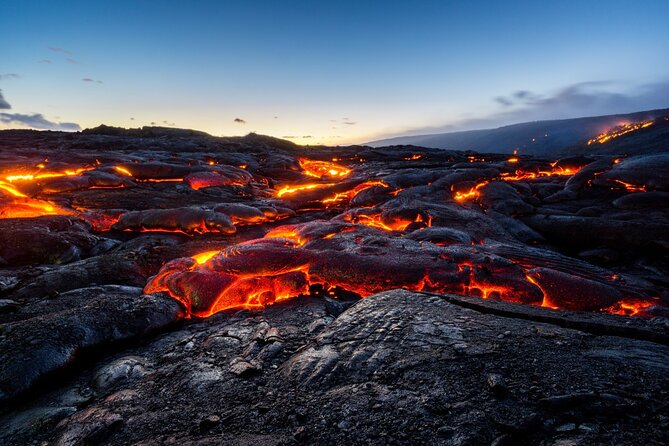
Hawaiʻi Volcanoes National Park is too large for a quick glance, and this GPS-guided driving tour gives you a useful thread to follow. You drive from the entrance toward Kīlauea’s steaming vents, craters, forests, lava flows, petroglyphs, and finally Hōlei Sea Arch while stories begin automatically near each stop.
I like the low per-car price and the freedom to pause for a hike, lunch, or photos without holding up a group. I also like that the narration adds Hawaiian mythology, volcanic science, and wartime history to places that can otherwise look like a series of dark rocks and gray ground. The main drawback is setup: you must download the app and tour over strong service before entering the park, and the route works best in one direction.
Key points before you book
- $16.99 covers a group of up to four: This is much cheaper than paying per person for a guided bus tour.
- More than 43 audio stories cover 24.5 miles: Plan on roughly two to three hours for the main drive.
- The route ends at Hōlei Sea Arch: The long drive to the coast is one of the most rewarding parts, so do not stop at the visitor center unless time is tight.
- Audio starts by GPS: You can keep your phone in the car and listen hands-free through Bluetooth, USB, AUX, or headphones.
- Download before you go: The tour works offline, but the initial setup needs strong Wi-Fi or cellular service.
- It is not an entrance ticket: You still need to pay the national park entry fee separately.
A useful guide for a park built on a giant scale
This experience is not a live tour with a guide waiting at the entrance. It is a private, self-guided audio route from History with Action, delivered through the Action Tour Guide app.
You begin at the park entrance near Volcano, Hawaiʻi, and follow the road toward the visitor center before continuing along the park route. The audio uses your phone’s GPS to trigger stories at points of interest, so you can focus on driving rather than tapping the screen every few minutes.
The route covers about 24.5 miles and includes more than 43 stories. The advertised driving time is two to three hours, but that is best treated as the time for the basic route. Add more time if you walk the Kīlauea Iki Trail, explore the lava tube, pause at overlooks, or stop for photographs.
I would allow at least half a day if you want to enjoy the park instead of simply passing through. The tour can fit into a short afternoon, but the park itself rewards patience.
More volcano trips from Big Island of Hawaii:
- Big Island in a Day: Volcanoes Waterfalls Sightseeing and History
★ 5.0 · 6,569 reviews - Hilo Shore Excursion: Volcanoes National Park & Black Sand Beach
★ 4.5 · 2,338 reviews - Small Group Big Island Twilight Volcano and Stargazing Tour
★ 5.0 · 1,619 reviews
What the $16.99 price really buys you
At $16.99 per group of up to four people, this is priced for the car, not for each seat. A couple pays the same as a family of four, which gives the tour a clear advantage over most guided excursions.
The value comes from the combination of narration and flexibility. You are not paying for transportation, a live guide, or a fixed departure time. You are paying for a route, audio storytelling, GPS prompts, offline maps, and the ability to use the tour again on another trip.
That last point matters. The tour is advertised with lifetime access and no expiry, so you can pause it, return to it later, or use it again on another visit. You can also skip stories, repeat them, or take a side trip and rejoin the route.
The tradeoff is that you must supply the park entry fee, your own car, and your own planning. You also do not get a person who can answer questions in real time or change the route for weather, road closures, or personal interests.
Starting at the entrance and visitor center
The tour starts at the Entrance Station in Volcano. No one meets you there. You open the Action Tour Guide app, select the version with the recommended starting point and direction, and enter the first story’s location.
The opening section helps you get oriented around the visitor center area. This is a sensible beginning because you can gather basic park information before heading deeper into the route.
If you only have a short visit, the first few stops offer a useful sample. One user with limited time reached the first three sights and still found the audio informative. I would use the visitor center area to decide how much of the full route you can manage.
The park may have changing conditions, closures, or government-related interruptions. Check official park information before leaving, especially if your visit is near a major weather event or other emergency. The supplied information also includes a tsunami warning notice, so check tsunami.gov for current alerts before your trip.
Kīlauea Military Camp and the park’s wartime past
The first named stop is Kīlauea Military Camp, a recreational facility for soldiers. The audio adds a darker layer by explaining its use during World War II as an internment camp for prisoners of war and Japanese citizens who were not accused of wrongdoing.
I like this early stop because it keeps the park from becoming only a geology lesson. You hear about the human history tied to this volcanic setting, including a period when national fear and wartime policy affected innocent people.
The stop itself is brief, listed at about 10 minutes. You can listen from the car or while looking around, then continue when ready.
A few more things to do on Big Island of Hawaii worth a look
- Big Island: Fat Tire E-Bike Tour through Volcanoes National Park
★ 5.0 · 546 reviews - Big Island, Hawaii: Volcanoes National Park Safari
★ 4.5 · 545 reviews - Small-Group Big Island Tour: Hawaii Volcanoes National Park and Kona Coffee Farm
★ 5.0 · 343 reviews - Volcano National Park Adventure From Kona
★ 5.0 · 339 reviews
Steam Vents and the Sulphur Banks Trail
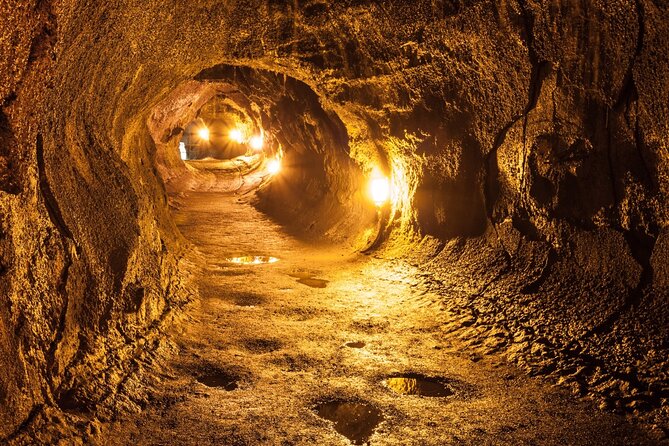
At Steam Vents, the story shifts back underground. Heat from Kīlauea warms groundwater trapped in pockets below the surface, sending steam upward through cracks and vents.
The audio explains why these vents matter as signs of activity beneath your feet. You are not simply looking at mist drifting over the ground. You are seeing part of the volcano’s heat system at work.
Nearby, the short Sulphur Banks Trail offers a quick walk. The name tells you what to expect. Sulfur gases produce a strong smell, and the route is more interesting for its geology than for a pleasant stroll.
I would keep your first stop here flexible. If the fumes bother you, listen to the story and move on. If you enjoy odd volcanic details, this is a good place to slow down and notice the colors and textures around the vents.
Kīlauea Overlook and Kīlauea Iki Trailhead
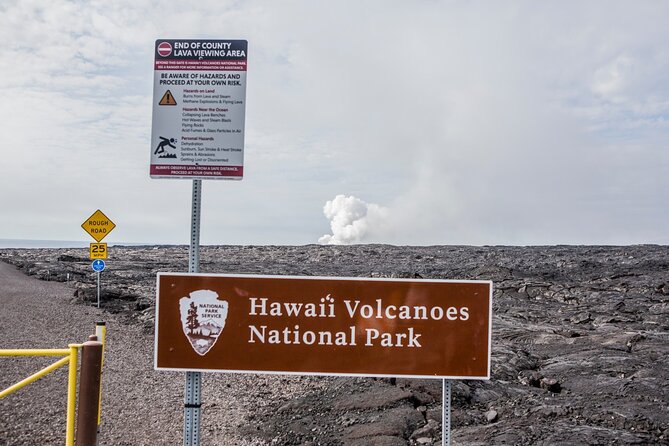
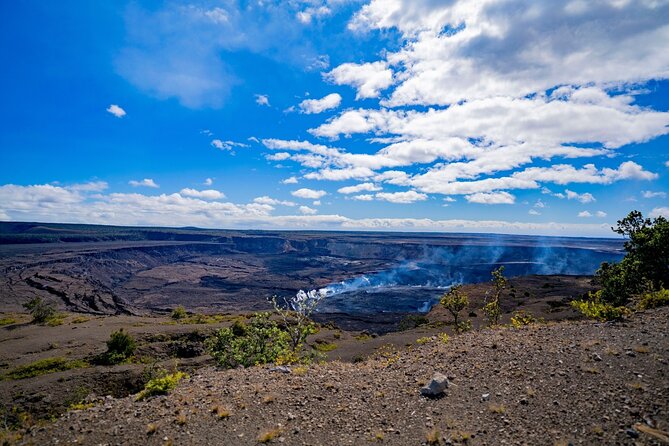
Kīlauea Overlook is one of the major visual stops. The crater may not look like the classic cone-shaped volcano you picture, but the audio points out that Kīlauea is among the world’s most active volcanoes.
The view is a strong reminder that volcanic activity can create a broad, open crater rather than a neat mountain peak. I would give this stop more than the basic 10-minute suggestion if conditions are clear and you want time for photographs.
The next major stop is the Kīlauea Iki Trailhead. The trail forms a 3.3-mile loop through the Kīlauea Iki Crater and takes about three hours, with elevation changes that can feel strenuous.
This is where the flexible format earns its keep. You can pause the audio, hike, and resume when you return. One useful tip is to keep the tour running at the recommended road speed when driving, since the stories are timed to the route. If you drive faster, the next story may begin before the previous one has finished.
Nāhuku, Thurston Lava Tube
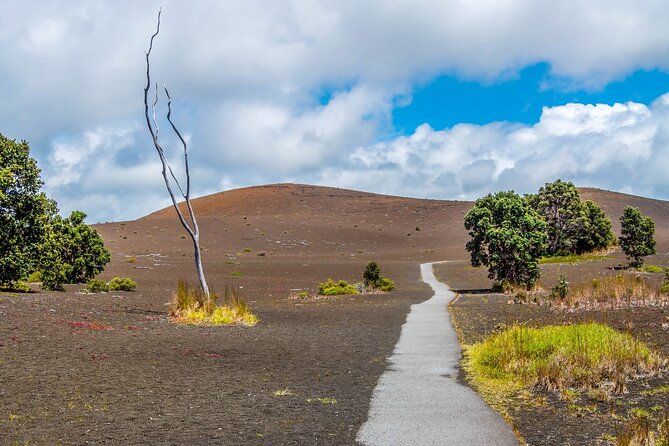
Nāhuku, also called Thurston Lava Tube, is one of the park’s most approachable volcanic features. It formed when molten lava flowed through the area, with the outside cooling and hardening while the hotter lava inside continued onward.
The result is a tunnel-like cave that you can explore. The tour gives you the basic formation story, which helps you understand why a lava tube is not an artificial tunnel or an ordinary cave.
This stop is easy to combine with the drive because it does not require a full-day hike. Still, allow extra time if you want to walk through the tube rather than simply listen from the parking area.
Luamanu, Puhimau, and Pauahi craters

The route then takes you through a series of volcanic features that are easy to pass without context.
Luamanu Crater was once covered by dense forest, but that changed in a single day. The story gives the stop a human scale. A forest that seems permanent can disappear quickly in a volcanic area.
Puhimau Crater shows another form of volcanic change. The stop focuses on the formations created by volcanic activity, giving you a reason to look carefully rather than treating every crater as the same.
Pauahi Crater is a steep-sided pit about 330 feet deep and 1,000 feet across. Look for lava spatter deposits and fumaroles, where steam and gases escape.
These stops are not all dramatic in the same way. Some are best appreciated through the narration, especially if you do not have time to get out at every pullout. The audio gives each feature a distinct role in the park’s story.
Puʻu Huluhulu and Kipuka Puaulu
Puʻu Huluhulu is a cinder cone. Its name means hairy hill, a reference to the low shrubs that cover it and give it a fuzzy look from a distance.
That small detail is exactly the kind of thing I want from an audio tour. It gives you something specific to watch for, rather than asking you to admire another unnamed mound of volcanic material.
Kipuka Puaulu shows how life can survive around lava. A kipuka forms when a lava flow surrounds an older patch of vegetation, leaving an island of living plants within a field of newer lava.
The idea is simple but powerful. In a park shaped by destruction, these pockets show survival and continuity. If you have time for the trail, the audio helps you understand why the vegetation here differs from what surrounds it.
Mauna Ulu Lookout and Puʻu Loa Petroglyphs
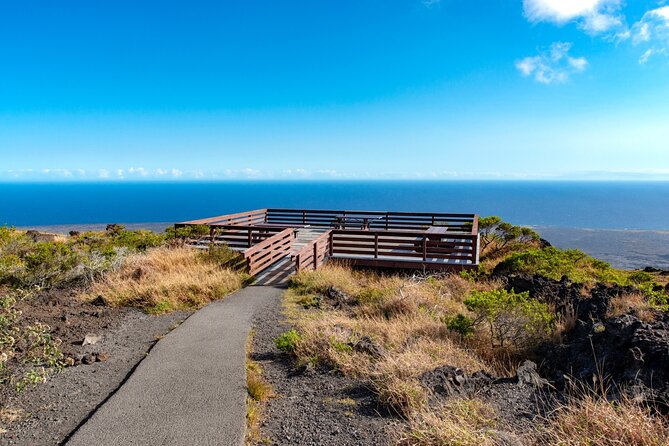
At Mauna Ulu Lookout, a raised platform gives you broad views over the Mauna Ulu lava flow. Much of the flow looks flat and gray, but the audio points you toward unusual toadstool-shaped formations.
This is a good stop for careful observation. Volcanic ground can appear empty at first glance, and the story gives you a visual target that makes the stop more rewarding.
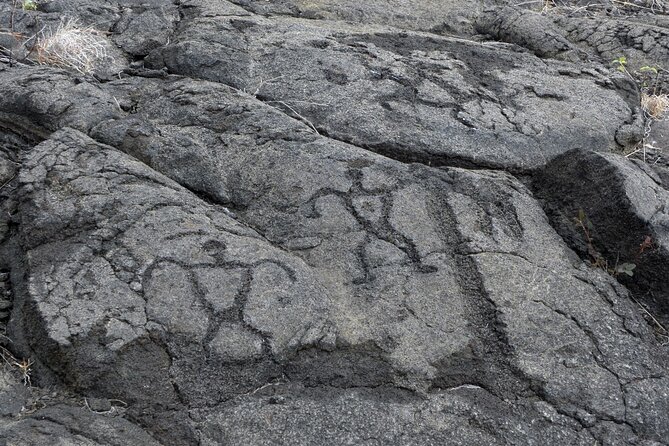
Puʻu Loa Petroglyphs adds a cultural and historical dimension. More than 23,000 ancient petroglyphs are etched into hardened lava rock here.
Treat this site with care. The markings are not decoration and should not be touched. The tour helps explain why the place deserves more than a quick photograph, though the supplied route information does not promise a particular walking time beyond the suggested 10-minute stop.
Hōlei Sea Arch, the payoff at the end of the road
The route finishes at Hōlei Sea Arch on Chain of Craters Road. The arch formed naturally in the sea cliff and makes a memorable final stop after the inland craters and lava fields.
I strongly recommend making it all the way to the arch if road and park conditions allow. One family specifically singled out this drive as worth the time, and the stop gives the tour a clear ending rather than leaving you somewhere in the middle of the park.
The sea arch also changes the rhythm of the day. You begin among steam vents and craters, then finish where volcanic rock meets the ocean. The route shows how one volcanic island can offer very different settings within a single drive.
The Volcano Art Center Gallery
The Volcano Art Center Gallery sits in a small building near the visitor center. It is an optional stop for anyone interested in fine art.
This is not a major part of the volcanic route, but it is a useful add-on before or after the drive. It gives you a cultural counterpoint to the geology and wartime history covered elsewhere.
Because the tour lets you pause and revisit locations, you can save the gallery for the end instead of trying to fit it into the main drive.
App setup, GPS, and the most important practical tip
Download the separate Action Tour Guide app before you enter the park. After booking, you receive setup instructions and a password by email and text. Search your messages for audio tour if the instructions are difficult to find.
Download the actual tour while you have strong Wi-Fi or cellular service. Once it is stored on your device, the audio and maps work offline, which is important in a park where service may be weak.
Connect your phone to the car stereo by Bluetooth, USB, or AUX. Apple CarPlay is supported for audio playback, while Android Auto support is noted as forthcoming. An iPhone with iOS 15 or newer, an Android device with version 9 or newer, or an iPad or tablet with GPS and cellular connectivity is recommended.
The best practical advice is to open the app and review the route before you arrive. One person found the opening map narration distracting, while others found the directions easy to follow. Previewing the stories helps you avoid trying to read setup instructions while driving.
The tour is designed for the recommended direction. It may track you if you make a small detour, but it does not currently offer a true reverse route. If you enter from another point or drive the road backward, the timing may not be as smooth.
Who should book this tour?
I would choose this tour if you want a low-cost introduction to the park, prefer to travel independently, or have only one afternoon to see the major stops.
It is especially useful for families and couples who do not want to pay per person for a full guided excursion. It also suits repeat visitors who want access to the stories again on another trip.
I would think twice if you dislike phone-based navigation, cannot download the app before entering the park, or want a live guide who can answer questions and change the plan on the spot. The app is easy once prepared, but the setup is not something to leave until you reach the entrance.
Free cancellation is available when you cancel at least 24 hours before the experience start time. Within 24 hours, the payment is not refunded, and late changes are not accepted.
FAQ
How much does the Hawaii Volcanoes National Park audio tour cost?
The tour costs $16.99 per group of up to four people. It is priced per car group, not per person.
How long does the tour take?
The main drive takes about two to three hours. You should allow more time if you hike, visit the lava tube, stop for photos, or spend time at the sea arch.
Does the tour include the national park entrance fee?
No. The Hawaiʻi Volcanoes National Park entrance fee is separate and is not included.
Where does the tour start?
It starts at the park’s Entrance Station in Volcano, Hawaiʻi.
Where does the tour end?
The route ends at Hōlei Sea Arch on Chain of Craters Road in Pāhoa, Hawaiʻi.
Does someone meet me at the starting point?
No. This is a self-guided tour, so no guide meets you at the entrance.
Do I need cell service during the tour?
You need strong Wi-Fi or cellular service to download the tour before you go. After downloading, the tour works offline.
How does the audio begin?
Open the Action Tour Guide app at the starting point. When you reach the first story location, the audio begins automatically through GPS.
Can I pause the tour for a hike or other stop?
Yes. You can pause the tour, take breaks, explore side trips, repeat stories, and resume later.
Can I drive the route in reverse?
The tour is designed for the recommended starting point and direction. It does not currently offer a dedicated reverse version.
Should you book it?
I would book this tour if you want useful context without joining a group and you can handle the app setup before arriving. The best parts are the per-car price, the freedom to stop, and the range of subjects, from Kīlauea’s underground heat to wartime internment, ancient petroglyphs, and Hōlei Sea Arch.
Download everything at home, follow the route at the posted speed, and protect enough time to reach the coast. If you do that, this is a practical way to turn a long volcanic drive into a connected story of fire, people, plants, and ocean.
Just added on Big Island of Hawaii
- Volcano National Park and Rainbow Fall in Hilo, Hawaii★ 5.0 · 53 reviews
- Volcanoes National Park Adventure Tour – Hilo Shore Excursion★ 4.5 · 104 reviews
- Volcanoes National Park and Hilo Private Tour★ 5.0 · 3 reviews
- Volcanoes Adventure Tour from Hilo★ 4.0 · 29 reviews
- Private VAN Tour Hilo★ 4.5 · 5 reviews
- Majestic Waterfall Tour★ 5.0 · 31 reviews
- Private Shore Excursion Hilo Volcanoes National Park up to 10 PPL★ 5.0 · 36 reviews
- 5 Hour Custom Private Tour of Hawaii★ 5.0 · 9 reviews
Volcanoes National Park Tours, compared.

Big Island in a Day: Volcanoes Waterfalls Sightseeing and History
Read our review →
Hilo Shore Excursion: Volcanoes National Park & Black Sand Beach
Read our review →
Small Group Big Island Twilight Volcano and Stargazing Tour
Read our review →
Big Island Highlights: Coffee, Volcano, Black Sands & Waterfall
Read our review →
Deluxe Volcano Experience with Restaurant Dinner
Read our review →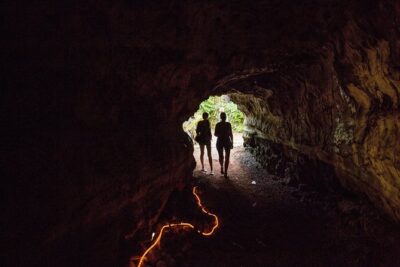

Captain Cook Snorkel Tour with Sea Caves and Lava Tubes
Read our review →
Fat Tire E-Bike Tour through Volcanoes National Park
Read our review →Browse the lists this tour appears in