Reviewed · TOURS IN THE BIG ISLAND
Full-Day Hakalau Forest Reserve Bird Watching Adventure
Hakalau Forest Reserve is one of the Big Island’s best places to seek rare native birds, and access to the privately owned Pua Akala tract gives this day real appeal. You travel far from the usual resort route, then walk forest trails with a naturalist guide who can often hear or spot birds before you do.
I like the small 10-person limit and the fact that binoculars, lunch, snacks, drinks, and transport are included. I also like the guides’ broad view of the place: Gary Dean and John are praised for explaining birds, plants, geology, history, and even unusual creatures such as carnivorous caterpillars and happy-faced spiders.
The main consideration is the physical demand. You need to manage short hikes of 1.5 to 4 miles over uneven or rocky ground, and the full day begins early and lasts about 12 hours. Bird sightings are never guaranteed, though the setting and expert guidance give you a strong chance.
Key points at a glance
- Private Pua Akala access: Explore a restricted section of Hakalau Forest Reserve that is not part of an ordinary self-guided visit.
- Rare Hawaiian birds: Search for akepa, ʻakiapōlāʻau, ʻiʻiwi, Hawaii creeper, ʻōmaʻo, Hawaiian hawk, pueo, and more.
- Guides who know the forest: Gary Dean and John are noted for spotting birds by sight and sound and explaining native plants and wildlife.
- Small-group transport: Ride in an air-conditioned 4-wheel-drive Mercedes Sprinter with a maximum of 10 people.
- Food and gear included: You receive binoculars, a deli-style lunch, snacks, filtered water, juices, and flavored sparkling water.
- A serious birding day: Expect an early start, long hours, uneven trails, and a price of $287.96 that reflects restricted access and specialist guiding.
Why Hakalau Forest is worth the long day
The Big Island gives you lava fields, beaches, ranch country, and high mountain forests in one trip. This tour takes you toward one of the island’s most important native forest areas, where rare Hawaiian birds still live among old trees and native plants.
The Pua Akala tract is privately owned and access is restricted. That matters. You are not simply pulling into a roadside viewpoint, following a marked visitor path, and hoping a bird appears. The day is built around entering a protected forest with a guide who understands where different species tend to feed, call, and move through the treetops.
Hakalau also gives you a look at what remains of Hawaii’s ancient rain forests. The forest is not only scenery between bird sightings. It is the reason the birds survive. Your guide may point out native plants, unusual insects, geology, and the ongoing work to protect this habitat.
That wider view improves the experience. You learn why a rare bird matters, not just how to add its name to a list.
A few more things to do on Big Island of Hawaii worth a look
- Full Day Sportsman/Enthusiast Charter
★ 5.0 · 66 reviews - Big Island: Full Day Adventure Tour of the Kohala Waterfalls
★ 5.0 · 41 reviews - Big Island: Full-Day Kohala Zipline and Waterfall Adventure
★ 4.8 · 36 reviews
The early Kona start and long ride inland
The listed start time is 6:30 a.m. at Hawaii Forest & Trail, 73-5593 A Olowalu Street in Kailua-Kona. Your actual pickup time may differ, so confirm it with the operator before the morning of the tour. Central pickup and drop-off locations are available, and pickup can be arranged on request.
The ride takes you across several of the Big Island’s climate zones before the vehicle leaves the paved route. That changing scenery helps explain the island’s unusual range of habitats. You begin near the Kona side, then pass through different elevations and weather conditions as you head toward Hakalau.
Transportation is in an air-conditioned 4-wheel-drive short-wheelbase Mercedes Sprinter. The vehicle is designed for small groups and rougher access roads. The small size is useful here: ten people or fewer means less crowding when the guide points toward a distant bird or asks everyone to listen for a call.
Still, this is a long day in a vehicle. If you prefer a relaxed morning and a short outing, this will feel demanding. The payoff is access to a place that would be difficult to reach on your own.
Entering the Pua Akala tract on foot
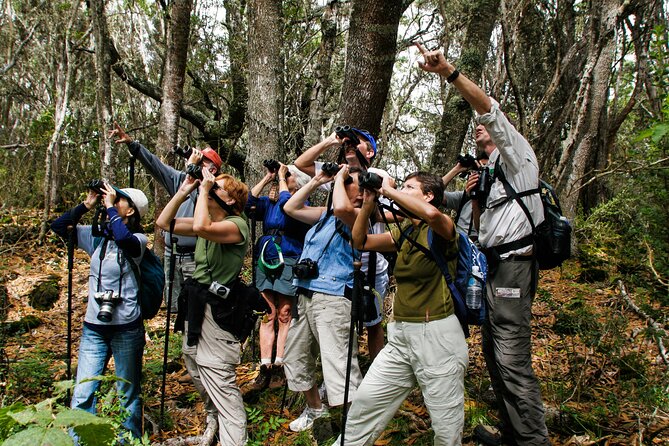
Once you reach the forest and fields of the Pua Akala tract, the focus shifts to walking and careful observation. The hikes range from 1.5 to 4 miles, and the terrain can be uneven or rocky. You should have a moderate fitness level and be comfortable walking outdoors for several hours.
This is not a paved nature walk. You need stable footwear and enough balance for rough ground. The supplied information does not specify a particular shoe type, but practical hiking shoes are a sensible choice for the conditions described.
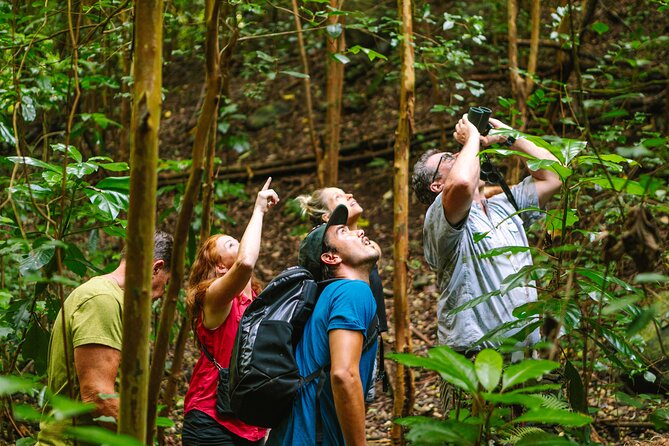
Your guide leads the group through forest and open areas, stopping to scan the canopy and listen. Birding here is less about covering huge distances quickly and more about patience, sound, and knowing where to look.
The guide may find a bird before you see it. One especially useful skill is recognizing calls. In a thick forest, a bird can stay hidden while its voice gives away its location. Gary Dean is praised for finding many birds by listening, then directing the group to the right tree or patch of foliage.
The rare birds you may search for
The target list includes some of Hawaii’s most sought-after native species:
- Akepa
- ʻAkiapōlāʻau
- ʻAmakihi
- ʻApapane
- Hawaii creeper
- ʻIʻiwi
- ʻElepaio
- ʻŌmaʻo
- Hawaiian hawk, or ʻio
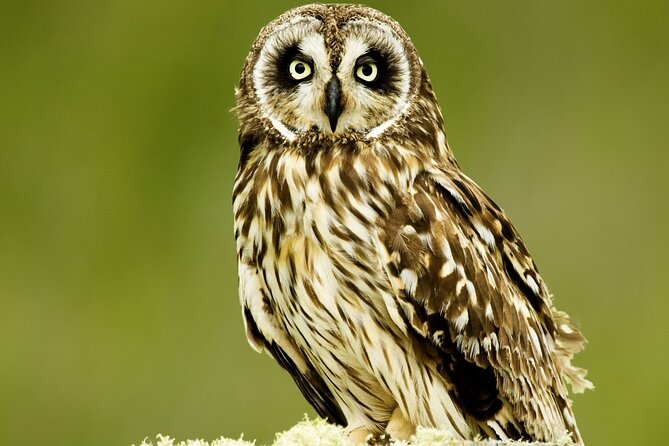
- Pueo, the Hawaiian short-eared owl
Several of these birds are endemic, meaning they are found nowhere else in the wild. That makes the outing special even for people who are not serious birders. You are looking at species tied closely to Hawaii’s remaining native forest.
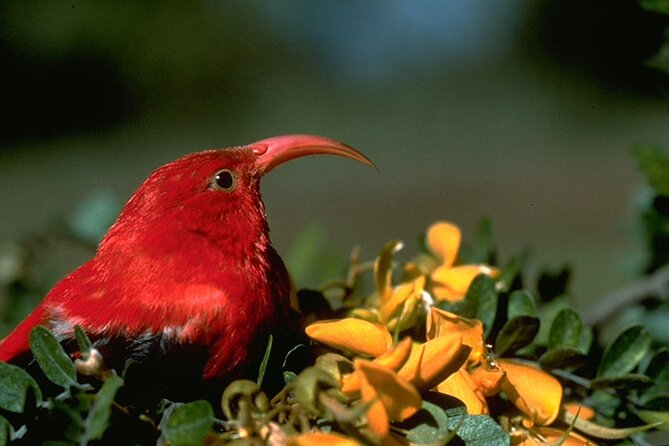
The akepa and ʻakiapōlāʻau are among the most exciting possibilities. They can be difficult to spot, and the guide’s ability to identify calls and likely habitat becomes important. The ʻiʻiwi, with its striking color and curved bill, is another prized sighting. Apapane may be more familiar to some visitors, but it remains a native Hawaiian forest bird and part of the place’s character.
You may also see birds beyond the main target list. One successful day included 31 species, with Hawaiian hawk and Hawaiian short-eared owl found during the journey to and from the Kona area. That is a useful reminder to keep watching outside the official forest stop. The road sections can produce worthwhile sightings too.
The palila is not normally part of this particular outing. It requires a separate trip to a different area. If seeing every rare Hawaiian forest bird is your main goal, you should know that this tour does not cover all habitats.
Same island, a different kind of day:
- Big Island in a Day: Volcanoes Waterfalls Sightseeing and History
★ 5.0 · 6,569 reviews - Big Island Manta Ray Night Snorkel
★ 5.0 · 5,656 reviews - Big Island: Kona Manta Ray Snorkel Tour in Keauhou Harbor
★ 4.5 · 2,465 reviews - Hilo Shore Excursion: Volcanoes National Park & Black Sand Beach
★ 4.5 · 2,338 reviews
More than birds: caterpillars, spiders, and native plants
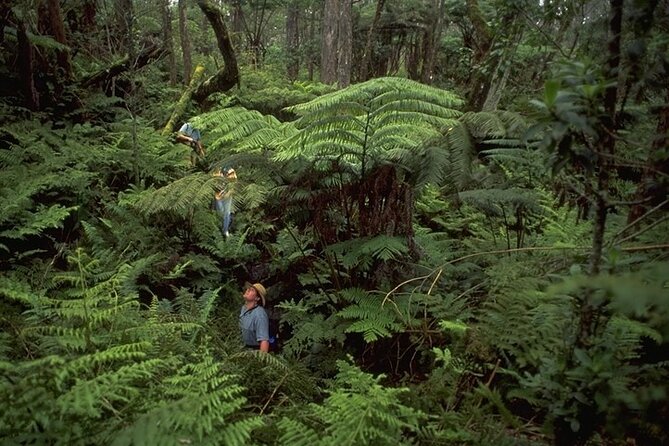
A good guide changes the pace of a forest walk. You are not left staring at the treetops for twelve hours. Between bird stops, the guide may explain the native plants, forest ecology, geology, and history of the area.
The unusual small creatures are part of the fun. The tour description specifically mentions carnivorous caterpillars and happy-faced spiders. Those details give the day variety, especially when a bird remains hidden or the group is moving between habitats.
Gary Dean is praised for knowing the flora as well as the birds. John is also described as a strong source of information, with a light sense of humor. Guide availability can vary, but the experience is clearly designed around an interpretive naturalist rather than a driver who simply drops you at a trailhead.
That distinction matters. Hakalau is valuable because of its ecological story, and a guide helps you read that story.
Lunch, binoculars, and the practical comforts
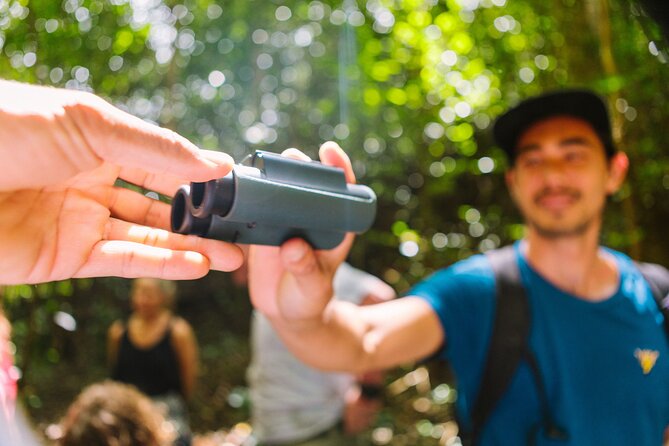
Binoculars are included, which saves you from bringing your own or renting equipment elsewhere. That is important because many sightings will be high in the canopy or across a clearing. You will still need patience and a steady hand, but the basic viewing gear is supplied.
The day also includes a deli-style lunch, snacks, filtered water, juices, and flavored sparkling water. Bathroom stops are included along the route. These details sound ordinary, but they matter on a 12-hour outing far from town.
You should still dress for changing conditions. The tour crosses different climates and elevations, so conditions may not feel the same at the meeting point and in the forest. Bring any personal medication, sun protection, and extra clothing you may need. The supplied information confirms food and drinks, but not special dietary arrangements, so ask the operator about those before booking if necessary.
Is $287.96 a fair price?
At $287.96 per person, this is not a casual low-cost nature trip. I think the price makes more sense when you consider what is included: transportation from the Kona area, access to private restricted land, a naturalist guide, binoculars, lunch, snacks, drinks, filtered water, and all fees and taxes.
The small group also affects the value. A maximum of 10 people gives the guide more room to help each person find a bird. In a larger group, the first few people might see the bird while everyone else is still trying to locate the tree. Here, the format is better suited to close observation.
The price is easiest to justify if rare Hawaiian birds are a major reason for your Big Island visit. If you simply want a general forest walk, you may find the cost and length excessive. This is a specialist outing with a full-day commitment.
It is also popular enough that people book it about 85 days ahead on average. That does not guarantee a particular date will sell out, but it is a clear reason to plan early, especially if your Big Island schedule is fixed.
Who will enjoy this most?
I would choose this tour if you have a real interest in birds, native plants, conservation, or unusual ecosystems. You do not need to be an expert. The guides are suited to beginners as well as experienced birders, and they can explain what you are seeing without assuming you already know the species.
It is also a strong choice for anyone who wants a less polished, more field-based Hawaiian experience. You are not spending the day at a scenic overlook with a short interpretive talk. You are riding off-road, walking rough trails, listening for calls, and waiting for movement in the canopy.
I would hesitate if you have limited mobility, cannot walk on uneven or rocky ground, or dislike early starts. The tour is not suitable for someone who is physically challenged in the ways described by the operator. The walking distance is modest by hiking standards, but the terrain and the long day add up.
Families should also consider the age, patience, and fitness of each person. The maximum group size is small, but a quiet birding stop can feel slow to someone expecting constant action.
What makes this different from ordinary Big Island sightseeing
Many Big Island outings focus on volcanoes, beaches, coffee, or stargazing. This one focuses on native forest and species found only in Hawaii. It gives you a side of the island that is easy to miss if you stay near the coast.
The restricted access is the key difference. You are visiting a protected and privately owned part of Hakalau rather than relying only on public roads and common viewpoints. That access, combined with a guide who knows the birds by sound and habitat, gives you a better chance to see species that are difficult to find independently.
The day also has a conservation angle without turning into a lecture. You see what remains of the ancient forest and learn about efforts to protect it. For me, that makes the bird sightings feel more meaningful. Each species is part of a larger struggle to preserve native Hawaiian ecosystems.
Booking, weather, and cancellation details
You receive confirmation when you book. Free cancellation is available if you cancel at least 24 hours before the local start time. Changes or cancellations inside that 24-hour window are not accepted for a refund.
The outing requires good weather. If poor conditions cause the operator to cancel, you can receive a different date or a full refund. If the minimum number of participants is not reached, the operator offers another date or experience, or a full refund.
The tour is offered in English. Group discounts may be available, and mobile tickets are supported.
Should you book the Hakalau birding day?
Book it if you want rare Hawaiian birds and are ready to give the day your full attention. The strongest reasons are the restricted Pua Akala access, the small vehicle group, and guides such as Gary Dean and John who can connect birds with the plants, geology, and history around them.
I would especially recommend it to a birder who wants akepa, ʻakiapōlāʻau, ʻiʻiwi, or Hawaii creeper, and to a curious first-timer who wants expert help rather than a self-guided search. The included food, gear, and transport make the $287.96 price easier to accept.
Skip it if you want a short, easy activity or cannot manage rocky trails. Also remember that no guide can promise every species, and the palila requires a separate area. For the right person, though, this is one of the Big Island’s most focused and memorable nature days.
FAQ
Where does the Hakalau Forest birding tour start?
The listed meeting point is Hawaii Forest & Trail at 73-5593 A, 73-5593 Olowalu Street in Kailua-Kona, Hawaii.
What time does the tour start?
The listed start time is 6:30 a.m. Your pickup time may be different, so contact the operator to confirm the exact meeting time.
How long does the experience last?
The experience lasts approximately 12 hours and ends back at the meeting point.
How many people can join the tour?
The tour has a maximum of 10 participants.
What birds might I see?
Possible species include akepa, ʻakiapōlāʻau, ʻamakihi, ʻapapane, Hawaii creeper, ʻiʻiwi, ʻelepaio, ʻōmaʻo, Hawaiian hawk, and pueo. The palila requires a separate area.
Is lunch included?
Yes. The tour includes a deli-style lunch, snacks, filtered water, juices, and flavored sparkling water.
Are binoculars provided?
Yes. Binoculars are included with the tour.
How much walking is involved?
You should be able to manage short hikes of 1.5 to 4 miles on uneven or rocky terrain and have a moderate level of physical fitness.
Just added on Big Island of Hawaii
- Volcano National Park and Rainbow Fall in Hilo, Hawaii★ 5.0 · 53 reviews
- Volcanoes National Park Adventure Tour – Hilo Shore Excursion★ 4.5 · 104 reviews
- Volcanoes National Park and Hilo Private Tour★ 5.0 · 3 reviews
- Private VAN Tour Hilo★ 4.5 · 5 reviews
- Volcanoes Adventure Tour from Hilo★ 4.0 · 29 reviews
- Majestic Waterfall Tour★ 5.0 · 31 reviews
- Private Shore Excursion Hilo Volcanoes National Park up to 10 PPL★ 5.0 · 36 reviews
- 5 Hour Custom Private Tour of Hawaii★ 5.0 · 9 reviews
Tours in the Big Island, compared.
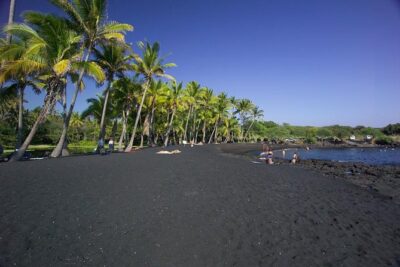
Big Island in a Day: Volcanoes Waterfalls Sightseeing and History
Read our review →

Kona Manta Ray Snorkel Tour in Keauhou Harbor
Read our review →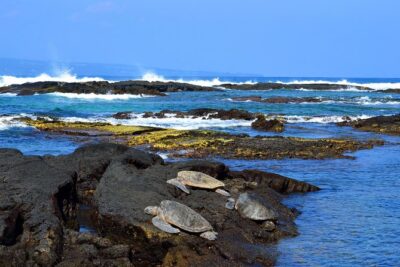
Hilo Shore Excursion: Volcanoes National Park & Black Sand Beach
Read our review →
Captain Cook Snorkel On A Power Catamaran With Lunch
Read our review →
KONA Manta Ray Night Snorkel – FREE re-ride if no Sightings
Read our review →
Big Island GOAT Experience: Mauna Kea Summit, Sunset & Stars
Read our review →