
Reviewed · TOURS IN KAUAI
Hawaiian Reef Spearfishing Lesson for Beginners on Kauai
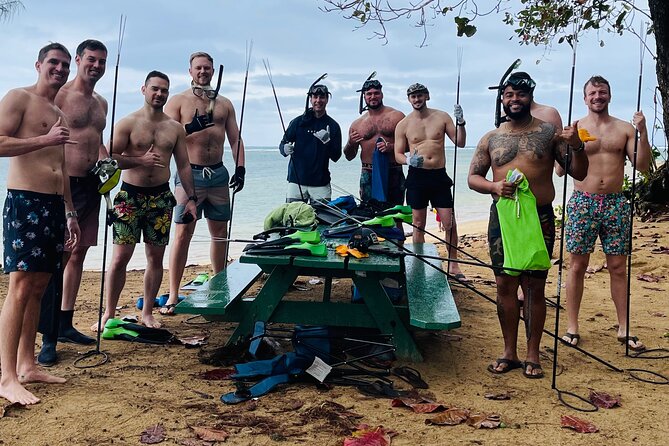
Kauai’s beginner spearfishing lesson turns a morning at Anini Beach into snorkeling with a purpose. You learn on shore, practice with a traditional three-prong spear, then swim out to reef areas where fish are more plentiful. Guides such as Aidden, Christian, Tui, and Aidan are praised for patient instruction and a calm presence in the water.
I like the small six-person maximum, which gives the guide room to watch the group and explain what you are seeing. I also like the honest approach to catching fish: you may bring home a catch, but the real reward is learning reef skills and spotting turtles, eels, rays, and colorful fish.
The catch is the physical demand. You need to be comfortable snorkeling, swimming against some current, and holding a loaded sling-style spear with one arm. The outer reef can be several football lengths from shore, so this is not a gentle, float-near-the-beach activity.
Key points to know before you book
- A 45-minute shore lesson comes first: Learn equipment safety, responsible fishing, fish identification, and how to handle the three-prong spear.
- The water session lasts about two hours: Expect a long morning in the reef, with plenty of time spent watching fish as well as trying to land one.
- You must bring your own fins: Snorkel equipment is supplied except for fins, and decent fins matter when current picks up.
- A Hawaii fishing license costs $20 for nonresidents: Buy the 24-hour recreational ocean fishing license through the state DLNR website before arriving.
- The group is capped at six people: That helps with instruction, though the group can spread out in the water.
- There is no guaranteed catch: The activity is built around instruction and sustainable practice, not a promised dinner.
Anini Beach is the right setting for a first lesson
The meeting point is at 4241 Anini Road in Kilauea, on Kauai’s north shore. You meet at 9:30 a.m. and return to the same spot when the activity ends, so you will need to arrange your own transportation.
Anini is a natural place to learn. The reef offers a chance to see marine life even if your spear never finds its mark. One outing produced sightings of turtles, eels, a manta ray, sea cucumbers, and many reef fish. Another visitor found the deepest water to be about five feet, though conditions and route can vary.
That shallow-water setting can make the lesson feel less intimidating than open-water fishing. Still, do not confuse shallow water with easy water. The reef is some distance from shore, and you may work against current on the way out or back. One account described the outer fishing area as roughly three football lengths from the beach. Another noted that people in the group could spread 50 to 100 yards apart while hunting.
You should already be comfortable with a mask and snorkel before booking. If you are rusty, spend time snorkeling before your Kauai morning. You will get more from the lesson if you can control your breathing, kick efficiently, and watch the reef without worrying about basic equipment.
Other trips people book on Kauai:
- Koloa Zipline in Kauai
★ 5.0 · 6,764 reviews - Kauai Deluxe Sightseeing Flight
★ 5.0 · 2,162 reviews - Kauai Eco Adventure Helicopter Tour
★ 5.0 · 2,032 reviews
The shore lesson makes the activity more than a quick fish hunt
The first 45 minutes are spent on land. This is where the guide explains how the equipment works, how to hold and load the spear, and how to use it without putting yourself or another person at risk.
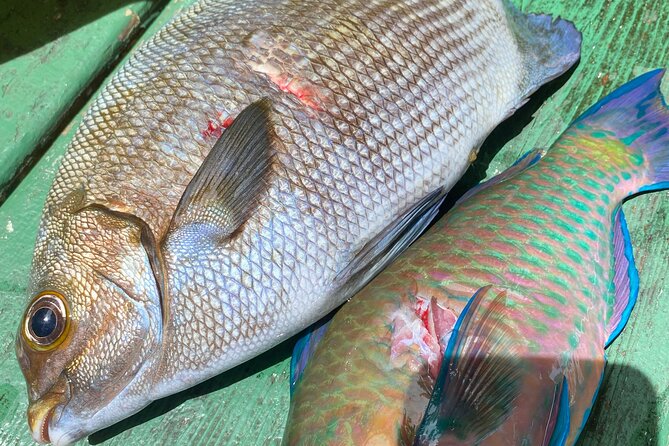
You will also learn to identify native and invasive reef fish. That detail matters. Spearfishing in Hawaii is not simply a matter of aiming at anything that moves. Knowing what you are looking at helps you act responsibly and avoid taking the wrong species.
The instruction covers sustainable practices as well. The aim is to give you a useful skill and a better understanding of Hawaii’s marine traditions, not to send every beginner home with a full bag of fish. Guides set realistic expectations early. Even an experienced instructor may need several outings before landing a fish, so a first-timer should treat any catch as a bonus.
The practical demonstration is important because the spear is not a standard fishing pole. It works more like a compact slingshot. You hold tension in one arm while waiting for a fish to move into range, then release the spear with control. That can tire your dominant arm faster than expected, especially when you are also kicking, watching the reef, and managing your breathing.
The two-hour reef session tests your swimming skills
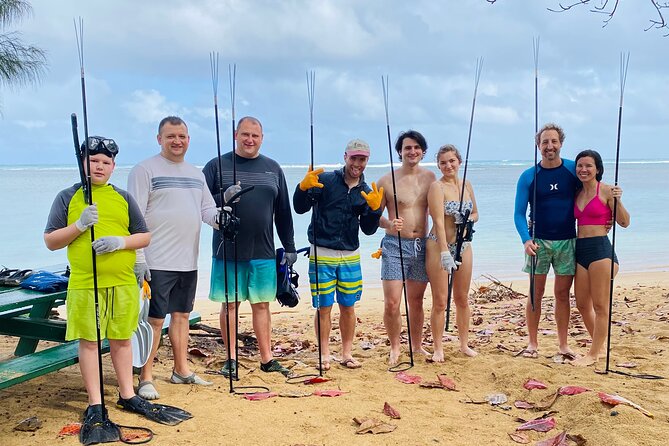
After the lesson, you suit up with the supplied snorkeling equipment and enter the water. Fins are not supplied, so bring your own pair. A basic pair can work, but stronger fins are useful when you are moving across current or swimming toward the outer reef.
The water portion lasts about two hours. That is enough time to move beyond a quick demonstration and practice the process repeatedly. You will watch fish, choose a position, hold the spear ready, and wait for a clear opportunity. Much of the skill comes from patience and positioning rather than fast action.
Your guide may move the group toward sections of reef where fish are more likely to be found. This is one of the main values of the lesson. You are not trying to guess where to go from the beach, and you do not need to teach yourself the basics while handling unfamiliar gear.
At the same time, do not expect the guide to hold your hand every second. Some groups spread out as people search for fish. The guide remains part of the activity, but you may have room to work independently. If you need help, speak up early, especially if you are nervous or new to snorkeling.
The conditions can change the feel of the morning. Low tide may make the trip out and back more awkward, and one account described scraping concerns around the reef. Rain can also affect visibility and fish activity. The experience requires good weather, so a cancellation for poor conditions results in another date or a full refund.
The catch is possible, but the wildlife is the real payoff
Landing a fish is satisfying, but it should not be your only measure of success. Several people went home empty-handed and still found the morning worthwhile. That is a fair expectation for a beginner activity where fish move quickly, visibility varies, and you are learning a new tool.
When someone does land a fish, the guide bags it so it can be taken home. Experiences have included guides cleaning or processing fish and sharing cooking suggestions, but the formal focus is instruction and sustainable practice, not a guaranteed catch-and-cook meal. Ask your guide what handling help is available that day rather than assuming a full seafood preparation service.
The reef itself gives you plenty to watch between attempts. You might see turtles, eels, rays, sea cucumbers, and schools of reef fish. Even when the water is not ideal for fishing, it can still be a rewarding snorkeling session.
That is why I would describe this as two activities joined together: a beginner spearfishing class and a guided reef outing. If you are curious about marine life but unsure about hunting fish, you can still appreciate the second half. If you only want dinner, the uncertain catch makes this a poor choice.
Same island, a different kind of day:
- Kauai Airplane Tour: Na Pali Coast, Waterfalls & Window Seats
★ 5.0 · 1,964 reviews - Kauai: Hughes 500 4-Passenger Doors-Off Helicopters
★ 5.0 · 1,951 reviews - Kauai: Luau Kalamaku with Buffet Dinner and Show
★ 4.5 · 1,620 reviews - Na Pali Coast Half-Day Raft and Snorkel Adventure
★ 5.0 · 1,609 reviews
Guides Aidden, Christian, Tui, and Aidan shape the experience
The guide has a big effect on a lesson like this. Aidden is repeatedly described as patient, friendly, and clear with beginners. He has guided families, couples, solo visitors, and people who had never tried spearfishing before. His approach appears to balance instruction with enough freedom for people to try the skill themselves.
Christian is also praised for taking time with families and choosing safe areas for people with less water experience. Tui made a nervous first-time snorkeler feel more comfortable, which is especially useful if one person in your group is excited while another is hesitant.
Aidan is described as an experienced local guide who demonstrated the technique by quickly landing a fish. A demonstration can help you understand what a successful shot looks like, but it should not convince you that your own first attempt will be just as quick.
Guide names and staffing can change, so you may not receive the same instructor shown in every account. The consistent theme is that the teaching matters as much as the fishing. Ask questions, stay within the guide’s instructions, and tell the guide if the current or distance is becoming too much.
What the $125 price really covers
At $125 per person, the price is reasonable if you value instruction, supplied snorkeling equipment, and guided access to the reef. You are paying for a 45-minute lesson, roughly two hours in the water, the spear, and the benefit of a guide who knows how to identify fish and choose areas for the session.
The price does not cover every essential item. You must bring:
- Your own fins
- Water and snacks
- Sunscreen
- A Hawaii recreational ocean fishing license if you are an out-of-state resident
The license costs $20 for 24 hours and is obtained through the Hawaii Department of Land and Natural Resources fishing website. Transportation to Anini Beach is also your responsibility.
Those add-on costs are modest, but they matter when comparing this with a standard snorkeling trip. The value is strongest if you want to learn a skill you can use again in Hawaii, rather than simply spend a few hours looking at fish.
The small group limit also improves the value. With no more than six people, the guide has a better chance of giving useful corrections and keeping track of everyone in the water. Still, the group may spread out, so do not expect a private lesson unless you book in a way that creates one.
How to prepare for the current, sun, and long swim
Bring good fins, not just any fins you happen to find in a rental bin. You may need them to push through current, and weak fins can leave your legs tired before the fishing begins.
Use sunscreen and consider protective clothing. The session keeps you in the sun for several hours, and sunscreen is not included. Bring water and a snack because neither is supplied.
Work on your snorkeling before the tour if you have not been in the water lately. Practice clearing your mask, breathing through the snorkel, and swimming while looking down. You do not need previous spearfishing experience, but you do need a strong physical fitness level and confidence in the water.
Pay attention to tide timing when planning your day. Low tide can make the route to and from the reef more difficult. The activity starts at 9:30 a.m., but the most comfortable conditions depend on the day’s weather and tide.
Wear a mindset that leaves room for surprise. You may catch a fish, or you may spend the morning learning how close you can get to one. Either outcome is normal.
Families, couples, and solo visitors
This works well for an adventurous family with older children or teens who already swim and snorkel comfortably. Families have enjoyed the shared challenge, and the guide can give a group a memorable goal without requiring everyone to catch something.
Couples may like the mix of instruction, wildlife viewing, and the possibility of preparing a catch later. It also suits solo visitors who want a more active and unusual morning than a standard beach stop.
I would not recommend it for someone who dislikes snorkeling, struggles with stamina, or expects calm water close to shore. The activity can be demanding, and one person found the swim out more strenuous than expected. The operator clearly requires swimming and snorkeling ability for good reason.
It may also be a poor fit if your main goal is a guaranteed meal. The lesson is about learning how to hunt responsibly, not promising fish for every participant.
Booking, cancellation, and the final 15 minutes
Confirmation is provided when you book, and the activity returns to the Anini meeting point. You can cancel up to 24 hours before the 9:30 a.m. start for a full refund. Changes or cancellations made inside that 24-hour window are not accepted for a refund.
The activity also needs a minimum number of participants. If that minimum is not met, you will be offered another date or experience, or a full refund. Poor weather can cause the same result.
The last 15 minutes are set aside for team photos and questions. If you have a catch, the guide bags it for you to take home. This closing period is useful because it gives you time to ask about fish identification, equipment, and responsible practices after the excitement of the water session.
Should you book this Kauai spearfishing lesson?
Book it if you are a confident swimmer, enjoy snorkeling, and want a hands-on connection with Kauai’s reef culture. The combination of patient teaching, a small group, traditional equipment, and wildlife viewing gives you much more than a quick attempt with a spear.
Go in expecting to learn, not to fill a cooler. Bring strong fins, water, sunscreen, your $20 fishing license, and enough stamina for a long swim over the reef. If you do that, even a fishless morning can feel like a worthwhile Kauai experience. If you need gentle water, close shore access, or a guaranteed dinner, choose a simpler snorkeling outing instead.
FAQ
Where does the Hawaiian Reef Spearfishing Lesson meet?
The meeting point is 4241 Anini Road, Kilauea, Hawaii 96754. The activity starts at 9:30 a.m. and ends back at the same meeting point.
How long does the spearfishing lesson last?
The experience lasts about three hours. It includes a 45-minute shore lesson, about two hours in the water, and a final 15 minutes for photos and questions.
Do I need previous spearfishing experience?
No. The activity is designed for beginners and includes instruction on equipment, safety, fish identification, and responsible fishing practices.
Do I need to know how to swim and snorkel?
Yes. You must be proficient in swimming and snorkeling and should have a strong level of physical fitness.
Are fins provided?
No. Snorkeling equipment is provided except for fins, so you must bring your own fins.
Do I need a Hawaii fishing license?
Yes, out-of-state residents need a recreational ocean fishing license. The 24-hour license costs $20 and can be obtained through the Hawaii DLNR fishing website.
Is catching a fish guaranteed?
No. The lesson focuses on instruction and sustainable practices, and catching a fish is not guaranteed. If you do catch one, the guide will bag it for you to take home.
What happens if the weather is poor?
If poor weather causes the activity to be canceled, you will be offered another date or a full refund. You can also cancel up to 24 hours before the start time for a full refund.
Just added on Kauai
- Kauai Island Private Guided Tour-Waimea Canyon from Poipu/Koloa★ 5.0 · 9 reviews
- Waimea Canyon & Na Pali Driving Tour app★ 4.5 · 116 reviews
- Waimea Historical and Cultural Shared Tour★ 4.5 · 5 reviews
- Kauai Wailua Valley & Waterfalls Audio Driving Tour★ 4.5 · 23 reviews
- Kauai Island Private Guided Tour-Waimea Canyon from Lihue/Kapaa★ 5.0 · 17 reviews
- Kauai Island Private Guided Tour-Waimea Canyon from Princeville★ 5.0 · 3 reviews
- Unforgettable Surf Lesson in Kauai★ 5.0 · 6 reviews
- Wailua River Paddle★ 4.5 · 73 reviews
Tours in Kauai, compared.




Kauai Airplane Tour: Na Pali Coast, Waterfalls & Window Seats
Read our review →
Hughes 500 4-Passenger Doors-Off Helicopters
Read our review →

Na Pali Coast Half-Day Raft and Snorkel Adventure
Read our review →
Browse the lists this tour appears in