
Reviewed · SEGWAY TOURS
History & Culture Tour in Honolulu via Segway
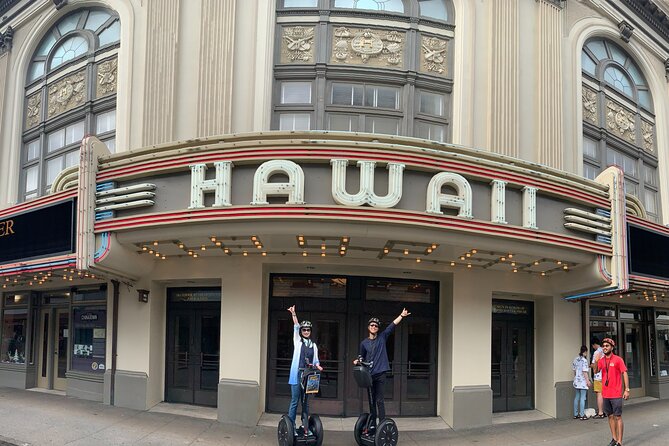
Honolulu’s past comes into focus quickly on this small-group Segway tour, which links missionary homes, royal monuments, Iolani Palace, Chinatown, the harbor, and the oceanfront in about two and a half hours. You cover far more ground than on foot, while a headset lets you keep listening instead of stopping every few minutes.
I like the personal scale, with no more than eight people, and I like the clever route from the Mission Houses to Aloha Tower and Kakaʻako Waterfront Park. Guides including Jeanne, Michael, and Zach are praised for clear storytelling, safety help, photography, and answers to detailed questions. The main consideration is price: at $254.14 per person, this is a costly city tour, especially if you already know Honolulu’s central sights.
Key points at a glance
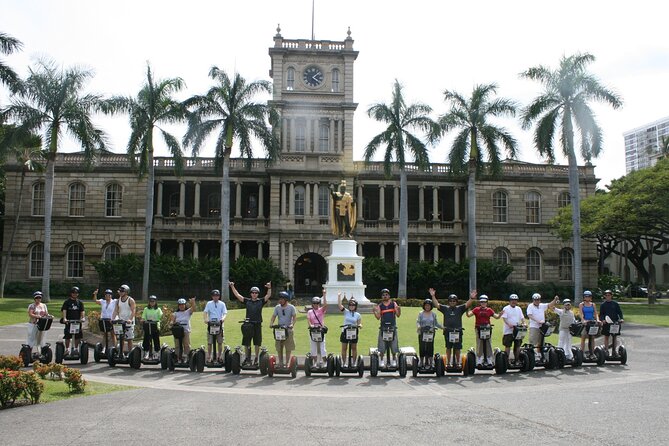
- Royal Honolulu in one ride: Visit Kawaiahao Church, Iolani Palace, the King Kamehameha Statue, and the Queen Liliʻuokalani Statue.
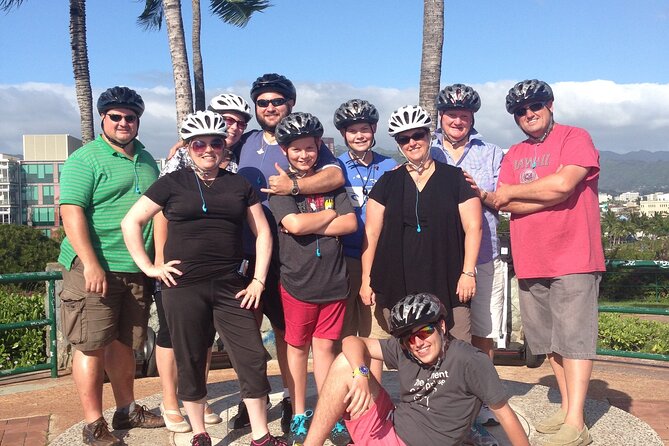
- A small group of eight or fewer: The guide can keep the pace personal and adapt explanations to your questions.
- Headsets and two-way radios: You can hear the guide while riding in single file and communicate without gathering around every stop.
- A wider route than a walking tour: The ride reaches Chinatown, Bishop Street, Honolulu Harbor, Kakaʻako, and Ala Moana Beach Park.
- A 9:00 am start from Kakaʻako: Waikiki pickup is available at four locations for an additional $20 per person round trip.
- A good first Segway outing: Past participants describe the instruction as reassuring and the machines as easy to pick up, though you should still expect a short learning period.
Why this route works for Honolulu history
The clever idea here is to treat central Honolulu as one connected story rather than a string of isolated sights. The route moves from the first missionary period to the Hawaiian monarchy, the overthrow of the Hawaiian government, the growth of downtown commerce, and the modern waterfront.
That sequence gives the tour more meaning than a simple ride past buildings. At the Mission Houses, you begin with Hawaii’s first missionaries and the austere buildings they used after arriving in 1820. Next door, Kawaiahao Church and its graveyard bring you closer to the royal families and leaders who shaped the islands.
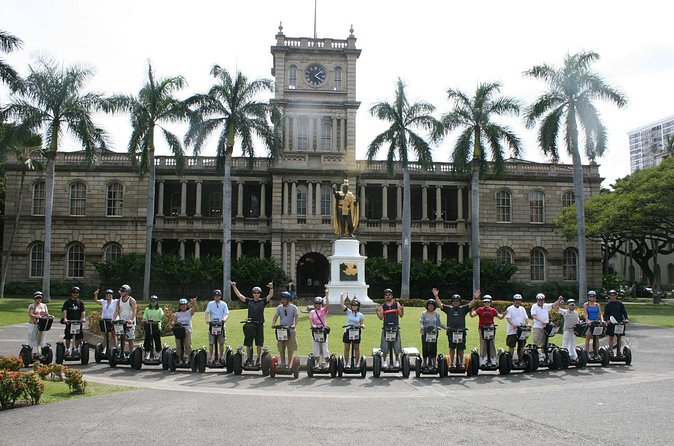
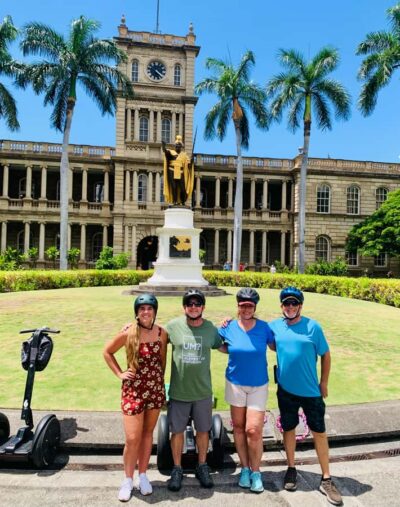
You then move into the political heart of the former Hawaiian kingdom. The King Kamehameha Statue sits in front of Hawaii’s State Supreme Court building, a site that once served as the seat of government when Hawaii was an independent nation. That setting helps connect the statue to government and power, not just photography.
The tour is strongest for anyone who wants context. If you only want to roll around and take pictures, the guide’s explanations may feel like a lot. If you want to understand how Honolulu changed, the route gives you a useful framework.
More segway tours on Honolulu:
- Honolulu: Diamond Head Segway Tour
★ 5.0 · 37 reviews - Honolulu: Magic Island & Beach Segway Tour
★ 5.0 · 10 reviews - Honolulu: Historic Downtown Segway Tour
★ 5.0 · 6 reviews
Starting at the Mission Houses and Kawaiahao Church
The first stop is a compact group of early buildings known as the Mission Houses. Built in 1820, they reflect the plain, practical world of Hawaii’s first Christian missionaries. Their severe design may not impress you at first glance, but that is part of the point. This is an early chapter in Honolulu’s modern history, before the grand royal buildings and commercial blocks appear.
Nearby Kawaiahao Church, also built in 1820, adds a second layer. Its graveyard includes former Aliʻi, or Hawaiian royalty. Your guide can help you read the area as a meeting point between religion, monarchy, and the growing foreign presence in Honolulu.
Across King Street, Honolulu Hale provides a quick look at the city’s civic life. The stop is not only about buildings. It shows how the same central district still holds religious, royal, and government institutions within a short ride.
The headset matters here. Instead of crowding around a guide to hear a speech, you can listen while looking at the building or getting positioned for a photograph. That setup also keeps the group moving.
King Kamehameha and the royal district
The gold-colored King Kamehameha Statue is one of the tour’s most recognizable stops. The Honolulu statue is one of three in the world, and its location in front of the former seat of government gives the visit real weight.
The route then crosses King Street into the grounds of Iolani Palace and the Royal Barracks. Iolani Palace is the only palace on American soil built by a reigning king. Today it is a museum, but even a ride around its grounds gives you a sense of the scale and ambition of the Hawaiian monarchy.
You glide around the palace rather than taking a full interior visit, so keep your expectations clear. This tour is about seeing the setting and hearing the story, not replacing a palace museum admission. The banyan trees add a memorable visual stop, and the Queen Liliʻuokalani Statue gives the guide a natural point to discuss Hawaii’s last ruling monarch.
The account of the American overthrow is central here. Queen Liliʻuokalani’s statue is not just another monument. It points to the loss of Hawaii’s government and the political changes that reshaped the nation. If that subject matters to you, listen closely and ask questions. The small group makes that easier than a large coach tour.
Behind the palace, you reach the State Capitol Building, known for its distinctive architecture. This part of the route links the former monarchy with the present state government. The contrast is useful: you see how the symbols and structures of power changed while the district remained the center of public life.
From Hotel Street to Chinatown
The route continues past the State Art Museum and along historic Hotel Street. Here, the tone shifts from royal Honolulu to an older commercial district with a more complicated past.
Chinatown is one of the more engaging sections because it gives you a look at daily commerce rather than official monuments. The route passes a shopping mall, noodle factories, open markets, and people from many parts of the world. You may find this stretch less polished than the palace grounds, but it gives the tour a stronger connection to present-day Honolulu.
A Segway is useful here because it lets you cross several districts in a short time. On foot, you could certainly explore Chinatown more slowly, but you would need to plan a separate visit to cover the entire route. On this tour, you get an introduction and a guide’s explanation, then you can return later if a market or building catches your eye.
The limitation is equally clear. You are passing through, not stopping for a meal or spending long inside individual shops. If Chinatown is your main interest, make time for a separate visit.
A few more things to do on Honolulu worth a look
- Oahu: Mauka Warriors Luau Honoring Polynesia’s Forgotten History
★ 5.0 · 3,013 reviews - Big Island in a Day: Volcanoes Waterfalls Sightseeing and History
★ 5.0 · 6,569 reviews - Big Island Historical Dinner Cruise to Kealakekua Bay
★ 4.5 · 1,279 reviews - Pearl Harbor History Remembered Tour from Ko Olina
★ 5.0 · 1,009 reviews
Downtown streets and Honolulu Harbor
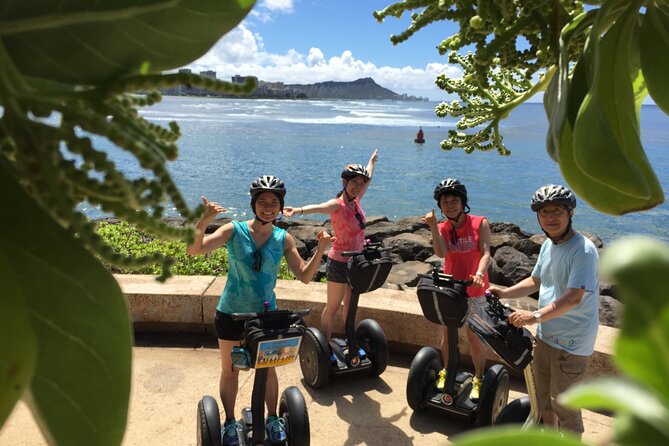
The ride follows Merchant Street, described as Honolulu’s first paved street, and then reaches Bishop Street, the city’s old financial corridor. The historic transportation buildings here are more than 150 years old, giving you another view of Honolulu’s growth.
This portion can be easy to overlook if you focus only on royal sites. I like it because it shows the practical city that developed around the port, trade, offices, and transport. The artistic details on the buildings add visual interest, while the guide fills in the links between the streets.
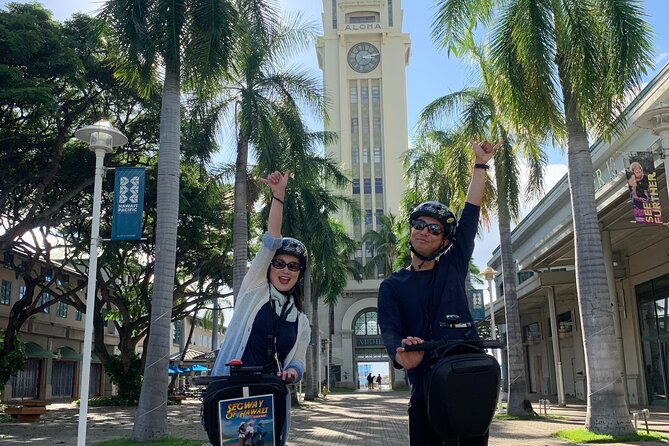
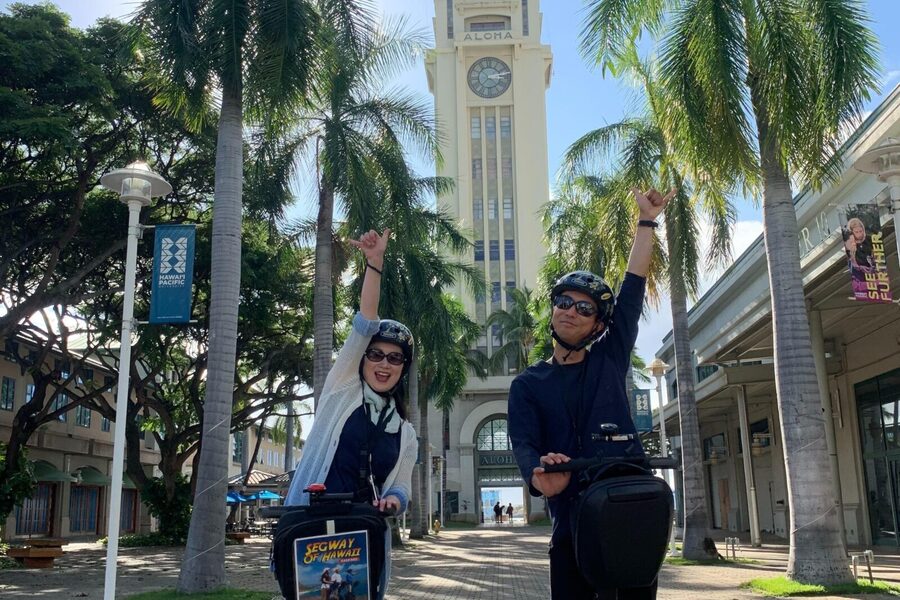
At Honolulu Harbor, the Aloha Tower becomes the main landmark. When it was built in 1926, it was the tallest building in Hawaii. For generations, it helped define the harbor and welcomed people arriving by sea.
You also see a restored coral reef and fish that come close to feed. That is a small but useful reminder that the harbor is more than a transport zone. It also has a living marine edge. The stop gives the tour a change of pace after several blocks of civic and commercial history.
Kakaʻako Waterfront Park and the ocean ride
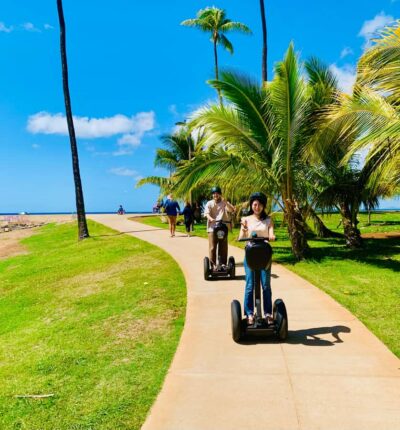
From downtown, the route heads toward Kakaʻako Waterfront Park. The promenade opens the ride to the ocean, with surfers at Point Panic adding movement and a strong sense of place.
You then glide uphill to the Ehime Maru Memorial and the Echo Stone. The supplied route information cuts off partway through the final description of this area, so do not book expecting a detailed account of every feature here. The named memorial is part of the planned route, and the guide will provide the explanation on site.
This section helps balance the earlier city streets. You are no longer looking only at government buildings and monuments. You are seeing how Honolulu’s shore is used for recreation, remembrance, and public space.
The final ride follows the ocean through Ala Moana Regional Beach Park back to the starting point. It is a pleasant way to finish, especially after the denser downtown sections. You get a broad coastal view and a last stretch of easy movement before returning to Kakaʻako.
What riding a Segway adds
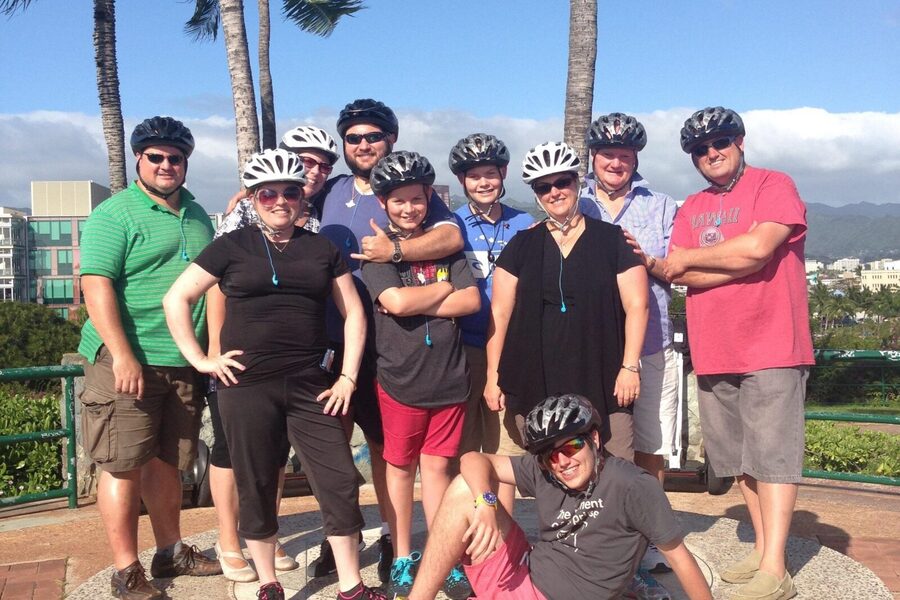
The main practical benefit is distance. In 2 hours and 30 minutes, you can reach sites scattered across central Honolulu without spending the entire morning on foot. The route still requires attention, but it reduces the physical effort of walking between districts.
If you have never used a Segway, expect an introduction before the main ride. Several people found the first experience easy to learn, and guides were praised for helping nervous riders feel safe. That said, do not treat the machine like a passive sightseeing vehicle. You control it, follow the guide, and ride in a group.
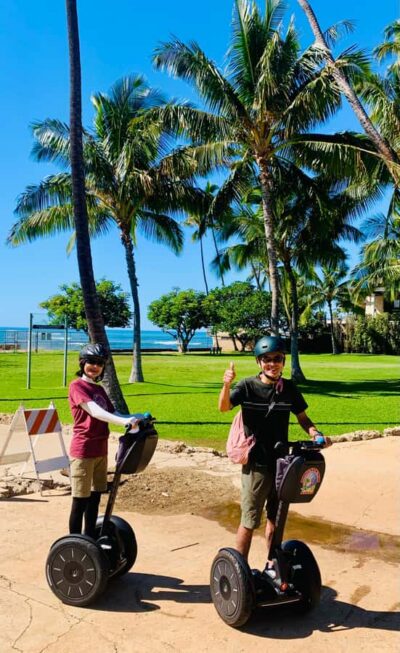
The helmet is included, as are bottled water and a two-way radio headset. The radio system is one of the best features. You can hear the explanation while moving and answer or ask questions without losing the group.
Guide quality is another major part of the experience. Jeanne is praised for handling detailed questions and for bringing information that many visitors would not hear elsewhere. Michael is noted for being entertaining, helpful with photographs, and easy to follow. Zach is praised for making a first ride feel comfortable. Allen and Jeanne are also noted for adjusting the tour to suit a family.
Those details matter because a Segway tour can feel mechanical if the guide only points at buildings. Here, the strongest element is the combination of movement and explanation.
Price, timing, and the real value
The listed price is $254.14 per person, which puts this well above a standard walking tour. You need to decide if the extra cost buys something you will use.
I think the price makes the most sense when you value three things: covering a wide area, having a very small group, and getting live historical explanation through a headset. It may also be worthwhile if you have only a short time in Honolulu and want an overview before choosing which places to revisit.
The price is harder to justify if you are staying near downtown, prefer slow exploration, or mainly want entry inside Iolani Palace. The tour circles the palace and visits the grounds, but it is not presented as a full palace interior tour. You are paying for mobility, guiding, equipment, and the combined route.
The tour begins at 9:00 am at Segway of Hawaii’s Kakaʻako location, 1687 Kalauokalani Way. It ends there after the oceanfront return. If you are in Waikiki, round-trip transfer is available from four pickup locations for $20 per person. You need to contact the operator to schedule it.
The group maximum is eight people. That is a real advantage in busy areas and when you want to ask questions. The tour is offered in English, and confirmation arrives when you book.
Free cancellation is available up to 24 hours before the start time. Changes or cancellations inside that window are not refunded. Since the tour needs good weather and a minimum number of participants, the operator may offer another date or a full refund if it cannot run.
Who should book this Honolulu Segway tour
I would choose this tour for a first visit to Honolulu when you want a fast introduction to the city’s political and cultural past. It also suits repeat visitors who have seen Waikiki but want to connect it with downtown, Chinatown, the harbor, and Kakaʻako.
It is a strong match for:
- History-minded visitors who prefer riding to walking
- First-time Segway riders who want instruction and radio support
- Families or small groups that value personal attention
- People with only a few hours for central Honolulu
- Anyone who enjoys asking a guide detailed questions
I would think twice if you dislike organized movement, want long visits inside museums, or are focused mainly on food and shopping. The tour gives you a broad look at Chinatown, but it does not leave much time for independent browsing.
Should you book it?
Book this tour if you want to cover a lot of Honolulu without wearing out your feet, and if the history matters as much as the ride. The small group, named guides such as Jeanne and Michael, headset system, and route through royal Honolulu give it more substance than a quick novelty ride.
Skip it if $254.14 feels too high for a guided overview or if you want to explore each site at your own pace. For the right person, the value is not simply the Segway. It is the chance to connect missionary Honolulu, the Hawaiian monarchy, the overthrow, Chinatown, commerce, the harbor, and today’s waterfront in one well-paced morning.
FAQ
Where does the tour begin?
It begins at Segway of Hawaii in Kakaʻako, at StoreKeeer Building, 1687 Kalauokalani Way, Honolulu, HI 96814.
What time does the tour start?
The scheduled start time is 9:00 am.
How long does the experience last?
The tour lasts approximately 2 hours and 30 minutes.
Where does the tour end?
It ends back at the Kakaʻako meeting point.
Is transportation available from Waikiki?
Yes. Round-trip transportation from Waikiki is available for $20 per person. There are four pickup locations, and you must contact Segway of Hawaii Kakaʻako to arrange pickup.
How many people can join the tour?
The maximum group size is eight travelers.
Is the tour offered in English?
Yes. The tour is offered in English.
What is included in the price?
The experience includes bottled water, a tour guide, a colorful helmet, and a two-way radio headset.
What happens if the weather is poor?
The tour requires good weather. If poor weather causes a cancellation, you will be offered another date or a full refund. A full refund is also available if you cancel at least 24 hours before the experience start time.
Just added on Honolulu
- Big Island Hawaii Volcano Day tour from Oahu and Hotel PU★ 4.8 · 29 reviews
- Best of Oahu in One Day★ 4.9 · 11 reviews
- Amazing Circle Island Tour★ 4.4 · 4 reviews
- Arrival Lei Greeting –HNL to Waikiki Private Transfer★ 5.0 · 3 reviews
- 3-Hour Honolulu Bottom Fishing Adventure★ 4.6 · 25 reviews
- 1 Hour Photography Honolulu Beautiful and Magical★ 5.0 · 5 reviews
- Oahu: Private Transfer to/from Honolulu Airport – Waikiki★ 4.1 · 59 reviews
- Honolulu: Diamond Head Segway Tour★ 5.0 · 37 reviews
Segway Tours, compared.
Browse the lists this tour appears in