
Reviewed · LUAUS & SHOWS
Polynesian Cultural Carving Experience in Kona
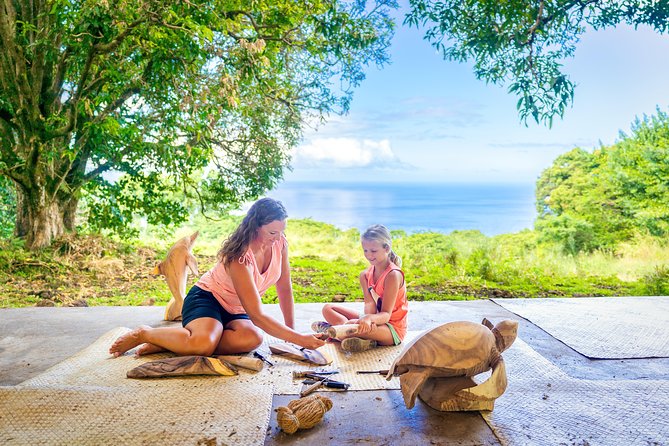
Creating a wooden tiki with Mani, a fourth-generation master carver from Tonga, gives you something most Kona tours do not: time to make, listen, and learn at your own pace. You work with locally grown Big Island wood, shape your own carving, and leave with a keepsake you helped create.
I like the small group size of eight, which lets Mani give real attention to each person. I also like the setting at Aloha Adventure Farms near Holualoa, where the calm surroundings and Pacific views add a sense of place. The main drawback is practical: each finished carving can weigh about seven pounds, and finding the entrance may take a little care.
Key things to know before you book
- Mani teaches the carving himself: His family connection to the craft and patient teaching style are central to the workshop.
- You make your own tiki: This is not a demonstration where you simply watch. You use the provided tools and wood, with guidance along the way.
- Groups stay small: The maximum is eight people, making the session more personal than a large cultural show.
- The finished piece is substantial: Be ready for a wooden souvenir that may weigh about seven pounds.
- The setting matters: Aloha Adventure Farms offers peaceful surroundings and scenic Pacific views near Holualoa.
- Plan around the two-hour schedule: The listed start time is 10:00 a.m., with morning or afternoon options offered when available.
Why this Kona workshop feels different
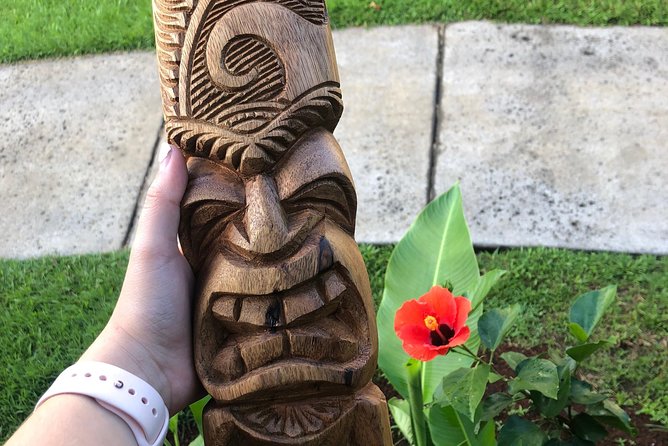
Many Hawaii activities give you photographs, a quick lesson, or a souvenir bought in a shop. Here, you spend roughly two hours making the souvenir yourself. That changes the value of the outing. The tiki is not just something you carry home from Hawaii. It becomes a record of the time you spent learning a craft with a Polynesian artist.
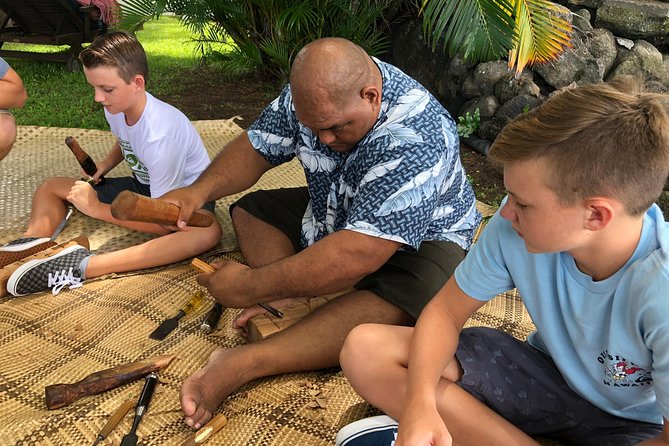
Mani is a fourth-generation master carver from Tonga. His role is more than showing you where to cut. He explains the cultural background of the art, tells stories about his upbringing, and helps you understand the meaning behind the symbols used in the work. The focus is on participation, not on trying to turn you into a professional woodworker in one morning.
You do not need previous carving experience. Mani’s teaching style is patient and encouraging, and he can correct parts of the carving when needed. Families with children from about the early teenage years have found the work manageable, while adults can take it just as seriously as a creative workshop.
The setting also helps. Aloha Adventure Farms is near Holualoa, in the Kona area, with a peaceful feel and views toward the Pacific. This is not a polished theater production or a crowded resort activity. It has the quieter character of a working cultural and craft site.
Other luaus and shows on Big Island of Hawaii:
- Big Island, Hawaii: Admission to Voyagers of the Pacific Luau
★ 4.0 · 790 reviews - Big Island: Island Breeze Luau
★ 4.0 · 733 reviews - Polynesian Cultural ATV Tour in Kona
★ 5.0 · 627 reviews
Arriving at Aloha Adventure Farms near Holualoa
The meeting point is 77-6261 Mamalahoa Highway, Holualoa, Hawaii 96725. The activity begins and ends there, so you do not need to arrange a separate drop-off at another location. Public transportation is nearby, though you should still check the route and timing carefully before booking.
One useful warning is that the entrance can be hard to spot. Allow extra time, especially for a 10:00 a.m. start. You want to arrive ready to work, not hurried after searching along the highway.
The workshop is offered in English, and your confirmation arrives when you book. The activity requires a moderate level of physical fitness. That wording matters because carving involves sitting or standing while using hand tools and working with wood for an extended period. It is a craft session, not a passive talk.
Morning or afternoon scheduling can help you fit this into a larger Kona day. The listed start time is 10:00 a.m., so check the exact option available for your date. If you are combining it with another outing, allow enough time for driving, finding the entrance, and finishing the piece without feeling pressed.
Beginning with the story behind the carving
The session starts with cultural context and an introduction to the craft. Mani shares his family background and explains the tradition of carving in a way that connects the finished object with Polynesian life and identity.
That opening is important. Without it, carving a tiki could feel like simply decorating a block of wood. With the background, the symbols and forms have a stronger purpose. You get a better sense of why the activity is presented as a cultural experience rather than a standard art class.
The workshop is personal by design. A group of eight is small enough for questions and individual help. Larger groups can make hands-on instruction feel like a production line. Here, the pace can adjust to the people at the table, including children or adults who have never used carving tools before.
The atmosphere is also part of the lesson. The farm setting and Pacific views give you a quiet break from the busier resort areas. You are not rushing from one photo stop to the next. The value comes from slowing down and giving your attention to one task.
Choosing your wood and learning the tools
The wood is locally grown on the Big Island, and the tools and carving materials are included in the price. You do not need to bring a knife, chisel, or piece of wood with you.
Mani introduces the process and demonstrates how to work the surface. You then begin shaping your own tiki under his direction. Expect a hands-on session rather than a formal lesson where everyone copies the exact same design. The finished pieces may share a general form, but each one reflects the maker’s choices and skill level.
This is where the small group helps most. If your cut goes too deep or your shape needs attention, Mani can guide you and repair what needs fixing. That safety net makes the workshop suitable for beginners. You can try the work without worrying that one imperfect stroke will ruin the entire souvenir.
The carving is not a quick paint-and-take-home craft. Reviews describe pieces weighing about seven pounds, so the wood is substantial. That gives the finished tiki a solid feel, but it also creates a luggage issue later. If you plan to fly home, leave room in your suitcase and check your airline’s weight limits.
Same island, a different kind of day:
- Big Island in a Day: Volcanoes Waterfalls Sightseeing and History
★ 5.0 · 6,569 reviews - Big Island Manta Ray Night Snorkel
★ 5.0 · 5,656 reviews - Big Island: Kona Manta Ray Snorkel Tour in Keauhou Harbor
★ 4.5 · 2,465 reviews - Hilo Shore Excursion: Volcanoes National Park & Black Sand Beach
★ 4.5 · 2,338 reviews
Carving your own tiki with Mani
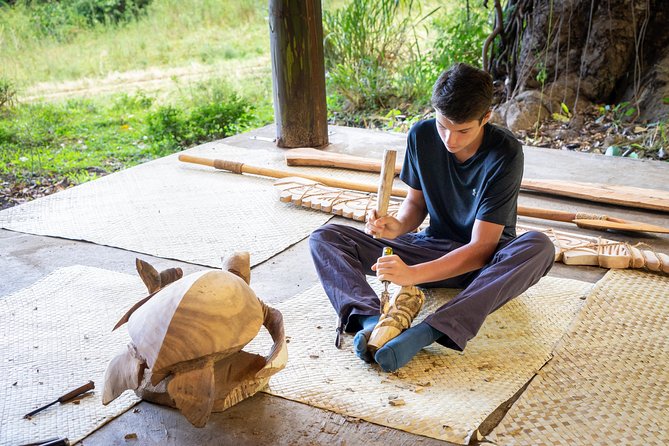
The central part of the activity is the carving itself. You work with your own piece of wood while Mani moves around the small group, offering instruction and help. His calm manner is especially useful for families. Children can take part without being expected to work at an adult professional level, and adults who consider themselves uncrafty can still produce something worth keeping.
At some point, you choose a symbol for the top of your tiki. Mani can carve that symbol for you, adding a personal detail to the piece. This is a nice balance between your own work and the master carver’s finishing touch. You are not simply buying a finished object, but you also receive help with the part that gives the tiki its final character.
The timing can be flexible. One group finished sooner, while another took longer because the work continued until the participants were happy with the result. The advertised duration is about two hours, but the exact pace can depend on the group and the amount of detail you want.
I would treat the workshop as a creative afternoon rather than a timed attraction. If you are booking a tight chain of activities, allow some breathing room. You may be ready to leave at the two-hour mark, but you will enjoy it more if you are not watching the clock.
What the finished tiki means as a souvenir
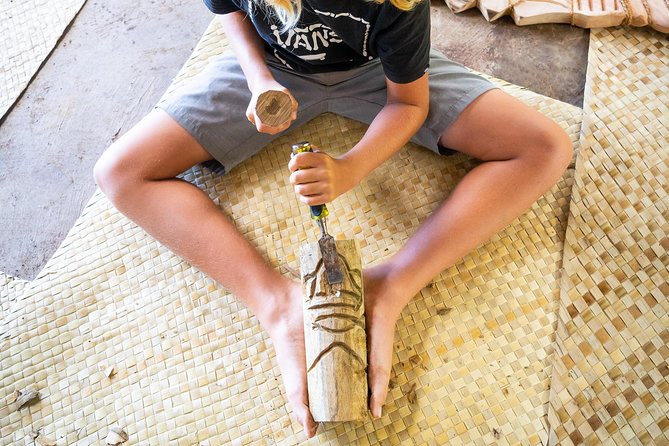
The strongest reason to book this activity is the finished object. A shop-bought carving can be attractive, but it does not carry the same memory as a piece you shaped yourself. The marks, uneven spots, and small corrections become part of the story.
Families can make this especially meaningful. Children and teenagers leave with something they made rather than another mass-produced gift. The carving can serve as a reminder of the Kona trip for years, and the family can compare each person’s design and progress.
Solo visitors may also find the format rewarding. The small group creates an easy setting for conversation, and the shared work gives you a natural way to meet the other people in the session. One solo participant described meeting a couple and staying in touch afterward, which shows how a quiet craft activity can become social without being forced.
The finished tiki is not a lightweight trinket. Pieces may weigh roughly seven pounds, so consider how you will carry it during the rest of your trip. One useful airport note is that a carved tiki may attract questions during carry-on screening because its shape is unfamiliar. A carving has been taken out for inspection before, though this did not prevent it from continuing through the screening process.
Is $242.40 a fair price?
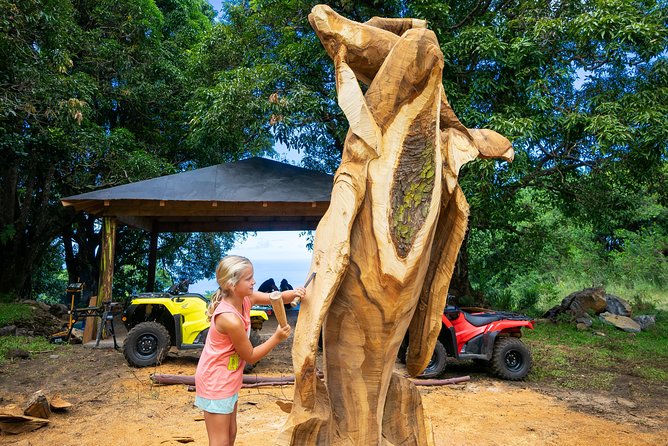
At $242.40 per person, this is not a budget activity. The price makes more sense if you value personal instruction, a small group, and a substantial handmade souvenir. Tools and wood are included, and the session is led by a fourth-generation carver rather than a general activity host.
You are paying for time and attention as much as for materials. A large cultural attraction may offer more entertainment for less money, but it will not usually give each person two hours of direct help or a finished object made by hand. On the other hand, if you are mainly looking for a quick introduction to Polynesian culture, the cost may feel high.
The value is strongest for families and couples who want one memorable activity rather than another standard sightseeing stop. It also suits people who already have plenty of beach and water time planned and want something slower. Because the group is limited to eight and the activity is often booked well ahead, waiting until the last minute may reduce your options.
The farm also offers other activities, including ATV and zipline outings, along with artwork in a gift shop. You do not need to add those activities to enjoy the carving session, but the location can work well as part of a larger visit if your schedule allows.
Who should book this activity?
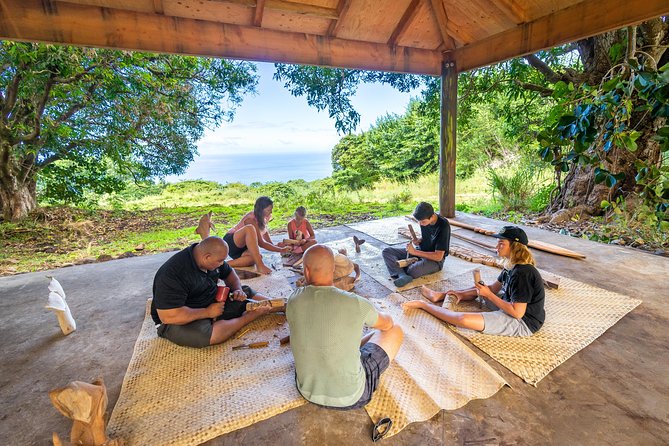
I would recommend it to families with older children, couples, solo visitors, and anyone who prefers making something over watching a performance. It is particularly good for a repeat visitor to Hawaii who wants a fresh way to spend time on the Big Island.
You should also book it if you appreciate meeting the person who teaches the craft. Mani’s family history, calm instruction, and willingness to help beginners are central to the appeal. The activity is not built around speed, spectacle, or a long list of stops.
I would hesitate if you dislike hands-on work, have very limited luggage space, or want a cheap souvenir. The carving takes concentration, and the final piece can be heavy. Also keep the outdoor setting in mind. A reviewer suggested adding bottled water because the heat can be noticeable, so bring water and dress for warm conditions.
The activity requires good weather. If poor weather forces a cancellation, you are offered another date or a full refund. You can cancel for a full refund up to 24 hours before the start time, but changes or cancellations inside that window are not accepted.
My practical take on the two-hour schedule
A 10:00 a.m. start works well if you want to make the workshop one of the main activities of your day. You can arrive, settle in, hear the cultural introduction, carve, and finish with a substantial souvenir before moving on.
The afternoon option may suit you better if you want a relaxed morning or have other plans near Kona. In either case, do not treat the meeting point as a place to rush through. The entrance can be easy to miss, and the carving may take longer for a family group that wants to add detail.
Wear clothing suitable for working with wood and bring water. The included tools and materials keep preparation simple, but the activity is still physical enough that comfort matters. If you plan to fly home with the tiki, check your luggage weight before the airport rather than discovering the problem at the counter.
Should you book the Polynesian Cultural Carving Experience?
Book it if you want an authentic-feeling, personal activity led by a real Polynesian carver, and if a handmade souvenir matters more to you than a low ticket price. Mani’s patient teaching, the group limit of eight, the local wood, and the peaceful Holualoa setting give the workshop a strong sense of place.
Skip it if you want a fast attraction, a light souvenir, or a large-scale cultural show. For everyone else, this is one of the better choices for turning a Kona visit into something you can remember through your hands, not just through photographs.
FAQ
Where does the Polynesian Cultural Carving Experience take place?
It takes place at Aloha Adventure Farms, 77-6261 Mamalahoa Highway, Holualoa, Hawaii 96725. The activity ends at the same meeting point.
How long does the tiki carving workshop last?
The workshop lasts approximately two hours.
What time does the activity start?
The listed start time is 10:00 a.m. Morning and afternoon options are offered to fit different schedules, so check the available time when booking.
Who teaches the carving workshop?
Mani, a fourth-generation master carver from Tonga, teaches the activity.
Are tools and wood included?
Yes. The price includes the tools and wood needed to carve your tiki.
Can I cancel for a full refund?
Yes. You can cancel at least 24 hours before the experience start time for a full refund. Cancellations or changes made less than 24 hours before the start time are not accepted. If poor weather cancels the activity, you are offered another date or a full refund.
Just added on Big Island of Hawaii
- Volcano National Park and Rainbow Fall in Hilo, Hawaii★ 5.0 · 53 reviews
- Volcanoes National Park Adventure Tour – Hilo Shore Excursion★ 4.5 · 104 reviews
- Volcanoes National Park and Hilo Private Tour★ 5.0 · 3 reviews
- Private VAN Tour Hilo★ 4.5 · 5 reviews
- Volcanoes Adventure Tour from Hilo★ 4.0 · 29 reviews
- Majestic Waterfall Tour★ 5.0 · 31 reviews
- Private Shore Excursion Hilo Volcanoes National Park up to 10 PPL★ 5.0 · 36 reviews
- 5 Hour Custom Private Tour of Hawaii★ 5.0 · 9 reviews
Luaus & Shows, compared.


Mauka Warriors Luau Honoring Polynesia’s Forgotten History
Read our review →
The Magical Mystery Show! at Hilton Waikiki Beach Hotel
Read our review →
Maui Nui Luau at the Sheraton Maui Resort & Spa
Read our review →
Waikiki Luau Buffet with Optional Rock-A-Hula Show Ticket
Read our review →Browse the lists this tour appears in