
Reviewed · LUAUS & SHOWS
Hale Hoaloha Luau at the Mauna Lani
The most memorable part of Hale Hoaloha is not simply the hula show. It is the moment the cooked pig is lifted from the underground imu, followed by stories about Kalāhuipuaʻa and the mountains that surround Mauna Lani. That connection to place gives the evening more purpose than a dinner with dancing.
I like the warm, family-friendly presentation and the generous buffet, which includes plenty of choice for different tastes. I also like the assigned seating, since you do not need to race in early to claim a good table. The main drawback is the sound system. If you have trouble hearing, some of the storytelling may be hard to follow.
I also appreciate the polished setting, free valet parking for people who are not staying at the hotel, and the chance to walk near the beach before the event. Drinks beyond the included welcome beverage cost extra, and alcoholic drinks can be expensive.
Key points to know before booking
- The imu ceremony is a real highlight: You can watch the underground-cooked pig being uncovered before dinner.
- The program has cultural purpose: Stories, mele, and hula explain Kalāhuipuaʻa, the five mountains, family, responsibility, and aloha.
- The buffet is broad and plentiful: Food is served from several tables, helping reduce crowding and giving you time to choose.
- Seating is assigned: Your reservation timing helps determine your table, so arriving very early is not necessary for a good view.
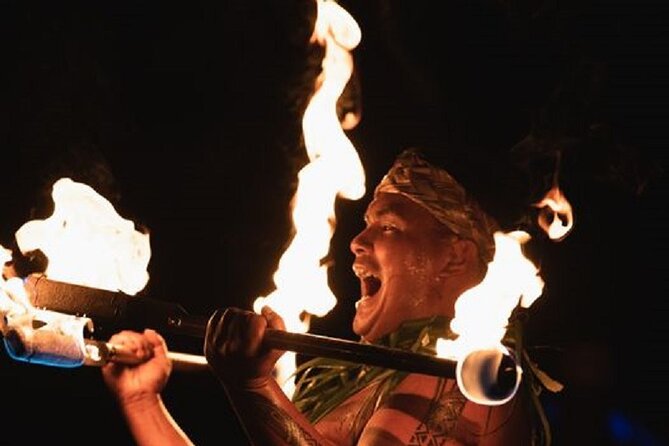
- The show ends with fire dancing: The closing performance is especially exciting for families and teenagers.
- Plan for extra drink costs: A welcome nonalcoholic drink or Mai Tai is provided, but additional drinks are sold separately.
Why the Mauna Lani setting matters
Hale Hoaloha means house of friendship, and the name fits the tone of the evening. The luau presents Mauna Lani as a place tied to family, food, music, and responsibility rather than as a simple hotel entertainment package.
The setting is the Mauna Lani pavilion, away from the main hotel area. Signs direct you from the resort entrance, and staff help guide you to the event space. If you arrive early, you can use the complimentary valet service and walk toward the beach before the program begins.
The event starts at 5:30 pm and lasts about two to three hours. Since the opening portion takes place outside before sunset, bring sunscreen and sunglasses. In summer, some shade is useful during the first part of the evening. Dress neatly, too. This is not a casual stop at a poolside grill, and several parts of the evening feel more special when you make a little effort with what you wear.
The setting itself is one of the strongest reasons to choose this luau. You are not seated inside a dark theater. You begin outdoors, with the Mauna Lani grounds around you, then watch the light change as the show moves into the evening.
Other luaus and shows on Big Island of Hawaii:
- Big Island, Hawaii: Admission to Voyagers of the Pacific Luau
★ 4.0 · 790 reviews - Big Island: Island Breeze Luau
★ 4.0 · 733 reviews - Polynesian Cultural ATV Tour in Kona
★ 5.0 · 627 reviews
An opening built around aloha and ohana
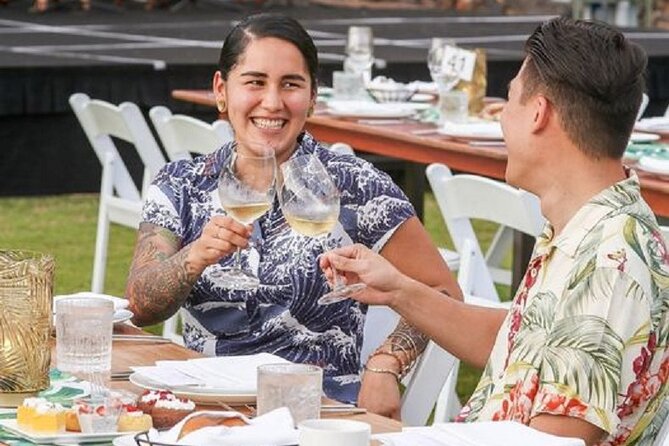
The evening begins with a welcome and a drink. Depending on the package and service that night, you may receive a Mai Tai or another complimentary beverage, and a lei is generally part of the arrival ritual. Additional alcoholic and nonalcoholic drinks are available for purchase.
The staff then help you to your assigned table. Tables can seat up to eight people, so you may sit with people you did not arrive with. That arrangement is worth knowing in advance. It can make the evening feel communal, but it is not ideal if you expect a private table for your own party.
Assigned seating is a practical advantage. Your table placement is connected to how early you booked, and you do not need to arrive far ahead of time to compete for a front-row seat. The layout provides good visibility, with no widely reported bad section. That makes the evening easier for families, older relatives, and anyone who would rather spend the pre-show time walking than standing in line.
Before dinner, children can take part in family activities. The amount of audience participation is controlled rather than constant, with much of it aimed at younger people. You can join in, watch quietly, or use the early period to settle at your table.
The imu ceremony gives dinner a sense of place
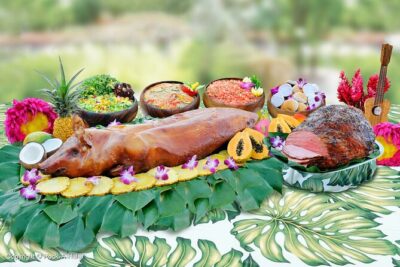
The underground-cooked pig is one of the most distinctive parts of this luau. The pig is prepared in an imu, then uncovered in front of the audience. Watching it come from the ground turns a familiar buffet item into a lesson in how food, ceremony, and community connect.
This is more than a photo opportunity. The presentation includes thanks, and it helps explain why food is central to a traditional lūʻau. The pork is also widely praised for its flavor, so the ceremony leads directly to one of the better dishes on the buffet.
The buffet itself is generous, with several food tables rather than one narrow serving line. That setup gives you room to choose from a broad range of dishes and return for more without feeling rushed. Service at the tables is attentive, and the overall meal is one of the strongest parts of the experience.
Still, remember that this is outdoor dining. One person found flies around some meat and fish dishes, a problem that can occur at an open-air meal but is worth noting if you are especially sensitive to it. Food quality is generally a major strength, yet outdoor conditions can never be controlled as tightly as they would be in an indoor restaurant.
If you have a hearty appetite, the portion of food helps justify the price. If you eat lightly, the entertainment and cultural presentation become more important to the value calculation.
Stories of Kalāhuipuaʻa and the five mountains
The heart of Hale Hoaloha is its storytelling. The program presents Kalāhuipuaʻa as a special area associated with Mauna Lani and places it at the center of the mountains of Haleakalā, Kohala, Mauna Kea, Mauna Loa, and Hualālai.
The stories give the performances a framework. Rather than watching unrelated dances from one number to the next, you get a sense of why the land matters and how Hawaiian ideas of family and responsibility shape the evening. The program also touches on Tahitian and Samoan traditions, broadening the cultural story beyond a single style of dance.
The lead storyteller and singers are a major asset. The spoken material is designed to be welcoming and accessible, with music and hula carrying much of the emotion. At its best, the storytelling feels personal and heartfelt, especially when it connects the mountains to family and ohana.
The sound system is the weak point. Music can overpower the spoken sections, and some people may struggle to understand the host’s stories. If hearing clearly matters to you, choose a seat with a direct view of the stage and stay attentive during the spoken parts. You should also expect the program to be easier to follow visually than through every spoken word.
That limitation does not erase the value of the presentation, but it changes how you experience it. If you want a detailed historical lecture, this may not satisfy you. If you enjoy learning through music, dance, and ceremony, the format works much better.
Same island, a different kind of day:
- Big Island in a Day: Volcanoes Waterfalls Sightseeing and History
★ 5.0 · 6,569 reviews - Big Island Manta Ray Night Snorkel
★ 5.0 · 5,656 reviews - Big Island: Kona Manta Ray Snorkel Tour in Keauhou Harbor
★ 4.5 · 2,465 reviews - Hilo Shore Excursion: Volcanoes National Park & Black Sand Beach
★ 4.5 · 2,338 reviews
Hula, music, and a strong fire-dance finale
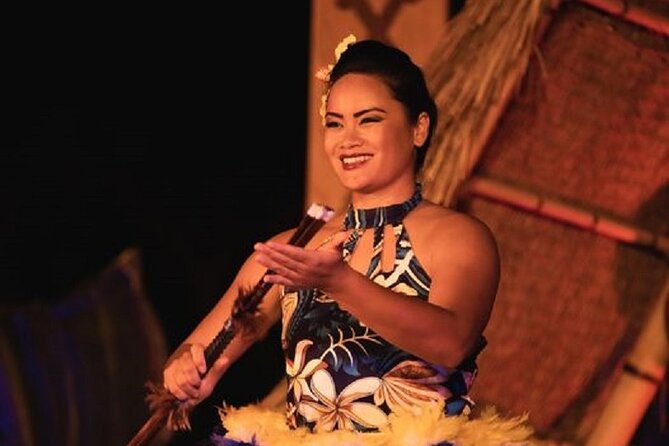
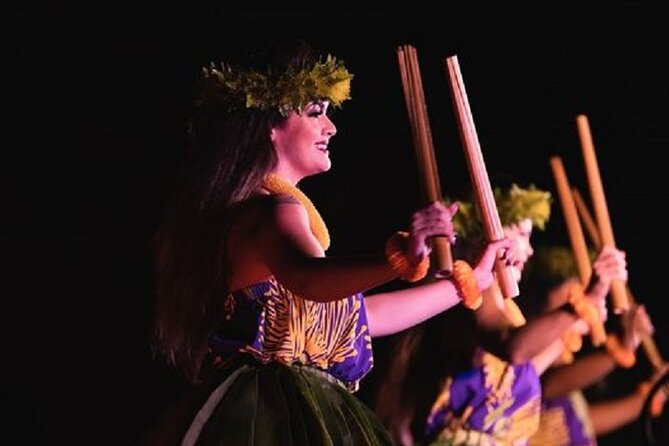
The performance combines hula, singing, instrumental music, and dances from Polynesian traditions. The singers are especially important here. A strong voice carries the mood of the evening, and the show has enough polish to feel like a professional production without losing its family focus.
The hula is not treated as decoration between buffet courses. It supports the stories about place, people, and connection. The dancers bring a measured quality to the early portions, then the program builds toward more energetic numbers.
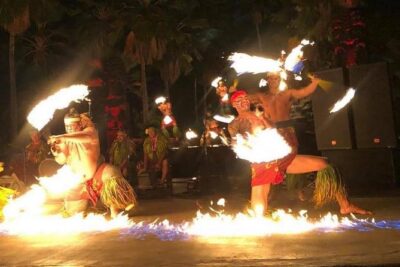
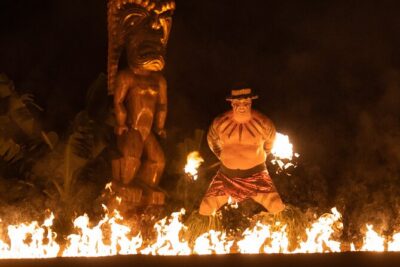
The fire dancer is the closing star. The flames, athletic movement, lighting, and music create the big finish that many families remember most. Children and teenagers tend to find this portion especially exciting, while adults may appreciate the skill and control required to perform it safely.
There is also some audience involvement, including an invitation for people to come onstage during part of the show. Participation is not forced on everyone, and the amount is modest enough that you can enjoy the performance without constantly being called out.
The show runs long enough to feel like a full evening, but not so long that the younger members of your party are likely to lose patience before the finale. Since the total visit is about two to three hours, plan on spending most of your evening at the pavilion rather than treating the luau as a quick dinner stop.
What $230.37 means in practical terms
At $230.37 per person, Hale Hoaloha is expensive for a dinner show. You are paying for more than food, but you should decide how much value you place on the setting, assigned seating, cultural program, valet service, and live entertainment.
The price makes more sense if you want one organized evening that covers dinner and a substantial performance. The meal is plentiful, the service is attentive, and the program includes the imu ceremony, storytelling, hula, music, and fire dancing. You are not left to arrange separate dinner and evening entertainment.
The cost is harder to justify if you mainly want a cheap buffet or a casual dance show. Alcoholic drinks are not included in the basic experience, and cocktails or wine can add noticeably to the bill. A photograph taken at the start is also sold separately for $25 to download, so expect optional extras beyond the ticket.
A benefit is that you do not need to purchase a premium seating package to see the stage well. Standard seating still provides a clear view, and assigned tables remove much of the usual scramble. Free valet parking for nonhotel visitors adds real value, especially if you are driving to Mauna Lani.
I would compare this luau with less expensive options only after deciding what kind of evening you want. Hale Hoaloha is not the bargain choice. It is the better fit if you want a polished event with a strong sense of place and a memorable imu presentation.
Who will enjoy Hale Hoaloha most
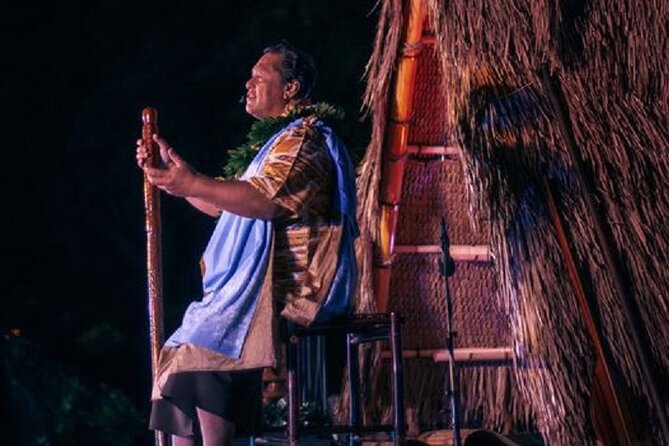
Families are a natural match. The buffet is broad, children have activities before the show, the audience participation is limited and friendly, and the fire performance gives the evening a clear payoff for younger people.
Couples can enjoy it as a special night out, especially if they like music, dance, and an organized dinner setting. The setting is elegant enough for an anniversary or celebration, though the shared tables mean the evening is not fully private.
It also suits first-time visitors to the Big Island who want a single introduction to Hawaiian food and performance traditions. The program offers several cultural elements in one place, including the imu, Hawaiian storytelling, hula, and Polynesian dance.
You may want to skip it if you dislike buffets, shared tables, outdoor heat, or audience participation. It may also disappoint you if clear spoken narration is essential, since the sound system can make the stories difficult to hear.
Most people can participate, and confirmation is provided at booking. The event depends on good weather and a minimum number of participants. If weather or numbers force a cancellation, you are offered another date or a full refund.
Simple tips for a smoother evening
Arrive with enough time to find the pavilion, but do not assume you must arrive an hour early for a seat. Tables are assigned, and coming too early mainly gives you extra time to walk around the grounds.
Wear sunscreen and sunglasses for the outdoor opening. A hat or other shade can help in summer, though you should keep it low enough that people behind you can see.
Bring a light, polished outfit rather than beachwear. The evening has a festive tone, and dressing neatly fits the setting.
Budget for drinks. Your included welcome beverage is not the same as unlimited service, and wine or cocktails can cost around $20 per glass.
If hearing is difficult, sit where you have a clear line to the stage and pay close attention during the storytelling. Music and speech do not always balance well.
Finally, come hungry. The buffet is one of the better reasons to book this experience, and the pork from the imu is worth trying.
Should you book Hale Hoaloha Luau?
I would book Hale Hoaloha if you want a full Big Island evening built around food, storytelling, and live performance, and if the $230.37 price fits your budget. The underground pig ceremony, strong singers, hula, and fire finale give it more substance than a basic dinner show.
I would hesitate if you want a low-cost meal, private seating, or perfectly clear narration. Extra drink charges and the occasional outdoor dining nuisance also keep this from being a flawless value.
For families, couples marking a special occasion, and anyone interested in Hawaiian culture presented through music and ceremony, this is a sound choice. Book it well ahead of time, since it is commonly reserved about 42 days before the event, and keep your expectations focused on an enjoyable cultural evening rather than a formal history lecture.
FAQ
Where does Hale Hoaloha Luau take place?
It takes place at the Mauna Lani pavilion on the Big Island of Hawaii. Signs direct you from the Mauna Lani property to the event area.
What time does the luau start?
The stated start time is 5:30 pm.
How long does the experience last?
Plan on approximately two to three hours.
Is food included?
Yes. Admission includes a buffet meal, with food served from multiple tables.
Is the underground-cooked pig included?
Yes. The program includes the uncovering of a pig cooked in an underground imu, and the pork is served as part of the meal.
Are drinks included?
A welcome beverage is provided, but additional drinks are purchased separately. Alcoholic drinks are available for an extra charge.
Is seating assigned?
Yes. Seating is assigned, and booking earlier can affect the table placement. You do not need to arrive very early simply to claim a seat.
Can I cancel for a refund?
You can cancel at least 24 hours before the local start time for a full refund. Cancellations or changes made less than 24 hours before the start are not accepted for a refund. If weather or an insufficient number of bookings cancels the event, you are offered another date or a full refund.
Just added on Big Island of Hawaii
- Volcano National Park and Rainbow Fall in Hilo, Hawaii★ 5.0 · 53 reviews
- Volcanoes National Park Adventure Tour – Hilo Shore Excursion★ 4.5 · 104 reviews
- Volcanoes National Park and Hilo Private Tour★ 5.0 · 3 reviews
- Private VAN Tour Hilo★ 4.5 · 5 reviews
- Volcanoes Adventure Tour from Hilo★ 4.0 · 29 reviews
- Majestic Waterfall Tour★ 5.0 · 31 reviews
- Private Shore Excursion Hilo Volcanoes National Park up to 10 PPL★ 5.0 · 36 reviews
- 5 Hour Custom Private Tour of Hawaii★ 5.0 · 9 reviews
Luaus & Shows, compared.
Mauka Warriors Luau Honoring Polynesia’s Forgotten History
Read our review →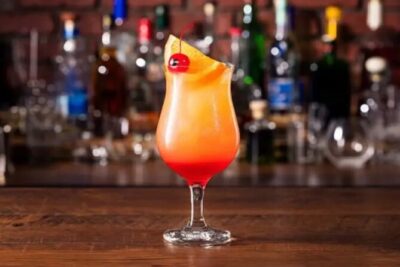
The Magical Mystery Show! at Hilton Waikiki Beach Hotel
Read our review →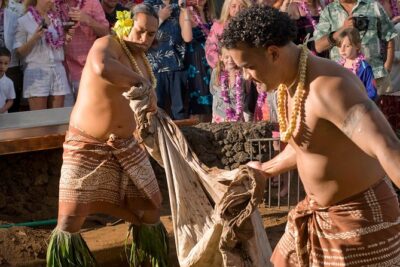
Maui Nui Luau at the Sheraton Maui Resort & Spa
Read our review →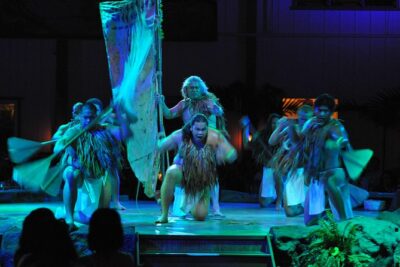
Waikiki Luau Buffet with Optional Rock-A-Hula Show Ticket
Read our review →Browse the lists this tour appears in