
Reviewed · WATERFALL TOURS
Hawaiian Rainforest Banana Cultivation Experience
The most unusual part of this Big Island outing is also the most practical: you help cut down a banana tree after it fruits, then open the stalk to inspect its edible core. This is not a quick photo stop beside a few plants. Jason and Nicky bring you into the work of raising bananas on their one-acre rainforest property.
I like the small maximum of six people, which should make the hands-on parts easier and give you time to ask questions. I also like the tasting at the end, especially the green banana tea, plus the chance to hear how Jason and Nicky built their farming life. The main drawback is the ground: much of the property sits on exposed lava rock, so good shoes matter.
Key details before you book
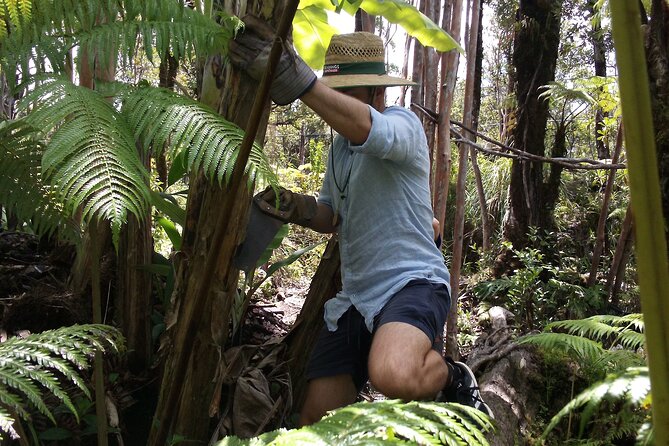
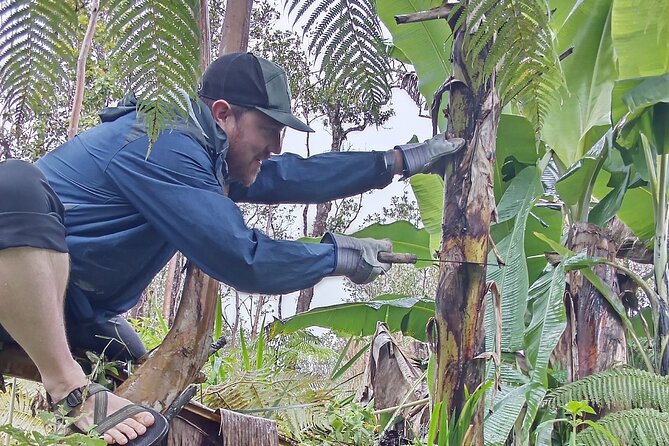
- Cut and examine a fruiting banana tree: You get a close look at what happens after an apple banana plant produces fruit.
- Visit an 800-year-old lava flow: The farm’s soil and growing conditions are tied to the Big Island’s volcanic past.
- Work with live plants: You can help propagate trees and discuss planting and cultivation methods.
- Taste green bananas and banana tea: The final sample gives the farm tour a clear local-food finish.
- Small group setting: The activity accepts no more than six participants, making it more personal than a large farm visit.
- Wear sturdy shoes: The terrain includes exposed lava rock and is not the place for flimsy sandals.
A banana farm with real work at its center
Many agricultural tours keep you on a path while someone else explains what you are seeing. This experience takes a different approach. You tour a collection of more than 200 apple banana trees, but you also handle plants, look inside a stalk, and take part in harvesting.
That matters because bananas are not trees in the usual sense. The familiar trunk is a tightly packed inner stem, and once a plant bears fruit, it must be cut down. Here, that process becomes part of the lesson. You are not simply told that banana plants have a life cycle. You get to see the evidence in the stalk and understand what happens to the plant after harvest.
The property covers about one acre in the Hawaiian rainforest on the east side of the Big Island. It sits on an 800-year-old lava flow, a detail that gives the visit a useful sense of place. The farm is not separated from the island’s volcanic foundation. The ground beneath the banana collection is part of the story.
Jason and Nicky lead the experience, and the tone is personal rather than formal. They share how they got started and explain the way they cultivate the bananas. Their own connection to the land is a large part of what you are paying for, since this is as much a visit with working farmers as it is a plant tour.
More waterfall tours on Big Island of Hawaii:
- Big Island in a Day: Volcanoes Waterfalls Sightseeing and History
★ 5.0 · 6,569 reviews - Big Island Zipline Tour Near Akaka Falls (250-ft Waterfall!)
★ 5.0 · 1,077 reviews - Big Island: 9-Line Waterfall Zipline Experience
★ 5.0 · 1,057 reviews
Walking through more than 200 apple banana plants
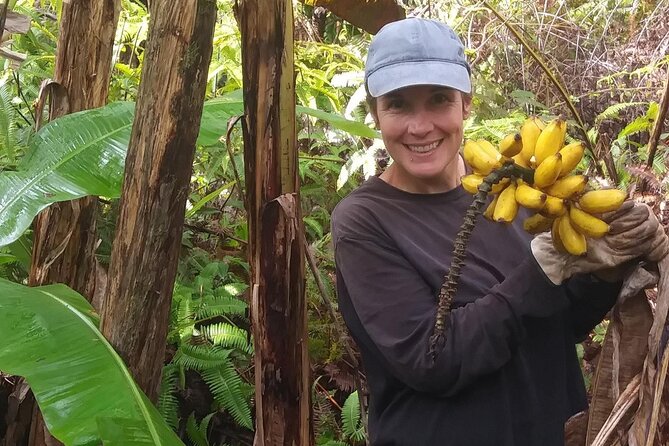
The first main part of the activity is a tour of the apple banana collection. Apple bananas are smaller and sweeter than the large bananas commonly sold in supermarkets, though the important point here is not a produce comparison. You are seeing one specific crop grown in a rainforest setting, with Jason and Nicky explaining how they care for it.
The one-acre size keeps the outing manageable. You can see a substantial collection without spending half a day walking from one end of a commercial farm to another. At the same time, more than 200 plants give you enough examples to notice that a banana patch is not just a row of identical trunks.
You will learn about planting and cultivation methods during this walk. The information is most useful if you are curious about where food comes from, enjoy gardening, or want a closer look at small-scale farming in Hawaii. It also works well for families because the subject is concrete. Kids can see leaves, fruit, stems, and tools rather than trying to follow a long talk about farming theory.
The plant collection is surrounded by other tropical plants, so the visit is not limited to bananas. The exact mix is not specified, but you can expect the property to feel like a working tropical garden rather than a polished botanical display. That distinction is worth keeping in mind. You are visiting a private farming property, not a formal public garden with carefully labeled paths and exhibits.
Propagating a live tree by hand
At some point, you get a hands-on chance to propagate live banana trees. This is one of the strongest reasons to choose this activity over a standard farm tour. The word propagation can sound technical, but the basic value is simple: you are shown how new plants are produced and get to take part in the process.
The activity lets you examine how a banana plant grows and reproduces. That can make the rest of the tour easier to understand. Instead of seeing a patch of plants as a mass of leaves, you begin to recognize the relationship between the main plant, new growth, and the fruiting cycle.
I would especially recommend this part to families with curious children, gardeners, and anyone who likes learning through touch. The experience has been described as a good fit for curious kids of any age, and that makes sense. There is a clear task, a living plant, and a result you can see immediately.
Do not expect a full gardening class with written instructions or a take-home plant unless the provider specifically confirms that in advance. The supplied details promise a chance to propagate live trees, not a formal certification or a kit. Think of it as a working demonstration in which you get involved.
Cutting the plant after it produces fruit
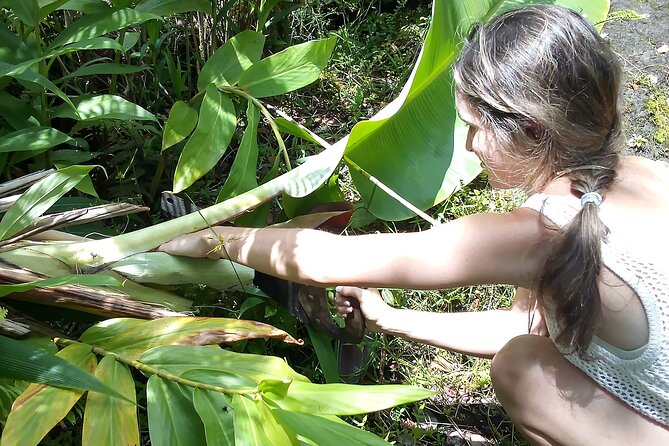
The most distinctive activity comes when a banana plant has already produced fruit. Once a banana tree bears fruit, it must be cut down, and participants can do the cutting. This may feel surprising if you have only seen bananas in a grocery store. The plant that gives you the fruit will not keep producing from that same stem.
After cutting, you open the inner stalk to see the core. The core is edible, which turns a basic bit of farm maintenance into a food lesson. You are seeing how the plant is used beyond the fruit itself and how farmers handle the next stage of the growing cycle.
This is a good example of why the tour feels more grounded than a simple tasting. The food on your plate is connected to the work in the field. You watch the harvest, inspect the plant, and then taste a preparation made from green bananas.
The activity does involve cutting a plant, so it may not suit everyone. If you prefer a purely scenic or passive outing, this could feel more hands-on than you want. The available information does not specify the type of cutting tool, safety briefing, or how much physical effort is required, so you may want to ask Jason and Nicky if those details matter to you.
Same island, a different kind of day:
- Big Island Manta Ray Night Snorkel
★ 5.0 · 5,656 reviews - Big Island: Kona Manta Ray Snorkel Tour in Keauhou Harbor
★ 4.5 · 2,465 reviews - Hilo Shore Excursion: Volcanoes National Park & Black Sand Beach
★ 4.5 · 2,338 reviews - Big Island: Captain Cook Snorkel On A Power Catamaran With Lunch
★ 5.0 · 2,232 reviews
Green bananas and banana tea at the finish
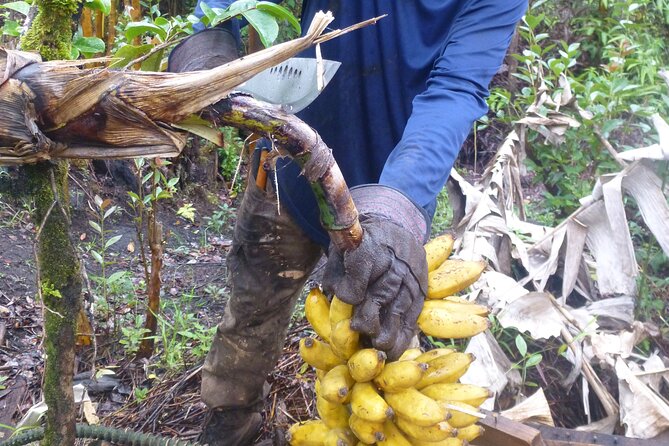
The tour ends with a sample of green bananas and green banana tea. The tasting gives the experience a simple payoff, but it also shows that bananas can be used before they reach the sweet, familiar stage you know from breakfast.
One preparation mentioned by participants is fried green bananas. The tea also gets special attention. You may not expect much from a drink made from banana, but the surprise is part of the fun. I would treat the tasting as a modest farm sample, not a full meal. Eat beforehand if you need lunch or a substantial snack.
The tasting is also a useful time to ask questions. After seeing the plants and taking part in the harvest, you have a better basis for understanding the food in front of you. The experience connects cultivation, cutting, cooking, and eating in about two hours.
Do not book this solely for the food. The samples are a bonus, while the main value comes from the access to the property and the chance to take part in the farm work. If your priority is a large tasting menu or a polished culinary tour, this is not the right format.
Meeting Jason and Nicky on their property
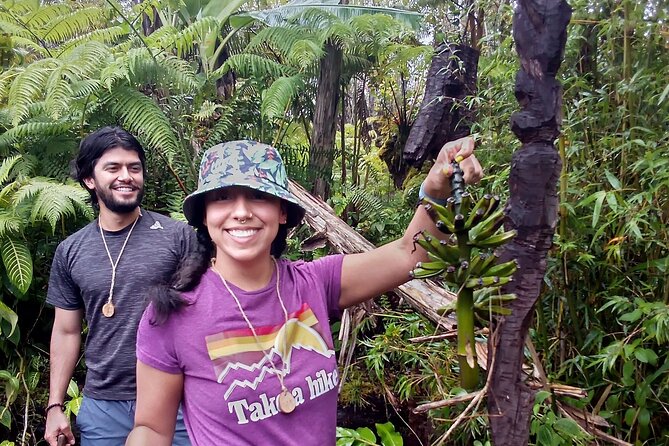
A major part of the experience is the personal story of the people who run it. Jason and Nicky meet you at Jungle King Avenue in Fern Forest, then show you around their property. Their approach is informal and welcoming, with time for conversation woven into the farm visit.
They describe themselves through the work they have built, and the tour includes their off-grid property and art. A handmade necklace has also been given to participants during the experience, though you should not assume that gift is guaranteed on every departure. These touches make the visit feel connected to their daily life rather than staged as a generic attraction.
That personal side is valuable, but it also means you should arrive ready for a less polished format. You may not find a large visitor center, extensive signage, or a fixed museum-style presentation. The appeal is the direct connection with the farmers and the chance to see how they live and work.
Because the group is limited to six, you should have a better chance to hear the story clearly and ask questions without competing with a busload of people. The small size is especially useful during the propagation and cutting portions, when everyone needs room to see and participate.
The lava-rock ground and what to wear
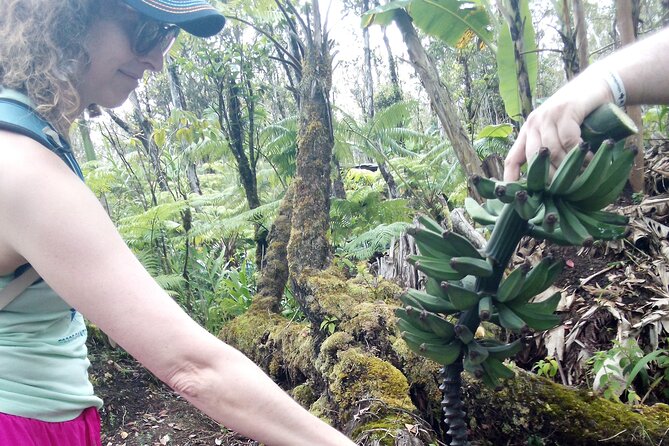
The setting is beautiful in a practical, untamed way, but the ground deserves attention. The property sits on an old lava flow, and exposed lava rock can make footing uneven. Wear sturdy, closed-toe shoes with soles that give you confidence on rough ground.
This is the single clearest preparation tip from the available information. Do not choose your thinnest beach sandals simply because you are in Hawaii. You are walking on a farm property, not a paved garden path, and the outing includes hands-on work with plants.
The supplied details do not state whether rain gear is provided, whether the property has covered areas, or how muddy conditions can become. The experience is in the Hawaiian rainforest, so checking the local forecast and asking the provider about conditions is sensible, especially if rain would affect your comfort.
Service animals are allowed, and most people can participate. Still, the uneven lava surface may matter to anyone with mobility concerns. Since the activity lasts about two hours and takes place on a working property, contact Paradise Unplugged before booking if you need specific accessibility information.
What the $75 price gets you
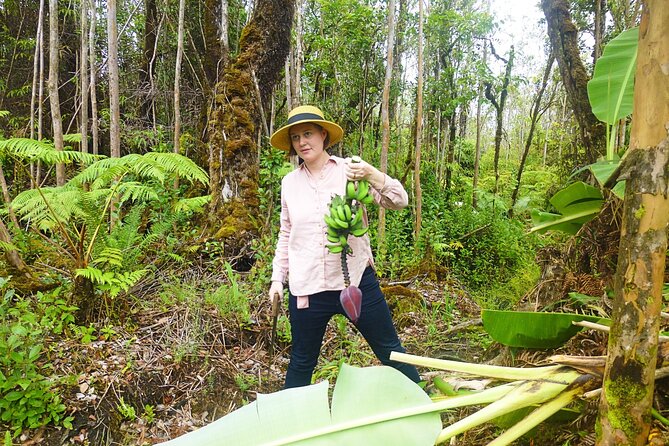
At $75 per person, this is not the cheapest way to spend two hours on the Big Island. Its value depends on how much you care about access, instruction, and personal contact rather than how much food or sightseeing you can pack into the time.
You are paying for a small-group visit with Jason and Nicky, a tour of an apple banana collection with more than 200 plants, cultivation instruction, propagation, harvesting, a look inside the banana stalk, and a tasting. The group limit of six is important here. A large farm attraction might charge for entry and a short talk, while this activity gives you more direct involvement.
The price makes the most sense if you enjoy unusual food experiences, small farms, gardening, or meeting the people behind a local operation. It is less convincing if you want dramatic volcano views, a long hike, or a full meal. The experience is focused and specific. You are paying for a close look at bananas and the life built around them.
I also like that the activity fits into a two-hour window. You can pair it with other Big Island plans instead of giving up a full day. Since the meeting point and return point are the same, you do not need to arrange a separate finish location.
Who will enjoy this most
I would choose this outing for people who like learning by doing. Families may appreciate the plant work and the clear life cycle of the banana. Couples and solo visitors who prefer local stories over large attractions should also find the format appealing.
It is a particularly good match for:
- Gardeners and home growers
- People curious about tropical crops
- Families with children who like hands-on activities
- Visitors looking for a small group experience
- Anyone interested in off-grid living and farm work
- People who enjoy trying unfamiliar food
I would think twice if you need a fully paved route, want a formal botanical garden, or dislike uneven ground. I would also skip it if your schedule leaves no room for a flexible conversation-based activity. The tour has a clear focus, but the personal style means it is not designed to rush you through a checklist.
The experience is offered in English. Confirmation arrives when you book, and the activity is generally suitable for most participants. It is typically booked about 27 days ahead, so reserve early if your Big Island dates are fixed.
Booking, meeting point, and cancellation details
You meet at Jungle King Avenue in Fern Forest, Hawaii, and the activity returns to that same meeting point. No transportation from a hotel or other parts of the island is included in the supplied details, so plan your own way to the start.
The experience is available with a mobile ticket and is offered in English. Paradise Unplugged operates the tour, which accepts a maximum of six people. That small capacity is one reason I would not wait until the last minute during a busy vacation period.
You can cancel for a full refund up to 24 hours before the local start time. Cancellations or changes made less than 24 hours ahead are not accepted for a refund. Keep that deadline in mind before finalizing your day plan.
Should you book the banana cultivation experience?
Book it if you want a close, hands-on look at a real Big Island farm and you enjoy meeting the people who run it. The chance to propagate a banana plant, cut down a fruiting stalk, inspect its edible core, and taste green bananas with tea gives the visit a clear purpose.
I would not book it for grand scenery, a long hike, or a full meal. The ground can be rough, the setting is a working property, and the experience is more personal than polished. But if that sounds like the kind of Hawaii you want to see, $75 is a fair price for two focused hours with Jason and Nicky. Wear good shoes, arrive curious, and let the bananas do the teaching.
FAQ
Where does the Hawaiian Rainforest Banana Cultivation Experience take place?
It takes place in the Hawaiian rainforest on the east side of the Big Island. The property is located in Fern Forest on an 800-year-old lava flow.
What is the meeting point?
The meeting point is Jungle King Avenue, Fern Forest, Hawaii 96778, USA.
Where does the activity end?
The activity ends back at the meeting point on Jungle King Avenue.
How long does the experience last?
The experience lasts approximately two hours.
How many people can join the activity?
The maximum group size is six participants.
What type of bananas will I see?
You will tour a collection of more than 200 apple banana trees.
Can I take part in harvesting?
Yes. Once a banana plant bears fruit, participants can help cut it down and open the inner stalk to examine its edible core.
What food and drink are included?
The experience includes a sample of green bananas and green banana tea. Fried green bananas have also been part of the food experience, but the supplied details do not state that this preparation is guaranteed every time.
Is the activity offered in English?
Yes. The activity is offered in English.
Can I cancel for a full refund?
Yes. You can cancel at least 24 hours before the local start time for a full refund. Cancellations or changes made less than 24 hours before the start are not accepted for a refund.
Just added on Big Island of Hawaii
- Volcano National Park and Rainbow Fall in Hilo, Hawaii★ 5.0 · 53 reviews
- Volcanoes National Park Adventure Tour – Hilo Shore Excursion★ 4.5 · 104 reviews
- Volcanoes National Park and Hilo Private Tour★ 5.0 · 3 reviews
- Volcanoes Adventure Tour from Hilo★ 4.0 · 29 reviews
- Private VAN Tour Hilo★ 4.5 · 5 reviews
- Majestic Waterfall Tour★ 5.0 · 31 reviews
- Private Shore Excursion Hilo Volcanoes National Park up to 10 PPL★ 5.0 · 36 reviews
- 5 Hour Custom Private Tour of Hawaii★ 5.0 · 9 reviews
Waterfall Tours, compared.
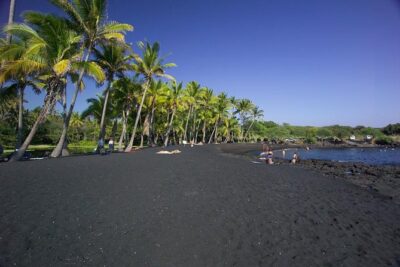
Big Island in a Day: Volcanoes Waterfalls Sightseeing and History
Read our review →
Oahu Circle Island Tour with Waimea Waterfall
Read our review →
All Inclusive Ultimate Circle Island Tour, Waimea Falls & Lunch
Read our review →
Kauai Airplane Tour: Na Pali Coast, Waterfalls & Window Seats
Read our review →
Oahu North Shore Experience: Activities, Waterfall & Free Time
Read our review →
Kauai Private Doors-Off Helicopter: Ultimate Waterfalls & Canyons
Read our review →
Small Group Waterfall and Rainforest Hiking Adventure on Maui
Read our review →Browse the lists this tour appears in