
Reviewed · FOOD & DRINK
Exotic Fruit Tasting Tour in Kona
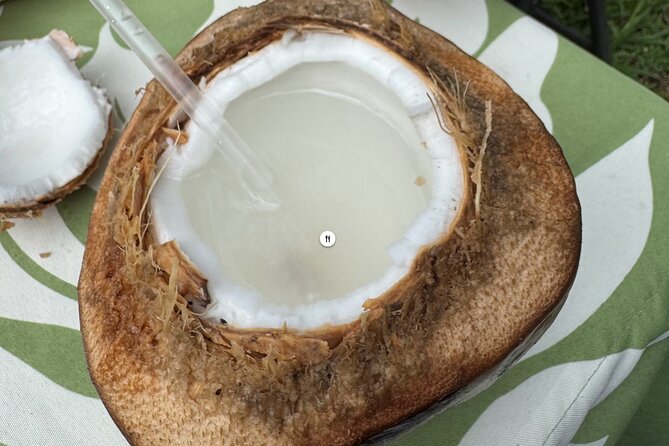
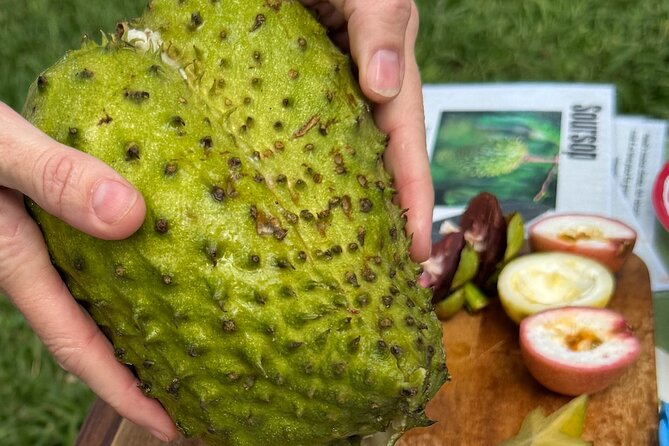
The best part of this Kona experience is the chance to taste fruits you may never find at home. In about 90 minutes, you might work through mangosteen, cherimoya, rambutan, snake fruit, several mangoes, cacao, coconut, and even durian, with a guide explaining what you are eating and how it grows.
I like the small groups of no more than 15, which make it easier to ask questions. I also like the practical touch of take-home containers. You can save fruit for the beach or your hotel instead of rushing through a large tasting plate.
The main thing to understand is that this is primarily a guided fruit tasting, not a long working-farm tour. Most of the tasting takes place at a picnic table, with a short look at plants and trees. If your family expects an active farm adventure, that distinction matters.
Key points at a glance
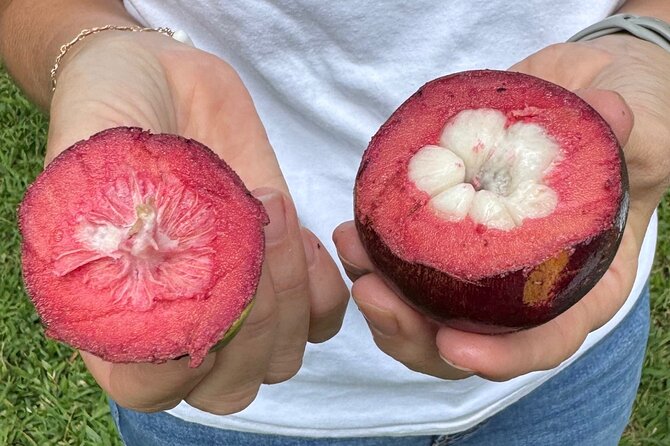
- Rare fruit in generous variety: Samples may include mangosteen, cherimoya, abiu, jaboticaba, tamarillo, durian, and several types of mango.
- A mostly seated experience: Fruit is prepared ahead of time so the guide can present many varieties within the 90-minute visit.
- A small-group setting: The tour has a maximum of 15 people, giving you room to ask about flavors, origins, and cultivation.
- Useful extras: Water, utensils, and containers for unfinished fruit are included.
- A glimpse beyond resort Hawaii: You get to see fruit plants and hear about Polynesian connections to food and farming.
- Bring mosquito repellent: One visitor had a rough time with bites, so protect your legs, especially in damp weather.
What happens at Aloha Adventure Farms
Aloha Adventure Farms is at 77-6261 Mamalahoa Highway in Holualoa, above the main resort areas of Kona. You meet there and finish at the same point, so you do not need to arrange a second pickup location.
The visit lasts about 1 hour and 30 minutes. That is enough time for a broad tasting without turning into an all-day food event. I see the format as part lesson, part snack, and part conversation. You sit with the group while the guide brings out fruit, identifies it, and explains its flavor and background.
The farm prepares much of the fruit before you arrive. That helps the tour cover a surprisingly wide range in a short period, but it also explains why you should not expect to watch every fruit being picked. The central experience is tasting and learning, not farm labor or a long walk through rows of crops.
A short walk around fruit trees and bushes may be part of the visit. You may see plants such as vanilla, cacao, and apple bananas close up. Still, I would book this for the food first and the farm setting second. That expectation will help you enjoy the visit rather than wait for a larger agricultural tour.
A few more things to do on Big Island of Hawaii worth a look
- Kona Walking Food Tour
★ 5.0 · 402 reviews - Craft Chocolate Tasting and Farm Experience on the Big Island
★ 5.0 · 95 reviews - Kona Coffee Farm Tour from Tree to Tasting Room
★ 5.0 · 36 reviews
A tasting menu that changes with the season
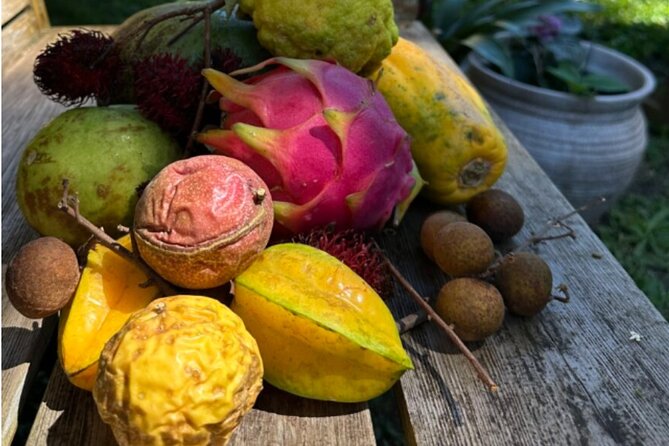
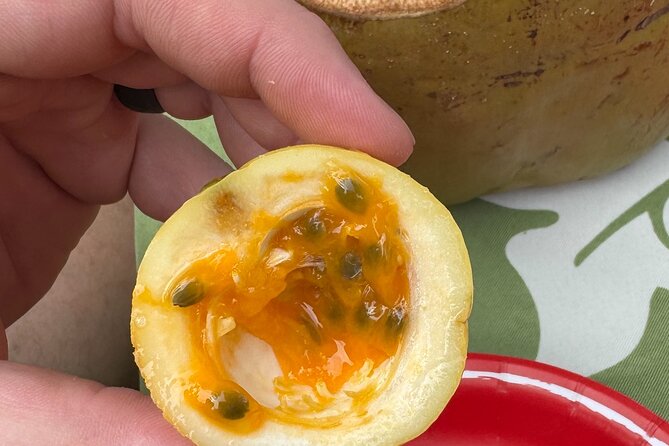
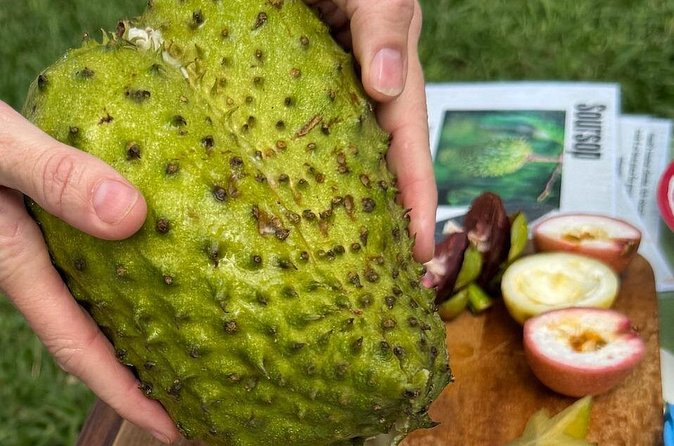
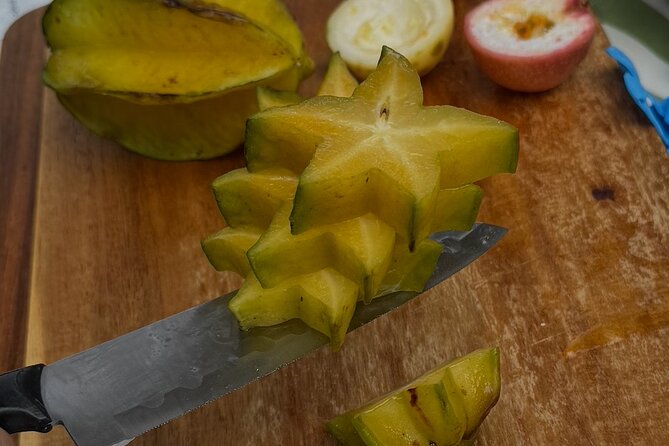
The exact fruit selection can vary, but the range is the real attraction. One recent tasting included two kinds of papaya with calamansi, two kinds of coconut, apple bananas, ice cream bananas, star fruit, cacao, rambutan, longan, snake fruit, lychee, lilikoi, mangosteen, white guava, four types of mango, two types of dragon fruit, abiu, jaboticaba, tamarillo, and durian.
That is a lot for one sitting. You do not need to love every sample. In fact, the fun comes from comparing them. A familiar banana can taste quite different from another variety, while a fruit such as mangosteen may be completely new to you.
Cherimoya is one of the likely highlights. Its soft texture and custard-like flavor make it very different from the crisp fruit you find in a mainland supermarket. Mangosteen offers a sweet, delicate taste inside a thick shell. Durian is more divisive, but this is a good place to try a small amount with a guide nearby to explain it.
Mangoes also get their due. Several types may be served side by side, letting you compare texture, sweetness, and aroma. A tasting like this can change the way you shop at a farmers market later in your trip. You start noticing varieties rather than treating every mango, papaya, or banana as the same.
Some extras can make the session feel hands-on. You might crack open a coconut, handle a Tongan blade under supervision, or open a macadamia nut. A dry-roasted macadamia nut can finish the tasting nicely, and the farm also sells roasted macadamias in its gift shop.
Why the guide matters
A fruit tasting can become a pile of samples with unfamiliar names. The guide gives the food a useful frame. You learn where a fruit comes from, what it tastes like, how it is used, and why it matters in Hawaii and Polynesian culture.
Guide Leah received especially warm praise for explaining the fruit clearly and keeping the session enjoyable. Since guides can vary, I would not assume Leah leads every departure, but the tour is designed around direct questions and conversation. The group limit of 15 helps here. You are less likely to sit silently at the back of a large presentation.
I like this format for families because children and teenagers can ask about the odd-looking samples without feeling self-conscious. A young person who is bored by a standard garden walk may perk up when faced with snake fruit, cacao, miracle berries, or durian. The unusual names and flavors turn the lesson into a challenge.
The cultural information also adds value. You are not simply eating expensive fruit. You are hearing how tropical crops connect to local food traditions and the Pacific. That makes the visit feel more rooted in Hawaii than a generic tasting counter.
The real value of a $84.99 ticket
At $84.99 per person, this is not a casual snack stop. A family of four will spend about $340 before any extra purchases, so price deserves an honest look.
You are paying for more than the fruit itself. The fee covers the guide, the farm setting, the preparation of a large number of samples, utensils, water, and a container for leftovers. You also get the chance to try fruits that may be costly or nearly impossible to find at home.
Still, the value depends on what you want. If you mainly want a full meal, this is poor value. If your group includes people who dislike trying new foods or who prefer a long active tour, the price may feel high. One family expected a larger farm adventure and found the seated format disappointing.
I think the price makes the most sense for curious eaters, food-focused families, and visitors who want something beyond coffee, beaches, and resort dining. The educational part matters. So does the range. If you sample 20 or more fruits and take some leftovers with you, the experience lasts beyond the scheduled hour and a half.
The best way to judge the cost is to ask yourself one question: would you pay for access to a guided tasting of rare tropical fruit, with cultural context and a chance to save leftovers? If yes, this can be a good splurge. If not, spend the money on a meal or a different farm activity.
Same island, a different kind of day:
- Big Island in a Day: Volcanoes Waterfalls Sightseeing and History
★ 5.0 · 6,569 reviews - Big Island Manta Ray Night Snorkel
★ 5.0 · 5,656 reviews - Big Island: Kona Manta Ray Snorkel Tour in Keauhou Harbor
★ 4.5 · 2,465 reviews - Hilo Shore Excursion: Volcanoes National Park & Black Sand Beach
★ 4.5 · 2,338 reviews
What to wear and bring
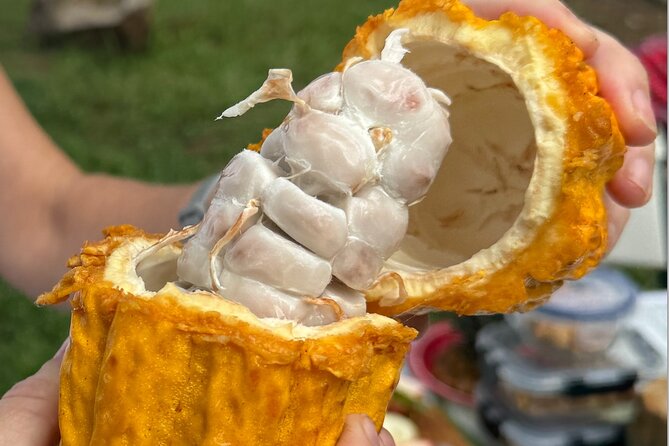
Wear comfortable clothes for a warm, potentially damp setting. Closed shoes are not stated as a requirement, but practical footwear makes sense if your visit includes a short walk near plants and bushes.
Bring mosquito repellent for your legs. This is the most useful tip from the experience details. Citronella candles may be burning, but they are not a substitute for personal protection. Mosquitoes can be an issue, especially after wet weather.
You do not need to pack tasting equipment. Fruit, utensils, water, and containers are provided. The container is worth using. Leftover fruit can become a snack later at your hotel or on the beach, provided you keep it stored properly.
A light rain layer may help. The tasting can move under cover when the weather turns wet, so rain does not necessarily end the visit, but conditions can change the feel of the experience. A covered tasting is practical, though it may offer less of the outdoor farm atmosphere you imagined.
Who will enjoy this most
I would recommend the tour to:
- Families with children or teenagers who enjoy trying unusual foods
- Couples looking for a short, low-key Kona activity
- Food lovers interested in tropical crops and local varieties
- People who want a cultural experience away from the main resort strip
- Visitors who like asking questions in a small group
- Anyone who has never tasted fruits such as mangosteen, abiu, jaboticaba, or cherimoya
The tour suits mixed-age groups because you can participate at your own pace. You can taste everything, take small portions, or simply ask questions and focus on the fruit that appeals to you.
I would be more cautious if your priority is a working farm tour, a long nature walk, or a substantial meal. The seated setup is a feature for some people and a drawback for others. Make sure everyone in your party understands that before booking.
The activity is also a good fit for repeat visitors to the Big Island. A fruit selection can change with the season, so returning at another time of year may offer a different set of samples. That gives the farm more repeat value than a fixed menu.
Booking and cancellation details
The tour is offered in English, uses mobile tickets, and is often booked about 40 days ahead. That advance demand suggests you should reserve early if your Kona schedule is tight, especially for a particular date.
The maximum group size is 15. Most people can participate, and service animals are allowed. The meeting point is near public transportation, though no transportation service is included in the information provided.
You can cancel for a full refund up to 24 hours before the start time. Cancellations or changes made less than 24 hours ahead are not accepted for a refund, and the cut-off follows local Hawaii time.
Should you book the fruit tasting?
Book it if you want a friendly, food-centered look at the Big Island and enjoy trying things you cannot easily find at home. The broad fruit selection, small group, cultural background, and take-home container make this more than a quick sample plate.
Skip it if you want a strenuous farm outing or expect to walk through the growing areas for most of the visit. This is a seated tasting with some plant viewing, and the $84.99 price asks you to care about unusual food and local growing traditions.
For the right person, it is a memorable Kona side trip. You leave with new flavors in your head, fruit in a container, and a better sense of how much Hawaii’s food culture extends beyond pineapple.
FAQ
Where does the Exotic Fruit Tasting Tour take place?
The tour takes place at Aloha Adventure Farms, located at 77-6261 Mamalahoa Highway in Holualoa, Hawaii.
How long does the tour last?
The experience lasts approximately 1 hour and 30 minutes.
How much does the tour cost?
The listed price is $84.99 per person.
What fruit might I taste?
The selection can include cherimoya, mangosteen, papaya, coconut, apple bananas, ice cream bananas, star fruit, cacao, rambutan, longan, snake fruit, lychee, lilikoi, guava, mango, dragon fruit, abiu, jaboticaba, tamarillo, and durian.
Is this a walking farm tour?
The main activity is a guided tasting, usually at a picnic bench. A short walk around fruit trees and bushes may also be included, but you should not expect a long working-farm tour.
Are food and utensils included?
Yes. Fruit and utensils are included, along with a container for any fruit you do not finish.
How many people can join the tour?
The activity has a maximum of 15 participants.
Is the tour offered in English?
Yes. The tour is offered in English.
Can I cancel for a refund?
Yes. You can cancel at least 24 hours before the start time for a full refund. Cancellations and changes made less than 24 hours before the start time are not accepted for a refund.
Just added on Big Island of Hawaii
- Volcano National Park and Rainbow Fall in Hilo, Hawaii★ 5.0 · 53 reviews
- Volcanoes National Park and Hilo Private Tour★ 5.0 · 3 reviews
- Volcanoes National Park Adventure Tour – Hilo Shore Excursion★ 4.5 · 104 reviews
- Private VAN Tour Hilo★ 4.5 · 5 reviews
- Volcanoes Adventure Tour from Hilo★ 4.0 · 29 reviews
- Majestic Waterfall Tour★ 5.0 · 31 reviews
- Private Shore Excursion Hilo Volcanoes National Park up to 10 PPL★ 5.0 · 36 reviews
- 5 Hour Custom Private Tour of Hawaii★ 5.0 · 9 reviews
Food & Drink, compared.
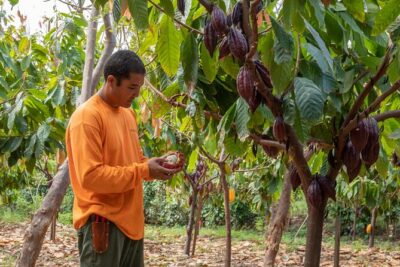
Maui Ku’ia Estate Guided Cacao Farm Tour and Tasting
Read our review →
Oahu Catamaran Waikiki Sunset on 40 Foot Catamaran: Food and BYOB
Read our review →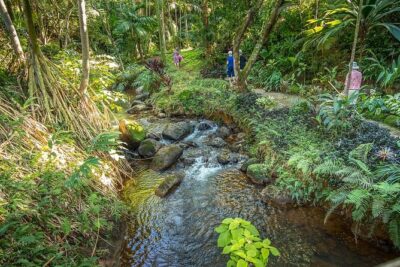
Princeville Botanical Gardens Tour and Chocolate Tasting Ticket
Read our review →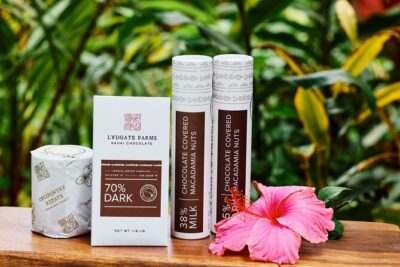
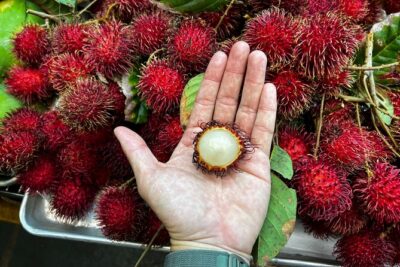
Oahu in a Day: Waterfall – Food Trucks – Lookouts – Small Crowds
Read our review →
Browse the lists this tour appears in