
Reviewed · HELICOPTER TOURS
Big Island Spectacular Helicopter Tour
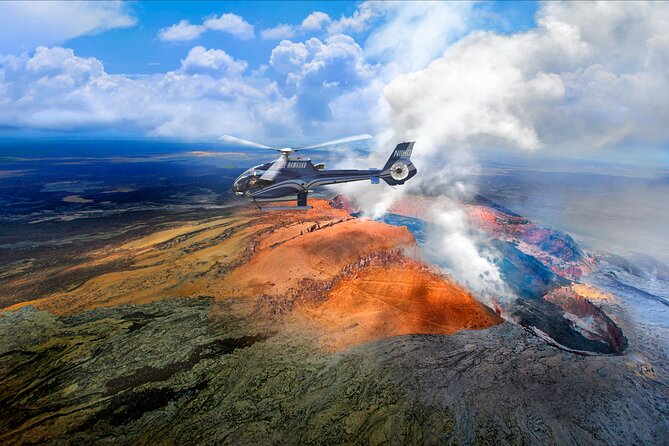
The Big Island Spectacular Helicopter Tour gives you the island’s greatest geographic hits in one flight: Kohala’s cut valleys, Kilauea’s volcanic ground, Hamakua’s waterfalls, and the long Pacific coast. In two hours, you cover sights that would take days of driving, with a view into places roads cannot reach.
I like the small maximum group of six and the clear two-way microphones, which let you ask your pilot about what you see. I also like the wide windows and Bose aviation headsets, especially when pilots such as Greg, Kai, Shane, James, and Ryan add useful local detail to the flight.
The main drawback is the price, $790.90 per person, with no ground transportation or photo package included. If you have already driven around much of the island, some scenery may feel familiar from above, though the valleys, cliffs, and volcano crater still offer a very different view.
Key points to know before you book
- See the Big Island in one sweep: The route links volcanoes, lava flows, ranch country, rainforests, waterfalls, and both coasts.
- A compact flight with a long reach: The tour lasts about two hours, making it easier to fit into a busy island visit.
- Your pilot is also your guide: Pilots are State of Hawaii Certified Tour Guides and speak through two-way microphones.
- Seating affects the view: Seats are assigned by weight and aircraft balance, and the front or left side may offer better views of some valleys.
- Weather can change the plan: Wind and rain may alter the route or cancel the flight, with a refund or new date offered for weather cancellations.
- Plan for the real cost: Video and photo packages cost extra, and passengers over 240 pounds need a second adjacent seat at half price.
Why seeing the Big Island from the air changes the trip
The Big Island is too large to understand from a single road trip. Five volcanoes form the island, and the ground rises from sea level to more than 13,000 feet. You can drive for hours through dry country, ranch land, rainforest, and lava fields without seeing how those regions fit together.
A helicopter fixes that problem quickly. You see the sharp change from the dry west side to the wet northeast, the way valleys cut into Kohala, and the scale of Kilauea’s volcanic zones. This is not a landing tour by design. It is a moving view, with the aircraft passing over places that are hard or impossible to reach on foot.
The flight also helps you decide where to spend time on the ground. After seeing the Hamakua Coast from above, you may want to visit its waterfalls. After seeing the Kilauea area, you may better understand why Hawaii Volcanoes National Park covers such a vast area. The helicopter is not a replacement for every ground visit, but it gives you a useful map in your head.
The short schedule helps. You check in one hour before departure, then spend roughly two hours in the air. That is a serious commitment, but it is still much less time than driving to the island’s far corners separately.
More helicopter tours on Big Island of Hawaii:
- Volcano Adventure: Hilo Sightseeing w/ Optional Helicopter Tour
★ 4.5 · 412 reviews - Private Kona Coast Helicopter Tour: All Window Seats
★ 5.0 · 139 reviews - Big Island: Discover Hilo Helicopter Tour
★ 4.5 · 110 reviews
From Waikoloa to Kohala’s steep green valleys
The tour begins at Blue Hawaiian Helicopters in Waikoloa Village, on Waikoloa Road. The west side is a practical base because it is generally drier than the northeast, but the flight quickly carries you into much wetter country.
Kohala is known for ranching, broad pastures, and valleys cut into the northern end of the island. From the air, the contrast is dramatic: open country near the top gives way to steep folds and narrow valleys toward the coast. These valleys are one of the strongest reasons to choose a helicopter instead of a standard sightseeing drive.
You will not stop for a walk or a viewpoint here. That is important. The value is in the changing angle and the access to areas where roads do not go. A pilot can point out the shape of the valleys and explain what you are seeing through the headset, but the view moves continuously.
Kona and the western side of Hawaii Island
The route includes the west coast town where King Kamehameha spent his final years. This is the Kona area, with its close ties to Hawaiian royalty and the island’s modern visitor center.
From above, the western side looks quite different from Kohala and Hamakua. It is drier, more open, and shaped by old lava flows. The clear contrast between the coast, volcanic ground, and inland slopes gives you a quick lesson in the island’s weather patterns.
If you have already toured Kona by car, the helicopter will not show you a completely unknown place. Instead, it changes the scale. Roads, towns, and shoreline become part of a much larger volcanic setting. I find that useful for understanding how isolated some of the island’s valleys and lava areas really are.
Kilauea and the fresh volcanic ground
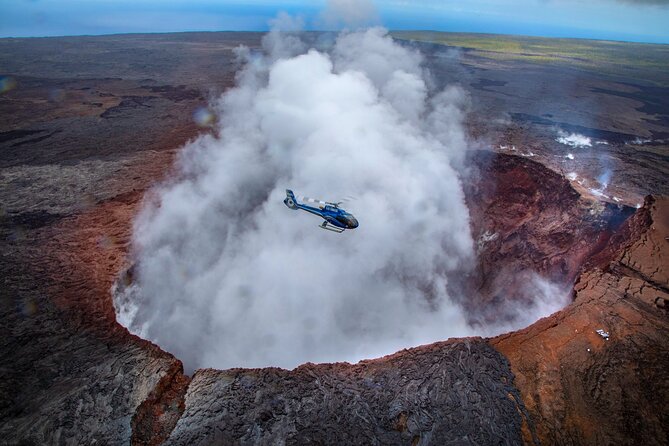
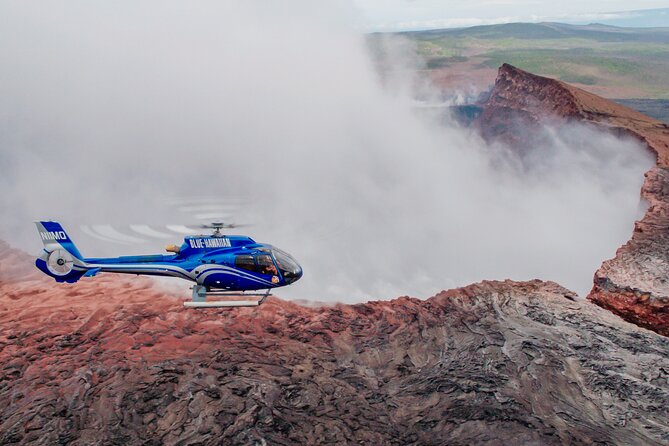
The volcanic section is the emotional center of the tour for many people. Kilauea is one of the five volcanoes that form Hawaii Island and is one of the largest volcanoes on Earth. The route may include recent lava flows, including areas associated with activity as recent as December 2022.
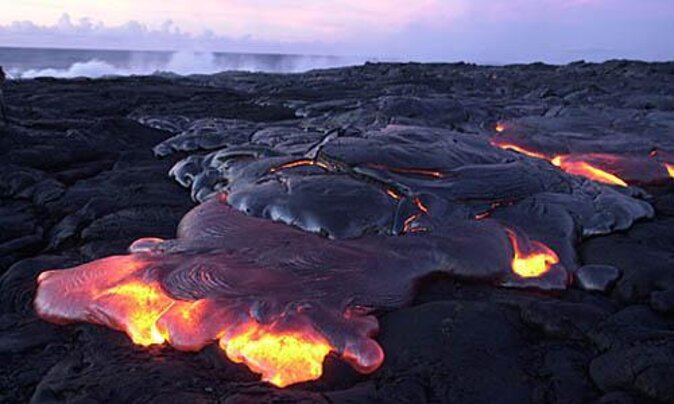
Volcanic scenery is not always about glowing lava. You may see dark flow fields, broad caldera areas, smoke, or other signs of recent activity. Conditions change, and an active volcano never follows a fixed sightseeing script. On some flights, the volcano may be smoking or erupting. On others, the main sight is the size and texture of the crater and surrounding flows.
One flight took place shortly after a lengthy eruption, when the volcano was still smoking. That kind of timing is luck, not something the company can promise. The tour’s value remains even when there is no visible lava, because the aircraft shows the scale of the volcanic zones from above.
Kilauea has been active along its southeastern side for decades, and the tour also connects this area with Hawaii Volcanoes National Park. The volcano is not a small isolated cone. It is part of a huge active system that shapes much of the island.
Same island, a different kind of day:
- Big Island in a Day: Volcanoes Waterfalls Sightseeing and History
★ 5.0 · 6,569 reviews - Big Island Manta Ray Night Snorkel
★ 5.0 · 5,656 reviews - Big Island: Kona Manta Ray Snorkel Tour in Keauhou Harbor
★ 4.5 · 2,465 reviews - Hilo Shore Excursion: Volcanoes National Park & Black Sand Beach
★ 4.5 · 2,338 reviews
Hawaii Volcanoes National Park from sea level to 13,000 feet
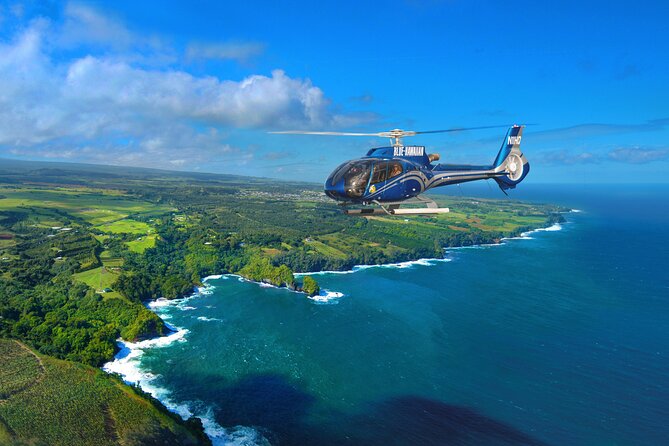
Hawaii Volcanoes National Park covers more than 335,000 acres and rises from sea level to over 13,000 feet. Six of Earth’s climate zones occur along that climb, a fact you can appreciate from the air even during a relatively short flight.
The helicopter does not replace a full park visit. You will not walk the trails, visit every overlook, or spend time at park facilities. What you gain is a broad view of how the park’s coastal areas, volcanic slopes, and high elevations connect.
This part of the tour is especially useful if your island schedule is tight. You see the park’s scale without committing a full day to roads and stops. If the park is a major reason for your visit, I would still allow time on the ground. If you are choosing between a helicopter and no volcano visit at all, the flight gives you a memorable introduction.
The 1983 to 2018 rift-zone eruption
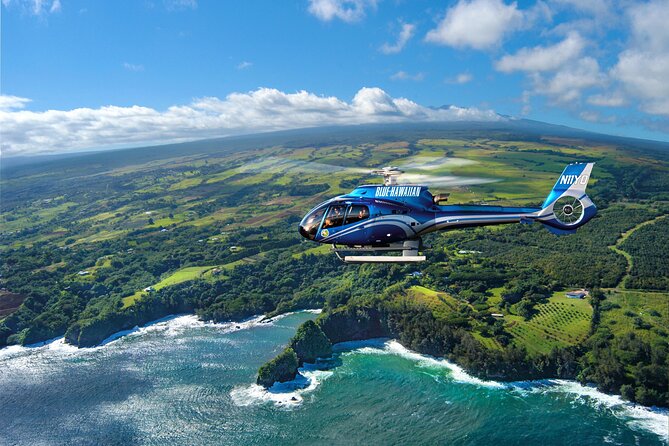
Another major feature is the eastern rift zone of Kilauea, where an eruption lasted from 1983 to 2018. It was the longest-lived rift-zone eruption of the last two centuries. From the air, long lava fields and altered ground make more sense than they do from a single roadside viewpoint.
This is where the helicopter’s ability to keep moving helps. You can see how far the eruption zone reaches and how lava changed the coastline and interior. The pilot’s narration matters here because black rock alone does not explain its age, direction, or connection to the volcano.
The flight is also a reminder that the Big Island is still being made. Roads, towns, and beaches seem permanent when you visit by car. From above, the volcanic surface feels newer and less settled.
Hilo, Akaka Falls, and the wet Hamakua Coast
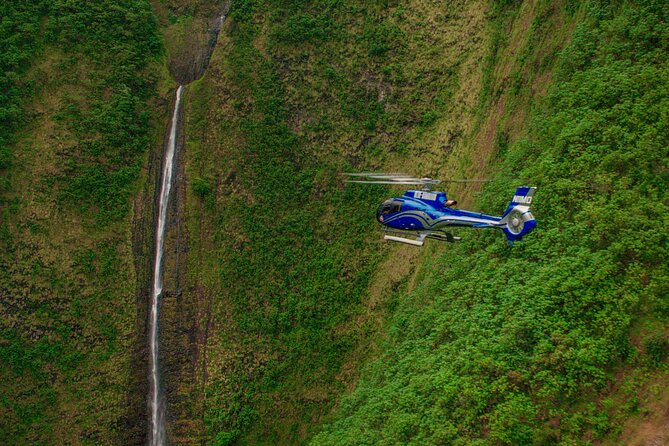
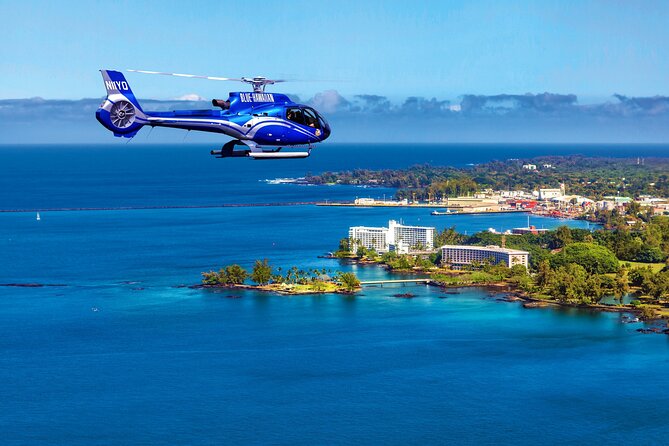
The tour heads toward Hilo, the island’s lively northeastern town. Hilo receives heavy rainfall, with the area around the Hamakua Coast receiving nearly 84 inches each year. That moisture feeds thick rainforest, green valleys, and waterfalls.
Akaka Falls is the best-known waterfall on the route. It drops 442 feet into the valley below, and from a helicopter you see both the falling water and the deep cut of the valley around it. This is a much better setting for understanding the falls than a simple photograph can provide.
The Hamakua Valleys may be the most scenic part of the flight, but your seat matters. One side of the aircraft may have a better angle as the helicopter follows the valleys, and the front seats usually provide the clearest forward view. Seating is assigned for weight and balance, so you cannot count on choosing your exact position.
That is not a reason to skip the tour, but it is a reason to keep expectations realistic. Every seat has a window and a view, yet the angle will not be identical for everyone. If your main goal is photographing the valleys, ask about seating options when booking, but understand that safety determines the final arrangement.
Waimea and the island’s cowboy country
The route finishes or passes through Waimea, known as cowboy country. This historic area has rolling pasture and ranches, a sharp contrast to the rainforest and lava fields seen earlier.
Waimea helps tie the flight together. In one trip, you see dry western ground, steep northern valleys, wet forest, volcanic zones, and open ranch country. Those changes are not just pretty scenery. They show how elevation, wind, rain, and volcanoes divide a single island into very different regions.
This is another section that may feel familiar if you have driven through Waimea. The difference is the wider view. From above, the pastureland appears as part of a larger high-country area rather than a town you pass through on the way to somewhere else.
What the aircraft and guide service add
Blue Hawaiian uses wide viewing windows and Bose aviation-grade electronic noise-canceling headsets. The headsets make a real difference because helicopter noise can otherwise compete with the narration. You also receive a microphone for two-way communication, so you can ask the pilot to repeat a point or identify a feature.
The pilots are also State of Hawaii Certified Tour Guides. Names reported from recent flights include Greg, Kai, Shane, James, Ryan, Toshi, Dale, and Matt. You should not book around a particular pilot, since assignments can change, but the company’s guide service is a central part of the experience.
The best pilots do more than name each valley. They explain the island’s changes, point out small details, and help you follow the route. One pilot pointed out whales in the ocean during the flight. Another used music at key moments, including Magic Carpet Ride, Jimmy Buffett’s Volcano, and the Jurassic Park theme during the jungle gorge section. The soundtrack is not guaranteed, but it gives you an idea of the playful presentation some pilots use.
The aircraft carries up to six passengers, though seating reports describe seven people including the pilot. Either way, this is a small aircraft rather than a large sightseeing bus in the sky. Expect assigned seating, close quarters, and a shared view rather than a private flight.
Is $790.90 a fair price?
At $790.90 per person, this is one of the more expensive activities you can add to a Big Island trip. The price includes taxes, fees, the pilot-guide, headsets, and microphones. It does not include transportation to the heliport, gratuity, or optional video and photo packages.
The value depends on your itinerary. If you plan to drive to Hilo, Akaka Falls, the Hamakua Coast, Waimea, and Hawaii Volcanoes National Park, you can see many of the same broad areas from the ground. Driving gives you walks and stops that the helicopter does not. The helicopter gives you distance, height, and access to valleys that you cannot reach by car.
I think the price makes the most sense for three types of people:
- You have limited time and want a fast overview of the island.
- You want to see volcanic ground and remote valleys from an angle the roads cannot provide.
- You are marking a special occasion and value the experience itself more than the number of included extras.
Do not assume the camera package is included. In-flight video and photos are sold afterward, so bring a credit card if you want them. Dark clothing is recommended because light fabric can reflect in the windows and spoil photographs.
Check-in, weight rules, and weather planning
Arrive one hour before your scheduled flight. The extra time is used for weighing passengers, giving the safety briefing, and seating everyone so the aircraft can leave on time. Late arrivals may not be accepted and are not refunded, so allow time for traffic and for reaching Waikoloa Village.
The total passenger weight limit is 240 pounds. If you weigh more than that, you need an adjacent empty seat for aircraft balance. The second seat is charged at half the regular tour price, and you arrange it after booking.
Leave hats, bags, large cameras, and extending selfie sticks behind. Children 23 months and younger may ride free as lap children. Most people can participate, and the meeting point is near public transportation, but ground transport to and from the heliport is not supplied.
Wind and rain can alter the route or cancel the flight. This is normal for an aircraft tour, not a minor inconvenience. The company offers a new date or a full refund when poor weather causes cancellation. You can also cancel for a full refund if you do so at least 24 hours before the start time. Do not plan scuba activity within 24 hours of departure.
Who should book the Big Island Spectacular?
Book this tour if you want a grand overview, have a strong interest in volcanoes, or would rather see remote valleys from the air than spend a full day driving. It also suits families with older children and couples looking for a memorable special-occasion activity.
Think twice if you dislike flying, need guaranteed access to a particular seat, or have already visited every major part of the island and want a completely new destination. The flight can repeat scenery you have seen from the ground, and the price is high once optional photos are added.
For most people, the deciding question is simple: do you want to understand the whole island at once, or do you want to stop and explore one region? If you want the broad view, the volcanoes, the cliffs, and the waterfalls in one carefully planned flight, this is a strong choice. If you want trails, beaches, and time on the ground, put the money toward a rental car and several full-day outings instead.
FAQ
Where does the helicopter tour begin?
The tour begins at Blue Hawaiian Helicopters, 68-690 Waikoloa Road, Waikoloa Village, Hawaii 96738.
How long does the tour last?
The flight lasts approximately two hours. You should also allow one hour before departure for check-in, weighing, the safety briefing, and seating.
What places can I see from the helicopter?
The route can include Kohala, the Kona area, Kilauea, Hawaii Volcanoes National Park, the eastern rift zone, Hilo, Akaka Falls, the Hamakua rainforest area, and Waimea ranch country.
How many people can join the tour?
The activity has a maximum of six travelers. Seating is assigned according to passenger weight and aircraft balance.
What equipment is included?
You receive Bose aviation-grade electronic noise-canceling headsets and a microphone for two-way communication with the pilot. The pilot is also a State of Hawaii Certified Tour Guide.
Are photos and videos included?
No. USB in-flight video and photo packages are available to purchase after the flight. A credit card is recommended if you want to buy one.
What happens if the weather is poor?
The route or departure time may change because of wind and weather. If the company cancels because of poor weather, you can choose a different date or receive a full refund.
Can I cancel my booking?
You can cancel for a full refund up to 24 hours before the experience starts. Cancellations or changes made less than 24 hours before departure are not accepted, and late arrivals may not be refunded.
Just added on Big Island of Hawaii
- Volcano National Park and Rainbow Fall in Hilo, Hawaii★ 5.0 · 53 reviews
- Volcanoes National Park Adventure Tour – Hilo Shore Excursion★ 4.5 · 104 reviews
- Volcanoes National Park and Hilo Private Tour★ 5.0 · 3 reviews
- Private VAN Tour Hilo★ 4.5 · 5 reviews
- Volcanoes Adventure Tour from Hilo★ 4.0 · 29 reviews
- Majestic Waterfall Tour★ 5.0 · 31 reviews
- Private Shore Excursion Hilo Volcanoes National Park up to 10 PPL★ 5.0 · 36 reviews
- Elite Volcano Hike From Hilo★ 5.0 · 20 reviews
Helicopter Tours, compared.
Kauai Airplane Tour: Na Pali Coast, Waterfalls & Window Seats
Read our review →
Kauai Private Doors-Off Helicopter: Ultimate Waterfalls & Canyons
Read our review →
Kauai Deluxe Waterfall Safari: Helicopter Tour
Read our review →
PRIVATE- Air Tour: 5 Islands: (2-5 people): SEE Even MORE!
Read our review →
Road to Hana Luxury Limo-Van Tour with Helicopter Flight
Read our review →
West Maui and Molokai Special 45-Minute Helicopter Tour
Read our review →
Royal Crown of Oahu – 60 Min Helicopter Tour – Doors Off or On
Read our review →Browse the lists this tour appears in